
- Release Year: 2000
- Platforms: Macintosh, Windows
- Publisher: Learning Company, Inc., The
- Developer: Learning Company, Inc., The
- Genre: Adventure, Educational
- Perspective: 3rd-person (Other)
- Game Mode: Single-player
- Gameplay: Puzzle elements
- Setting: Amusement park
- Average Score: 86/100
Description
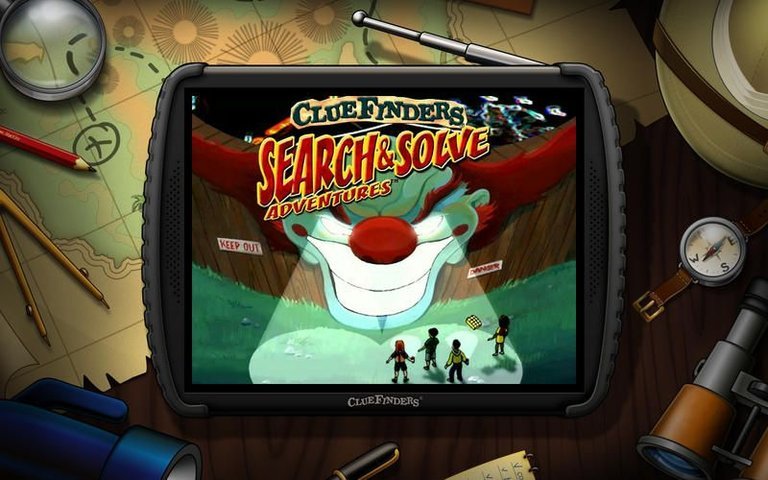
ClueFinders: Search & Solve Adventures is an educational adventure game for children aged 9-12, where the ClueFinders team—Joni, Santiago, Leslie, Owen, and Laptrap—investigates the mystery of an abandoned, haunted amusement park at night. Players must uncover the truth behind the apparent kidnapping of the local art museum curator, who is trapped at the top of a drop tower ride, while developing skills in logic, problem-solving, data analysis, and critical thinking through engaging puzzles.
Gameplay Videos
ClueFinders: Search & Solve Adventures: Review
Introduction
Imagine stumbling upon a flickering SOS signal during a lunar eclipse, emanating from a derelict amusement park shrouded in midnight fog—humanoid robots lurking in the shadows, a trapped art curator dangling from a towering drop ride, and whispers of art forgery echoing through rusted Ferris wheels. This is the gripping hook of ClueFinders: Search & Solve Adventures (full title: The ClueFinders Search and Solve Adventures: The Phantom Amusement Park), a 2000 edutainment gem from The Learning Company that catapults kids aged 9-12 into a web of logic puzzles and critical thinking challenges. As the seventh main entry in the acclaimed ClueFinders series—following grade-specific adventures like 3rd Grade: Mystery of Mathra and 6th Grade: Empire of the Plant People—it shifts focus to subject-agnostic skills like deduction and pattern recognition. My thesis: This title stands as a pinnacle of early-2000s educational gaming, masterfully disguising rigorous brain-teasers as a spine-tingling mystery, proving edutainment could rival pure entertainment while fostering lifelong problem-solving prowess.
Development History & Context
The Learning Company, founded in 1980 as a pioneer in educational software, entered the late ’90s edutainment boom with the ClueFinders franchise—a deliberate evolution from toddler-targeted Reader Rabbit to appeal to tweens craving adventure. Search & Solve Adventures, released on August 24, 2000, for Windows and Macintosh CD-ROMs, was developed and published in-house amid corporate upheaval. By then, The Learning Company had been acquired by Mattel in 1999 for $3.7 billion (a notorious flop leading to a fire sale to Gores Technology Group), yet the studio persisted, leveraging A.D.A.P.T. (Adaptive Diagnostic Assessment and Progress Tracking) technology—one of its final showcases, as noted in series trivia.
Technologically constrained by 2000-era PCs (mouse-only input, 1-player offline), the game embodied the era’s point-and-click paradigm, echoing Myst but kid-friendly. The gaming landscape was shifting: Pokémon and The Sims dominated consoles, but PC edutainment thrived via school mandates and parental software bundles. Creators envisioned a “Scooby-Doo meets Indiana Jones” vibe for multicultural tweens, drawing from 16 months of backstory development across the series. Reused animations from Reading Adventures (1999) cut costs, though introducing continuity glitches. Positioned post-6th Grade Adventures and pre-Incredible Toy Store Adventure!, it targeted logic/math skills amid No Child Left Behind precursors, emphasizing replayable, adaptive puzzles in a post-Y2K world of dial-up demos and classroom labs.
Narrative & Thematic Deep Dive
At its core, Search & Solve weaves a taut mystery plot that rivals Saturday-morning cartoons, commencing with the ClueFinders—Joni Savage (tough leader, voiced by Chrissie McCarron), Santiago Rivera (mechanic whiz, Clayton Stroope), Owen Lam (skater bro, Brian Gregory), Leslie Clark (bookish strategist, Keoni Asia Gist), and neurotic robot LapTrap (Les Hedger)—spotting Morse-code flashes from their clubhouse during a lunar eclipse. Investigating the “Phantom Amusement Park,” they rescue Jacques Ramon (Charles Martinet, channeling Luigi’s panic), curator of the local art museum, stranded atop a powerless drop tower. His cryptic tale of kidnapping unravels into familial betrayal: sister Mimi Ramon (Irene Trapp) captures Santiago and Leslie, revealing a scheme of stolen masterpieces, robot-forged fakes, and sibling rivalry over profits versus hoarding.
Key Plot Beats:
– Act 1: Entry & Power-Up: Collect robot keys (from clown panels, vending bots) to restore electricity, uncovering art supplies and non-human prints.
– Act 2: Haunted House Heist: Rescue teammates via maze clues; trap Mimi, only for Jacques to betray them, crushing LapTrap (a heroic glitch moment).
– Act 3: Cave Chase & Climax: Reprogram painter-bots, hoard paintings exposed, log-ride pursuit ends in police arrest—Leslie clinches with forgery evidence.
Thematically, it champions teamwork and interdependence—teams split (Joni/Owen/LapTrap vs. Santiago/Leslie), linked by videophone hints—mirroring series ethos. Critical thinking shines via deduction (e.g., photo clues linking siblings), while art forgery probes ethics (greed vs. preservation). Dialogue crackles with tween banter: Joni’s bravado, Owen’s chill vibes, LapTrap’s comic panic. Subtle motifs like eerie night-time parks evoke childhood fears, balanced by empowerment. Voices elevate it—Martinet’s suave villainy adds gravitas—though reused animations betray budget shortcuts, like LapTrap floating post-“damage.”
Gameplay Mechanics & Systems
A point-and-click adventure distilled to puzzle perfection, Search & Solve eschews combat or progression trees for core loops of exploration, mini-game keys, and narrative gates. Players navigate a 3rd-person park map (pre- and post-power-up phases), collecting items to unlock activities yielding keys for bosses like “Power the Park.” No lives or timers pressure; instead, A.D.A.P.T. scales 4 difficulty levels per puzzle, adapting to performance for endless replay.
Deconstructed Activities (9 total, skills-focused):
| Activity | Mechanics | Skills Trained |
|---|---|---|
| Clown Mouth Door | Rotate puzzle pieces to match patterns. | Visual thinking |
| Vending Machine | Select row (color)/column (shape) to clear jams. | Logic grids |
| Spaceball Splat | Spot odd-one-out in sequences, paintball it. | Classification |
| Bumper Carwash | Sequence cars per board rules (e.g., “red before blue”). | Verbal logic |
| Monorail Cargo | Pattern-match words (overlap/spelling or semantics). | Word patterns |
| Power the Park | Analogize circuit parts to diagram. | Visual analogies |
| Haunted House Maze | Follow directional clues to free teammates. | Strategy/sequencing |
| Bridge the Gap | Tile-matching stones for continuous paths. | Visual strategy |
| Log Ride | Input numbers completing grid patterns. | Number sequences |
UI shines: Intuitive mouse controls, progress maps, practice mode decouples puzzles from story. Videophone delivers hints/team updates, preventing frustration. Flaws? Minor: Repetitive key-hunts, arcade timing in some (e.g., Spaceball) may irk non-gamers. Innovative: Puzzles embed data analysis (grids, hypotheses), feeling organic to the forgery plot.
World-Building, Art & Sound
The Phantom Amusement Park pulses with haunted allure—a sprawling map of bumper cars, monorails, haunted houses, and caves under perpetual night, fostering paranoia via flickering lights and robot groans. Atmosphere builds dread-then-triumph: powerless gloom yields neon revival, symbolizing enlightenment through logic.
Visuals: 2D hand-drawn cartoons mimic Scooby-Doo, with thick outlines and vibrant palettes (rusted reds, shadowy blues). Pre-rendered 3D cutscenes amp drama (log chase!), but limited animation recycles Reading Adventures assets, spawning errors like post-crush LapTrap floating. Screenshots reveal detailed locales: graffiti-ed clowns, jammed venders.
Sound Design: Full voice acting immerses—Martinet’s oily Jacques, Hedger’s whiny LapTrap. Eerie carnival muzak (distant calliopes, robot whirs) swells to triumphant orchestration. SFX pop: paintball splats, log splashes. No music drowns puzzles; it’s atmospheric glue, enhancing “scariness and intrigue” per reviewers.
Collectively, they craft a cohesive, kid-safe horror vacay—viscera-free chills amplifying themes.
Reception & Legacy
Launch reception glowed: MobyGames aggregates 86% critics (Tech with Kids: 100%—”fun, sound, repeatable”; Discovery Education: 93%—”brain-stretching”; PCMag: 80%—”engrossing, chill-inducing”; AllGame: 70%—”painless teaching”). One player rates 3/5, craving more reviews. Echoed series acclaim (3.5M units by 2001, 50+ awards), praised for mystery masking math/logic.
Legacy endures: Final original-voice ClueFinders (pre-Toy Store), influencing edutainment like JumpStart or modern Prodigy. Bundled in Adventure Pack (2003), archived on Internet Archive, it exemplifies “edutainment done right”—seamless fun/learning amid ClueFinders’ multicultural teamwork push. Post-HMH/HarperCollins ownership, it symbolizes PC golden age, cited academically for peer interaction studies. Influence: Paved adaptive learning in Brain Age, puzzle-adventures like Professor Layton.
Conclusion
ClueFinders: Search & Solve Adventures is a masterclass in edutainment alchemy—transmuting logic grids and sequences into a robot-haunted park thriller that hooks, challenges, and educates without preaching. Despite animation shortcuts and corporate turbulence, its adaptive puzzles, twisty plot, and eerie vibe cement it as essential 9-12 fare. In video game history, it earns a resounding 9/10: A timeless testament to The Learning Company’s legacy, proving kids’ games could thrill brains as potently as any blockbuster. Dust off that CD-ROM (or emulator)—the park awaits.