
- Release Year: 2021
- Platforms: Linux, Macintosh, Nintendo Switch, PlayStation 4, Windows, Xbox One, Xbox Series
- Publisher: Chaosmonger Studio
- Developer: Chaosmonger Studio
- Genre: Action
- Perspective: Side view
- Game Mode: Single-player
- Gameplay: Metroidvania, Platform, RPG elements
- Setting: Fantasy
Description
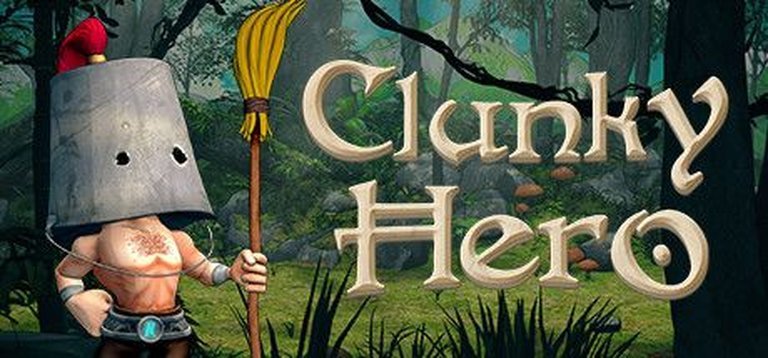
Clunky Hero is a 2D side-scrolling metroidvania platformer with RPG elements set in a charming fantasy world, where players control Rufus, an unlikely hero parodying overused chosen-one tropes, as he explores intricate levels, battles quirky monsters voiced by a talented cast, and uncovers humor-filled adventures amidst clunky yet endearing combat mechanics.
Gameplay Videos
Where to Buy Clunky Hero
Clunky Hero Free Download
Clunky Hero Cracks & Fixes
Clunky Hero Guides & Walkthroughs
Clunky Hero Reviews & Reception
metacritic.com : Clunky Hero succumbs to its name.
keengamer.com : Just Too Clunky
opencritic.com : An unfortunately spot-on title for this pretty generic and troubled platformer
lifeisxbox.eu : Things turned out a bit differently, sadly enough.
Clunky Hero: Review
Introduction
Imagine a world where the archetypal video game hero isn’t a chiseled demigod wielding a gleaming sword, but a shirtless peasant named Rufus, sporting a dented bucket as a helmet and his wife’s broom as a weapon. Clunky Hero (2021-2023, Chaosmonger Studio) bursts onto the scene with this absurd premise, a satirical jab at the damsel-in-distress trope that has defined platformers since Mario’s first mustache-twirling rescue missions. Released first in Early Access on PC in November 2021 and fully across consoles in January 2023, this Unity-powered metroidvania platformer promises a “story-driven” adventure laced with RPG elements, side quests, and “tons of humor.” Yet, beneath its whimsical facade lies a game that embodies its title—charmingly clunky, occasionally frustrating, but undeniably endearing in its unpretentious indie spirit. My thesis: Clunky Hero is a bold, trope-subverting entry in the post-Hollow Knight metroidvania renaissance, succeeding as a comedic breath of fresh air amid genre saturation, but stumbling over technical rough edges that prevent it from transcending cult curiosity to classic status.
Development History & Context
Chaosmonger Studio, an Italian indie outfit founded by multimedia visionary Nicola Piovesan, entered the gaming fray after success in point-and-click adventures like the well-received ENCODYA (2021). Piovesan wore multiple hats on Clunky Hero—lead developer, writer, artist, and coder—helming a modest team of 57 credits, including voice talents like Edoardo Lomazzi (Rufus) and a roster of NPC performers evoking a theatrical ensemble. The project stemmed from a successful Kickstarter campaign launched June 15, 2020, tapping into the indie crowdfunding boom that fueled titles like Hades and Dead Cells. This grassroots funding reflected a vision to parody fantasy heroics in a 2.5D metroidvania format, differentiating from the genre’s brooding darlings (Ori and the Blind Forest, Guacamelee!).
Launched amid the Early Access wave on Steam (November 9, 2021, for Windows/Mac/Linux), it featured in Steam Next Fest demos, building hype with promises of 40 levels across seven areas, skill unlocks, and humorous quests. Full release hit consoles (PS4, Xbox One/Series, Switch) on January 25, 2023, at a budget-friendly $14.99, aligning with the cross-platform indie surge post-2020 pandemic boom. Technological constraints were minimal—Unity’s accessibility enabled Piovesan’s solo-heavy workflow—but era-specific challenges loomed: the metroidvania market was oversaturated, with Hollow Knight: Silksong hype and Game Pass deluges demanding polish. Clunky Hero‘s crowdfunding success (crowd-funded group on MobyGames) and Piovesan’s prior work positioned it as a scrappy underdog, but console ports exposed optimization woes, echoing indie pitfalls seen in early Celeste builds. In the 2021-2023 landscape, it carved a niche as a lighthearted counterpoint to grimdark peers like Blasphemous, prioritizing comedy over precision.
Narrative & Thematic Deep Dive
At its core, Clunky Hero deconstructs the hero’s journey with gleeful irreverence. Rufus, a “dull peasant” in a idyllic village, lives under the thumb of his “boisterously smart” (read: unattractive) wife Brunhilde until “the Evil One”—a nebulous, unnamed villain awakened by “magical mistake”—kidnaps her, transforming her into a “hideous duck-faced monstrosity” obsessed with a handheld mirror (a savage nod to duckface selfies). Donning his bucket helm and broomstick quarterstaff, Rufus embarks to save her and the village, dubbed the “Clunky Hero” by mocking villagers. This setup parodies Super Mario Bros. et al., flipping the script: no princess beauty, just a homely couple; no prophecy, just domestic desperation.
Plot Structure and Pacing
The narrative unfolds across seven fantasy biomes (forests, castles, caves) and 15+ interiors, blending linear progression with metroidvania backtracking. Rufus chats with NPCs via gibberish “Simlish” (unvoiced, slurry babble) subtitled in English, yielding humorous dialogues laced with fourth-wall breaks (“Our shop isn’t coded yet!”) and meta-jabs at tropes (e.g., a warrior woman questing Rufus as the “only single girl”). Side quests abound—fetching items for villagers, slaying pests—leveling Rufus while Rufus gripes about them, reinforcing his reluctant anti-hero vibe. Brunhilde’s plight evolves subtly, critiquing vanity and heroism, culminating in boss rushes against the Evil One’s minions (wasps, goblins, hipsters?).
Characters and Dialogue
Rufus anchors the comedy: arrogant, beer-obsessed, shirtless everyman whose “walking shirtless scene” trope is self-aware. NPCs like Debbee Darling’s villagers embody archetypes (priest, tavern wench) twisted into poo jokes, womanizing quips, and juvenile gags—critics decry them as “out of touch” or “unfunny,” yet they land wry smiles via exaggeration. Brunhilde’s transformation satirizes beauty standards; the Evil One’s anonymity mocks vague antagonists (Lord Voldemort lite). Narrator John Mondelli’s deep intro sets a fairy-tale tone, subverted by absurdity.
Themes
Clunky Hero skewers fantasy clichés: heroism as drudgery (Rufus resents quests), beauty as curse (Brunhilde’s duckface), evil as incompetence (minions bungle). It champions underdogs—Rufus’ peasant grit vs. polished knights—echoing Shovel Knight‘s homage but with cruder edge. Yet, shallow character arcs (no deep backstory) and repetitive banter dilute depth, making themes feel like punchlines sans payoff. In metroidvania canon, it echoes Guacamelee!‘s luchador satire but lacks emotional heft, prioritizing laughs over lore.
Gameplay Mechanics & Systems
Clunky Hero‘s loops revolve around exploration, combat, and progression in a side-view 2D scroller, blending platforming with light RPG.
Core Loops and Platforming
Traverse 40 levels via intuitive direct controls (keyboard/gamepad/mouse): WASD/arrow movement, space/jump, attack swings multi-directional. Acquire six abilities sequentially—Double Jump, Dash, Dive, Cling (wall-stick), Range Shot, Blasting Attack—unlocking paths in classic metroidvania fashion (e.g., Double Jump revisits early areas). Floating platforms, spikes, and blind jumps challenge timing, but tight camera (criticized universally) obscures overviews, fostering “lost in a maze” frustration. Respawning enemies on screen transitions (even house entries) grate during backtracking.
Combat and Progression
Broomstick whacks stun-lock foes (bees, goblins); upgrade via shops (trade items for weapons/wearables) and eight bonus slots (e.g., health boosts). Life meter (top-left red bar) heals via hyperactive metabolism—food/drinks from chests (hit repeatedly for inexplicables). Side quests level Rufus; bosses demand patterns (dodge, mash). Flaws abound: hitbox issues make combat “rigid,” UI clunky (tab-cycling inventory, manual map activation post-pickup), sparse save points (lampposts) punish post-boss deaths. Fast travel mitigates mazes, but no auto-pause healing risks inputs mid-inventory.
Innovations and Flaws
Bonus combos innovate lightly (mix for skill amps), but repetition reigns—same pits/goblins fatigue. 7-10 hour story (100% ~10h) suits casuals, yet navigation aids lag (hidden maps). On PC, responsive; consoles suffer framerate dips, geometry snags.
World-Building, Art & Sound
The bizarre realm enchants: hand-drawn-looking 2.5D backdrops evoke Studio Ghibli whimsy—detailed forests, castles, caves teeming funny creatures (drunk bees, wasps “bee afraid”). Foreground parallax scales beautifully (when smooth), crowds interiors with quirky shops/taverns. Atmosphere builds via progression: village coziness to Evil One’s grim castle.
Visual Direction
Characters polarize—Rufus’ bucket/broom iconic, monsters charmingly odd, but NPCs feel “generator-made,” foreground clashing backgrounds. Scaling Mode 7 adds depth, but Switch stutters mar it.
Sound Design
Original score swells atmospherically (calm medieval flutes ramp to boss punch), non-repetitive. Gibberish voices add personality (Rufus’ grunts endearing), but repetitive lines annoy; no full VO keeps costs low. SFX (broom whacks, chest cracks) punchy, enhancing comedy.
Elements synergize for immersive satire—visuals amplify humor (bucket helm absurdism), sound underscores peasant grit—but camera/UI hinder navigation.
Reception & Legacy
Launch reception split hairs: MobyGames aggregates 55% critics (GamesCreed 74%: “charm and humor”; Gameluster/Finger Guns 50%/40%: “bland,” “unfunny”). OpenCritic percentile bottom-tier; Metacritic tbd (Xbox Tavern 68%, But Why Tho? 30%). Players: 4.2/5 (sparse). Praise: visuals/music/humor; gripes: clunky combat/camera/UI, juvenile jokes, navigation. Console ports drew porting ire (Switch framerate “atrocious”).
Commercially modest (17 MobyGames collectors), it endures as Chaosmonger’s sophomore, post-ENCODYA. Influence minimal—reinforces indie metroidvania satire (Guacamelee!, Shovel Knight) without revolutionizing. Legacy: cult footnote in 2020s boom, exemplifying ambition vs. polish; inspires bucket-helm memes, but fades amid superiors (Hollow Knight, 90+ scores).
Conclusion
Clunky Hero triumphs in parody, delivering a bucket-headed romp that skewers hero myths with visual splendor and absurd quests, proving indies can thrive on humor alone. Yet, clunky mechanics—tight camera, hitbox woes, UI tedium—undercut its 7-10 hour charm, rendering backtracking tedious amid genre giants. As historian, it slots as a scrappy 2020s artifact: Chaosmonger’s heartfelt swing in a saturated field, echoing Kickstarter underdogs like early Terraria. Verdict: Recommended for metroidvania fans craving laughs (7/10)—a flawed gem hiding brilliance under its dented lid, worthy of history’s quirky annals but not pantheon. Grab on sale; polish prays for sequels.