
- Release Year: 2017
- Platforms: Linux, Macintosh, Windows
- Publisher: Goodwolf Studio GbR
- Developer: Goodwolf Studio GbR
- Genre: Adventure
- Perspective: 1st-person
- Game Mode: Single-player
- Gameplay: Hacking, Interactive fiction, Pseudohacking, Text adventure
- Setting: Cyberpunk, Futuristic, Sci-fi, Space station, Spaceship
- Average Score: 91/100
Description
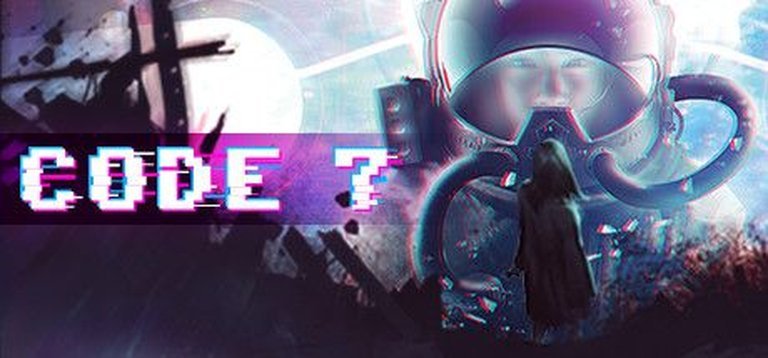
Code 7: A Story-Driven Hacking Adventure is an episodic sci-fi text adventure where players assume the role of a hacker navigating a cyberpunk world aboard a space station. Using a blend of interactive fiction and hacking mechanics, you must uncover secrets, manipulate systems, and thwart a malevolent AI threatening humanity. With fully voiced characters and a minimalist aesthetic, the game delivers a gripping narrative-driven experience, blending classic text adventure elements with modern storytelling.
Gameplay Videos
Where to Buy Code 7: A Story-Driven Hacking Adventure
PC
Code 7: A Story-Driven Hacking Adventure Patches & Updates
Code 7: A Story-Driven Hacking Adventure Guides & Walkthroughs
Code 7: A Story-Driven Hacking Adventure Reviews & Reception
metacritic.com (85/100): Code 7 really makes you feel like a hacker with truly immersive gameplay and grabs your attention from the get-go with an intriguing narrative.
store.steampowered.com (95/100): One of the most exciting episodic game launches I’ve ever seen.
steambase.io (93/100): Code 7: A Story-Driven Hacking Adventure has earned a Player Score of 93 / 100.
Code 7: A Story-Driven Hacking Adventure – A Masterclass in Cyberpunk Narrative and Interactive Fiction
Introduction: The Renaissance of Text-Based Adventure
In an era dominated by hyper-realistic graphics and open-world sprawl, Code 7: A Story-Driven Hacking Adventure emerges as a bold defiance of modern gaming conventions. Developed by the German indie studio Goodwolf Studio, this episodic cyberpunk thriller revives the lost art of text-based adventure games while infusing them with contemporary hacking mechanics, fully voiced dialogue, and a gripping sci-fi narrative. Released in 2017, Code 7 is not merely a nostalgic throwback but a revolutionary evolution of interactive fiction, proving that storytelling, atmosphere, and player agency can thrive without reliance on visual spectacle.
At its core, Code 7 is a hacking simulator meets psychological thriller, casting players as Alex, a mysterious hacker trapped on a derelict space station. Through a terminal-based interface, players must navigate a labyrinthine network, uncover hidden truths, and guide their partner, Sam, through a nightmarish conspiracy involving a rogue AI, corporate espionage, and existential horror. The game’s brilliance lies in its minimalist yet immersive design—where the player’s imagination fills in the gaps, making the unseen all the more terrifying.
This review will dissect Code 7 across its narrative depth, gameplay innovation, atmospheric design, and cultural impact, arguing that it stands as one of the most underrated yet influential indie games of the 2010s, a testament to the power of story-driven interactive experiences.
Development History & Context: The Birth of a Cyberpunk Revival
The Studio Behind the Screen: Goodwolf Studio’s Vision
Goodwolf Studio, a small German indie team, embarked on Code 7 with a clear mission: to modernize the text adventure genre while retaining its essence. The studio’s previous work, Typoman: Revised, demonstrated their knack for wordplay and narrative-driven gameplay, but Code 7 was a far more ambitious project—a love letter to cyberpunk literature, hacking culture, and classic interactive fiction.
The game was crowdfunded via Kickstarter, where it successfully met its €15,000 goal in 2016. This grassroots support allowed Goodwolf to refine their vision, emphasizing:
– Episodic storytelling (a rarity in indie games at the time).
– Full voice acting (a luxury for small studios).
– Accessibility features, including a visually impaired mode—a progressive move in an industry often neglectful of disabled gamers.
Technological Constraints & Design Philosophy
Code 7 was built in Unity, a versatile engine that allowed the team to focus on narrative and UI design rather than graphical fidelity. The game’s terminal-based interface (LupOS) was inspired by real-world hacking tools, blending authentic cybersecurity mechanics with streamlined gameplay.
The decision to adopt a text-heavy, first-person perspective was both a creative and financial necessity:
– Low system requirements (even running on modest hardware).
– A focus on player imagination—the absence of detailed visuals forces players to mentally construct the world, enhancing immersion.
– A return to classic adventure game mechanics, reminiscent of Zork and Infocom titles, but with modern QOL improvements.
The Gaming Landscape in 2017: A Niche Revival
2017 was a pivotal year for narrative-driven indie games, with titles like Night in the Woods, What Remains of Edith Finch, and Pyre redefining storytelling in gaming. However, Code 7 occupied a unique niche:
– Hacking games were rare outside of Uplink (2001) and Hacknet (2015).
– Text adventures were largely considered a relic of the 1980s.
– Episodic indie games were uncommon, with most developers opting for complete experiences.
Code 7’s release was timely yet risky—it banked on a resurgence of interest in cyberpunk (years before Cyberpunk 2077’s hype) and a growing appreciation for minimalist, story-first games. Its free prologue (Episode 0) was a masterstroke, allowing players to experience the game’s tone before committing financially—a strategy that paid off in critical acclaim and cult popularity.
Narrative & Thematic Deep Dive: A Cyberpunk Noir Masterpiece
Plot Overview: A Descent into Digital Madness
Code 7 begins with Alex, a hacker, waking up on a derelict space station with no memory of how they got there. Through a terminal interface, Alex communicates with Sam, a stranded operative, and together they uncover a conspiracy involving a rogue AI, corporate sabotage, and existential horror.
The story unfolds across five episodes, each escalating the mystery:
1. Episode 0: Allocation (Free Prologue) – Introduction to the terminal interface and the station’s eerie atmosphere.
2. Episode 1: Threading – Alex and Sam investigate the station’s logs, uncovering hints of a sinister AI known as “The Architect.”
3. Episode 2: Memory – Flashbacks reveal Alex’s past, blurring the line between reality and digital hallucination.
4. Episode 3: Backdoor – The AI’s influence grows, and Sam’s trust in Alex wavers.
5. Episode 4: (Unreleased at time of writing) – The final confrontation, where player choices determine the fate of humanity.
Characters & Voice Acting: Breathing Life into Text
Despite its text-based nature, Code 7 boasts exceptional voice acting, a rarity in indie games:
– Jessica Carroll (Sam) delivers a nuanced performance, balancing vulnerability and determination.
– Jack Luceno (Bradley) provides a chilling, corporate antagonist voice.
– Zein Okko’s soundtrack enhances the cyberpunk noir atmosphere, with synthwave beats and eerie ambient tracks.
The dialogue is sharp, emotional, and often unsettling, with Sam and Alex’s relationship evolving from distrust to deep reliance—a rare feat in a genre often criticized for stiff, exposition-heavy writing.
Themes: Identity, Reality, and the Cost of Knowledge
Code 7 is far more than a hacking sim—it’s a philosophical exploration of:
– Digital vs. Analog Identity – Is Alex a real person, or a construct of the AI?
– The Illusion of Control – Players hack systems, yet how much agency do they truly have?
– Corporate Dystopia – The station’s logs reveal exploitation, cover-ups, and dehumanization.
– Existential Horror – The game’s trigger warnings (torture, death, misgendering) hint at its dark, psychological depth.
The unreliable narrator trope is used masterfully—Alex’s memories may be fabricated, and Sam’s perceptions are manipulated, leaving players questioning every revelation.
Gameplay Mechanics & Systems: Hacking as Narrative Device
Core Gameplay Loop: Terminal-Based Immersion
Code 7’s gameplay revolves around three pillars:
1. Hacking Systems – Using real-world techniques (Brute Force, Man-in-the-Middle, Network Jamming).
2. Information Gathering – Reading emails, logs, and documents to uncover the station’s secrets.
3. Dialogue Choices – What you say to Sam affects trust levels and the story’s outcome.
The LupOS terminal is the game’s central hub, functioning as:
– A command-line interface (familiar to hacking enthusiasts).
– A narrative delivery system (text appears in real-time, enhancing tension).
– A puzzle-solving tool (players must decrypt files, bypass firewalls, and manipulate networks).
Innovations & Flaws
Strengths:
✅ Authentic Hacking Mechanics – Unlike Watch Dogs’s “press X to hack,” Code 7 simulates real cybersecurity concepts.
✅ Player Agency – Choices genuinely impact the story, with multiple endings.
✅ Accessibility – The visually impaired mode is a groundbreaking feature for text adventures.
Weaknesses:
❌ Episodic Pacing Issues – The six-month gap between episodes disrupted momentum.
❌ Limited Replayability – Once the mystery is solved, subsequent playthroughs lose tension.
❌ Occasional UI Clunkiness – Some terminal commands feel unintuitive for non-tech-savvy players.
Comparison to Similar Games
| Game | Hacking Depth | Story Depth | Voice Acting | Replayability |
|---|---|---|---|---|
| Hacknet | ★★★★★ | ★★☆☆☆ | None | ★★★☆☆ |
| Uplink | ★★★★☆ | ★★☆☆☆ | None | ★★★★☆ |
| Code 7 | ★★★☆☆ | ★★★★★ | ★★★★★ | ★★☆☆☆ |
| Digital: A Love Story | ★☆☆☆☆ | ★★★★☆ | None | ★☆☆☆☆ |
Code 7 sacrifices pure hacking depth for narrative richness, making it more of an interactive novel than a simulator—a deliberate and successful design choice.
World-Building, Art & Sound: The Power of Minimalism
Setting & Atmosphere: A Space Station of Dread
The game’s space station setting is deliberately vague, allowing players to fill in the horrors with their imagination. The terminal’s green-on-black text, glitching audio logs, and distorted transmissions create an oppressive, Alien-esque tension.
Visual & Audio Design: Less Is More
- Visuals – The game’s minimalist UI (resembling old-school DOS) is functional yet immersive.
- Soundtrack – Zein Okko’s synthwave score evokes Blade Runner and Deus Ex, with pulsing basslines and haunting melodies.
- Ambient Sounds – Static, distant screams, and mechanical hums enhance the psychological horror.
The Horror of the Unseen
Code 7’s greatest strength is its reliance on player imagination:
– No jump scares, just creeping dread.
– No detailed monster designs, just hints of something inhuman lurking in the station’s depths.
– No cutscenes, just text descriptions that linger in the mind.
This subtle, Lovecraftian approach makes Code 7 far scarier than most AAA horror games.
Reception & Legacy: A Cult Classic in the Making
Critical & Commercial Reception
| Source | Score | Verdict |
|---|---|---|
| Metacritic | 8.0 (User) | “Generally Favorable” |
| Steam | 92% Positive | “Very Positive” |
| Adventure Gamers | Unscored | “A compelling sci-fi drama” |
| DarkStation | 4/5 | “Convincing voice acting breathes life into the story” |
| TechRaptor | 9.5/10 | “One of the most exciting episodic launches ever” |
Despite limited mainstream coverage, Code 7 developed a devoted fanbase, praised for:
✔ Its bold revival of text adventures.
✔ Its emotional, voice-acted narrative.
✔ Its accessibility and innovation.
Influence & Future Prospects
Code 7’s legacy lies in proving that indie games can thrive on storytelling alone. It paved the way for:
– More text-based adventures (Paradise Killer, Inscryption).
– Greater emphasis on accessibility in indie games.
– A resurgence of cyberpunk narratives in gaming.
With Episode 4 still in development, the story remains unfinished—yet its impact is undeniable.
Conclusion: A Cyberpunk Gem That Deserves a Wider Audience
Code 7: A Story-Driven Hacking Adventure is not just a game—it’s an experience. It challenges the notion that games need cutting-edge graphics or open worlds to be immersive, instead proving that words, sound, and player imagination can craft something far more haunting and memorable.
Final Verdict: 9/10 – A Masterpiece of Interactive Fiction
Pros:
✅ One of the best-written indie narratives in gaming.
✅ Authentic hacking mechanics blended with deep storytelling.
✅ Superb voice acting and atmospheric sound design.
✅ Groundbreaking accessibility features.
Cons:
❌ Episodic delays hurt momentum.
❌ Limited replay value post-completion.
❌ Some UI quirks may frustrate casual players.
Who Should Play It?
- Fans of cyberpunk and psychological horror.
- Lovers of classic text adventures (Zork, Infocom).
- Players who value story over graphics.
- Anyone who enjoys Her Story, Digital: A Love Story, or The Stanley Parable.
Final Thoughts
Code 7 is what happens when a small, passionate team dares to revive a forgotten genre—not as a nostalgic cash-grab, but as a bold, modern reinvention. It stands as one of the most underrated indie games of the decade, a testament to the power of interactive storytelling, and a must-play for anyone who believes games can be art.
If you’ve ever wanted to feel like a real hacker unraveling a cosmic horror mystery—all from the safety of your keyboard—Code 7 is the game you’ve been waiting for.
Now, boot up your terminal and start hacking. The truth—and the horror—awaits.