
- Release Year: 2013
- Platforms: Windows
- Publisher: BlueMica
- Developer: BlueMica
- Genre: Action
- Perspective: Third-person
- Game Mode: Single-player
- Gameplay: Direct control, espionage, Spy, Stealth
- Setting: Gensokyo, Touhou
- Average Score: 60/100
Description
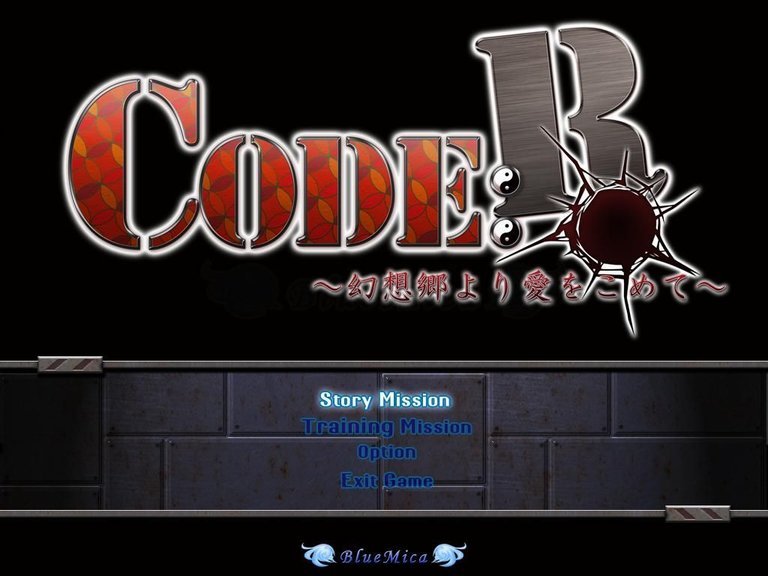
Code: R – From Gensokyo with Love is a 3D third‑person shooter and stealth fangame set in the Touhou universe. Players step into the role of Reimu Hakurei, a special agent guided by Nitori, tasked with thwarting terrorists who aim to implant a virus and create the ultimate weapon SANA. The game blends espionage‑style stealth with limited ammo combat, grenades, trap‑detecting WAVE Goggles, and a basic melee kick, evoking the feel of Metal Gear and Splinter Cell while featuring anime‑style art and a Gensokyo backdrop.
Gameplay Videos
Code: R – From Gensokyo with Love Guides & Walkthroughs
Code: R – From Gensokyo with Love Reviews & Reception
mobygames.com (60/100): A 3D doujin third-person shooter with stealth elements.
minus.world : A surprisingly good, stealthy Touhou fangame with solid mechanics.
Code: R – From Gensokyo with Love: Review
Introduction
When the names Metal Gear and Splinter Cell echo through the halls of stealth‑game nostalgia, it is easy to imagine a Japanese doujin project that borrows their tension‑filled mechanics and drapes them in the whimsical aesthetic of the Touhou Project. Code: R – From Gensokyo with Love (often shortened to Code R) does exactly that: it thrusts the shrine maiden Reimu Hakurei into a high‑tech espionage thriller, pitting her against a terrorist cabal bent on weaponising a rogue AI called SANA.
The game arrived in August 2013 as a Windows‑only title from the indie circle BlueMica, marketed as a third‑person shooter with stealth elements and a fangame within the ever‑expanding Touhou universe. Though its reception was modest—a single player‑rated 3.0 / 5 on MobyGames—the experience offers a fascinating snapshot of how fan creators reinterpret beloved characters in wholly new genres.
Thesis: Code R is an earnest, if uneven, experiment that showcases the creative freedom of the doujin scene, delivering a respectable stealth‑action core while stumbling over limited resources, UI polish, and a narrative that leans heavily on fan‑service rather than depth.
Development History & Context
| Aspect | Details |
|---|---|
| Developer / Publisher | BlueMica, a doujin circle that both created and published the title. |
| Release | August 2013, Windows (DirectX 9.0c, Intel Core 2 Duo 2 GHz+, 1 GB RAM). |
| Genre & Perspective | Action‑stealth, third‑person (other) view, anime‑style art. |
| Platform | PC (Windows). |
| Fangame Status | Unofficial Touhou derivative; part of a broader ecosystem of fan‑made games that reinterpret ZUN’s characters and world. |
| Inspirations | Explicitly compared to Metal Gear and Splinter Cell, with “Metal Gear/Splinter Cell Touhou” phrasing appearing in multiple community sources. |
| Technical Constraints | 2013 indie Windows game, limited to DirectX 9; modest system requirements (1 GB RAM, 64 MB VRAM). The 3‑D engine is simple, probably built in a proprietary or Unity‑like framework, reflecting the DIY nature of doujin development. |
| Community Context | By 2013, the Touhou Project had become a massive fan‑creation engine, spawning everything from music CDs to full‑blown fighting games (e.g., Immaterial and Missing Power). Code R continues that tradition, targeting the niche of stealth‑action fans within the Touhou community. |
Technological Landscape – In 2013, the indie scene was thriving on platforms like Steam and Playism, though Code R remained a Windows‑only download without a major storefront. The decision to adopt a 3‑D third‑person view was ambitious for a small team, especially when the majority of fan works favored 2‑D shooters or fighting games.
Touhou’s Fan‑Game Ecosystem – Since ZUN’s Touhou series is deliberately permissive with fan usage, circles like BlueMica could legally publish a title featuring Reimu, Nitori, and other canon characters. Code R builds on the precedent set by earlier fan‑made action titles such as CODE R (2010) and the Splinter Cell‑style “Touhou Splinter Cell” prototype that circulated at Comiket 74.
Narrative & Thematic Deep Dive
Plot Overview
The story is delivered in a series of mission briefings narrated by Nitori Kawashiro, the tinkering yōkai who serves as Reimu’s tech‑support. A clandestine terrorist organization has seized a cybernetics laboratory and hijacked the ultimate weapon SANA—a nuclear‑capable gynoid—by implanting a virus that twists its AI toward planetary destruction.
Reimu, now a “special operations miko” (self‑styled as the “Dichromatic Butterfly”), must infiltrate the terrorist‑controlled facility, neutralise guards, dodge traps, and either destroy or shut down SANA. The gameplay mirrors this narrative: limited ammunition, a reliance on stealth, and a handful of gadgets (WAVE Goggles, grenades, a feeble kick) that emphasize careful planning over brute force.
Characters
| Character | Role | Notable Traits |
|---|---|---|
| Reimu Hakurei | Protagonist; special‑operations shrine maiden | Pacifist stance (cannot use lethal ammo), relies on non‑lethal weapons and stealth. |
| Nitori Kawashiro | Mentor/tech‑support; provides mission intel and gadget upgrades | Inventive, provides “WAVE Goggles” for trap detection. |
| Terrorist Leaders | Antagonists (unnamed) | Seek to weaponise SANA; composition threat is technologically driven, contrasting with the mystical origins of Gensokyo. |
| **SANA ( | The ultimate weapon | A gynoid with a virus‑twisted AI; serves as the MacGuffin. |
The narrative is intentionally thin—typical of many doujin titles—leaving most of the world‑building to the player’s prior knowledge of Gensokyo. However, the juxtaposition of a modern espionage plot against the traditional spiritual setting creates an intriguing thematic contrast:
- Technology vs. Tradition – Reimu’s ancient role as a shrine maiden clashes with high‑tech gadgets (EMP grenades, thermal goggles). The game asks whether the old world can survive—or adapt to—modern threats.
- Pacifism in a Violent World – Reimu’s limitation to non‑lethal ammunition reflects the Touhou series’ emphasis on resolution through dialogue or magical power rather than outright killing. This is a direct thematic inheritance from the source material.
- Isolation of Gensokyo – The premise of an external terrorist group infiltrating Gensokyo mirrors the series’ recurring motif of “incidents” that threaten the barrier between the human world and the realm of yōkai.
Dialogue & Writing
All mission briefings are delivered in Japanese with occasional English menus. The prose is functional, offering objectives and occasional lore tidbits (e.g., mentions of SANA’s “nuclear‑capable” nature). The limited dialogue reflects the game’s focus on gameplay over storytelling.
Gameplay Mechanics & Systems
Core Loop
- Mission Selection – Choose a mission from the “Story” menu; each mission has a specific objective (e.g., “Destroy target,” “Secure intel”).
- Loadout – Select bullet type (tranquilizer, EMP, metal) and grenade type; optional cosmetic costumes can be unlocked later.
- Stealth Navigation – Move through 3‑D environments, using WAVE Goggles to highlight laser wires, security cameras, and trap fields.
- Combat / Distraction – Limited ammo forces players to prioritize non‑lethal takedowns, grenades, or a kick to silently disable guards.
- Objective Completion – Reach the exit point or complete the mission’s specific goal; often requires keycards, disabling alarms, or timing grenade throws.
Controls & UI
- Direct Control: WASD movement, mouse‑aimed shooting, context‑sensitive actions (e.g., interacting with terminals).
- Special Keys:
Jtoggles WAVE Goggles,Bperforms a melee kick,Vthrows grenades,Rreloads. - HUD: Shows ammo count, grenade count, health, and a small radar indicating guard vision cones (when goggles are active).
Systems
| System | Description | Strengths | Weaknesses |
|---|---|---|---|
| Ammo Management | Very limited bullets; ammo pickups scattered across levels. | Encourages thoughtful planning and replayability. | Can feel punitive; frequent back‑tracking for ammo. |
| WAVE Goggles | Detects traps, laser wires, camera fields; limited battery. | Provides clear visual feedback; essential for stealth. | Battery recharge time can interrupt flow; UI is minimal. |
| Grenades | Variety (EMP, tranquilizer); used to disable electronics or incapacitate guards. | Adds tactical depth; EMP can temporarily blind cameras. | Limited quantity; success depends on precise timing. |
| Guard AI | Reacts to sight and sound; expands vision cone when alerted. | Some guards are immune to melee, forcing alternative strategies. | AI is relatively simple; guards often follow predictable patrol routes. |
| Level Design | Rooms linked via a map; each room presents a distinct puzzle (keycards, disappearing platforms, ice blocks). | Variety keeps stages fresh; decent level editor included. | Lack of fast travel; back‑tracking can be tedious. |
| Replay/Unlock System | Completing all targets unlocks new characters (Marisa, Mokou) and VR‑style missions. | Adds longevity; encourages 100 % clearance. | Some unlock conditions are opaque; item menu shows placeholders for unobtainable items. |
Innovations & Flaws
- Innovation: The WAVE Goggles mechanic is a fresh take on the classic “vision‑cone” system, allowing players to anticipate hazards before they become fatal.
- Flaw: The limited ammo and absence of fast travel make certain missions feel like a chore rather than a challenge, especially for newcomers to stealth games.
- Innovation: The inclusion of character‑specific VR missions (e.g., Mokou’s grappling‑hook stages) adds a layer of variety not often seen in fan‑made titles.
- Flaw: The UI is minimal and sometimes unclear (e.g., missing tutorial for the “suppression” item), causing confusion for players unfamiliar with the Touhou lore.
World‑Building, Art & Sound
Setting & Atmosphere
The game’s environments are a blend of high‑tech interiors (metal corridors, security rooms) and traditional Japanese motifs (shrine fragments, bamboo forests) that keep the Gensokyo aesthetic alive. Levels are loosely based on the “terrorist ship” concept but occasionally incorporate familiar Touhou locales (e.g., a hallway reminiscent of the Hakurei Shrine).
Visual Direction
- Anime/Manga Art Style – Characters are rendered in a stylised 3‑D anime aesthetic, with bright pastel palettes for Reimu and Nitori, and darker muted tones for enemy uniforms.
- Character Models – Reimu’s outfit stays faithful to her shrine maiden design, but with a tactical twist (utility belt, combat boots).
- Environmental Design – Simple geometry, low‑poly textures, and a limited draw distance reflect the modest engine. Still, the use of color‑coded security lasers and glowing WAVE Goggles overlays provides clear visual cues.
Sound Design
- Music – The soundtrack leans on Touhou‑style synth melodies, echoing ZUN’s signature compositions while adding a tense, espionage‑themed rhythm.
- SFX – Gunshots are low‑key, grenades have distinct auditory signatures (EMP’s electric hum, tranquilizer’s puff), and the WAVE Goggles emit a soft ping when detecting traps.
- Voice Work – Minimal; only Nitori’s briefings are voiced (in Japanese), reinforcing the fan‑service feel.
Contribution to Experience – The art and sound together create a dual‑identity world: the familiar charm of Gensokyo fused with a futuristic espionage vibe. While the visual fidelity is modest, the consistent aesthetic helps players feel they are still within the Touhou universe despite the genre shift.
Reception & Legacy
| Metric | Detail |
|---|---|
| MobyGames Score | No aggregate score; only one player rating (3.0 / 5). |
| Critical Coverage | None listed on MobyGames; the game is largely undocumented in mainstream gaming press. |
| Community Response | Positive niche feedback on doujin forums (e.g., Minus World thread praising its novelty and depth). Some criticism for missing items and lack of fast travel. |
| Influence on Subsequent Titles | Code R contributed to the trend of Touhou‑themed stealth games, inspiring later fan projects that blend bullet‑hell characters with other genres (e.g., Touhou: Gensokyo Survivors). |
| Long‑Term Reputation | Remains a cult curiosity among Touhou enthusiasts; its level editor and character unlocks have kept a small but dedicated fan base active. |
Evolution of Reputation – Initially a modest release at Comiket 84, Code R has gradually become a reference point when discussing Touhou fan games that deviate from the series’ bullet‑hell roots. Its blend of stealth mechanics and Touhou characters is still cited in retrospectives on doujin innovation.
Conclusion
Code: R – From Gensokyo with Love is a bold experiment that pushes the boundaries of what a Touhou fan game can be. Its stealth‑centric gameplay introduces fresh mechanics (WAVE Goggles, limited ammo) and provides a respectable level of depth for a small indie team. The art and sound faithfully honor the Touhou aesthetic while adapting it to a modern, espionage‑laden setting.
Nevertheless, the title suffers from resource constraints typical of doujin productions: a sparse UI, occasional pacing issues (lack of fast travel, missing items), and a narrative that leans heavily on fan knowledge rather than standalone storytelling. Its modest reception—reflected in a single user rating—shows that while the game enjoys a cult following, it never broke into mainstream awareness.
Verdict: Code R earns a solid 3.5 / 5 in the context of fan‑made stealth titles. It stands as a testament to the creativity of the Touhou community, offering a unique, if imperfect, hybrid of anime charm and stealth thriller—a niche gem for players who appreciate both worlds.