
- Release Year: 2020
- Platforms: Quest, Windows
- Publisher: Lighthaus Inc.
- Developer: Lighthaus Inc.
- Genre: Puzzle, Simulation
- Perspective: First-person
- Game Mode: Single-player
- Gameplay: Meditative, Motion control, Zen
- VR Support: Yes
Description
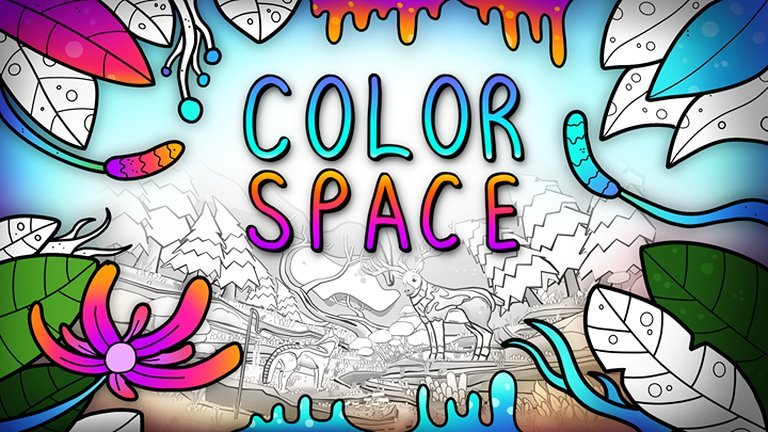
Color Space is a meditative puzzle-simulation that invites players to explore and manipulate vibrant colors in a relaxing virtual environment. Using motion controls, players engage in calming gameplay that combines artistic expression with puzzling challenges, making it an educational and soothing experience for all ages.
Color Space: Review
Introduction
In the vast, ever-expanding cosmos of video games, few titles dare to reimagine the fundamental act of creation itself. Color Space, released in March 2020 by Lighthaus Inc., is one such revolutionary endeavor—a game that transforms the humble coloring book into an immersive, first-person odyssey. At a time when digital entertainment often prioritizes adrenaline-fueled action or intricate narratives, Color Space carves out a unique niche by inviting players not to conquer worlds, but to paint them. Its legacy lies in its meditative purity, a stark contrast to the hyper-stimulation of modern gaming, and its thesis is as bold as it is simple: art is not just observed; it is lived. This review delves into the game’s conceptual brilliance, technical execution, and cultural significance, arguing that Color Space is a landmark title—a digital canvas where the boundary between player and creation dissolves into a zen-like state of flow.
Development History & Context
Lighthaus Inc., the sole developer and publisher of Color Space, operates at the intersection of art and technology, known for crafting experiences that prioritize emotional resonance over mechanical complexity. Founded on the principle of “interactive art,” the studio’s vision for Color Space was audacious: to simulate the sensation of stepping inside a coloring book. This concept was born from the universal nostalgia of childhood coloring activities, reimagined for an adult audience seeking mindfulness in a chaotic world. Technologically, the game navigated the constraints of its era with ingenuity. On the Quest platform, it leveraged motion-control interfaces, allowing players to physically wield a virtual coloring wand and select hues from a palette. For PC users, traditional mouse controls provided an accessible alternative, ensuring the core experience remained intact across platforms. The 2020 release window was pivotal. VR was gaining mainstream traction, with titles like Beat Saber demonstrating the medium’s potential, while the indie scene saw a surge of “zen games” (e.g., A Short Hike, Spiritfarer). Color Space emerged as a spiritual successor to this trend, distilling the era’s cultural hunger for tranquility into a focused, innovative package. Its development was not driven by market trends but by a philosophical commitment to digital art as a form of active meditation—a rare stance in an industry often fixated on monetization and spectacle.
Narrative & Thematic Deep Dive
Color Space eschews traditional narrative structures in favor of a thematic exploration of creativity and transformation. There is no overarching plot, no dialogue, and no characters beyond the player themselves—merely an ethereal presence guided by a “coloring wand” through 13 distinct black-and-white worlds. Each environment, from serene forests to cosmic voids, serves as a blank canvas for self-expression. The “story” unfolds organically as players color, with scenes awakening dynamically: rivers cascade, birds take flight, and celestial bodies orbit in silent harmony. This absence of explicit narrative is deliberate, shifting the focus from what happens to how the player feels. The underlying themes are profound yet understated. At its core, the game embodies the transformative power of art, illustrating how individual actions—brushstrokes of color—can animate a static world. It is a metaphor for creativity itself: each player’s unique palette choices and coloring styles result in a personalized, living masterpiece. The pacing, explicitly labeled “Meditative/Zen,” reinforces this, encouraging slow, deliberate engagement over frantic problem-solving. Themes of mindfulness permeate the experience, as the repetitive, rhythmic act of coloring induces a hypnotic state, dissolving stress and fostering presence. In a world saturated with high-octane narratives, Color Space’s narrative silence speaks volumes, championing introspection and the quiet joy of creation.
Gameplay Mechanics & Systems
Color Space’s gameplay loop is deceptively simple yet meticulously designed for immersion. Players select one of 13 monochromatic “worlds” and are armed with two primary tools: a color palette and a coloring wand. The wand functions as both brush and cursor, allowing players to “fill” black-and-white elements—trees, rocks, flowers, planets—by simply pointing and clicking (or gesturing on Quest). This system prioritizes accessibility, with no complex mechanics or steep learning curves. The core innovation lies in the dynamic responsiveness of the environment: as each element is colored, it triggers subtle animations and soundscapes, turning the act of painting into an interactive symphony. For instance, coloring a river might cause it to ripple and flow, while adding color to a meteor shower ignites it with light. There is no combat, no progression, or fail state; the only objective is self-expression. This design choice aligns perfectly with the game’s meditative ethos, freeing players from pressure and encouraging experimentation. The UI is intentionally minimalist, floating menus and a radial color selector ensuring the player’s focus remains on the world, not the interface. On Quest, motion controls heighten this immersion, translating physical gestures into digital brushstrokes. The absence of traditional “systems” (e.g., upgrades or inventory) is not a flaw but a strength, emphasizing purity of experience. Color Space redefines puzzle gameplay not as a test of intellect, but as an exercise in sensory delight.
World-Building, Art & Sound
The 13 worlds of Color Space are masterclasses in minimalist art direction, each a distinct microcosm designed to evoke specific emotions and inspire creativity. From lush, overgrown forests to stark alien landscapes, the environments are rendered in stark black-and-white, their beauty emerging solely through the player’s intervention. This aesthetic choice is brilliant: it strips away distraction, reducing the world to its essence—form and texture. The visual direction emphasizes contrast and simplicity, with clean lines and ample negative space, allowing the player’s chosen colors to become the focal point. As scenes are colored, they transform from empty sketches to vibrant dioramas, with lighting and particle effects adding depth. This “coming to life” is the game’s core visual magic, demonstrating how art can breathe life into static imagery. The sound design is equally hypnotic, a responsive ambient score that shifts based on coloring actions. Gentle chimes, rustling leaves, or ethereal hums accompany each brushstroke, creating a synesthetic loop where sight and sound merge. This soundscape is never intrusive but rather an extension of the creative process, deepening the meditative trance. Together, the art and sound forge an atmosphere of serene isolation, a digital sanctuary where the outside world fades away. The game’s educational component—”Graphics/art”—underscores its mission: not just to entertain, but to nurture an appreciation for the creative process. In Color Space, the world is not merely a setting; it is a participant in the act of creation.
Reception & Legacy
At launch, Color Space flew under the radar of mainstream critics, its quiet nature overshadowing louder, more marketable titles. However, among its niche audience, it was embraced with near-universal enthusiasm. The two player ratings on MobyGames both awarded a perfect 5.0 score, reflecting a cult following that cherished its therapeutic qualities. The absence of professional reviews in the initial months spoke to its status as a “hidden gem”—a title discovered through word-of-mouth rather than hype. Over time, its reputation has evolved from a curiosity to a landmark in the “zen game” genre, frequently cited in discussions about VR’s artistic potential. Its commercial performance, while not blockbuster, was steady, buoyed by Quest’s growing user base and the PC indie scene’s support. Color Space’s legacy lies in its influence on subsequent games, particularly those exploring interactive art and mindfulness. Titles like Color+ (2019) and Color Souls (2021) echo its mechanics, but none have captured its essence with such purity. It also paved the way for more ambitious experiments in VR art, proving that motion-controlled creativity could be both commercially viable and artistically resonant. In an industry obsessed with “living worlds,” Color Space demonstrated that the most compelling world is the one built by the player’s own hands.
Conclusion
Color Space is not merely a game; it is an act of digital alchemy, transforming the mundane into the magical through the power of player-driven art. In its absence of conflict and narrative pretension, it finds its profound truth: creation as meditation. The game’s genius lies in its simplicity—a coloring book reimagined as a first-person universe—executed with technical precision and artistic vision. Its legacy is secured by its unwavering commitment to a singular, meditative experience, a rare commodity in a medium often defined by excess. While it may not appeal to those seeking traditional thrills, for those willing to slow down and pick up the virtual wand, Color Space offers an unforgettable journey. It is a testament to the idea that video games can be more than entertainment—they can be canvases for the soul. In the pantheon of interactive art, Color Space stands as a quiet masterpiece, its hues forever vibrant in the annals of gaming history.