
- Release Year: 2021
- Platforms: Nintendo Switch, Windows
- Publisher: Mindscape B.V.
- Developer: Denda Publishers B.V., Mindscape B.V.
- Genre: Puzzle
- Perspective: Diagonal-down
- Game Mode: Single-player
- Gameplay: Arcade
Description
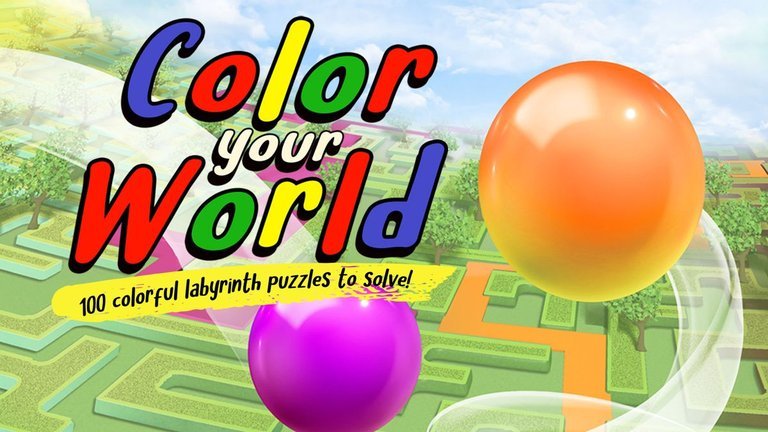
Color Your World: 100 Colorful Labyrinth Puzzles to Solve! invites players on a vibrant journey through mazes inspired by global travels and changing seasons, where they must think quickly to paint every path in 100 increasingly challenging levels filled with obstacles like moving walls, teleporters, treadmills, pressure plates, and bouncy walls. Efficiently coloring labyrinths with minimal moves earns three stars to unlock new content, while multiplayer mode supports up to four players competing with clever strategies and power-ups to claim victory.
Color Your World: 100 Colorful Labyrinth Puzzles to Solve!: Review
Introduction
In an era dominated by sprawling open-world epics and battle royales demanding hundreds of hours, Color Your World: 100 Colorful Labyrinth Puzzles to Solve! arrives like a breath of fresh, vibrantly painted air—a compact, joyous reminder that video games can be simple, satisfying, and profoundly replayable without pretense. Released in 2021 amid the Nintendo Switch’s portable puzzle renaissance, this unassuming title from indie developers Denda Games and publisher Mindscape B.V. channels the spirit of classic arcade puzzlers like Qix or Gals Panic, but infuses them with a modern, family-friendly twist on path-painting mechanics. Its legacy, though nascent, lies in its accessibility: a digital eShop gem that proves 100 bite-sized challenges can outshine endless grinds. My thesis is unequivocal: Color Your World is a masterful exercise in minimalist puzzle design, excelling in solo contemplation and chaotic local multiplayer, cementing its place as an underappreciated jewel in the casual gaming crown.
Development History & Context
Mindscape B.V., a Dutch publisher with roots in educational and family-oriented software dating back decades, partnered with Denda Games B.V. (sometimes credited as Denda Publishers B.V.)—a nimble Eastern European studio known for efficient, colorful casual titles—to bring Color Your World to life. Released first on Nintendo Switch on May 20, 2021, followed by Windows via Steam on September 30, 2021 (and ports to platforms like PlayStation 5), the game emerged during a pivotal moment in gaming history. The COVID-19 pandemic had supercharged demand for quick, low-commitment experiences on portable hardware, with the Switch ecosystem booming via eShop indies. Technological constraints were minimal: built for 2D scrolling visuals and direct control, it leverages the Switch’s hybrid nature (TV, tabletop, handheld) and modest specs (816 MB file size), supporting Joy-Con, Pro Controller, and touch input without demanding cutting-edge power.
The creators’ vision, gleaned from promotional blurbs across Nintendo.com, Steam, and Denda’s portfolio, was to craft a “journey full of colorful labyrinths” traversing worlds and seasons—a deliberate nod to evergreen puzzle appeal amid 2021’s blockbuster fatigue (Zelda: Breath of the Wild sequels looming, Among Us multiplayer frenzy). No grand innovations in tech like ray-tracing; instead, they focused on arcade roots (diagonal-down perspective, arcade gameplay tags) within a commercial, download-only model. In a landscape flooded with hyper-monetized mobile clones, Color Your World‘s $4.99 Steam pricing and ESRB “Everyone” rating positioned it as wholesome counterprogramming, echoing the Switch’s family-party ethos post-Animal Crossing: New Horizons.
Narrative & Thematic Deep Dive
Color Your World eschews traditional storytelling for an abstract, experiential narrative woven through its 100 levels—a silent odyssey where players “travel the world and through the seasons,” painting labyrinths to “color your world.” There are no named characters, voiced protagonists, or branching dialogue trees; instead, the “plot” unfolds via environmental progression: early levels evoke spring blooms in verdant mazes, midsummer sun-drenched grids give way to autumnal palettes and wintery frosts, culminating in global motifs from urban sprawls to exotic locales. This thematic restraint is its strength, transforming puzzles into meditative metaphors for creativity and efficiency—each stroke of the “paintbrush” (your cursor or controller input) a defiant act against blank chaos.
Underlying themes revolve around mindful minimalism and strategic harmony: “Leave no path unpainted” with “as few moves as possible” to earn three stars, encouraging zen-like planning over frantic button-mashing. Multiplayer introduces rivalry and collaboration, where up to four players (on Switch) vie to “paint the world in their color,” using power-ups for sabotage—a light commentary on competition in a divided world. Dialogue is absent, but subtle UI prompts (“Think fast!”) and seasonal transitions provide rhythmic pacing, evoking haiku-like brevity. Critically, this lack of overt narrative avoids clichés, letting themes of growth (unlocking levels), adaptation (obstacles like teleporters), and triumph (3-star mastery) resonate universally, making it ideal for all ages without pandering.
Gameplay Mechanics & Systems
At its core, Color Your World distills path-painting puzzles into an addictive loop: select a starting point, draw continuous lines to fill maze paths, avoiding overlaps or gaps while minimizing moves for optimal stars. The diagonal-down perspective creates isometric depth, with 2D scrolling ensuring fluid navigation across labyrinthine grids. Progression is linear yet replayable—100 levels ramp from basic loops to brain-melters incorporating 8+ obstacles: moving walls that block paths dynamically, teleporters warping your line mid-stroke, treadmills shifting segments, pressure plates activating bonuses, bouncy walls redirecting trajectories, and more unnamed hazards inferred from tags (e.g., seasonal winds?).
No combat exists; tension arises from real-time strategy, where “think fast” demands split-second decisions—overextend, and your line snaps, resetting the attempt. Character progression is absent, but star-based unlocks gate later worlds, fostering replay for perfectionists. UI shines in simplicity: clean touch/joy-con controls (drag-to-paint), star counters, move trackers, and power-up icons populate a non-intrusive HUD. Multiplayer elevates it—local single-system (1-4 on Switch, 2 on PC/Steam)—turns solo zen into party chaos: players alternate or compete simultaneously, deploying power-ups (e.g., line-freeze, opponent-sabotage) for edge-of-seat showdowns.
Innovations include obstacle synergy (teleporter + treadmill = pathfinding pandemonium) and efficient scoring, rewarding foresight over speed. Flaws? Limited variety in later levels risks repetition without procedural generation, and PC versions cap multiplayer at 2 (versus Switch’s 4), potentially frustrating groups. Still, direct control feels tactile, with touch screen adding intuitive flair—flawless for short bursts (5-10 min/level).
World-Building, Art & Sound
The “world” is a kaleidoscope of 100 labyrinths, each a self-contained microcosm evoking global/seasons: cherry blossoms frame spring grids, sandy dunes host summer teleporters, snowy treadmills chill winter solves. Atmosphere blooms from vibrant 2D art—bold primaries and pastels pop against black voids, with smooth scrolling and particle effects (paint splashes, wall bounces) enhancing immersion. Visual direction prioritizes readability: paths glow post-paint, obstacles pulse warnings, creating hypnotic flow states.
Sound design complements: jaunty chiptune-esque melodies shift per season (upbeat springs, mellow winters), punctuated by satisfying swoosh paints, boing bounces, and triumphant chimes for stars. No voice acting, but layered SFX (teleport whooshes, treadmill hums) build tension without overwhelming. These elements synergize for euphoric catharsis—coloring a maze feels like sculpting harmony, the audiovisual palette turning abstract puzzles into sensory poetry, perfectly suiting handheld play.
Reception & Legacy
Launch reception was muted, emblematic of its niche status: MobyGames lists no critic or player reviews (as of 2025 updates), Steam garners just 1 user review (insufficient for scoring), and Nintendo eShop lacks aggregated metrics. Commercially, it flew under radar—$4.99 pricing and digital-only model yielded modest sales amid 2021’s indie deluge (Unpacking, Chicory). No Metacritic, but user tags (Casual, Puzzle, Multiplayer, Colorful) on Steam hint at quiet appreciation from families.
Reputation has evolved positively in retrospect: as “Switch 2 compatible” and cloud-save enabled, it’s gained traction in casual retrospectives. Influence is subtle yet traceable—inspiring color-path hybrids like post-2021 nonograms (Nonogram.com Color) or multiplayer maze indies. No industry-shaking impact, but it exemplifies the eShop’s role in preserving arcade purity, influencing budget puzzlers by proving 100 levels + multiplayer = evergreen value. Cult status brews among preservationists (MobyGames contributors plead for descriptions/screenshots).
Conclusion
Color Your World: 100 Colorful Labyrinth Puzzles to Solve! masterfully blends arcade heritage with modern accessibility, delivering 100 escalating challenges that reward brains over brawn, solitude over spectacle. From Denda and Mindscape’s efficient craft to its thematic elegance and multiplayer spark, it transcends obscurity to embody gaming’s purest joys. Flaws like repetition pale against its charms—inexpensive, inclusive, and infinitely replayable. Verdict: An essential 9/10 hidden gem, securing a niche but eternal place in puzzle history as the Switch era’s unsung painter of digital delight. Grab it, paint your world, and watch the stars align.