
- Release Year: 2020
- Platforms: Nintendo Switch, Windows, Xbox One, Xbox Series
- Publisher: Mango Protocol SL
- Developer: Mango Protocol SL
- Genre: Action
- Perspective: Side view
- Game Mode: Co-op, Single-player
- Gameplay: Beat ’em up, brawler
- Setting: Futuristic, Sci-fi
- Average Score: 64/100
Description
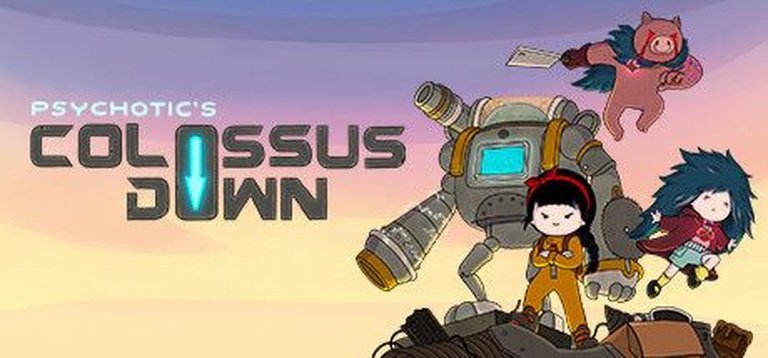
Colossus Down is a side-scrolling beat ’em up set in a sci-fi future, where players control a giant robot in a fixed-screen environment. Developed by Mango Protocol SL, it features a cutesy art style, wacky humor, and pop culture references as part of the Psychotic Adventures series. The game offers direct control gameplay with vehicular mecha elements, supporting cooperative play through levels that blend action with comedic storytelling.
Gameplay Videos
Where to Buy Colossus Down
PC
Colossus Down Patches & Updates
Colossus Down Mods
Colossus Down Guides & Walkthroughs
Colossus Down Reviews & Reception
metacritic.com (59/100): Colossus Down offers an interesting art style and comedic writing, that all fit well in the wider context of the game. Sadly, it just isn’t enough to carry you through the repetitive and uninspired gameplay.
opencritic.com (70/100): Colossus Down is genuinely funny, but it’s gameplay just isn’t good enough to compete with other Beat’em ups.
xboxera.com : Colossus Down is a side-scrolling beat ’em by Mango Protocol and features a lot of charm and varied gameplay bits to keep you from tiring out on mashing the X button.
Colossus Down: Review
Introduction
In the pantheon of eccentric indie darlings, few franchises embrace delightful anarchy with the fervor of the Psychotic Adventures series. Mango Protocol’s Colossus Down—the third installment following MechaNika and Agatha Knife—transitions the series’ signature point-and-click surrealism into a raucous, mecha-fueled beat ’em up. Released in December 2020, it thrusts players into the boots (or cockpit) of a seven-year-old prodigy, Nika Allen, piloting her world-destroying mecha, MechaNika, alongside her butcher friend Agatha Knife and her godly alter ego, the Great Bleeding Pig. This game is a masterclass in controlled chaos, blending visceral combat, darkly comedic storytelling, and audacious theming that skewers everything from corporate greed to the banality of nostalgia. Yet, beneath its vibrant veneer lies a deeply ambivalent legacy: a title hailed for its artistry and audacity, yet criticized for repetitive gameplay and tonal whiplash. This review dissects Colossus Down as both a standalone triumph and a pivotal, if flawed, entry in the indie canon, arguing that its greatest strength—its unapologetic villainous perspective—is also its most divisive element.
Development History & Context
Mango Protocol, a Spanish developer founded by Mariona Valls Porta, carved a niche for itself with the Psychotic Adventures trilogy. Colossus Down emerged as a bold pivot: from narrative-driven adventures to a high-octane action game. Porta, serving as lead designer, writer, and artist, spearheaded a vision that married grotesque humor with mechanical mayhem. The team leveraged Unity for flexibility, though the game’s fixed-screen, flip-level presentation harkened back to 16-bit-era brawlers—a deliberate choice to constrain creative scope and accelerate development.
The 2020 release landscape was dominated by AAA behemoths like Assassin’s Creed Valhalla and Cyberpunk 2077, creating a stark contrast to Colossus Down’s scrappy DIY ethos. Mango Protocol capitalized on the indie boom on storefronts like Steam and Xbox Game Pass, targeting players hungry for quirky, co-op experiences. However, technical constraints were evident: PC required Intel Core 2 Duo processors, and Switch’s multiplayer demanded extra controllers—a baffling oversight noted by critics. The game’s Spanish roots seeped into its DNA, with bilingual (Catalan/Spanish) development and a script rich in local humor and cultural references that sometimes proved divisive in international markets. Despite these hurdles, Colossus Down stood as a defiant statement: that a small team could craft a world as bizarre and memorable as any AAA release.
Narrative & Thematic Deep Dive
Colossus Down’s narrative is a grotesque fairy tale filtered through the lens of a child’s warped logic. Nika, a seven-year-old “child prodigy,” constructs MechaNika to purge the world of “uncool” things: history books, obsolete technology, cutesy dresses, and even vegetable-based foods. Joined by Agatha—a butcher-turned-prophetess of Carnivorism, a cult that preaches animals should embrace their delicious fate—the duo embarks on a mission of global destruction. The plot unfolds across 18 eclectic levels, each targeting a new “enemy”: a Trump-like president in a tank (Donald Tank), a GLaDOS-esque CEO (Gladys) peddling planned obsolescence, and a Sailor Moon-inspired despot (Queen Angelica).
The dialogue crackles with anarchic energy, blending pop-culture satire (references to Portal, Sailor Moon, and gaming tropes) with genuine pathos. Nika’s monologues oscillate between gleeful malice and existential doubt, especially when confronting her sister Ellie—a premature fetus preserved in a jar, who secretly built her own mecha to earn Nika’s affection. Ellie’s tragic arc—“I just want to be loved”—transforms the climax into a gut-wrenching familial tragedy, forcing players to choose between domination, nihilism, or redemption.
Thematically, the game is a scathing indictment of modernity. It lambasts corporate waste (ObsoTech’s “resurrection machines” that break by design), political farce (Donald Tank’s tank adorned with a Donald Duck caricature), and creative stagnation (the Clone Zone, a level mocking derivative game design). Yet it also subverts expectations: Angelica’s “happiness dictatorship” and Kato’s animal resistance force players to question whether Nika’s tyranny is preferable to oppressive order. The multiple endings—four in total—reflect this ambiguity, ranging from triumphant world conquest to crushing self-destruction. As TVTropes notes, Colossus Down is less a story about heroes and more about the terrifying power of unchecked conviction, making it a rare game that leaves players complicit in its villainy.
Gameplay Mechanics & Systems
At its core, Colossus Down is a beat ’em up with strategic depth, wrapped in a mecha-suit. Players control either Nika in MechaNika or Agatha as the Great Bleeding Pig, each with distinct stats and special moves. The combat revolves around an “overheating” system: a central gauge depletes with damage, and if it maxes, the character becomes vulnerable. Coolant—scavenged from defeated enemies or destroyed terrain—must be strategically managed to prevent collapse. A robust combo multiplies damage and scrap metal drops, incentivizing aggressive play, but using coolant or special attacks resets it, creating tense risk-reward calculations.
Special attacks, unlocked via scrap metal, are gleefully destructive: Nika’s dumbshredder (a radial saw) and Agatha’s scarlet vomit (a corrosive blast) turn crowds into pulp. Boss battles are highlights, like Donald Tank’s phase-2 tank transformation or Gladys’s existential meltdown after learning Nika duped her into digitizing a duplicate. Gameplay diversifies with shoot ’em up segments (e.g., dodging neon-lit projectiles in the Neon Street) and puzzle rooms, though these often feel like afterthoughts.
The Permadeath Mode, introduced midway, is a ballsy choice: disable infinite respawns, and failure deletes save data. It rewards skill but alienates casual players. Co-op amplifies the chaos, though Switch’s single-controller requirement was a glaring flaw. Despite innovations, combat can feel repetitive; enemies are often damage sponges, and level design occasionally defaults to “fill screen with foes.” Yet the scrap metal economy and combo system add layers that elevate it beyond a mindless button-masher.
World-Building, Art & Sound
Mango Protocol’s art direction is Colossus Down’s masterstroke. The world is a patchwork of absurdly detailed biomes: a neon-drenched cyberpunk city (Neon Street), a saccharine nightmare of candy and rainbows (Candyland), and a retro pixel labyrinth (Clone Zone). Each environment oozes personality, with Nika’s hometown’s dilapidated charm contrasting sharply with ObsoTech’s sterile futurism. The mechas are particularly iconic: MechaNika’s industrial brutality vs. Ellie’s quadrupedal “fetus jar” design blending horror and pathos. Character animations are fluid, from Agatha’s butcher dance to Nika’s smug smirks, making even background NPCs feel alive.
The sound design matches the visuals’ intensity. Pau Damia Riera’s score shifts from frantic chiptune battles to melancholic piano during Ellie’s scenes, enhancing emotional beats. Sound effects are visceral—mecha impacts squelch with wet crunches, and Agatha’s cleaver thwacks with brutal finality. Voice acting, though limited, captures Nika’s deranged glee and Agatha’s deadpan fervor. The game’s mature content descriptions (violence/gore) are earned: giblets fly during fatalities, but the cartoonish style prevents gore from feeling gratuitous. Together, art and sound forge a world that’s both hilarious and haunting, proving that budget constraints didn’t stifle ambition.
Reception & Legacy
At launch, Colossus Down polarized critics. Its Moby Score of 6.5 and Metacritic average of 59 reflected mixed-to-positive reviews. XboxEra (87%) and Video Chums (80%) celebrated its humor and artistry, calling it “beat ’em up goodness.” Conversely, Nintendo Life (50%) and NintendoWorldReport (55%) lambasted its repetitive combat and unlikeable protagonist, with one damning it as a “scrap pile.” Sales were modest buoyed by Switch’s indie audience, but its legacy has grown over time. Steam’s “Very Positive” user rating (86%) attests to a devoted cult following, drawn to its replayability via endings and permadeath.
Its influence is subtle but significant. Colossus Down proved that niche narratives—centered on anti-heroes—could thrive in action games, inspiring titles like Hades to embrace morally grey protagonists. Mango Protocol’s use of Unity to achieve distinct art styles also set a benchmark for indie developers. However, its greatest legacy might be thematic: a prescient critique of consumerism and creative stagnation that resonated amid 2020’s pandemic-induced digital fatigue. As NamuWiki notes, its references to planned obsolescence feel eerily prophetic post-2021 supply chain crises. Though it never reached mainstream acclaim, Colossus Down remains a vital, if flawed, milestone in indie game design—a testament to the power of unbridled creativity.
Conclusion
Colossus Down is a game of glorious contradictions: a beat ’em up with a brain, a comedy that bleeds pathos, and a visual feast held together by narrative duct tape. Its strengths—unforgettable art, audacious themes, and chaotic co-op—make it a standout in the Psychotic Adventures trilogy. Yet, repetitive gameplay and tonal inconsistencies prevent it from reaching true greatness. For players seeking a subversive romp or a study in villainy, it’s essential; for those craving polished combat, it may frustrate. Ultimately, Colossus Down’s place in history is secure: as a bold, unapologetic experiment that dared to make destruction beautiful, and a reminder that the most memorable games aren’t always the most polished. Mango Protocol crafted not just a game, but a dark, hilarious mirror to a world they sought to destroy—and in doing so, created something worth saving.