
- Release Year: 2017
- Platforms: Windows
- Publisher: LunarCore Games
- Developer: LunarCore Games
- Genre: Action
- Perspective: Side view
- Game Mode: Single-player
- Gameplay: Arcade, Platform
- Average Score: 78/100
Description
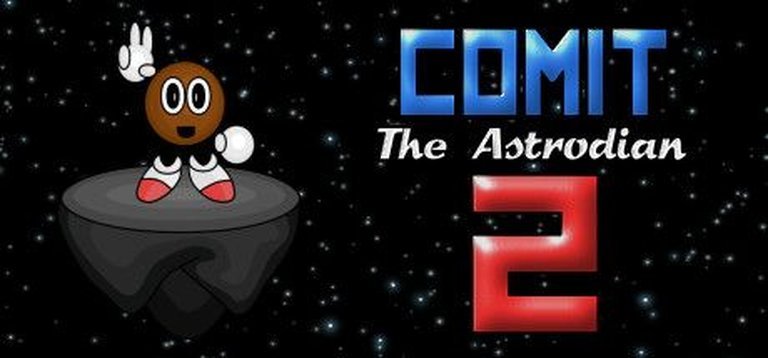
Comit the Astrodian 2 is a side-scrolling action-platformer sequel that follows hero Comit as he leaves his peaceful life on Astrodia to confront the resurrected Space Pirate Krater, who threatens a new star system. Armed with rocket-powered abilities like boosting, double-jumping, and bouncing off enemies, players navigate new stages while unlocking additional skills such as swinging, sliding, and power-ups. Bonus stages offer the chance to unlock the alternate character Meta Comit in this arcade-style adventure spanning Krater’s home planet.
Where to Buy Comit the Astrodian 2
PC
Comit the Astrodian 2 Guides & Walkthroughs
Comit the Astrodian 2 Reviews & Reception
steambase.io (78/100): Comit the Astrodian 2 has achieved a Steambase Player Score of 78 / 100. This score is calculated from 23 total reviews on Steam — giving it a rating of Mostly Positive.
Comit the Astrodian 2: Review
Introduction
In the crowded galaxy of indie platformers, few sequels manage to expand their universe while retaining the soul of their predecessor. Comit the Astrodian 2 (2017), developed by LunarCore Games, emerges as a rare gem—a meticulously crafted sequel that evolves its 2016 predecessor’s formula without sacrificing its retro charm. As the second entry in the franchise, it thrusts players back into the cosmos of Comit, the meteor-suited hero, tasked with thwarting the return of the half-cyborg space pirate Krater. This review deconstructs Comit the Astrodian 2 as both a standalone adventure and a pivotal chapter in LunarCore Games’ evolving saga. Its thesis is clear: despite minor technical hiccups and repetitive loops, the game excels as a loving homage to 16-bit classics, enriched by innovative mechanics, thematic depth, and a commitment to player-driven discovery.
Development History & Context
LunarCore Games, a studio founded by a solo developer or small team (sources remain ambiguous), crafted Comit the Astrodian 2 as a deliberate expansion of their 2016 debut. Built in GameMaker Studio, the game operated within the constraints of a low-budget indie project: minimal graphical assets, limited animation frames, and reliance on retro-inspired pixel art. The developer’s vision, as articulated in Steam descriptions and community posts, was to “recapture the essence of 90s arcade platformers” while introducing new abilities to avoid sequel stagnation.
Released on March 20, 2017, the game arrived amid a surge in indie platformers on Steam, competing with titles like Freedom Planet and Shovel Knight. Unlike its AAA contemporaries, it embraced accessibility—requiring just 120 MB RAM and a 1.2 GHz processor—with a $0.99 price point. This reflected LunarCore’s strategy to cater to retro enthusiasts and budget-conscious players. The studio also leveraged Steam Greenlight (announced December 2016) to build hype, emphasizing “new stages, abilities, and enemies” as key selling points. Though no documented development challenges appear in sources, the game’s eventual launch alongside the franchise’s broader expansion (including Comit the Astrodian 3 in 2018) suggests a calculated, iterative approach to world-building.
Narrative & Thematic Deep Dive
The narrative of Comit the Astrodian 2 embodies classic sci-fi simplicity, amplified by thematic resonance. A year after defeating Krater, Comit enjoys a peaceful life on Astrodia, only for his nemesis to resurface, threatening to conquer a new star system. The plot culminates in a journey to Krater’s homeworld, Planet Krater, framing conflict as an inevitable cycle of heroism and villainy. While dialogue is sparse (no cutscenes or voice acting exist), the narrative’s strength lies in its subtext: Krater’s return symbolizes the futility of temporary peace, while Comit’s willingness to confront him underscores duty over complacency.
Characterization is archetypal yet effective. Comit’s silent heroism evokes Mega Man’s stoicism, while Krater’s status as a “half-cyborg space pirate” blends technological terror and tragic ambition. Minor characters like Jupi (introduced in sequels) are absent here, grounding the story in a personal duel. Thematic layers emerge through environmental storytelling: industrial levels (e.g., Planet Mechanos) imply Krater’s plunder, while vibrant planets (Paradise, Starlight) represent what he seeks to ravage. The narrative’s brevity—a 3-4 hour playthrough—serves the arcade-style format, prioritizing action over exposition. However, the lack of deeper lore (e.g., Astrodia’s culture or Krater’s motives beyond greed) leaves world-building tantalizingly underdeveloped.
Gameplay Mechanics & Systems
Comit the Astrodian 2’s gameplay is a masterclass in refined retro mechanics. Core movement revolves around Comit’s rocket pack, enabling high-speed boosts, double jumps, and physics-based bounces off enemies. These mechanics create a fluid, momentum-driven loop that rewards skill and experimentation. New additions—swinging, sliding, and power-ups—diversify traversal. Swinging, for instance, turns vertical obstacles into momentum opportunities, while sliding allows tight navigation of corridors. Power-ups (e.g., temporary shields or rapid-fire) introduce strategic depth, though their scarcity in standard levels encourages replaying bonus stages.
Combat emphasizes agility over brute force. Comit defeats enemies via bouncing or projectiles, with Destroy 100 Enemies being an achievement that encourages aggressive play. Boss fights, while not detailed in sources, likely follow pattern-based designs common to the genre. Character progression is minimal: no RPG-like leveling exists, but Meta Comit—unlocked via bonus stages—offers apowered-up variant, incentivizing completionists. The UI is minimalist, with clear indicators for health, stars, and objectives. However, technical flaws mar the experience: Steam discussions report an unresponsive options menu and occasional physics glitches (e.g., clipping through platforms). These issues, while not pervasive, hint at the constraints of a solo-developed project.
World-Building, Art & Sound
The game’s universe is a vibrant tapestry of sci-fi whimsy. Each planet—from the aquatic Aquatica to the neon-drenched Shock—offers distinct visual motifs. Art direction leans into pixelated nostalgia, with detailed backgrounds (e.g., lush jungles on Paradise) contrasting against Comit’s simple, expressive sprite. Enemies, like Krater’s robotic drones, feature varied designs that reflect planetary themes (e.g., crab-like mechs on Red Planet). This diversity prevents visual monotony, even as level layouts occasionally repeat.
Sound design reinforces the retro aesthetic. Upbeat, chiptune-driven soundtracks accompany action, while effects for rocket boosts and enemy impacts provide satisfying tactile feedback. Steam user tags frequently praise the “Great Soundtrack,” highlighting its memorability. Atmosphere is further enhanced by subtle environmental storytelling; Planet Dark’s shadowy corridors and Planet Blizzcicle’s icy landscapes evoke mood through color and enemy placement. Yet, the lack of dynamic audio (e.g., adaptive music for boss fights) limits immersion. Overall, the art and sound collaborate to create a cohesive, if derivative, retro-futuristic world.
Reception & Legacy
Upon release, Comit the Astrodian 2 garnered a “Mostly Positive” Steam rating (81% of 22 reviews at the time), with players lauding its “tight controls” and “great soundtrack.” Critics, however, were sparse—Metacritic lists no reviews, and MobyGames notes a “n/a” Moby Score. Player feedback was mixed: some praised the “smooth physics” and “fun bonus stages,” while others criticized repetition and the steep difficulty curve (only 2.2% of players completed early levels, per completionist.me). Community discussions reveal polarized opinions: one user argued for “more elements from Ristar, Mario, and Sonic,” highlighting a desire for greater innovation, while another celebrated the “controller support” and “retro feel.”
The game’s legacy is best understood within the broader Comit franchise. It served as a proof-of-concept for LunarCore Games’ evolution, directly leading to Comit the Astrodian 3 (2018), which introduced new allies and villains. Its most enduring contribution is the Meta Comit mechanic, a precursor to the franchise’s later emphasis on unlockable forms. Comit Legends (2023), a remake compilation, further cemented its status by remastering all five original games, including this sequel, for a new audience. Though not revolutionary, Comit the Astrodian 2 influenced indie platformers by demonstrating how sequels can honor roots while iterating meaningfully—a lesson studios like Team Cherry (Hollow Knight) would later amplify.
Conclusion
Comit the Astrodian 2 is a flawed yet fascinating entry in the indie platformer canon. Its strengths—an innovative movement system, charming retro aesthetic, and thoughtful mechanics—make it a joy for speedrunners and completionists. Weaknesses, such as repetitive level design and technical quirks, prevent it from reaching the heights of its inspirations. Yet, within the context of LunarCore Games’ vision, it succeeds as a bridge: expanding its universe while staying true to its arcade roots. For players seeking a no-frills, nostalgia-fueled challenge, it remains a hidden gem. For historians, it exemplifies the risks and rewards of sequels in the indie renaissance—a testament to how passion projects can carve out their own corners of gaming history. Verdict: A solid 7.5/10—essential for fans of 16-bit platformers, but niche for everyone else.