
- Release Year: 2017
- Platforms: Windows
- Publisher: Slitherine Ltd.
- Developer: WarfareSims Ltd.
- Genre: Strategy, Tactics
- Perspective: Top-down
- Game Mode: Single-player
- Gameplay: Business simulation, Managerial
- Average Score: 93/100
Description
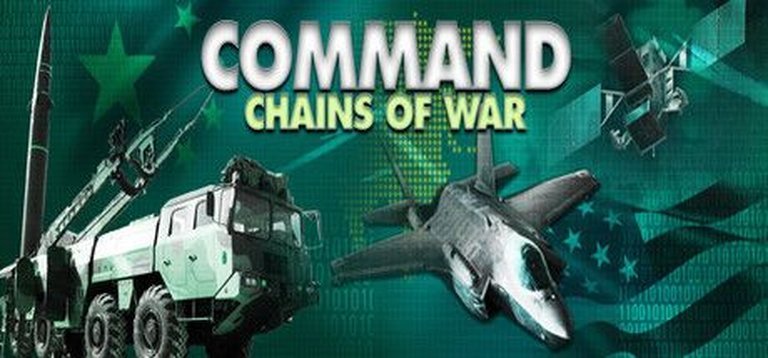
Command: Chains of War is a standalone expansion for Command: Modern Air/Naval Operations, plunging players into a near-future conflagration in the Western Pacific sparked by tensions on the Korean peninsula, where the US and China clash for dominance over vital trade routes using cutting-edge technologies like cyber attacks, EMP weapons, anti-ship ballistic missiles, railguns, anti-satellite weapons, and high-energy lasers, across 12 campaign scenarios and 4 bonus standalone missions.
Gameplay Videos
Command: Chains of War Cracks & Fixes
Command: Chains of War Guides & Walkthroughs
Command: Chains of War Reviews & Reception
steambase.io (93/100): Player Score of 93 / 100 […] rating of Positive.
combatsim.com : Warfaresims has gotten a jump on Armageddon with the latest standalone expansion of Command Modern Air and Naval Operations (CMANO), Command: Chains of War.
Command: Chains of War: Review
Introduction
In an era where video games increasingly prioritize spectacle over substance, Command: Chains of War emerges as a brutal reminder of what true strategic depth entails—a unforgiving simulation of 21st-century superpower conflict that transforms the Western Pacific into a chessboard of hypersonic missiles, cyber blackouts, and carrier-killing railguns. Released in 2017 as a standalone expansion to the critically acclaimed Command: Modern Air/Naval Operations (CMANO), this title by WarfareSims Ltd. and publisher Slitherine Ltd. catapults players into a near-future conflagration ignited by Korean Peninsula tensions, where the U.S. battles China’s ascent amid chokepoints like Taiwan and the Spratlys. Its legacy as the “Pentagon’s hottest new simulation tool” underscores its unyielding realism, evolving the Command series from Cold War hypotheticals to bleeding-edge warfare. My thesis: Chains of War isn’t just a DLC—it’s a masterclass in operational wargaming, redefining modern naval-air simulation through innovative mechanics that force players to confront the fragility of high-tech dominance, cementing its place as an essential for strategy historians.
Development History & Context
WarfareSims Ltd., a boutique studio founded by veterans of the CMANO project, crafted Chains of War under the Slitherine umbrella, building directly on the 2013 base game and its 2015 predecessor Northern Inferno. Led by scenario architect Mike Mykytyn—a founding CMANO team member—the DLC arrived alongside the massive v1.12 update, introducing features that addressed core player demands for futuristic warfare while grappling with 2010s tech constraints. Developed for Windows PCs with modest specs (dual-core CPU, DirectX 9 GPU, 10GB HDD), it leveraged CMANO’s Google Earth-like globe engine, optimized for real-time pausable play without multiplayer or editor bloat.
The vision was ambitious: shift from Atlantic NATO-Warsaw Pact clashes to Pacific geopolitics, mirroring real-world 2010s headlines like North Korea’s 2010 provocations (Cheonan sinking, Yeonpyeong shelling) and China’s “nine-dash line” assertiveness. Released May 18, 2017, amid U.S.-China trade frictions and carrier strike group transits near Taiwan, it captured a gaming landscape dominated by accessible RTS like Hearts of Iron IV but starved for granular modern sims. Technological limits—no native VR, Linux/Mac ports delayed—forced a focus on database depth (post-WW2 to near-future units) over visuals, while Slitherine’s patronage enabled free updates like UI overhauls. Forums buzzed with beta testers praising “Red Pill” evolutions, from cargo ops to EMPs, positioning it as a bridge to Command: Modern Operations (2019), which integrated it fully. In context, it filled a void left by Harpoon’s decline, educating players on A2/AD (anti-access/area denial) doctrines amid rising U.S. Pacific pivot budgets.
Narrative & Thematic Deep Dive
Chains of War eschews cinematic cutscenes for exhaustive scenario briefings, delivering a 12-mission campaign and 4 bonus standalones that weave a taut, plausible alternate history. Penned by Mykytyn, the arc ignites with Blue Dawn (preemptive South Korean strikes on DPRK artillery amid 2010s escalations), snowballing into a theater-wide inferno: China’s opportunistic Vietnam blitz (God of War), U.S. sub shadows on PLAN SSBNs (Push), Salvo’s base-saturating ASBMs, Nightmares‘ EMP/cyber chaos, culminating in Hail Mary‘s carrier-vs.-strike complex Armageddon. Themes probe superpower hubris—China’s “two island chains” fixation (Vietnam-Taiwan-Ryukyus as first line, Marianas-Indonesian arc as second), U.S. over-reliance on consolidated bases (Okinawa, Guam vulnerabilities), and miscalculation’s cascade (NK’s chem strikes, UN peace fumbles).
Characters are faceless brass—DPRK warlords, PLAN admirals, U.S. sub COs—but dialogue via ROEs (rules of engagement) and intel logs humanizes stakes: “Pacific waters run red” evokes trade route strangulation, containment vs. ascent. Sub-themes dissect 21st-century asymmetries: cyber “Borg-view” denial isolates units; ASATs blind orbits; HEMP fries F-35s mid-flight. Bonus scenarios enrich lore—Reds (2005) posits post-WWIII Sino-Soviet Far East clash; Armed Diplomacy (1996) dramatizes Taiwan Strait Crisis carrier transits; Politics Are Local (1958) and Paracel ’74 revisit Taiwan Strait/Paracel skirmishes, underscoring China’s “carrier threat” paranoia. Narratively, it’s a geopolitical thriller in sim form, thematic depth rivaling Tom Clancy but grounded in declassified doctrines, warning of “mankind’s last spectacle.”
Gameplay Mechanics & Systems
At its core, Chains of War refines CMANO’s real-time pausable loop: plan missions (strike, ASW, ferry), allocate assets (platoons to carriers/subs), execute amid fog-of-war, adapt via pause. Innovation shines in new systems, deconstructing Pacific ops.
Core Loops & Combat: Top-down map micromanages air/naval/ground (platoon-scale) across vast theaters. Missions chain dynamically—e.g., Taiwan Blitz demands layered strikes: ASATs first, then railgun salvos on carriers, cyber to silo isolated foes. Combat simulates physics: ASBMs (DF-21D/26) evade defenses via hypersonics; lasers burn optics silently; railguns outrange missiles. EMP/HEMP disables electronics fleet-wide, forcing “limp home” retreats.
Progression & UI: No RPG trees—progression is scenario-to-scenario, with cargo ops enabling emergent stratagems (submarine airdrops!). Aircraft damage model revolutionizes air war: fuselage/cockpit/engine hitpoints allow “mission kills” (e.g., F/A-18 limps back, repairs delay sortie). UI, dense yet intuitive, layers toggles (sensors, ROEs, fuel states); comms disruption enforces “local control,” ditching god-view for realistic isolation.
Innovations/Flaws: Cargo/landing/airdrops (volume/weight/crew limits) enable invasions like Okinawa landings; cyber nets fragment C2. Flaws? Steep curve punishes newbies (manual PDF essential); no PBEM/hotseat limits replay; AI competent but predictable in solos. Verdict: Exhaustive, punishing loops reward mastery, flaws stem from sim purity over accessibility.
| Mechanic | Innovation | Impact |
|---|---|---|
| Comms Disruption | Cyber/EMP isolates units | Ends omniscience; tactical micro surges |
| Aircraft Damage | Zonal hitpoints/repairs | Survivability nuance; mission-kill economy |
| Futuristic Weapons | Lasers/railguns/ASBM/ASAT/EMP | A2/AD realism; carrier vulnerability |
| Cargo Ops | Realistic transport limits | Amphib/vertical ops depth |
World-Building, Art & Sound
The “world” is a hyper-detailed Western Pacific: 3D globe spans Korea-Spratlys-Marianas, terrain modulating radar (islands shadow SAMs). Atmosphere evokes dread—missile salvos arc invisibly, EMP blooms blacken screens, cyber logs flicker red. Visuals prioritize function: unit icons pulse threats, 3D models toggle for immersion (burning carriers belch smoke). Art direction is utilitarian—Google Earth skin, no flashy effects—amplifying tension via abstraction.
Sound design enhances: Tense BGM swells in salvos; alerts blare (“Fox three!”); engine roars/impacts ground chaos. No voice acting, but logs/newsreels narrate (e.g., “Seoul hospitals overwhelmed”). Collectively, they forge immersion: not Hollywood boom, but CINC’s war room—clinical, overwhelming data streams heightening “chains rattling loose” peril.
Reception & Legacy
Launch reception was ecstatic: Matrix forums exploded (“WOW!! You hit it out of the park”), Steam holds 93% positive (28 reviews), praising “next-gen war intricacies.” No MobyGames score (niche), but community hailed v1.12 integration. Commercially modest (standalone $20-50, often bundled), it thrived via Slitherine’s ecosystem—praised for free updates, DB expansions.
Legacy endures: Folded into Command: Modern Operations (2019, retitled DLC), influencing sims like Rule the Waves 3 (railgun nods). Industry impact: Validated CMANO as pro tool (Pentagon use), inspiring Fail Safe (2025 Cold War DLC). Evolved rep from “hardcore” to “essential,” with CSPs (community packs) extending life; influenced discourse on Pacific balance (A2/AD debates pre-2020s tensions).
Conclusion
Command: Chains of War masterfully synthesizes geopolitics, simulation fidelity, and speculative tech into 16 scenarios that educate as they challenge, exposing modern war’s brittleness. While its austerity alienates casuals, for historians and strategists, it’s unparalleled—pushing CMANO to apex, birthing Modern Operations dynasty. Definitive verdict: A landmark in video game history, 9.5/10; required for understanding tomorrow’s flashpoints. Play it, or risk chains binding you to outdated playbooks.