
- Release Year: 2019
- Platforms: Windows
- Publisher: Slitherine Ltd.
- Developer: WarfareSims Ltd.
- Genre: Simulation, Strategy, Tactics
- Perspective: Diagonal-down
- Game Mode: Single-player
- Gameplay: Wargame
- Average Score: 79/100
Description
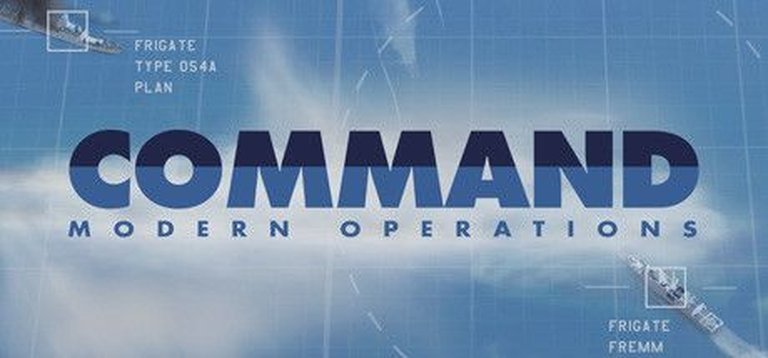
Command: Modern Operations is a real-time wargame simulation that immerses players in commanding modern air, naval, ground, and submarine forces across scenarios from World War II to near-future conflicts, including historical events like Desert Storm and the Falklands. Featuring an improved interface, enhanced world maps with new layers, satellite support, and a vast array of weapons systems, it challenges hardcore strategists to manage complex operations requiring intense concentration and tactical precision.
Gameplay Videos
Where to Buy Command: Modern Operations
PC
Command: Modern Operations Free Download
Command: Modern Operations Cracks & Fixes
Command: Modern Operations Patches & Updates
Command: Modern Operations Mods
Command: Modern Operations Guides & Walkthroughs
Command: Modern Operations Reviews & Reception
steambase.io (85/100): Very Positive
metacritic.com (73/100): Mixed or Average
wargamer.com : prettier and smarter
Command: Modern Operations: Review
Introduction
In an era where video games often prioritize flashy graphics and simplified mechanics, Command: Modern Operations (CMO) emerges as a brutal reminder of what true strategic depth entails—a relentless, unforgiving simulation of contemporary warfare that demands total intellectual surrender. Released in 2019 as the successor to the acclaimed Command: Modern Air/Naval Operations (CMANO) from 2014, CMO builds on a legacy rooted in the Slitherine/Command series tradition of hardcore wargaming. This isn’t entertainment for the casual player; it’s a digital command center where you orchestrate multinational forces across air, sea, land, and subsurface domains in scenarios spanning from World War II tank clashes to hypothetical nuclear submarine crises in the near future. My thesis: CMO is the gold standard of modern military simulations, refining its predecessor’s ambitious scope with a vastly improved interface and expanded content, cementing its place as an essential tool for strategy enthusiasts, historians, and armchair generals seeking the ultimate test of tactical and operational acumen.
Development History & Context
Developed by WarfareSims Ltd. and published by Slitherine Ltd.—titans of the digital wargaming scene—Command: Modern Operations represents the culmination of over five years of iteration on the original Command: Modern Air/Naval Operations. At the helm was General Director and Head of Development Dimitris Dranidis, whose vision transformed CMANO’s groundbreaking but interface-challenged engine into a more accessible powerhouse. Supported by a robust team including Director of Operations Paul Bridge (also Data Administrator), developers like Rory Anderson, Rory Noonan, and Wayne Styles, and a sprawling content creation cadre (Andrea Daolio, Mark Gellis, and others totaling 79 credits), the project emphasized realism drawn from declassified military data, open-source intelligence, and community feedback.
Launched on November 14, 2019, for Windows (with a Steam price of $31.99), CMO arrived amid a wargaming renaissance fueled by titles like Armored Brigade and Close Combat: The Bloody First, yet it stood apart in its uncompromising scale. The late 2010s gaming landscape was dominated by accessible strategy hits like Civilization VI and Total War: Three Kingdoms, but CMO targeted niche “hardcore doorbijters” (die-hards), grappling with technological constraints like real-time processing of vast global maps, satellite layers, and thousands of simulated units. Slitherine’s expertise in publishing complex sims (e.g., Fantasy General II: Invasion) provided the platform, while add-ons like Northern Inferno and Desert Storm (released shortly after) expanded its ecosystem, reflecting a post-Cold War focus on hybrid warfare amid rising geopolitical tensions.
Narrative & Thematic Deep Dive
Command: Modern Operations eschews traditional storytelling for immersive, scenario-driven campaigns that function as interactive historical analyses or speculative what-ifs, embedding players in the high-stakes theater of modern operations. There are no protagonists or dialogue trees; instead, “characters” are the meticulously modeled platforms—F-35 stealth fighters, Virginia-class submarines, T-90 tanks, and Arleigh Burke destroyers—each with bespoke loadouts, sensors, weapons, and fuel states drawn from real-world data. Scenarios like those in DLCs (Chains of War, Red Tide, Falklands) narrate geopolitical flashpoints: a Commonwealth collision in the South China Sea, Korean missile crises, or Falklands redux with 2022-era tech.
Thematically, CMO probes the fog of war’s existential dread, from Desert Storm-era tank melees to nuclear sub hunts evoking Cold War paranoia. It underscores operational friction—themes of C3I (command, control, communications, intelligence) overload, logistical fragility, and escalation risks—mirroring Clausewitzian chaos in a hyper-realistic lens. Players “narrate” through decisions: authorizing a carrier strike group transit risks ASBM saturation; micromanaging SAM networks tests resource allocation amid SEAD threats. Dialogue is absent, but event logs and ROEs (rules of engagement) provide terse, procedural “storytelling,” like “Missile impact confirmed—casualties: 47.” Underlying motifs of technological asymmetry (hypersonic missiles vs. legacy air defenses) and multinational coalitions critique realpolitik, evolving from CMANO’s air/naval focus to holistic joint operations, demanding “opperste concentratie en toewijding” (utmost concentration and dedication) as noted in contemporary reviews.
Gameplay Mechanics & Systems
CMO’s core loop is a real-time wargame masterpiece: plan, execute, adapt in a point-and-select interface viewed from diagonal-down perspective, commanding forces across planetary scales. Players toggle map layers (terrain, weather, EM spectrum) to plan missions—assigning patrol zones, strike packages, or ASW barriers—then hit “go” and micromanage in real-time via time acceleration (1:1 to 1:7200). Combat deconstructs into physics-based simulations: missiles follow ballistic arcs influenced by drag, ECM, and kinematics; aircraft manage BVR merges with sensor fusion; subs play cat-and-mouse with SOSUS and torpedoes.
Innovations shine: overhauled UI reduces CMANO’s clunkiness with draggable windows, customizable Lua scripting, and satellite recon overlays; new ground warfare enables combined arms (infantry, artillery, helos); expanded DB5000 database boasts “tal van nieuwe oorlogstuigen” (myriad new war machines). Progression is campaign/scenario-based, unlocking tech trees via victories, but flaws persist—steep learning curve (manual spans hundreds of pages), pathfinding quirks in cluttered battlespaces, and performance hits on massive scenarios. Add-ons (17+ listed, e.g., Kashmir Fire, Silent Service) extend via new theaters and live ops like Black Gold Blitz. Overall, systems foster emergent narratives: a single overlooked SAM site cascades into air campaign failure.
World-Building, Art & Sound
CMO’s “world” is a hyper-detailed Earth circa 1946–2030, rendered via high-fidelity global maps with zoomable topography, urban overlays, and dynamic meteo (winds, icing). Atmosphere evokes TOC tension: pulsing radar arcs, missile contrails, and explosion icons amid vast oceans/deserts create operational vertigo. Visual direction prioritizes utility—color-coded unit icons, spectrum views (IR/RWR), trajectory predictions—over beauty, with clean 2.5D graphics holding up in 2025. No cinematic flair, but layers like SAM density heatmaps immerse in intel fusion.
Sound design is utilitarian: procedural alerts (“Inbound missile!”), radio chatter snippets, and explosion rumbles underscore urgency without distraction. Authentic sonar pings and jet afterburners enhance sim fidelity, contributing to a clinical, high-command vibe—less orchestral bombast, more procedural tension that amplifies the “strategische uitdaging” (strategic challenge).
Reception & Legacy
At launch, CMO garnered niche acclaim but limited mainstream buzz, reflected in MobyGames’ n/a score and a single unscored review from Gameplay (Benelux, Dec 2019): “Van WOII tot nabije toekomst… echt iets voor de hardcore doorbijters,” praising UI upgrades and multi-domain ease amid “opperste concentratie.” Commercially modest ($79.99 MSRP, Steam sales), it thrived in wargame circles, spawning 20+ DLCs and community scenarios.
Reputation evolved into cult reverence, influencing Armored Brigade, Close Combat: The Bloody First, and procedural wargames. Credited alongside shared devs (e.g., Iain McNeil on 101 games), CMO professionalized digital Harpoon-style sims, inspiring academic citations (MobyGames boasts 1,000+) and modding. Its legacy: democratizing professional-grade MOE (modern operations environment) simulation, bridging hobbyists and analysts.
Conclusion
Command: Modern Operations is a tour de force of strategic simulation, evolving its lineage into a refined juggernaut of realism, depth, and challenge. From UI triumphs to exhaustive mechanics and thematic gravity, it transcends gaming to embody modern warfare’s complexity. Flaws like accessibility barriers pale against its ambition; for wargamers, it’s indispensable. Definitive verdict: an all-time great, rightfully enthroned in video game history as the definitive modern operations simulator—9.5/10, essential for any serious strategist.