
- Release Year: 1991
- Platforms: Android, DOS, Linux, Macintosh, Nintendo Switch, Windows
- Publisher: Hard Disk Publishing, Lone Wolf Technology LLC, Night Dive Studios, LLC, Softdisk Publishing, Super Fighter Team
- Developer: Hard Disk Publishing, id Software, Inc.
- Genre: Action, Platform
- Perspective: Side view
- Game Mode: Single-player
- Gameplay: Direct control, Platform, Shooter
- Setting: Dream world, Fantasy
- Average Score: 68/100
Description
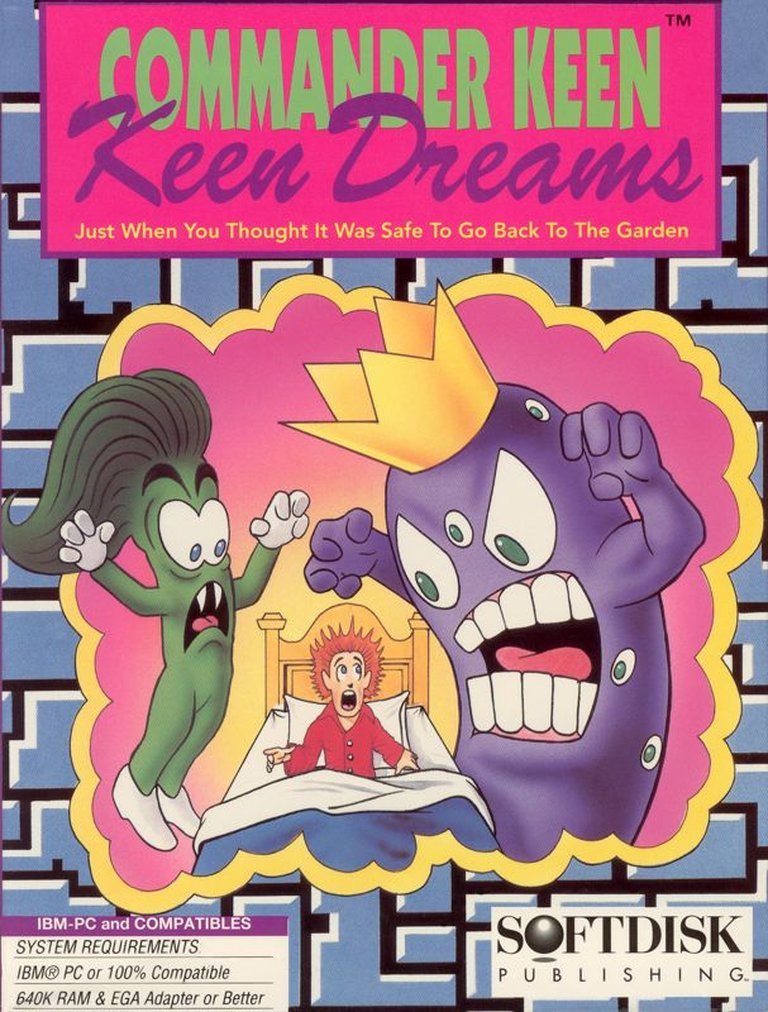
Commander Keen: Keen Dreams is a platform game set in a whimsical dream world called Tuberia, where sentient vegetables rule under the tyranny of King Boobus Tuber. After refusing to eat his vegetables, eight-year-old genius Billy ‘Commander Keen’ Blaze is transported to this surreal land in his sleep, where he must navigate through hazardous levels filled with evil vegetables, collect Boobus Bombs, and ultimately defeat the king to free enslaved children. Unlike other games in the series, Keen relies on ‘Flower Power’ bombs to temporarily neutralize enemies, adding a unique twist to the classic platforming gameplay.
Gameplay Videos
Commander Keen: Keen Dreams Free Download
Commander Keen: Keen Dreams Mods
Commander Keen: Keen Dreams Guides & Walkthroughs
Commander Keen: Keen Dreams Reviews & Reception
opencritic.com (50/100): While Commander Keen in Keen Dreams: Definitive Edition kind of checks off some of my old-school boxes, it’s not a markedly high-quality release on the Nintendo Switch in 2020.
mobygames.com (64/100): Commander Keen: Keen Dreams is a platform game.
imdb.com (90/100): Technically as groundbreaking as Marooned on Mars
Commander Keen: Keen Dreams Cheats & Codes
PC
Enter codes during gameplay.
| Code | Effect |
|---|---|
| F10 + W | Level select |
| F10 + I | 99 bombs and 99 keys |
| F10 + S | Slow motion |
| F10 + G | God mode |
| F10 + J | Jump higher |
| F10 + E | Exit level |
| F10 + C | Color |
| F10 + P | Pause the game |
Commander Keen: Keen Dreams – A Lost Episode Revisited
Introduction
Commander Keen: Keen Dreams (1991) occupies a peculiar niche in gaming history—a “lost episode” sandwiched between the iconic Invasion of the Vorticons and Goodbye, Galaxy! trilogies. Developed by id Software but published by Softdisk, it stands apart from its siblings in tone, mechanics, and legacy. This review dissects its development, gameplay, and cultural footprint, arguing that while Keen Dreams lacks the polish of its predecessors, its whimsical dream logic and experimental design make it a fascinating artifact of early ’90s platforming.
Development History & Context
The Birth of id Software and a Contractual Obligation
Keen Dreams emerged from id Software’s tumultuous origins. After the success of Commander Keen: Invasion of the Vorticons (1990), the team—John Carmack, John Romero, Tom Hall, and Adrian Carmack—left Softdisk to form id. However, their departure came with a catch: a contractual obligation to produce games for Softdisk’s Gamer’s Edge disk magazine. Keen Dreams was one such project, developed in just two months alongside Dangerous Dave prototypes.
Technological Constraints and Innovations
- Engine Evolution: Built on an enhanced Dangerous Dave engine, Keen Dreams introduced smoother scrolling and larger sprites, though it lacked the pogo stick and raygun of prior entries.
- Storage Limitations: The game’s absence of music (despite Bobby Prince’s planned “Eat Your Veggies” track) stemmed from Softdisk’s 360KB floppy disk mandate. The song later resurfaced in Keen 4.
- Artistic Direction: Adrian Carmack’s darker style clashed with the game’s cartoonish vegetable theme, leading Tom Hall to handle most artwork, evoking Warner Bros. cartoons.
The Gaming Landscape of 1991
- Platformer Boom: Keen Dreams competed with Super Mario Bros. 3 clones and Apogee’s Duke Nukem.
- Shareware vs. Retail: Unlike Apogee’s shareware model, Softdisk’s mail-order distribution limited Keen Dreams’ reach, contributing to its “lost” status.
Narrative & Thematic Deep Dive
Plot: A Child’s Nightmare
Billy Blaze, after refusing vegetables, dreams of Tuberia—a dystopian vegetable kingdom ruled by King Boobus Tuber. The premise is a surreal metaphor for childhood rebellion, blending Alice in Wonderland absurdity with Freudian dream logic.
Characters and Themes
- Keen in Pajamas: Stripped of his usual gear, Keen’s vulnerability mirrors a child’s powerlessness in dreams.
- Vegetable Enemies: Anthropomorphic foes (e.g., Broccolash, Tater Troopers) embody childhood food aversions, while the Dream Machine critiques parental control.
- Themes: The game explores autonomy (Keen’s defiance), transformation (enemies turning into flowers), and escapism (the dream framework).
Dialogue and Tone
- Minimalist Storytelling: Text-based intros and endings eschew cutscenes, relying on environmental storytelling (e.g., waving trees, imprisoned children).
- Humor: The game’s whimsy—like Keen napping when idle—contrasts with the darker Vorticons trilogy.
Gameplay Mechanics & Systems
Core Loop: Platforming Without a Pogo Stick
- Movement: Keen’s jumps are floatier than in prior games, emphasizing precision over momentum.
- Combat: Flower Power pellets stun enemies temporarily, adding a tactical layer (e.g., stunning a Pea Pod to avoid its projectiles).
- Progression: The top-down map allows non-linear exploration, though levels are shorter and less complex than Keen 4’s.
Innovations and Flaws
- Innovations:
- Retrievable Ammo: Missed pellets can be reused, a rarity in 1991 platformers.
- Environmental Hazards: Radioactive floors and rolling apples diversify threats.
- Flaws:
- No Pogo Stick: Removing the series’ signature mechanic feels jarring.
- Lack of Music: The silence underscores the game’s rushed development.
UI and Controls
- Simplicity: Two-key controls (Ctrl to jump, Alt to shoot) reflect id’s focus on accessibility.
- Status Screen: The Space-activated menu tracks lives, keys, and Boobus Bombs (required for the final boss).
World-Building, Art & Sound
Setting: Tuberia’s Surreal Landscapes
- Visual Design: EGA graphics render lush, exaggerated environments (Melon Mines, Spud City), though sprites lack Keen 4’s detail.
- Atmosphere: The dreamworld’s pastel hues and waving flora create a disorienting yet playful mood.
Sound Design
- PC Speaker Effects: Crunchy sound effects (e.g., Flower Power blooms) compensate for the absent soundtrack.
- Legacy: The unused “Eat Your Veggies” track highlights the game’s compromised vision.
Reception & Legacy
Critical and Commercial Reception
- 1991 Reviews: Limited coverage praised its charm but criticized its brevity and lack of innovation (MobyGames score: 6.3/10).
- Modern Reappraisal: The 2015 Steam re-release and Definitive Edition (2020) introduced Keen Dreams to new audiences, though reviews remain mixed (eShopper Reviews: 16/100).
Influence and Cultural Footprint
- Prototype for Goodbye, Galaxy!: Keen Dreams’ engine and art style informed Keen 4’s pseudo-3D platforms.
- “Lost Episode” Mythos: Its exclusion from Apogee compilations (e.g., 3D Realms Anthology) fueled its cult status.
- Modding Community: Fan projects like Keen Meets the Meats expand its dreamworld lore.
Conclusion
Commander Keen: Keen Dreams is a flawed but fascinating detour in id Software’s legacy. While it lacks the polish of its siblings, its surreal narrative, experimental mechanics, and historical context make it essential for platformer historians. As a bridge between Vorticons and Goodbye, Galaxy!, it embodies the creative risks that defined early id—even when constrained by contractual obligations.
Final Verdict: A curious artifact, best appreciated as a historical footnote rather than a standalone masterpiece. 7/10 for its ambition, 5/10 for its execution.