
- Release Year: 2022
- Platforms: Android, Linux, Macintosh, Windows
- Publisher: Hosted Games LLC
- Genre: Adventure
- Perspective: Text-based / Spreadsheet
- Game Mode: Single-player
- Gameplay: Interactive fiction, RPG elements, Text adventure
- Setting: Contemporary, Fantasy
- Average Score: 91/100
Description
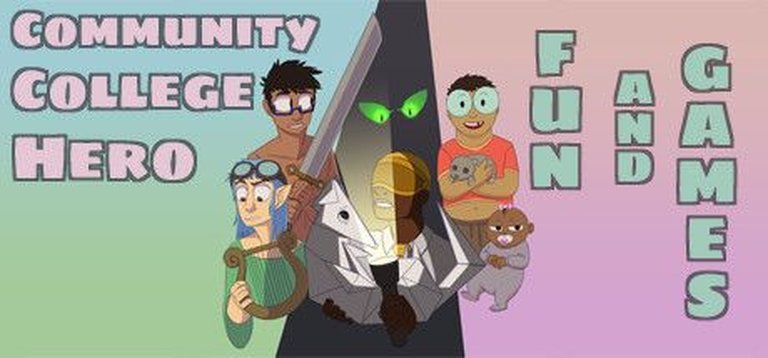
Community College Hero: Fun and Games is a ChoiceScript-powered interactive fiction adventure set in a contemporary fantasy world, where you play as a superpowered student at a community college. Embark on three light-hearted escapades with your classmates in this interquel, blending RPG elements, branching narratives, and menu-based choices before the intense events of Part 3 unfold.
Where to Buy Community College Hero: Fun and Games
PC
Community College Hero: Fun and Games Mods
Community College Hero: Fun and Games Reviews & Reception
reddit.com : pure joy from start to finish.
Community College Hero: Fun and Games: Review
Introduction
In the high-stakes world of superhero training, where capes clash and villains loom, what happens during the quiet interludes? Community College Hero: Fun and Games dares to answer this question, offering a delightful detour into the everyday antics of fledgling heroes at Speck Community College. As the 2.5 installment in Eric Moser’s beloved interactive fiction series—sandwiched between the intense Trial by Fire (2015) and Knowledge Is Power (2018)—this 108,000-word text-based epic captures the “calm before the storm” with three self-contained adventures brimming with comedy, camaraderie, and clever meta-humor. My thesis: While it eschews the series’ grander arcs for levity, Fun and Games is an indispensable character study that deepens emotional investment in its ensemble, proving that sometimes the best hero stories are the ones without a single world-ending threat.
Development History & Context
Eric Moser’s Community College Hero series emerged from the fertile ground of Choice of Games’ Hosted Games program, a platform empowering independent authors to craft branching narratives using the ChoiceScript engine. Moser, a prolific writer known for titles like Talon City: Death from Above and Zip!: Speedster of Valiant City, envisioned Fun and Games as a modest 10,000-word supplement to Knowledge Is Power. Announced on the Choice of Games forum in July 2020, it ballooned to over 100,000 words amid enthusiastic beta testing from a dedicated group of 20+ volunteers, including standouts like Oliver Stevenson-Hoare (“Bugreporter”) and others credited in the final release.
Hosted Games LLC published the title on February 3, 2022, across Windows, macOS, Linux, Android, and Steam (App ID 1782860), priced accessibly at $4.99 (with Linux/Mac variants at $2.99). This era marked a renaissance for text-based interactive fiction (IF), buoyed by mobile accessibility and Steam’s indie surge, yet constrained by the medium’s reliance on player imagination over visuals. The COVID-19 pandemic likely influenced its cozy, group-focused tone—Moser explicitly framed it as “fun content” to savor characters before the darker finale in All Things End. Technological limits were minimal: ChoiceScript’s menu-driven interface handled complex branching effortlessly, supported by beta testers who refined balance, continuity, and prose. Art contributions from Gloves Belanger and Adrienne Valdes provided evocative covers, while copy editor Laura Bontje polished the script. In a landscape dominated by AAA superhero blockbusters like Marvel’s Avengers, Fun and Games carved a niche for narrative-driven, low-fi RPGs, echoing classics like Choice of the Dragon while nodding to modern IF hits.
Narrative & Thematic Deep Dive
At its core, Fun and Games is a triptych of vignettes set across the protagonist’s freshman fall and spring semesters at Speck Community College, a contemporary fantasy hub for superpowered misfits. No overarching plot advances the series’ Diabolical Dozen saga; instead, it luxuriates in interpersonal dynamics, emphasizing friendship as the true superpower. Players input basics like hero name, gender (male, female, non-binary), romantic interest (from seven classmates), and mother’s personality, enabling seamless integration without prior saves.
“The Fury of Zarlor” unfolds mid-spring in a library session turned epic tabletop RPG homage (D&D-inspired). The core seven friends—quintessential archetypes like the brooding Stoic, prankster Crook, and enigmatic Origami—craft fantasy avatars, rolling virtual dice against bandits, elves, ogres, and a wyvern. Themes of escapism shine: supers unwind through roleplay, mirroring player agency in character creation and fate-tempting rolls. Success yields legendary status; failure, penniless obscurity—hilarious extremes underscore vulnerability beneath powers.
“There’s a Monster on My Line” rewinds to fall, stranding the hero with peripheral classmates in Hay Springs, Nebraska, amid a Scooby-Doo-esque lake monster mystery. Randomized culprits ensure replayability, blending meta-humor (e.g., small-town tropes) with heartfelt beats, like a gut-wrenching stargazing scene with Origami that exposes emotional fractures. It explores outsider bonds, contrasting core-group intimacy.
“Family Day” caps spring with Dean Tolly’s campus event, importing maternal embarrassment and competitive games. Wholesome hijinks—chili cook-offs, greasy diners—mask the Dean’s potential scheme, delving into family legacies and classmate backstories. Romances deepen via flirtations, while humor peaks in puns and awkward reveals.
Dialogue crackles with Moser’s signature wit: rapid-fire banter reveals quirks (e.g., Dirty Girl’s vampire sex ballad), blending levity with pathos. Themes coalesce around impermanence—joy before doom—fostering investment in characters like Crook (whose unlockable short story unveils a bleak past) or Dr. Hover. Non-binary inclusivity and seven romances enrich representation, making every playthrough a personalized mosaic of growth.
Gameplay Mechanics & Systems
Powered by ChoiceScript, Fun and Games delivers a streamlined loop: read prose, select from 4-8 branching choices, track stats via an accessible menu. No complex RPG progression from priors carries over, but subtle hero traits influence outcomes, emphasizing narrative over grind.
Core innovation: simulated agency. “Zarlor” lets players build custom fantasy PCs (class, stats) and input real die rolls (e.g., d20s), blending digital determinism with physical randomness—a flawed but charming hybrid evoking actual TTRPGs. Success/failure gates epic moments, rewarding risk.
The mystery in “Monster” randomizes suspects/victims, promoting deduction loops with replay variance. “Family Day” offers activity choices (win contests, schmooze mom, probe Dean), balancing mini-games like cook-offs.
UI shines: clean point-and-select menus, shortcut keys (J/K for options, Q for stats), achievement trackers (47 total, three unlocking shorts on Crook/Stoic/Dr. Hover). Flaws include occasional choice imbalance (safe paths dominate) and text walls, but replayability—via randomization, romances, achievements—offsets this. Steam Cloud/Family Sharing enhances portability. Overall, systems innovate within IF constraints, prioritizing emergent stories over combat (absent here).
World-Building, Art & Sound
Speck Community College anchors a vibrant contemporary fantasy milieu: Nebraska plains host supers-in-training, blending mundane (dorms, libraries) with mythic (lake beasts, RPG realms). Fresh locales—Hay Springs’ diners, campus gyms—infuse Americana charm, contrasting series’ urban heroics. Atmosphere thrives on text: vivid descriptions evoke laughter in chili chaos or tension in monster hunts, fueled by “unstoppable imagination.”
Art is sparse but effective: Gloves Belanger’s illustrations and Adrienne Valdes’ story covers capture ensemble energy on promo materials. No in-game visuals align with IF purity, emphasizing readability.
Sound design? Absent—no effects/music—reinforcing text primacy. This austerity heightens immersion: player minds soundtrack banter, dice clatters, monster splashes. It contributes profoundly, democratizing experience across devices while challenging AAA excess.
Reception & Legacy
Launch reception skewed niche-positive: Steam boasts 90% thumbs-up from 11 reviews (92/100 player score via Steambase), praising humor/characters. MobyGames lacks critic scores (none submitted), Backloggd/RAWG show minimal engagement (3 plays, no ratings). Metacritic tbd. Forum/Reddit raves (e.g., PistachioPug’s “pure joy”) hail it as a “palate cleanser,” boosting series hype.
Commercially modest—bundled in Eric Moser packs—yet culturally resonant in IF circles. No industry awards, but 47 achievements spurred completionism. Legacy: cements Community College Hero as a modern IF benchmark, influencing TTRPG-IF hybrids (e.g., randomized mysteries). It humanizes supers, prefiguring ensemble-focused narratives in The Boys or My Hero Academia, while preserving text adventures amid visual dominance. For historians, it’s a testament to Hosted Games’ model, crediting 27 contributors including 20+ betas.
Conclusion
Community College Hero: Fun and Games masterfully distills superhero life’s lighter side into a comedic triumph of character and choice, bridging series highs with replayable charm. Exhaustive in humor, heartfelt in bonds, and innovative in mechanics, it transcends its interquel status to stand alone. In video game history, it earns a hallowed spot among IF gems like Anchorhead—a must-play for narrative aficionados, solidifying Moser’s saga as essential reading. Verdict: 9/10—pure, unadulterated fun before the end times.