
- Release Year: 2014
- Platforms: Linux, Macintosh, Windows
- Publisher: Feral Interactive Ltd., Relic Entertainment Inc, SEGA Corporation
- Developer: Relic Entertainment Inc
- Genre: Strategy, Tactics
- Perspective: Diagonal-down
- Game Mode: Online PVP
- Gameplay: characters control, Directional, Fog of war, Multiple units, Point and select, positional damage, Real-time strategy (RTS), Weather changes
- Setting: Europe, Historical events, World War II
- Average Score: 77/100
Description
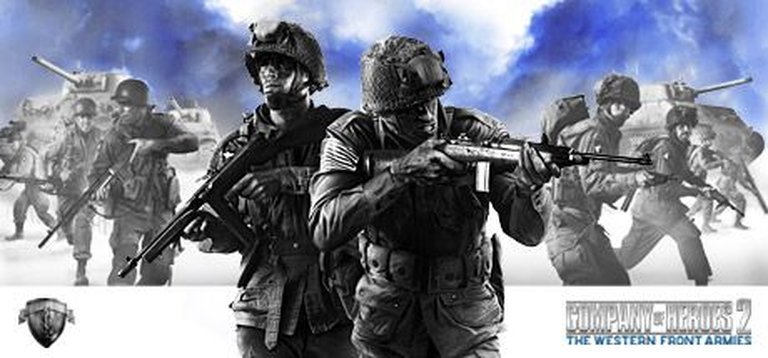
Company of Heroes 2: The Western Front Armies – US Forces is a standalone multiplayer expansion that brings the United States military into the strategic fray of World War II. This expansion introduces the iconic Sherman battle tank and other US forces to multiplayer battles, featuring eight new maps alongside the 23 maps from the main game. It focuses solely on multiplayer action, offering a rich and tactical experience for fans of real-time strategy games.
Gameplay Videos
Company of Heroes 2: The Western Front Armies – US Forces Reviews & Reception
pcgamer.com : A shot of adrenaline for the year-old game, these new armies bring the best parts of Company of Heroes into the upgraded Company of Heroes 2 world.
metacritic.com (80/100): Great entry point to a rich RTS…if you can master it.
gamewatcher.com : It’s impressive just how different each army feels from the core Russian and German forces of the main game. These are no mere reskins.
Company of Heroes 2: The Western Front Armies – US Forces: Review
Introduction
Company of Heroes 2: The Western Front Armies – US Forces is a pivotal expansion that reinvigorated Relic Entertainment’s acclaimed WWII RTS franchise by shifting the theater of war to the Western Front. Released in 2014 as a standalone multiplayer experience, this DLC introduced the US Forces as a dynamic, asymmetrical faction, emphasizing speed, adaptability, and air superiority. While devoid of single-player content, its focus on competitive and skirmish gameplay capitalized on Company of Heroes 2’s already robust multiplayer foundation. This review argues that US Forces exemplifies Relic’s mastery of tactical RTS design, balancing historical authenticity with innovative mechanics, though its legacy is tempered by the inherent constraints of its niche focus.
Development History & Context
Developed by Relic Entertainment and published by Sega, The Western Front Armies emerged during a transitional period for RTS games, as studios experimented with DLC models to sustain communities. Released a year after Company of Heroes 2’s Eastern Front-centric base game, the expansion addressed fan demand for iconic Western Front factions. Relic leveraged its proprietary Essence Engine 3.0 to deliver detailed destructible environments and dynamic weather, despite technical challenges in balancing new factions against existing ones.
At the time, the RTS genre was grappling with declining mainstream appeal, but Company of Heroes 2’s loyal player base craved deeper multiplayer variety. Relic’s decision to offer US Forces as a standalone purchase (alongside the German Oberkommando West) reflected a savvy bid to attract newcomers without fracturing the community. This approach mirrored free-to-play strategizing, allowing players to engage with the game’s ecosystem at a lower entry cost.
Narrative & Thematic Deep Dive
As a multiplayer-only expansion, US Forces lacks a traditional narrative. However, its thematic core is rooted in the historical identity of the American military during WWII. The faction embodies the “citizen soldier” ethos, contrasting the Soviet Union’s grim attrition warfare in the base game. Units like the Riflemen—flexible, upgradable infantry—and the iconic M4 Sherman tank reflect the US Army’s reliance on mobility and combined arms.
The absence of campaign storytelling is mitigated by atmospheric touches: voice lines evoke the camaraderie and desperation of frontline troops, while commanders like the Airborne Company channel Operation Overlord’s airborne assaults. Themes of ingenuity and adaptability permeate the faction’s design, mirroring historical narratives of Allied resourcefulness against Germany’s entrenched defenses.
Gameplay Mechanics & Systems
The US Forces introduced a meta-shifting playstyle distinct from other factions:
– Officer System: Unlocking specialized officers (e.g., Captain, Major) gates access to advanced units, rewarding players for securing early-game momentum.
– Air Support: P-47 Thunderbolt strafes and paradropped reinforcements enable devastating flanking maneuvers, though reliance on fuel-intensive abilities risks resource starvation.
– Versatile Infantry: Riflemen squads can equip flamethrowers, BARs, or bazookas, allowing on-the-fly adaptation to enemy armor or infantry.
– Light Vehicle Focus: The M20 Utility Car and M8 Greyhound excel at hit-and-run tactics but falter against heavy armor like the German King Tiger.
The faction’s weakness lies in its fragility: engineers lack demolition charges for structure assaults, and late-game reliance on the fragile Sherman (often outmatched by German heavies) demands meticulous micro-management. Critics, including PC Gamer, praised this high-risk, high-reward design but noted balancing hiccups at launch, particularly against the OKW’s brute-force tactics.
Eight new maps, like Hurtgen Forest and Ettelbruck Station, emphasized choke points and ambush opportunities, complementing the US’s mobility focus. The expansion also overhauled progression via the “War Spoils” system, rewarding players with cosmetic skins and tactical buffs—a precursor to live-service models.
World-Building, Art & Sound
US Forces excels in immersive presentation:
– Visual Design: Uniforms, vehicle models, and weapons are meticulously detailed, from the Sherman’s welded hull to the mud-splattered uniforms of airborne troops. Maps blend idyllic French villages with war-torn forests, showcasing the Essence Engine’s dynamic lighting and seasonal effects.
– Sound Design: The thunderous roar of .50-caliber machine guns and radio chatter (“We’re getting chewed up out here!”) heighten the chaos of battle. Composer Cris Velasco’s soundtrack mixes patriotic brass with somber strings, echoing the duality of heroism and sacrifice.
– Destruction Physics: Collapsing buildings and cratered terrain reinforce the Western Front’s devastation, creating emergent tactical opportunities.
While lacking the narrative heft of the base game’s Eastern Front campaigns, these elements ground the multiplayer in a tangible historical context.
Reception & Legacy
Critics lauded US Forces for its strategic depth, with GameWatcher calling it “a smart concept that gets off to a good start,” earning a 77% average on Metacritic. Players praised its fresh mechanics but critiqued its balance—Shermans often felt underpowered against German armor, and the officer system occasionally bottlenecked late-game strategies.
Legacy-wise, the expansion solidified Company of Heroes 2’s multiplayer longevity, paving the way for future DLC like Ardennes Assault. Its standalone model influenced later RTS titles, proving that niche audiences would embrace premium, faction-specific content. However, its lack of single-player and reliance on microtransactions for commanders drew ire from series purists.
Conclusion
Company of Heroes 2: The Western Front Armies – US Forces is a masterclass in tactical RTS design, deftly translating historical doctrine into compelling gameplay. While its multiplayer focus and balancing issues limited its broader appeal, it remains a benchmark for asymmetrical faction design. For veterans of the series, it’s an essential—if imperfect—addition to Relic’s WWII opus. For RTS historians, it epitomizes a studio’s ability to evolve with its audience, even as the genre’s tides shifted. In the pantheon of WWII games, US Forces earns its place as a daring, if narrowly focused, experiment.
Final Verdict: 8/10 — A must-play for competitive RTS enthusiasts, but less essential for solo players.