
- Release Year: 2022
- Platforms: Windows
- Publisher: Lucky Blimp
- Developer: Lucky Blimp
- Genre: Action
- Perspective: Behind view
- Game Mode: Single-player
- Gameplay: Shooter
- Average Score: 87/100
Description
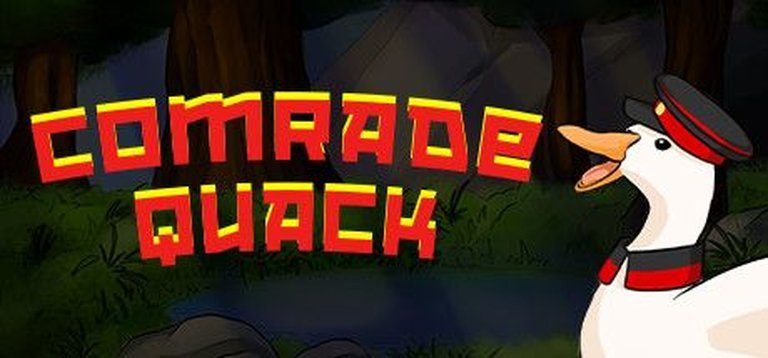
Comrade Quack is a humorous, third-person tower defense shooter where players take on the role of Comrade Quack, a duck defending the Mother Pond from invading Capitalist Pigs. Combining action-packed gameplay with strategic turret placement and barriers, the game blends parody and cartoonish charm in a colorful, stylized 3D world. Developed as a student project at the University of Utah, it offers a lighthearted yet engaging experience for young adult audiences.
Where to Buy Comrade Quack
PC
Comrade Quack Guides & Walkthroughs
Comrade Quack Reviews & Reception
store.steampowered.com (87/100): A fun, hybrid, third person tower defense game aimed at young adult audiences!
steambase.io (88/100): Comrade Quack has earned a Player Score of 88 / 100.
Comrade Quack: A Revolutionary Hybrid of Tower Defense and Third-Person Shooting
Introduction: A Duck’s Crusade Against Capitalism
In the vast, often homogenous landscape of indie games, Comrade Quack (2022) emerges as a delightfully bizarre and politically charged hybrid—a third-person shooter fused with tower defense mechanics, all wrapped in a satirical, cartoonish veneer. Developed by Lucky Blimp, a student team from the University of Utah, this game is a testament to the creative potential of academic game development, blending humor, strategy, and fast-paced action into a uniquely engaging experience.
At its core, Comrade Quack is a game about ideological warfare: players assume the role of the titular duck, a revolutionary defender of the “Mother Pond,” battling waves of “filthy Capitalist Pigs” intent on turning the pond into a “muddy sty.” The premise is absurd, the execution is polished, and the result is a game that manages to be both a sharp parody of political rhetoric and a genuinely fun strategic shooter.
This review will dissect Comrade Quack in exhaustive detail, exploring its development history, narrative and thematic depth, gameplay mechanics, artistic direction, reception, and legacy. By the end, we’ll determine whether this student-made experiment is a fleeting curiosity or a hidden gem deserving of broader recognition.
Development History & Context: From Classroom to Steam
The Birth of Lucky Blimp and the University of Utah’s Influence
Comrade Quack is the brainchild of Lucky Blimp, a student development team operating under the Entertainment Arts & Engineering (EAE) program at the University of Utah—a prestigious institution known for producing industry-ready game developers. The EAE program has a strong track record of fostering innovative student projects, and Comrade Quack is no exception.
The game began development in August 2021, with a team of 22 developers working across disciplines: engineering, art, design, and production. The project was conceived as a capstone experience, allowing students to apply their skills in a real-world development cycle. Given the constraints of an academic timeline, the team adopted an Early Access model, releasing the game on Steam on April 12, 2022, with the intention of refining it based on community feedback.
Technological Constraints and Design Challenges
Developed in Unity with FMOD for audio, Comrade Quack leverages modern game development tools to create a visually appealing and mechanically sound experience. However, as a student project, the team faced several challenges:
- Scope Management – Balancing ambition with feasibility was a constant struggle. The initial design allowed players to place nests for “quacklings” (duck minions) with little risk, which led to exploitative gameplay. Designer Davis Canby addressed this by implementing fixed nest locations, forcing players to strategize rather than spam defenses.
- Level Design Iteration – Early versions of the game featured multiple ponds, but players could focus defenses on a single pond, breaking the intended challenge. The solution? A single, more complex pond with verticality and obstructed sightlines, encouraging movement and tactical placement.
- Community-Driven Development – As an Early Access title, Comrade Quack relied heavily on player feedback. The team actively engaged with the community via Discord surveys and Steam discussions, though development stalled after the team’s academic tenure ended in late 2022.
The Gaming Landscape in 2022: A Niche Hybrid in a Crowded Market
Comrade Quack entered a market dominated by roguelikes, battle royales, and live-service games, making its tower defense/shooter hybrid a refreshing anomaly. While games like Orcs Must Die! and Sanctum had previously blended FPS and tower defense elements, Comrade Quack distinguished itself with:
- A Strong Satirical Tone – Unlike the fantasy or sci-fi settings of its predecessors, Comrade Quack leans into political parody, a rarity in the tower defense genre.
- Accessibility – The game’s cartoonish art style and simple controls made it approachable for casual players, while its strategic depth appealed to hardcore fans.
- Free-to-Play Model – Released as a free Early Access title, it lowered the barrier to entry, allowing players to engage without financial commitment.
Despite these strengths, the game’s student-driven development cycle meant it lacked the polish and long-term support of commercial titles. The last update was over three years ago, leaving it in a state of permanent Early Access limbo.
Narrative & Thematic Deep Dive: A Pond Under Siege
Plot Summary: The Revolution Will Be Feathered
Comrade Quack’s story is simple but effective: Capitalist Pigs are invading the Mother Pond, and it’s up to Comrade Quack—a charismatic, Soviet-inspired duck revolutionary—to defend it. The narrative is delivered through minimalist dialogue and environmental storytelling, with the game’s humor deriving from its over-the-top propaganda aesthetic.
Key narrative beats include:
– The Call to Arms – The Mother Pond is under threat, and Comrade Quack must rally the quacklings (duck soldiers) to man the defenses.
– Wave-Based Survival – Each level represents a new assault by the pigs, with Comrade Quack acting as both a field commander and a frontline fighter.
– The Ultimate Sacrifice – The game’s tagline, “FOR THE MOTHER POND!”, reinforces the revolutionary zeal of its protagonist, framing the conflict as a holy war against capitalism.
Characters: A Cast of Ideological Archetypes
While Comrade Quack lacks deep character development, its cast is symbolically rich:
– Comrade Quack – The heroic duck revolutionary, embodying the Soviet-era “comrade” archetype with a mix of patriotism and absurdity.
– The Quacklings – Loyal duck soldiers who man turrets and follow Comrade Quack’s orders. Their blind devotion parodies cult-like political movements.
– The Capitalist Pigs – Literal pigs in suits, representing greedy corporate invaders. Their designs range from businessmen to military enforcers, each wave escalating in threat.
Themes: Satire, Propaganda, and the Absurdity of War
Comrade Quack is, at its heart, a satirical deconstruction of political extremism. Its themes include:
- The Absurdity of Ideological Warfare – The game mockingly frames the conflict as a life-or-death struggle, with Comrade Quack’s over-the-top rhetoric highlighting how propaganda distorts reality.
- Class Struggle as Comedy – The ducks vs. pigs dynamic is a clear allegory for proletariat vs. bourgeoisie, but the game never takes itself too seriously, using humor to diffuse potential controversy.
- The Futility of Endless Defense – Like many tower defense games, Comrade Quack presents a never-ending battle, mirroring the cyclical nature of political conflict.
Dialogue and Writing: Propaganda as Comedy
The game’s writing is minimal but effective, relying on slogans, battle cries, and exaggerated villainy to convey its tone. Lines like:
– “FOR THE MOTHER POND!”
– “Death to the capitalist swine!”
– “The pond must be purified!”
reinforce the propaganda-heavy atmosphere, making the game feel like a playable political cartoon.
Gameplay Mechanics & Systems: A Duck’s Arsenal
Core Gameplay Loop: Build, Defend, Repeat
Comrade Quack blends third-person shooting with tower defense strategy, creating a fast-paced, multi-layered experience. The core loop consists of:
- Resource Gathering – Players collect quacklings (duck minions) scattered across the map.
- Turret Placement – Quacklings are assigned to turrets, which automatically fire at incoming pigs.
- Direct Combat – Comrade Quack engages enemies directly with a machine gun, adding a first-person shooter element to the strategy.
- Wave Survival – Players must hold out against increasingly difficult waves of pigs, upgrading defenses as they progress.
Combat and Movement: A Duck of All Trades
Comrade Quack is highly mobile, capable of:
– Flying short distances (via a glide mechanic).
– Shooting on the move (with aim-down-sights precision).
– Quickly repositioning to reinforce weak points in the defense.
The dual-layered combat (turrets + direct shooting) ensures that players are never passive, constantly balancing macro-strategy (turret placement) with micro-action (gunfights).
Turret and Defense Systems: The Backbone of Revolution
Turrets are the primary defensive tool, with variations including:
– Basic Machine Gun Turrets – Standard defense against early waves.
– Heavy Turrets – Slow-firing but high-damage, effective against armored pigs.
– Barriers – Temporary walls to funnel enemies into kill zones.
Quacklings serve as ammunition for turrets, meaning players must constantly gather reinforcements to keep defenses operational.
Progression and Upgrades: A Limited but Effective System
Given its Early Access state, Comrade Quack’s progression is relatively shallow:
– Turret Upgrades – Players can enhance firepower and durability between waves.
– New Enemy Types – Later waves introduce faster, tankier, and more aggressive pigs, forcing adaptive strategies.
– Map Variety – The original plan included multiple maps, but only one tutorial and one challenge level were fully implemented.
UI and Controls: Functional but Unrefined
The user interface is clean but basic, with:
– A radial menu for turret placement.
– A health/ammunition HUD.
– Minimalist wave notifications.
Controls are keyboard-and-mouse only, with:
– WASD for movement.
– Left-click to shoot.
– Right-click to place turrets.
– Shift to aim.
– V to gather quacklings.
While functional, the lack of controller support and polished UI animations reflects its student-project origins.
Innovations and Flaws: A Mixed Bag of Brilliance and Rough Edges
Innovations:
✅ Hybrid Genre Blending – Few games successfully merge tower defense and third-person shooting as seamlessly.
✅ Political Satire in Gameplay – The ducks vs. pigs premise is both humorous and thematically rich.
✅ Dynamic Defense Strategy – The need to manually reinforce turrets adds urgency and depth.
Flaws:
❌ Limited Content – Only two levels were fully realized, leaving the game shallow in longevity.
❌ Abandoned Development – The last update was in 2022, leaving many promised features (skins, maps, enemies) unfulfilled.
❌ Lack of Polish – No controller support, basic UI, and repetitive waves hold it back from greatness.
World-Building, Art & Sound: A Cartoonish Revolution
Setting: The Mother Pond as a Battleground
The game’s primary setting is the Mother Pond, a lush, idyllic wetland under siege by industrial capitalist forces. The environment is colorful and exaggerated, with:
– Vibrant greenery contrasting against the gritty, polluted pig machinery.
– Propaganda posters scattered across the map, reinforcing the revolutionary aesthetic.
– Destruction physics that show the pond being gradually corrupted by pig invasions.
Art Direction: Soviet Propaganda Meets Looney Tunes
Comrade Quack’s visual style is a delightful mashup of:
– Soviet-era propaganda art (bold reds, hammer-and-sickle motifs).
– Cartoonish exaggeration (ducks with comically large guns, pigs in business suits and military gear).
– Stylized 3D models that balance humor and readability.
The character designs are particularly strong:
– Comrade Quack resembles a cross between a Soviet mascot and a Disney duck, complete with a revolutionary armband.
– The Capitalist Pigs are grotesque caricatures, with cigar-chomping executives and militarized enforcers.
Sound Design: A Symphony of Quacks and Gunfire
The audio experience is simple but effective:
– FMOD-powered sound effects ensure crisp gunfire, duck quacks, and pig grunts.
– Upbeat, militaristic music reinforces the revolutionary theme.
– Voice lines (though minimal) are delivered with exaggerated fervor, enhancing the propaganda feel.
Atmosphere: A Playful Yet Urgent Tone
The game strikes a balance between humor and tension:
– The absurd premise keeps the mood lighthearted.
– The escalating waves create a sense of desperation, making victories feel earned.
– The propaganda aesthetic immerses players in a world where the revolution is both serious and ridiculous.
Reception & Legacy: A Cult Classic in the Making?
Critical and Commercial Reception: A Niche Hit
Comrade Quack received overwhelmingly positive reviews on Steam, with:
– 87% positive ratings (29 positive, 4 negative).
– A Steambase Player Score of 88/100.
– Praise for its unique premise, fun gameplay, and humorous tone.
However, mainstream critics largely ignored it, likely due to:
– Its student-project origins.
– The lack of marketing beyond Steam and itch.io.
– Its incomplete state (Early Access with no full release).
Community Response: A Small but Passionate Following
The game’s Steam Community Hub and Discord fostered a dedicated fanbase, with players praising:
✔ The fresh take on tower defense.
✔ The political satire (without being overly preachy).
✔ The fast-paced, engaging combat.
However, frustration mounted as development stalled:
❌ No post-2022 updates.
❌ Unfulfilled promises (DLC, new maps, enemy types).
❌ Abandonment by the dev team after graduation.
Influence and Legacy: A Blueprint for Student Games
While Comrade Quack didn’t revolutionize the industry, it serves as:
– A proof-of-concept for hybrid tower defense/shooter games.
– A case study in student game development (showing both potential and pitfalls).
– A cult favorite among fans of satirical, offbeat indie games.
Its biggest legacy may be inspiring future student teams to:
– Blend genres creatively.
– Use humor to enhance gameplay.
– Engage with communities early (even if long-term support is uncertain).
Conclusion: A Revolutionary Experiment Worth Quacking About
Comrade Quack is a flawed but fascinating experiment—a game that punches above its weight in creativity, humor, and mechanical innovation, even if it falls short in polish and longevity.
Final Verdict: 7.5/10 – A Promising Revolution Cut Short
Pros:
✅ Unique hybrid of tower defense and third-person shooting.
✅ Hilarious political satire that doesn’t take itself too seriously.
✅ Fast-paced, engaging gameplay with a great risk-reward balance.
✅ Charming art style and strong thematic identity.
Cons:
❌ Abandoned in Early Access with unfulfilled promises.
❌ Extremely limited content (only two levels).
❌ Lack of polish (no controller support, basic UI).
❌ No post-launch support, leaving it incomplete.
Who Should Play It?
- Fans of tower defense games looking for something fresh.
- Players who enjoy political satire with a lighthearted touch.
- Indie game enthusiasts who appreciate student-made passion projects.
Final Thoughts: A Game That Deserved More
Comrade Quack is a testament to what student developers can achieve—a game that dares to be different in both mechanics and messaging. Had it received full development support, it could have been a breakout indie hit. As it stands, it remains a cult curiosity, a fun but unfinished revolution that quacks loudly before fading into obscurity.
For the Mother Pond! 🦆✊