
- Release Year: 2013
- Platforms: Nintendo 3DS, PS Vita, Windows
- Publisher: Atlus U.S.A., Inc., Spike Chunsoft Co., Ltd.
- Developer: Spike Chunsoft Co., Ltd.
- Genre: Role-playing
- Perspective: Third-person
- Game Mode: Single-player
- Gameplay: Turn-based combat, Visual novel
- Setting: Fantasy
- Average Score: 81/100
- Adult Content: Yes
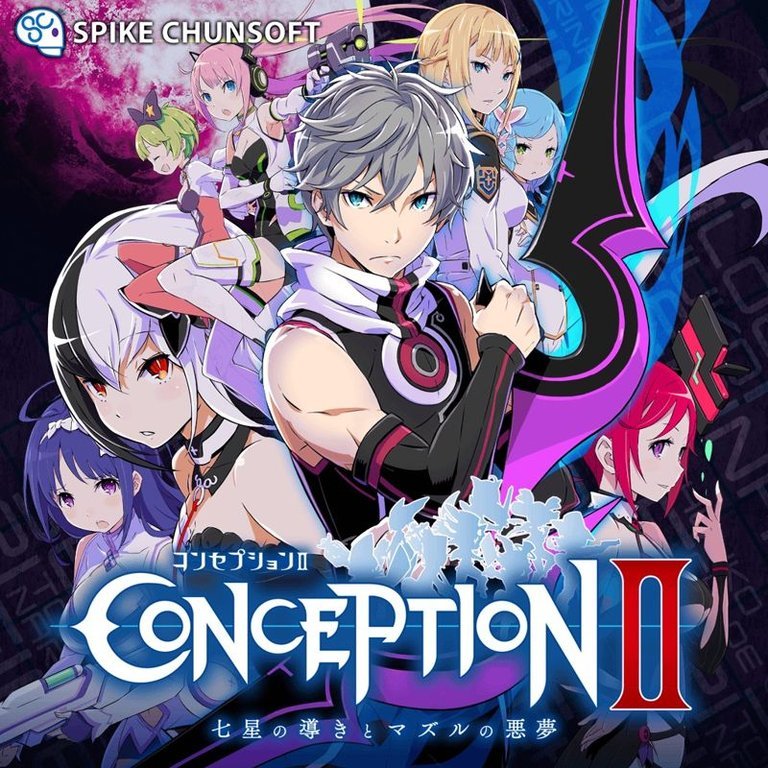
Description
Conception II: Children of the Seven Stars is a fantasy role-playing game set in the world of Attera, which has been plagued by monsters emerging from anomalies called Dusk Circles for two decades. Players take on the role of a new Disciple, a person with the Star God Brand, who is trained at a school in Fort City to combat these monsters. The game features a unique blend of turn-based combat, dungeon exploration, and relationship-building elements, where the protagonist can create Star Children through a ritual called classmating with various heroines, influencing the story’s progression and multiple endings based on the relationships developed.
Gameplay Videos
Where to Buy Conception II: Children of the Seven Stars
PC
Conception II: Children of the Seven Stars Cracks & Fixes
Conception II: Children of the Seven Stars Patches & Updates
Conception II: Children of the Seven Stars Guides & Walkthroughs
Conception II: Children of the Seven Stars Reviews & Reception
metacritic.com (83/100): Anyone looking for an RPG with a unique personality need look no further.
gamerhorizon.com : Only one of these two games is worth playing.
336gamereviews.com : The game features both English & Japanese voice acting.
gamepressure.com (80/100): The title is the sequel to the first installment of the series.
gamefaqs.gamespot.com : The game is extremely structured.
Conception II: Children of the Seven Stars Cheats & Codes
PlayStation Vita (PSV)
| Code | Effect |
|---|---|
| $0200 813EFEE0 0098967F | 9.999.999 G Points |
| $0200 813EFEE4 43960000 | 300 Bond Points |
| $0000 813EFF16 00000063 | Player Level 99 |
| $4201 813EFF6C 0001869F $0002 00000004 00000000 $4101 813EFF74 0000270F $0007 00000004 00000000 |
Player Max Base Stats |
| $0000 813F001A 00000063 | Fuuko Level 99 |
| $4201 813F0070 0001869F $0002 00000004 00000000 $4101 813F0078 0000270F $0007 00000004 00000000 |
Fuuko Max Base Stats |
| $0000 813F011E 00000063 | Serina Level 99 |
| $4201 813F0174 0001869F $0002 00000004 00000000 $4101 813F017C 0000270F $0007 00000004 00000000 |
Serina Max Base Stats |
| $0000 813F0222 00000063 | Ellie Level 99 |
| $4201 813F0278 0001869F $0002 00000004 00000000 $4101 813F0280 0000270F $0007 00000004 00000000 |
Ellie Max Base Stats |
| $0000 813F0148 00000063 | Torri Level 99 |
| $4201 813F019E 0001869F $0002 00000004 00000000 $4101 813F01A6 0000270F $0007 00000004 00000000 |
Torri Max Base Stats |
| $0000 813F042A 00000063 | Narika Level 99 |
| $4201 813F0480 0001869F $0002 00000004 00000000 $4101 813F0488 0000270F $0007 00000004 00000000 |
Narika Max Base Stats |
| $0000 813F052E 00000063 | Feene Level 99 |
| $4201 813F0584 0001869F $0002 00000004 00000000 $4101 813F058C 0000270F $0007 00000004 00000000 |
Feene Max Base Stats |
| $0000 813F0632 00000063 | Chloe Level 99 |
| $4201 813F0688 0001869F $0002 00000004 00000000 $4101 813F0690 0000270F $0007 00000004 00000000 |
Chloe Max Base Stats |
| $4001 813F0736 00000063 $0046 00000104 00000000 |
All Children Level 99 |
| $4201 813F078C 0001869F $0046 00000104 00000000 $4201 813F0790 0001869F $0046 00000104 00000000 $4101 813F0794 0000270F $0046 00000104 00000000 $4101 813F0798 0000270F $0046 00000104 00000000 $4101 813F079C 0000270F $0046 00000104 00000000 $4101 813F07A0 0000270F $0046 00000104 00000000 $4101 813F07A4 0000270F $0046 00000104 00000000 $4101 813F07A8 0000270F $0046 00000104 00000000 $4101 813F07AC 0000270F $0046 00000104 00000000 |
All Children Max Base Stats |
Nintendo 3DS (3DS)
| Code | Effect |
|---|---|
| 0065A410 0098967F | Max Money |
| 2065A446 00000063 | Hero Level 99 |
| 1065A49C 0000270F 1065A4A0 0000270F 1065A4A4 0000270F 1065A4A8 0000270F 1065A4AC 0000270F 1065A4B0 0000270F 1065A4B4 0000270F 1065A4B8 0000270F 1065A4BC 0000270F |
Hero Max Stats |
| 2065A54A 00000063 | Heroine Level 99 |
| 1065A5A0 0000270F 1065A5A4 0000270F 1065A5A8 0000270F 1065A5AC 0000270F 1065A5B0 0000270F 1065A5B4 0000270F 1065A5B8 0000270F 1065A5BC 0000270F 1065A5C0 0000270F |
Heroine Max Stats |
| C0000000 0000004A 2065A64E 00000063 DC000000 00000104 D1000000 00000000 |
75 Children Level 99 |
| C0000000 0000004A 1065A6A4 0000270F 1065A6A8 0000270F 1065A6AC 0000270F 1065A6B0 0000270F 1065A6B4 0000270F 1065A6B8 0000270F 1065A6BC 0000270F 1065A6C0 0000270F 1065A6C4 0000270F DC000000 00000104 D1000000 00000000 |
75 Children Max Stats |
| C0000000 0000029C 2065F36A 00000063 DC000000 00000004 D1000000 00000000 |
All weapons you own x99 |
| C0000000 000001EE 2065FDE2 00000063 DC000000 00000004 D1000000 00000000 |
All Armor you own x99 |
| C0000000 00000030 206605A2 00000063 DC000000 00000004 D1000000 00000000 |
All Accesories you own x99 |
| C0000000 00000061 2066066E 00000063 DC000000 00000004 D1000000 00000000 |
All consumables you own x99 |
| C0000000 0000005E 206607FA 00000063 DC000000 00000004 D1000000 00000000 |
All gifts you own x99 |
| C0000000 0000000E 2066097A 00000063 DC000000 00000004 D1000000 00000000 |
All matrioskas you own x99 |
Conception II: Children of the Seven Stars: A Deep Dive into Romance, Dungeons, and Cosmic Responsibility
Introduction
In a gaming landscape dominated by gritty realism and open-world epics, Conception II: Children of the Seven Stars (2013) dared to embrace absurdity. A hybrid of dungeon-crawling JRPG and dating sim, Spike Chunsoft’s title invites players to save the world by romancing classmates and birthing magical “Star Children” through an Ether-fueled ritual called “classmating.” While its premise drew polarized reactions—ranging from fascination to bafflement—Conception II carved a niche as a cult oddity. This review explores whether its fusion of tactical combat, anime tropes, and thematic ambition transcends its notorious gimmickry or collapses under its own eccentric weight.
Development History & Context
Developed by Spike Chunsoft (best known for Danganronpa and Zero Escape), Conception II emerged during a renaissance for portable JRPGs. The Nintendo 3DS and PlayStation Vita were thriving with experimental titles like Persona 4 Golden (2012), which blended social sims with dungeon crawling. Conception II leaned into this trend but amplified its quirks: the 2012 predecessor, Conception: Please Give Birth to My Child!, laid groundwork with its “baby-making” combat system, but the sequel refined mechanics for broader appeal.
Director Shu Watanabe sought to balance risqué humor with heartfelt storytelling, while composer Masato Kouda (Devil May Cry, Monster Hunter) infused the soundtrack with dreamy J-pop and orchestral beats. Released in Japan in 2013 and localized by Atlus in 2014, the game faced stiff competition from Persona and Fire Emblem. Its M rating (for “suggestive themes”) and premise—often misconstrued as prioritizing fan service over substance—limited mainstream traction, but its systemic depth and irreverent charm resonated with niche audiences.
Narrative & Thematic Deep Dive
Set in the besieged world of Aterra, Conception II follows Wake Archus, a Disciple marked by the Star God Brand. After his sister’s death at the hands of Dusk Circle monsters, Wake enrolls at an academy to combat these threats. His unprecedented Ether levels—30 times the average—designate him as “God’s Gift,” enabling him to enter labyrinths and sire Star Children via “classmating” with seven heroines, each embodying archetypal anime tropes:
- Fuuko: The cheerful athlete haunted by a ghostly friend.
- Ellie: A stoic church agent grappling with her undead nature as a “Stillblood.”
- Feene: A aloof photographer hiding vulnerability beneath icy professionalism.
The plot revolves around neutralizing seven Dusk Circles tied to the deadly sins, but the true focus lies on character bonds. Wake’s relationships evolve through visual novel-esque dialogue choices, with bonding events exploring insecurities like Serina’s height complex or Chloe’s burden as a teen genius. While criticized for superficial arcs early on, later chapters deliver poignant moments: Alec, Wake’s rival, confronts his jealousy before succumbing to monsterhood, while Ellie’s storyline deconstructs religious guilt.
Themes of legacy and self-worth permeate the narrative. The Star Children—born from hope yet destined to fade—mirror the Disciples’ fleeting adolescence (their powers vanish by age 19). The game’s tonal whiplash—from slapstick humor to tragic twists—echoes its central tension: innocence versus existential duty.
Gameplay Mechanics & Systems
Conception II intertwines two core loops: social simulation and dungeon crawling.
Social Mechanics
- Classmating: By spending Bond Points (BP), Wake performs rituals with heroines to produce Star Children. Their stats depend on the heroine’s mood and affinity, incentivizing gift-giving and dialogue finesse.
- Star Children Management: Children are assigned classes (e.g., Lancer, Healer) and deployed in trios. Excess units can be “released” to upgrade city facilities, fostering meta-progression.
Dungeon Crawling
- Labyrinth Design: Randomly generated dungeons suffer from repetitive layouts (square rooms, narrow halls), though traps and enemy variety escalate in later chapters.
- Combat System: Battles emphasize positioning—attacking enemy weak points builds a “Chain Gauge” to delay their turns. The Ether Density system buffs stats as players chain attacks, rewarding aggression.
- Party Composition: Wake fights alongside one heroine and nine Star Children (grouped into three units). Mecunite skills allow trios to fuse into giant robots—a flashy but underutilized feature.
Issues
- Repetition: Grinding for Star Children upgrades becomes tedious, exacerbated by fixed dungeon aesthetics.
- Balance: Auto-battle trivializes early fights, while late-game enemies spike in difficulty, demanding meticulous team-building.
World-Building, Art & Sound
Conception II’s aesthetic is unabashedly anime: designer Shinichirō Ōtsuka’s vibrant character art contrasts with the dreary labyrinths. The heroines’ exaggerated designs—Torri’s half-black, half-white hair; Chloe’s idol-like attire—reinforce archetypes but lack subtlety. Dungeon environments, though functional, recycle assets relentlessly, diluting the otherworldly menace of the Dusk Circles.
Masato Kouda’s soundtrack shines, blending whimsical pop (the classmating theme, phantasmagoric) with haunting dungeon melodies. Voice acting (Japanese-only in early releases) fluctuates between heartfelt (Fuuko’s teary confessions) and grating (Chlotz’s over-the-top antics).
Reception & Legacy
Conception II earned mixed reviews (Metacritic: 62/100). Praise focused on its:
– Addictive JRPG core loop.
– Charmingly absurd premise.
– Pacing-friendly portable design.
Critics panned its:
– Repetitive dungeons.
– Underdeveloped heroines.
– Tonal inconsistency.
Commercially, it sold modestly—20,000 Vita copies in Japan at launch—but fostered a cult following. Its legacy lies in amplifying hybrid genres; later titles like Fire Emblem: Three Houses (2019) refined its blend of tactics and social sims, while Conception Plus (2019) remastered the original with mixed results.
Conclusion
Conception II: Children of the Seven Stars is a flawed but fascinating experiment. Its messy fusion of dating sim and dungeon crawler delivers moments of genuine heart and strategic depth, buried under repetitive design and missed potential. While not a masterpiece, it remains a testament to JRPGs’ willingness to embrace the bizarre—a game where saving the world requires equal parts tactical prowess and emotional vulnerability. For players seeking idiosyncratic charm and systemic depth, Conception II offers a stars-aligned oddity. For others, its uneven execution may eclipse its cosmic ambitions.
Final Verdict: A flawed yet memorable niche title—best approached with patience and a tolerance for anime tropes.