
- Release Year: 2012
- Platforms: Android, Linux, Macintosh, Windows
- Publisher: Illwinter Game Design
- Developer: Illwinter Game Design
- Genre: Strategy, Tactics
- Perspective: Top-down
- Game Mode: Hotseat, Online PVP, Single-player
- Gameplay: 4X, Automatic combat, Map editor, Random maps, Resource Management, Spellcasting, Turn-based strategy
- Setting: Fantasy
- Average Score: 77/100
Description
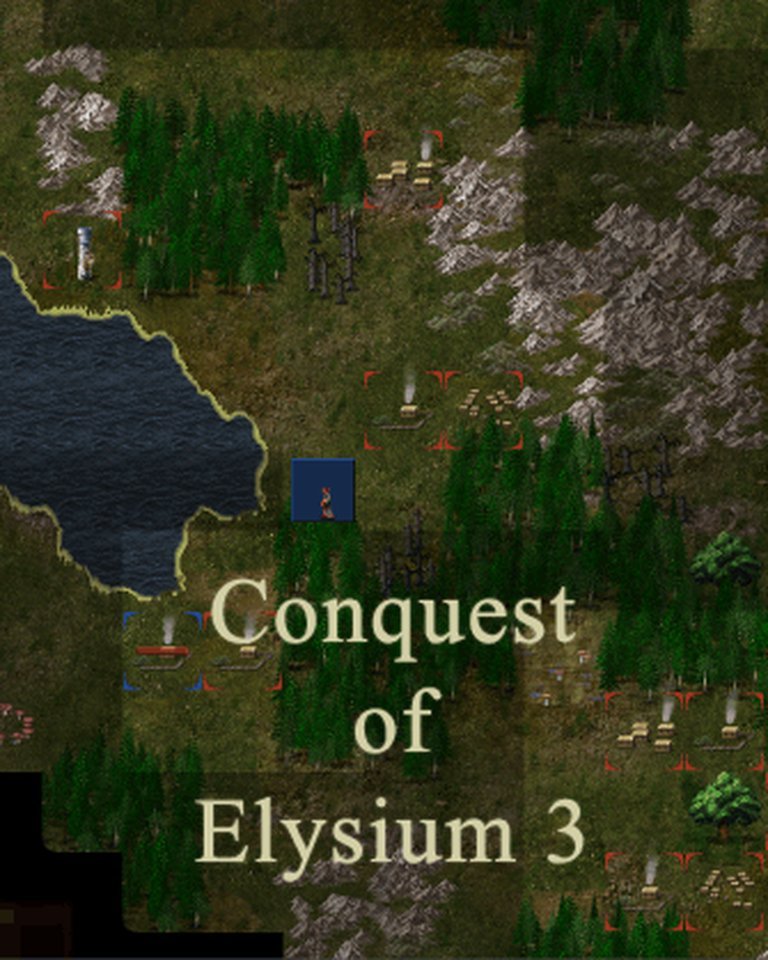
Conquest of Elysium 3 is a turn-based fantasy strategy game where players command one of 18 unique factions on randomly generated maps, aiming to protect citadels and commanders while securing faction-specific resources—such as gems for sorcerers or sacrifices for priests—to unleash powerful abilities and spells. The gameplay emphasizes asymmetric warfare against both human opponents and neutral threats like wandering monsters, with no diplomacy or campaign mode, focusing purely on tactical resource control and survival in a dynamic setting.
Gameplay Videos
Where to Buy Conquest of Elysium 3
PC
Conquest of Elysium 3 Guides & Walkthroughs
Conquest of Elysium 3 Reviews & Reception
metacritic.com (71/100): A strangely serene and evocative game, lying somewhere between strategy and chaos.
gamepressure.com (81/100): Someone described the game as a strategy roguelike and I think that is a quite good description.
oneguytoomanygames.blogspot.com : Fans of multiplayer will probably get more mileage.
Conquest of Elysium 3: The Unforgiving Symphony of Asymmetric Strategy
Introduction: A Purified Essence
In an era saturated with streamlined, accessible strategy titles, Conquest of Elysium 3 (2012) stands as a defiant, uncompromising monument to a more brutal, imaginative school of design. From the Swedish indie studio Illwinter Game Design—creators of the similarly esoteric Dominions series—this title is not a game of gentle expansion or narrative triumph. It is a turn-based strategy roguelike, a “pure essence” of competitive conquest where the only victory condition is absolute annihilation, and the primary antagonist is often the chaotic whims of its own creator. This review will argue that Conquest of Elysium 3 is a landmark of asymmetric faction design and emergent narrative, achieving a profound depth of replayability through systemic risk and randomness, though its punishing nature and lack of traditional structure render it a cult classic accessible only to the most perseverant strategists.
Development History & Context: The Illwinter Ethos
Illwinter Game Design, founded by Johan Karlsson and Kristoffer Osterman, has cultivated a distinct niche since the mid-1990s. Their pedigree is crucial to understanding CoE3. Following the Conquest of Elysium series (1996-1997) and the more complex, grand-strategy Dominions series, CoE3 represents a deliberate pivot toward a tighter, faster, yet mechanically dense “tube strategy” experience. Developed in the early 2010s, a period seeing a resurgence of deep indie strategy (e.g., Fallen Enchantress, Battle for Wesnoth), CoE3 eschewed the graphical polish and tutorial hand-holding of mainstream titles. Its technological constraints were self-imposed: a simple top-down interface, minimal animations, and a focus on textual data and numerical depth over spectacle. This was a game designed for the PC purist, built on the philosophy that compelling strategy emerges from complex, interacting systems, not cinematic set-pieces. The development context is one of a small team (credited are 9 developers) creating a game for a dedicated audience already familiar with the unforgiving, simulation-heavy paradigms of the Dominions series and classic roguelikes.
Narrative & Thematic Deep Dive: The History of Elysium
Conquest of Elysium 3 possesses no campaign mode, no scripted storyline. Its narrative is purely ludonarrative, emerging from the manual and, most richly, from the in-game “History of Elysium” lore accessible via libraries. This lore, detailed in the Steam community guide sourced from the game itself, presents a cyclical, darkly fantastical history for the continent, divided into distinct “Ages”:
- The Dark Ages: The primordial era of human settlement, where Dragons roam and Dwarven cities stand unspoiled. Humanity is fragile, surrounded by aggressive wildlife and ruins of elder civilizations.
- The Agricultural Period: Humanity tames the wilds, but lawlessness prevails as Brigands rule the forests.
- The Empire: A golden age under Emperor Mesentius the Wise, where civilization is unified, wildlife is contained, and a great Capital is built.
- The Interregnum (Fallen Empire): The Empire’s collapse due to the Astrologer’s hubris and the resulting incursion of cosmic Horrors. Civilization is shattered, the Capital becomes a dark stronghold.
- The Monarchy: A feudal rebuilding under King Clovis, focused on localized protection against the resurgent Wild.
- The Dawn of a New Empire: A Council of Elders rules from a great city, seeking to restore past glories, though this era includes sub-societies like the Hoburg Empire (orderly, industrial hobgoblins) and the Malefic Hoburg Empire (cruel, undead-serving hobgoblins).
These ages are not just flavor; they directly impact gameplay. The chosen “society” determines map generation (e.g., the Fallen Empire spawns undead and battlefields, the Dawn of a New Empire features a large, guard-patrolled capital). The lore themes are clear: the constant, cyclical tension between civilization and chaos, order and barbarism, the mundane and the eldritch. The player is a catalyst in this endless cycle, a faction leader whose actions will either restore order or plunge Elysium further into nightmare. The absence of a linear plot is a feature, not a bug; the player’s specific game becomes the history for that world.
Gameplay Mechanics & Systems: Asymmetric Chaos
CoE3‘s genius lies in its breathtaking faction asymmetry, all built upon a simple core loop.
- The Core Loop: Select one of 18 factions (e.g., Necromancer, Demonologist, Dwarf Queen, Troll King, High Priestess of Ba’al). Start with a citadel and a few commanders. Explore a randomly generated map (size 30×20 to 70×52), capture resource locations, fend off neutral monsters and enemy AI/human players. Win by eliminating all enemy commanders or capturing all their citadels. Lose if your last commander or citadel falls.
- Resources & Faction Identity: Two universal resources, gold and iron, fund basic recruitment. The transformative layer is the special resource/ritual system, which defines each faction’s entire strategic posture:
- Nature-Based (Witch, Druid): Harvest fungus/herbs from forests/jungles to summon powerful nature creatures. They thrive in specific terrain but struggle for basic resources.
- Gem-Based (Warlock, Dwarf): Seize rare gem mines to power构造 magical constructs or summon immortal beings like the Phoenix. They have brutal early fights for mining rights but become nigh-unassailable once established.
- Sacrifice-Based (Demonologist, High Priestess): Collect human sacrifices from towns/villages to summon demon lords or gain blood-god boons. They balance expansion with the grim need for offerings.
- Conventional (Baron, Senatorial): Rely on massed human levies from farms/towns, gaining yearly conscripts. A more traditional, “Heroes of Might and Magic” style.
This isn’t a simple “unique unit” gimmick; it’s a total reorientation of strategic priorities. A Warlock’s map is a puzzle of gem mine locations; a Witch’s is a web of forested zones. The design forces radically different playstyles, creating the “wonderfully asymmetric combat” praised in the user review.
- Commanders & Army Management: Commanders are the sole mobile units on the strategic map. They lead stacks of troops. Managing their Action Points (AP)—spent on movement and special actions—is a constant tension. You cannot be everywhere; defense requires careful distribution.
- Combat System: Fully automatic, resolved in a single click. The system is deceptively deep:
- Units auto-sort into ranks (melee front, ranged middle, casters rear).
- Initiative is strictly defender-first, then alternating ranks (rear to front) per side.
- Over 300 unit types exist, each with unique stats, special attacks (charm, spawn, swallow whole), immunities (immortality, invulnerability to normal weapons), and mounted/boulder-throwing siege capabilities.
- Spells (drawn from 42 magic paths) are pre-memorized but cast randomly by AI casters during combat, introducing a critical layer of uncontrollable risk.
- The review astutely notes this creates a “stack of doom” problem; evaluating a 500-unit battle by inspecting individual sprites is tedious, highlighting a UI limitation.
- The Map & Randomness: The map is a character in itself. Terrain (mountain, forest, water) affects movement and provides defensive bonuses. Seasons dynamically change movement costs (winter snows, frozen rivers). Crucially, all terrain has value for someone: swamps for witches, mountains for dwarves. Map locations are more than resources; they offer ancient battlefields (for necromancers), spell-learning sites, artifact vaults, or seasonal control anchors.
- The Engine of Chaos: This is the game’s defining, divisive mechanic. Randomness is pervasive and often brutal:
- Wandering Neutral Monsters: Deer, wolves, bandits, and cosmic horrors spawn and move autonomously. The infamous “bloody deers” can capture an undefended citadel and end your game in turn 5.
- Random Events: Gates to the underworld, merchant visits, plagues—all can alter the game state unpredictably.
- Procedural Failure: Summoning rituals can fail even with high chances. Spellcasters may waste a crucial round on a weak spell. Catapult boulders can randomly one-shot your commander during a siege.
The review’s litany of catastrophic failures (“lost the game just because a pack of deers…”) is not an edge case; it’s the expected experience. This is the “strategy roguelike” premise: you win by mitigating and exploiting chaos, not by eliminating it.
World-Building, Art & Sound: Functional Baroque
- Setting & Atmosphere: The fantasy world is a pastiche of classic and grotesque elements. You’ll find hoburgs (hobbits), dwarves, trolls, undead, but also Cosmic Horrors, the Four Horsemen of the Apocalypse, and Devil Lords. The lore from the manual and libraries infuses each faction with dreadful, often humorous, gravitas (e.g., the Goat Devil of the Burning Sun). The procedural generation ensures no two games feel the same, with the historical era chosen painting the world in a specific thematic light (agrarian, imperial, fallen).
- Visual Direction: The graphics are undeniably primitive, even for 2012. Unit sprites are small and often indistinct, especially in the zoomed-out combat view. Terrain is clear but basic. This is a UI-driven game; the value is in icon readability and map layout, not artistic flair. For the committed player, this functional aesthetic becomes a neutral canvas for the mind’s eye, but it is a significant barrier to entry for modern audiences.
- Sound Design: A study in contrast. Sound effects are minimal—basic attack noises, spell effects. The musical score by Mattias Westlund, however, is universally praised as excellent, atmospheric, and non-repetitive. It provides the heroic or ominous backdrop the primitive graphics lack, elevating the experience significantly.
Reception & Legacy: The Niche Masterpiece
- Critical Reception: Critics were cautiously positive, averaging 78% on MobyGames. Hooked Gamers (75%) noted its fun and freedom but acknowledged the steep learning curve. Hardcore Droid (90%) hailed it as “a deep, addictive game with uncommon depth for mobile devices,” testament to its successful PC-to-mobile port. PC PowerPlay (80%) called it “strangely serene and evocative… somewhere between strategy and chaos.” The common thread was recognition of its deep, systemic design tempered by acknowledgment of its rough edges and punishing randomness.
- User Reception: More polarized. Metacritic user score is 7.1/10 (Mixed or Average). Steam shows “Very Positive” (81/100) from 329 reviews, indicating a dedicated fanbase. The divergence stems from the core design philosophy. Players who enjoy emergent stories, asymmetric challenges, and can tolerate (or enjoy) brutal randomness become ardent advocates. Those seeking balanced, predictable, or narratively driven strategy often burn out quickly. The user review by “LaughingProphet” captures this: it’s close to the beloved Warlords series but marred by annoyances like deer overpopulation and “stacks of doom.”
- Legacy & Influence: Conquest of Elysium 3 is a cult classic cornerstone, not a mainstream influencer. Its legacy is most directly felt in its own sequels (CoE4 in 2015, CoE5 in 2021), which refined its systems. It shares DNA with the Dominions series (same studio, similar magic/unit systems) but is more accessible. In the broader landscape, it is a poignant example of the “strategy roguelike” subgenre pre-dating its wider popularity. It demonstrates that deep asymmetry and procedural chaos can create unparalleled replayability, a lesson echoed in later titles like Into the Breach or Fights in Tight Spaces, though those titles are far more controlled. Its influence is less about mechanics copied and more about proof of concept: a commercially viable, critically respected game can be built on a foundation of extreme asymmetry and systemic randomness, catering to a dedicated niche without compromise.
Conclusion: A Flawed, Essential Artifact
Conquest of Elysium 3 is not for everyone. Its lack of a campaign, its archaic UI, its tiny sprites, and its often-frustrating, laughter-inducing randomness will alienate the majority of players seeking a “polished” strategy experience. Yet, for the connoisseur of deep systems, it is an essential, brilliant failure—a failure of conventional game design, but a triumph of systemic creativity. It achieves what few games do: every single match tells a unique, dramatic story shaped by the collision of asymmetric factions, a living map, and a dice roll. The thrill of a perfectly executed Druid forest empire, the despair of a demonic ritual backfiring, the awe of finally summoning the Seven Devil Lords—these moments are earned through play that is simultaneously intellectually demanding and utterly unpredictable.
Its place in history is secure as a pinnacle of niche design. It represents the mature statement of Illwinter’s “pure strategy” philosophy, prioritizing player-Driven narrative and systemic complexity over accessibility or fairness. It is a game that respects the player’s imagination by providing immense mechanical diversity and then letting the chaos unfold. While its sequels have iterated on its formula, CoE3 remains the definitive, raw expression of its vision: a turn-based strategy game where the map is a myth, the units are a pantheon, and every victory is a fragile, hard-won victory against the universe itself. It is, in the words of one reviewer, “fun” and “innovative,” but more than that, it is a testament to the enduring power of asymmetric, systemic game design executed with audacious, uncompromising vision.