
- Release Year: 2014
- Platforms: Linux, Macintosh, Windows
- Publisher: astragon Entertainment GmbH
- Developer: weltenbauer. Software Entwicklung GmbH
- Genre: Simulation
- Perspective: 3rd-person (Other)
- Game Mode: Single-player
- Gameplay: Business simulation, City building, construction simulation, Managerial
- Setting: Contemporary
- Average Score: 67/100
Description
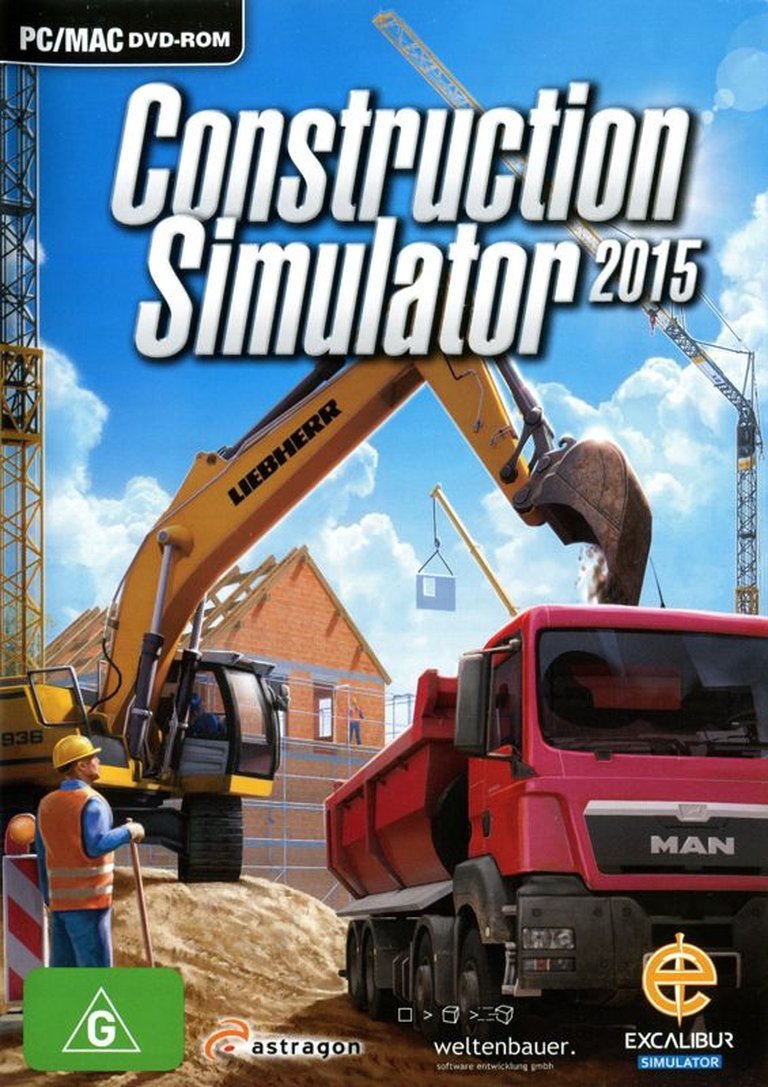
Construction Simulator 2015 is a simulation game that immerses players in the role of a construction company operator, tasked with managing projects and operating licensed heavy machinery across a contemporary urban setting. Players can drive realistic vehicles from brands like Liebherr, complete contracts ranging from small repairs to large-scale builds, and grow their business while navigating occasional technical quirks noted by critics.
Gameplay Videos
Where to Buy Construction Simulator 2015
Construction Simulator 2015 Cracks & Fixes
Construction Simulator 2015 Patches & Updates
Construction Simulator 2015 Mods
Construction Simulator 2015 Reviews & Reception
metacritic.com (63/100): The games weaknesses are outweighed by its generally solid gameplay.
gamewatcher.com : Construction Simulator offers a comprehensive game that delivers core gameplay involved in construction work.
mobygames.com (64/100): The game lets you take control of 16 realistic construction machines and experience high‑quality 3D graphics.
opencritic.com (75/100): The games weaknesses are outweighed by its generally solid gameplay.
Construction Simulator 2015: The Digital Groundbreaker
Introduction: Building a Genre Legacy
In an industry dominated by shooters, RPGs, and open-world epics, Construction Simulator 2015 dared to ask: What if hard work was the power fantasy? Developed by weltenbauer. Software Entwicklung GmbH and published by astragon Entertainment, this 2015 simulator transported players into the mud-caked boots of a construction mogul, digitizing the visceral thrill of heavy machinery with surprising authenticity. While its niche appeal initially drew skepticism, the game’s blend of meticulous vehicle operation, economic strategy, and emergent sandbox storytelling cemented its place as a cult classic. This review argues that Construction Simulator 2015—flaws and all—paved the way for a subgenre renaissance, proving that even the most “ordinary” labor could captivate when rendered with tangible systems and mechanical depth.
Development History & Context: Blueprints of a Simulator
Studio Vision & Industry Landscape
In the early 2010s, astragon had already carved a reputation for hyper-specialized simulators (Bus Simulator 16, Towtruck Simulator 2015), but Construction Simulator 2015 marked a pivotal escalation. Leveraging the mobile success of Construction Simulator 2014 (2+ million sales), weltenbauer aimed to create a PC/Mac experience that transcended its handheld roots. The studio’s goal was twofold: authenticate the minutiae of construction workflows while democratizing the joy of big machines for players lacking engineering degrees.
Technological Constraints & Ambitions
Built on Unity Engine, the team faced challenges balancing realism with accessibility. Physics-driven interactions—like excavator bucket resistance and concrete viscosity—required bespoke coding, while the open-world map (housing villages, highways, and industrial zones) strained hardware limits. A November 2014 Steam developer post revealed prototyping headaches: “Getting the Liebherr LTM 1060 crane’s hydraulics to feel ‘heavy’ took months of tweaking” (“Behind the Scenes,” Steam Community). Despite these hurdles, weltenbauer prioritized modularity, releasing modding tools alongside the game to empower player creativity.
The 2015 Simulation Boom
Construction Simulator 2015 emerged amid a simulator gold rush, with titles like Euro Truck Simulator 2 (2012) and Farming Simulator 15 (2014) proving niche markets could thrive. Yet, astragon’s focus on multiplayer collaboration—a rare feature in contemporaries—set it apart, anticipating today’s co-op sandbox trends.
Narrative & Thematic Deep Dive: The Quiet Drama of Infrastructure
Plot? What Plot?
Unlike narrative-driven games, Construction Simulator 2015’s “story” lies in player-driven ascension. You inherit a small construction yard, transforming it into a regional empire via contracts ranging from backyard sheds to municipal skyscrapers. Characters exist only as voiceless clients or hireable NPCs, but the absence of scripted drama sharpens focus on systemic storytelling: A crumbling bridge rebuilt by your hands becomes a triumph; a botched concrete pour, a tragedy.
Themes of Craft & Capitalism
Beneath its diesel-soaked exterior, the game interrogates post-industrial ethos. Each mission reinforces the weight of manual labor—sculpting terrain with a R936 excavator isn’t just a task; it’s a meditation on friction, torque, and human ingenuity. Simultaneously, the economic meta-layer—balancing vehicle purchases, employee wages, and profit margins—mirrors the capitalist tightrope small businesses tread. Thematically, it’s Death Stranding without the existential dread: Connection through construction.
Gameplay Mechanics & Systems: Gears, Grind, and Growth
Core Loop & Vehicle Mastery
The gameplay orbits three pillars:
1. Contract Execution: Accept jobs, transport materials, operate machinery.
2. Economic Management: Earn cash, expand fleets, hire workers.
3. World Exploration: Discover new regions (e.g., industrial docks, suburbs).
Vehicles—16 licensed machines from Liebherr, MAN, and STILL—are the stars. Each demands nuanced control:
– Excavators use SAE (stick-relative) inputs for bucket precision.
– Mobile Cranes require stabilized boom extensions to avoid physics-glitch collapses.
– Concrete Pumps test patience with literal fluid dynamics.
Progression & Economy
Early-game simplicity (digging ditches, hauling gravel) gradually escalates to high-stakes projects (high-rises, hospitals). Money unlocks advanced tools (e.g., Liebherr LTM 1300-6.2 crane), while an RPG-like experience system gates elite contracts. However, critics noted a repetitive mid-game where material transport dominates (GameWatcher: “Too much early focus on transporting materials”).
Multiplayer & Modding
Co-op (4 players) shines in complex tasks: One player excavates while another coordinates deliveries. The Steam Workshop-enabled modding toolkit (requiring Unity and 3DS Max) birthed fan-made machines and missions, extending longevity. Yet, bugs—like trucks phasing through terrain (Co-Optimus)—plagued post-launch reception.
UI/UX: Functional But Flawed
The radial menu streamlines vehicle swaps, but cluttered HUD elements (fuel, damage, mission prompts) overwhelm newcomers. Controller support eases the learning curve, though keyboard binds remain unintuitive (“German games […] lack polish,” Steam user MadJaples).
World-Building, Art & Sound: A Concrete Canvas
Environment & Atmosphere
The game’s map blends idyllic villages, arterial highways, and grimy construction sites. While environmental textures are serviceable—not award-winning—the sprawl sells scale: Driving a MAN TGX truck across the map’s 10k㎡ evokes genuine road-trip monotony, punctuated by dynamic weather (rain slicks terrain, affecting traction). Still, barren zones between points of interest expose the budget’s seams (SpazioGames: “Graphically nice but lacks life”).
Visual Design & Machine Fidelity
Vehicles receive photorealistic treatment: Every Liebherr decal, hydraulic joint, and warning sticker mirrors real-world counterparts. Cockpit views (fully modeled dashboards, working mirrors) immerse players, though human models are robotic afterthoughts.
Sound Design: Growls and Groans
weltenbauer recorded authentic machinery samples—the guttural rumble of a TGS truck’s diesel engine, the metallic screech of a crane’s winch—to anchor the simulation. Ambient sounds (birdsong, distant traffic) are sparse but effective. The absence of a soundtrack focuses players on the ASMR of industry.
Reception & Legacy: From Mixed Reviews to Genre Cornerstone
Launch Reception
Critics praised ambition but scolded jank:
– Positive: GameWatcher (7.5/10) lauded “solid gameplay,” while Gaming Nexus (7/10) championed its “polished simulation core.”
– Negative: Gamer.nl (30/100) decried physics bugs, and SpazioGames (6.5/10) flagged mission monotony.
Metacritic settled at 63/100 (Mixed), while Steam reviews stabilized at “Mostly Positive” (68%).
Post-Launch Evolution
Updates fixed critical bugs but couldn’t overhaul aging systems. Instead, modding sustained engagement: Fan-made excavators, trucks, and even parody missions (e.g., “UFO Site Construction”) populated Steam Workshop.
Industry Influence
The game’s success greenlit sequels (Construction Simulator 2, 3, 4), refining its formula across platforms. More crucially, it validated niche simulation markets, inspiring titles like Shipbreaker (2020) and PowerWash Simulator (2021) to embrace vocational fantasy.
Conclusion: Cementing a Legacy
Construction Simulator 2015 is no masterpiece. Its dialogue is nonexistent, its textures dated, and its pacing uneven. Yet, as a holistic simulation artifact, it achieves something profound: transforming backhoes and cement mixers into vessels of player agency. Weltenbauer’s commitment to tactile systems—flawed but earnest—created a blueprint for empathetic simulators where labor itself is the hero’s journey. For historians, it’s a testament to gaming’s power to romanticize the mundane; for players, it remains a diesel-powered meditation on what it means to build.
Final Verdict: A foundational text in vocational simulators—rough-edged, ambitious, and unapologetically earnest.