
- Release Year: 2017
- Platforms: Android, iPad, iPhone, Macintosh, Windows
- Publisher: Evil Tortilla Games
- Developer: Evil Tortilla Games
- Genre: Action
- Perspective: Behind view
- Setting: Fantasy
Description
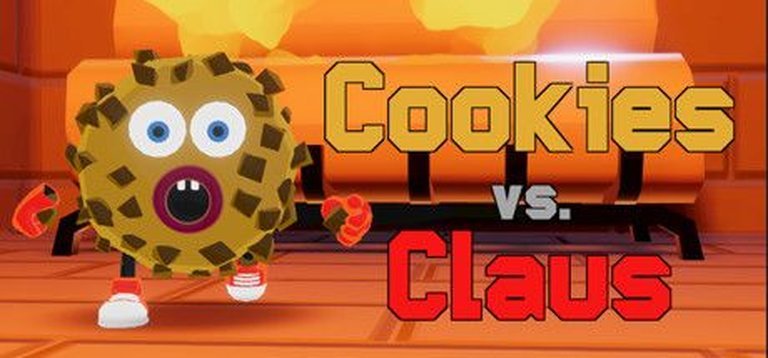
Cookies vs. Claus is an action-packed, fantasy-themed battle game where players choose sides as either cookies or holiday characters like Santa Claus in asymmetric combat. Combining elements of first-person shooters and battle arena games, it offers both single-player and multiplayer experiences with a variety of characters to select from, all set in a whimsical holiday world.
Gameplay Videos
Where to Buy Cookies vs. Claus
PC
Cookies vs. Claus Patches & Updates
Cookies vs. Claus Guides & Walkthroughs
Cookies vs. Claus Reviews & Reception
game-solver.com : This Action game offers engaging gameplay and regular updates for mobile players.
Cookies vs. Claus: A Cult Classic Caught in the Holiday Freeze
Introduction: The Unlikely Siege of the North Pole
In the crowded pantheon of holiday-themed video games—a niche already saturated with saccharine platformers and tired rehashes—Cookies vs. Claus (2017) emerged not as a gentle carol but as a discordant, chaotic chime. Its premise is immediately arresting: an asymmetric multiplayer shooter where sentient, weapon-wielding cookies lay siege to Santa Claus and his festive forces in a desperate battle for survival. This is not a tale of nice lists or toy deliveries; it is a raw, bizarre struggle for existence between the baked and the benevolent. Developed by the enigmatic Evil Tortilla Games (primarily Joshua Williams), the game captured a specific, whimsical madness that resonated enough to build a small but passionate following, largely fueled by family-friendly YouTube channels like FGTEEV. Yet, for all its creative audacity, Cookies vs. Claus exists today as a fascinating case study in indie ambition, community-driven Early Access, and the perilous fate of a game left in a perpetual, frozen state. This review will argue that Cookies vs. Claus is a historically significant but fundamentally flawed artifact—a game whose core asymmetric design was conceptually brilliant but ultimately undermined by technical instability, sparse content, and a development lifecycle that stalled just as its community’s hopes peaked.
Development History & Context: An Indie’s Bite-Sized Ambition
Cookies vs. Claus was the brainchild of Joshua Williams under the Evil Tortilla Games banner, a classic micro-studio operating on a scale that could fit inside a gingerbread house. The game was built in Unity, the accessible engine that democratized indie development but also presented its own constraints for a solo or tiny team. The technological landscape of 2017 was one of accessible but demanding multiplatform releases; Cookies vs. Claus launched simultaneously on Windows, Macintosh, iPhone, and iPad, with an Android port following in 2019. This cross-platform push was ambitious for a tiny studio, suggesting a desire for a broad, casual audience beyond the PC-centric indie scene.
The game’s trajectory is inextricably tied to the Steam Early Access model. Williams and Evil Tortilla explicitly stated they chose this path to involve the community, promising “regular updates” and a full release by “late this year” (of 2017 or 2018). The initial vision, per the developer, was expansive: 6+ additional maps, 12+ new cookies, and 6+ new Santa characters. An update in July 2020—the “Christmas in July” patch—was the last significant developer communication on Steam, addressing load times, adding cosmetic skins (“Sugar In July,” “Ham”), and fixing a critical glitch preventing some from playing as Santa. The developer’s post from January 2, 2020, reveals a reflective, somewhat disillusioned creator: “I believe the idea is quite unique but the implementation could have been much better.” He solicited community feedback via a Google Form, outlining potential new characters (an engineer cookie, a ghost pirate cookie, a rhino animal cracker, a healing cocoa mug), vehicles (monster truck, nutcracker pop-gun), and mechanics (grappling hooks, buildable walls). This post stands as a poignant epitaph; the form’s suggestions were passionately detailed but were never integrated. The game remains in Early Access to this day, with the last update over five years ago as of 2026, making it a permanent resident of Steam’s “Early Access” graveyard.
Narrative & Thematic Deep Dive: Lore of the Literal Cookie Cutter
Narrative is not Cookies vs. Claus‘s strong suit, but its sparse lore is key to its charm and thematic underpinnings. The conflict is pure, unadulterated asymmetric survival. The Cookies are not heroic protagonists; they are “fight[ing] for your right to survive against the hungry enemies.” Santa Claus and his squad (Rudolph the Red-Nosed Laser Beam Reindeer, Stelf the Elf, and, per some sources, the Easter Bunny) are the “hungry enemies.” The theme is a darkly comedic inversion of holiday tradition: Santa is not a giver but a predator, and the Cookies are not treats but the threatened. This taps into a subgenre of holiday horror (think Krampus or Poor Santa) but filters it through the absurdist lens of a child’s playroom.
The world-building is entirely environmental and mechanical. There is no campaign, no dialogue trees, no cutscenes explaining why cookies are sentient or why Santa is a lethal hunter. The narrative is emergent and player-driven: the story is whatever the player invents in a 5-minute round. A Cookie’s desperate last stand with a flamethrower against a Santa who has already “eaten” (eliminated) three allies becomes the narrative. The various maps—Christmas Home (a domestic space), The North Pole (the workshop), Cookie Cove (a pirate-themed bakery)—act as thematic backdrops reinforcing this clash of domestic comfort vs. industrial holiday production vs. chaotic confectionery. The game posits a world where holiday icons are not symbols of joy but systems of power and consumption. Santa represents an authoritarian, omnipresent force (his ship is even a destructible map objective in “Santa’s Ship” mode), while the Cookies are a decentralized, resourceful rebellion using toys (planes, tanks) as weapons. It’s a冷战 of baked goods, a silent war waged in snow and frosting.
Gameplay Mechanics & Systems: The Asymmetric Engine
The core design philosophy is asymmetric team-based combat, a genre often seen in games like Evolve or Dead by Daylight, but here filtered through a family-friendly, third-person shooter lens. The balance is not about mirrored classes but about fundamentally different roles, resources, and win conditions.
Team Cookies: Players select from a roster of cookie archetypes (e.g., Choccy, Sugar, Tank, Graham, Ninjasnap, Creameo, Eggie, Mr. Nut, Milky—names derived from community discussions and inferred from standard cookie types). Each possesses a unique ability (e.g., Ninjasnap’s invisibility, a flamethrower cookie’s area denial) and presumably base stats (health pools suggested in user feedback: Tank 30, Sugar 20, etc.). Cookies are fragile, numerous, and rely on pick-ups and vehicles scattered across maps. The maps are playgrounds of toy-based warfare: players can pilot planes, tanks, and “elf” minions. The objective in the signature “Cookies vs. Claus” mode is to simply survive and whittle down the Santa team, or complete specific map objectives like destroying Santa’s Ship (7 parts).
Team Santa: The Santa side is a “hero” or “boss” unit concept. Santa Claus is a high-health, powerful entity with abilities like a “eat” (a grab-and-kill) and projectile bombs. Rudolph is a “laser beam” unit, suggesting a ranged attacker. Stelf the Elf is presumably a support or scout. The Santa team is vastly outnumbered (typically 1-3 vs. a full team of Cookies) and must use their higher durability and powerful single-target abilities to control space and eliminate Cookies efficiently. This creates immense tension: a single Santa can be a terrifying force, but against coordinated Cookies using vehicles and ambush tactics, they can be overwhelmed.
Game Modes: The base offering, per the Steam store, is three modes:
1. Cookies vs. Claus: The core asymmetric experience.
2. Cookies vs. Cookies: A symmetric, free-for-all style cookie battle.
3. Cookie Free For All: Straightforward deathmatch to 25 kills.
Additional sources (Game-Solver) list six modes, including “Egg Hunt” (capture the flag variant), “Capture the Flag,” and “Santa’s Ship” (destroy the objective), indicating the game’s scope was intended to be broader than its current Steam description suggests.
Systems & Flaws: The gameplay loop is simple: spawn, find weapon/power-up/vehicle, engage Santa or Cookies, die, repeat. The progression system is purely cosmetic (“cookie skins”), with no in-game currency or unlockable abilities mentioned in official sources, though player requests (from the 2020 forum post) include an in-game shop for skins. The User Interface is minimal. The most glaring systemic flaws, repeatedly cited in user reviews, are:
* Bot AI: Described as “dumb” (bots flying planes into the ground) and “overpowered” (Santa bots using “eat” continuously without cooldown).
* Balance Issues: Santa’s abilities (especially the grab) feel “unbreakable” to Cookies if not carefully managed. The “aimbot” comment from reviewers suggests either poorly tuned AI targeting or perceived cheating.
* Technical Glitches: A litany of issues: Santa’s model glitching (legs twisted, camera sideways when played), frequent crashes (especially on mobile/iPad), freezes, and being kicked from matches. The “Santa’s arm gets stuck” when eating a Cookie is a famously broken animation.
* Matchmaking & Population: The online multiplayer is effectively dead. Repeated reviews state “no players online,” “only 1 player online,” and that offline/bot mode is the only way to play. This critically wounds the game’s core appeal.
* Customization Depth: Lacking the depth requested by fans (no hat/attachment system, no character editing).
The design is a fascinating prototype for an asymmetric casual shooter, but its implementation is rickety, unbalanced, and now barren of the human opponents it required.
World-Building, Art & Sound: A Festive, Functional Aesthetic
The game’s presentation is low-poly, bright, and intentionally silly. The visual style is a blend of children’s toy commercial and early 2000s web game. Cookies are chibi-style, anthropomorphized baked goods with simple faces. Santa and his crew are exaggerated, sometimes grotesque caricatures (Santa’s standard model is notably glitchy). The maps—Christmas Home, The North Pole, Cookie Cove, Castle War, Easter Islands, Santa’s Ship—are small, confined spaces dense with interactive objects (toys, vehicles, power-ups). The art direction successfully creates a playful, chaotic sandbox where a gingerbread man can hijack a toy monster truck and ram a reindeer. It’s not beautiful, but it is readable and thematically consistent.
Sound design is functional and festive. Expect jingle bells, stock sound effects for weapons (pew-pew from candy cane guns?), and Santa’s iconic “ho ho ho” possibly distorted as a threat. The soundtrack is nonexistent or extremely looped; the focus is on diegetic sound effects. The overall atmosphere is one of low-stakes, high-energy cartoon violence. It feels like a playroom after a sugar rush, which perfectly suits the premise. However, the polish is minimal; audio glitches are not reported, but the visual glitches (especially Santa’s model) severely break immersion.
Reception & Legacy: The “Very Positive” Ghost Town
Cookies vs. Claus‘s official reception is a paradox. On Steam, it holds a “Very Positive” rating with 83% of 228 reviews being positive, accumulating a Player Score of 81/100 from over 300 total reviews. This strong aggregate is built on a foundation of nostalgia and affection for the concept. Positive reviews frequently cite: “fun with friends,” “childhood game,” “no ads,” and appreciation for its unique idea. Many come from players who discovered it via FGTEEV and other family YouTubers, cementing its status as a “kid-approved” cult title.
However, digging into the negative reviews (17%) reveals the crippling realities:
* Technical Instability: “Crashes on startup,” “glitchy Santa model/camera,” “kicked from games.”
* Dead Multiplayer: The most common complaint: “no one plays online,” “only bots,” “white screen when joining.”
* Stagnant Development: “Why stop updating?”, “waited 2 years for nothing.”
* Gameplay Imbalances: “Santa is broken,” “bots too strong.”
* Feature Requests: Pleas for campaigns, more maps, customization, garlic bread man character.
Commercial performance is obscure but clearly modest. Priced at $2.99, it was bundled in the “Evil Tortilla Games Bundle.” It is collected by only 10 players on MobyGames, a stark statistic for a 7-year-old game, indicating extremely low penetration even among preservationists. The Metacritic entry is barebones, listing only credits (Joe Williams as Director/Writer), with no critic scores, reflecting its obscurity in the professional press.
Its legacy is one of unfulfilled potential. It is a footnote in the history of asymmetric multiplayer experiments, predating the broader popularity of the genre but not influencing it due to its obscurity. It is a cautionary tale about Early Access: a developer openly solicited feedback and laid out grand plans but then vanished, leaving a community that invested time and emotional capital in the forums high and dry. The January 2020 developer post is a museum piece of indie development honesty—a creator admitting the “implementation could have been much better” while seemingly lacking the resources or will to fix it. It lives on in Let’s Play archives and in the memories of players who enjoyed its chaotic, glitch-ridden fun during its brief active period around the 2017-2020 holidays. It represents the “micro-indie” Christmas game phenomenon: a tiny, weird, heartfelt project that flares up in the holiday season on YouTube and fades, leaving a small, devoted fanbase wondering “what if?”
Conclusion: A Preserved Curiosity, Not a Classic
Cookies vs. Claus is not a great game by any conventional metric. It is buggy, unbalanced, sparsely populated, and abandoned. Its narrative is an excuse, not a story. Its mechanics are a proof-of-concept stretched thin. Yet, to dismiss it entirely is to ignore its raw, creative spark. In an industry where holiday themes are often synonymous with corporate license-farming, Cookies vs. Claus dared to ask: “What if Santa was the final boss and you were a cookie with a flamethrower?” Its asymmetric design, while poorly executed, pointed toward a fun, accessible, and deeply silly competitive shooter that could have been a perennial party game with proper nurturing.
Its historical significance lies in its perfect encapsulation of a specific indie development archetype. It was a solo/duo project using Unity to target multiple platforms (PC, Mac, iOS) and embrace the Early Access model for community input, all while chasing a niche, idea-driven premise that found its audience through influencer marketing (YouTube) rather than traditional press. Its failure is not one of vision but of execution and sustainability. The source material—from the developer’s own candid reflection to the torrent of user bug reports and pleas for updates—paints a picture of a project that grew beyond its means but was cherished by those who played it in its prime.
Final Verdict: Cookies vs. Claus is a 6/10 curio. As a functional game, it fails. As a historical artifact, it is a fascinating, heartfelt, and ultimately tragic example of indie game development’s risks and rewards. It deserves to be archived, studied, and remembered not for what it became, but for the brilliantly absurd question it asked and the small, glitchy, joyful chaos it created in its fleeting moments of life. For the historian, it is essential viewing for understanding the landscape of 2010s micro-indies. For the player, it is a nostalgic, broken toy—best played with friends in a room, laughing at its flaws as much as its fleeting triumphs. It is, in the end, a cookie that crumbled far too soon.