
- Release Year: 2019
- Platforms: Windows
- Publisher: 8floor Ltd.
- Developer: GameOn Production
- Genre: Action
- Perspective: Diagonal-down
- Game Mode: Single-player
- Gameplay: Point and select, Time management
- Average Score: 87/100
Description
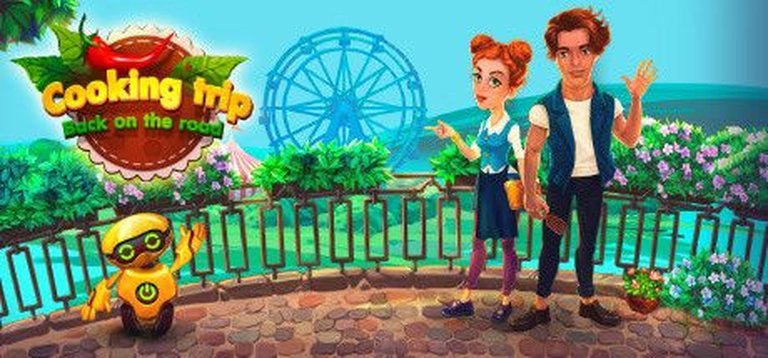
Cooking Trip: Back on the Road is a casual time management game where players embark on a culinary adventure, traveling the world to discover new recipes and prove their cooking skills. With a diagonal-down perspective and a fixed/flip-screen visual style, the game challenges players to manage their time efficiently while preparing dishes, serving customers, and unlocking culinary secrets. Developed by GameOn Production and published by 8floor Ltd., this sequel to Cooking Trip offers a mix of strategy, simulation, and arcade-style gameplay, perfect for fans of cooking and puzzle games.
Gameplay Videos
Where to Buy Cooking Trip: Back on the Road
PC
Cooking Trip: Back on the Road Free Download
Cooking Trip: Back on the Road Patches & Updates
Cooking Trip: Back on the Road Reviews & Reception
steambase.io (88/100): This score is calculated from 34 total reviews which give it a rating of Positive.
store.steampowered.com (87/100): Positive (87% of 33)
missitheachievementhuntress.com : Cooking Trip: Back on the road is an enjoyable time-management game in which you complete orders.
Cooking Trip: Back on the Road – A Flavorful Yet Flawed Culinary Adventure
Introduction: The Road Less Traveled
Cooking Trip: Back on the Road (2019) is a time-management cooking simulation that attempts to blend the addictive rush of Diner Dash with the charm of a globetrotting culinary adventure. Developed by GameOn Production and published by 8Floor Ltd., this sequel to Cooking Trip (2019) follows aspiring chefs Mary and John as they embark on a journey to master international cuisines after a humbling defeat in a cooking competition. While the game promises “fun locations, intuitive gameplay, and an exciting plot,” it ultimately delivers a mixed bag—a dish that’s hearty in portions but lacking in depth.
This review dissects Cooking Trip: Back on the Road through its development context, narrative structure, gameplay mechanics, audiovisual design, reception, and legacy, arguing that while it succeeds as a casual, accessible time-management game, it fails to innovate or elevate the genre beyond its predecessors.
Development History & Context: A Recipe for Repetition
The Studio & Creative Vision
GameOn Production, a Russian developer known for casual and hidden-object games (Lost Artifacts series), partnered with publisher 8Floor Ltd.—a studio specializing in time-management and simulation titles (Gnomes Garden, Travel Cuisine). The Cooking Trip series was conceived as a lighthearted, family-friendly alternative to more complex restaurant sims like Cook, Serve, Delicious! or Overcooked!.
The game’s development was constrained by:
– Technological Limitations: Built in Unity, it adheres to a fixed/flip-screen, diagonal-down perspective, a design choice that harkens back to early 2000s time-management games. This limits dynamic camera movement and immersive world-building.
– Market Saturation: Released in July 2019, it entered a crowded space dominated by mobile cooking games (Cooking Madness, Cooking Fever) and indie darlings (Battle Chef Brigade). Its PC-exclusive release (with no console or mobile ports) further narrowed its audience.
– Sequel Syndrome: Unlike its predecessor, which introduced Mary and John’s origin story, Back on the Road recycles mechanics without significant iteration, relying on new locations and minor UI tweaks to justify its existence.
The Gaming Landscape in 2019
The late 2010s saw a resurgence of time-management games, but mostly on mobile platforms. Cooking Trip: Back on the Road’s Steam-exclusive release was an odd choice, as its simplistic gameplay and cartoonish aesthetic aligned more with mobile or browser games. Competitors like Cooking Madness (2017) had already perfected the addictive, microtransaction-driven formula, leaving Back on the Road feeling outdated at launch.
Narrative & Thematic Deep Dive: A Thinly Sliced Story
Plot Summary & Character Arcs
The game’s premise is straightforward:
– After losing a “Best Chef” competition, Mary and John realize their culinary skills are inadequate.
– They embark on a globetrotting journey to learn from master chefs in Germany, France, and America.
– Each location introduces new dishes, customers, and challenges, culminating in a rematch against their rivals.
Themes Explored:
1. Perseverance & Self-Improvement: The protagonists’ journey mirrors classic underdog narratives, but the execution is superficial. There’s no character development—Mary and John remain static, their motivations reduced to generic ambition.
2. Cultural Appreciation (or Appropriation?): The game romanticizes international cuisines but reduces them to stereotypes (e.g., Germany = sausages, France = pastries). There’s no depth in how these cultures are represented.
3. Teamwork & Collaboration: The duo’s dynamic is underutilized. Unlike games like Overcooked!, where cooperation is key, Back on the Road treats them as interchangeable avatars.
Dialogue & Writing
- Minimalist & Functional: Dialogue is brief, often limited to tutorial prompts and customer reactions.
- No Voice Acting: Text-only interactions make the world feel lifeless.
- Humor Falls Flat: Attempts at whimsy (e.g., quirky customer requests) lack the charm of Diner Dash’s witty writing.
Verdict: The narrative is serviceable but forgettable—a vehicle for gameplay rather than a compelling story.
Gameplay Mechanics & Systems: A Time-Management Time Capsule
Core Gameplay Loop
Cooking Trip: Back on the Road adheres to the classic time-management formula:
1. Seat Customers → 2. Take Orders → 3. Prepare Dishes → 4. Serve & Collect Payment → 5. Upgrade Restaurant.
Key Mechanics:
– Point-and-Click Controls: Players drag ingredients, click appliances, and manage waitstaff.
– Progressive Difficulty: Levels introduce new obstacles (e.g., impatient customers, limited ingredients, VIP guests).
– Star Rating System: Players earn 1-3 stars per level based on speed, accuracy, and customer satisfaction.
– Restaurant Upgrades: Unlock new decor, appliances, and staff to improve efficiency.
Innovations & Flaws
✅ What Works:
– Accessible for All Ages: The intuitive UI and gradual difficulty curve make it easy to pick up.
– Variety in Dishes: Each location offers unique recipes, preventing monotony.
– Bonus Tasks: Side objectives (e.g., “Serve 10 burgers in a row”) add replay value.
❌ What Fails:
– Repetitive Structure: After 10 levels, the formula stagnates. There’s no mechanical evolution—just faster customers and more complex orders.
– Hitbox Issues: A notorious bug where the rightmost drink station has a tiny clickable area, leading to frustrating misclicks.
– Lack of Depth: Unlike Cook, Serve, Delicious!, there’s no recipe memorization or strategic planning—just mindless clicking.
– No Multiplayer: A missed opportunity for co-op chaos (a la Overcooked!).
Progression & Economy
- Currency System: Earn coins to upgrade restaurants and unlock new areas.
- Achievements: 12 Steam Achievements, mostly tied to completing levels with high scores.
- No Difficulty Settings: The game scales artificially by adding more customers, not through meaningful challenges.
Verdict: A competent but uninspired time-management game that plays it safe rather than innovating.
World-Building, Art & Sound: Aesthetic Comfort Food
Visual Design
- Cartoonish & Colorful: The 2D art style is bright and cheerful, appealing to younger audiences.
- Fixed Perspective: The diagonal-down view is functional but dated, lacking the dynamic cameras of modern sims.
- Character Design: Mary and John are generic anime-style protagonists, while customers are caricatured stereotypes (e.g., mustachioed Germans, beret-wearing Frenchmen).
Sound & Music
- Upbeat Soundtrack: The lighthearted, looped tunes fit the casual vibe but lack memorability.
- Sound Effects: Satisfying (e.g., sizzling pans, cash register dings) but repetitive.
- No Voice Acting: A missed opportunity to add personality.
Verdict: The art and sound design are adequate but fail to elevate the experience beyond background noise.
Reception & Legacy: A Niche Success with Limited Impact
Critical & Commercial Reception
- Steam Reviews: 87% Positive (33 reviews), with players praising its accessibility but criticizing its repetitiveness.
- Metacritic: No critic reviews, indicating limited mainstream attention.
- Sales: Likely modest, given its niche appeal and lack of marketing.
Legacy & Influence
- Sequel Bait: The game sets up a potential third entry but has yet to receive one.
- No Major Innovations: It didn’t influence the time-management genre, which continued evolving toward multiplayer chaos (Overcooked!) and roguelike elements (PlateUp!).
- Cult Following: Some achievement hunters appreciate its easy 100% completion, but it remains obscure outside casual gaming circles.
Verdict: A forgotten but inoffensive entry in the time-management canon.
Conclusion: A Decent Side Dish, Not a Main Course
Cooking Trip: Back on the Road is exactly what it advertises: a light, casual cooking sim with charming visuals, simple mechanics, and a forgettable story. It succeeds as a relaxing, low-stakes experience but fails to innovate or challenge the player.
Final Verdict:
✅ Play It If…
– You enjoy classic time-management games like Diner Dash.
– You want a stress-free, family-friendly cooking sim.
– You’re an achievement hunter looking for an easy 100%.
❌ Skip It If…
– You crave depth, strategy, or multiplayer (Overcooked!, PlateUp!).
– You dislike repetitive, click-heavy gameplay.
– You expect narrative depth or cultural nuance.
Score: 6.5/10 – “Adequate but Unremarkable”
Cooking Trip: Back on the Road is comfort food—satisfying in the moment, but unlikely to leave a lasting impression. It’s a decent sequel that doesn’t outshine its predecessor, let alone redefine the genre. For fans of casual sims, it’s a harmless diversion; for everyone else, it’s easily forgotten.
Final Thought:
If Cooking Trip were a dish, it’d be mac and cheese—warm, familiar, and enjoyable, but not something you’d order at a Michelin-starred restaurant.