
- Release Year: 2004
- Platforms: Windows
- Publisher: DreamCatcher Interactive Inc., Game Factory Interactive Ltd., Russobit-M, Strategy First, Inc.
- Developer: ZAO MiST land South
- Genre: Strategy, Tactics
- Perspective: Diagonal-down
- Game Mode: Single-player
- Gameplay: Branching objectives, Equipment based on rank, RPG elements, Squad combat, Turn-based
- Setting: Cyberpunk, dark sci-fi
- Average Score: 45/100
Description
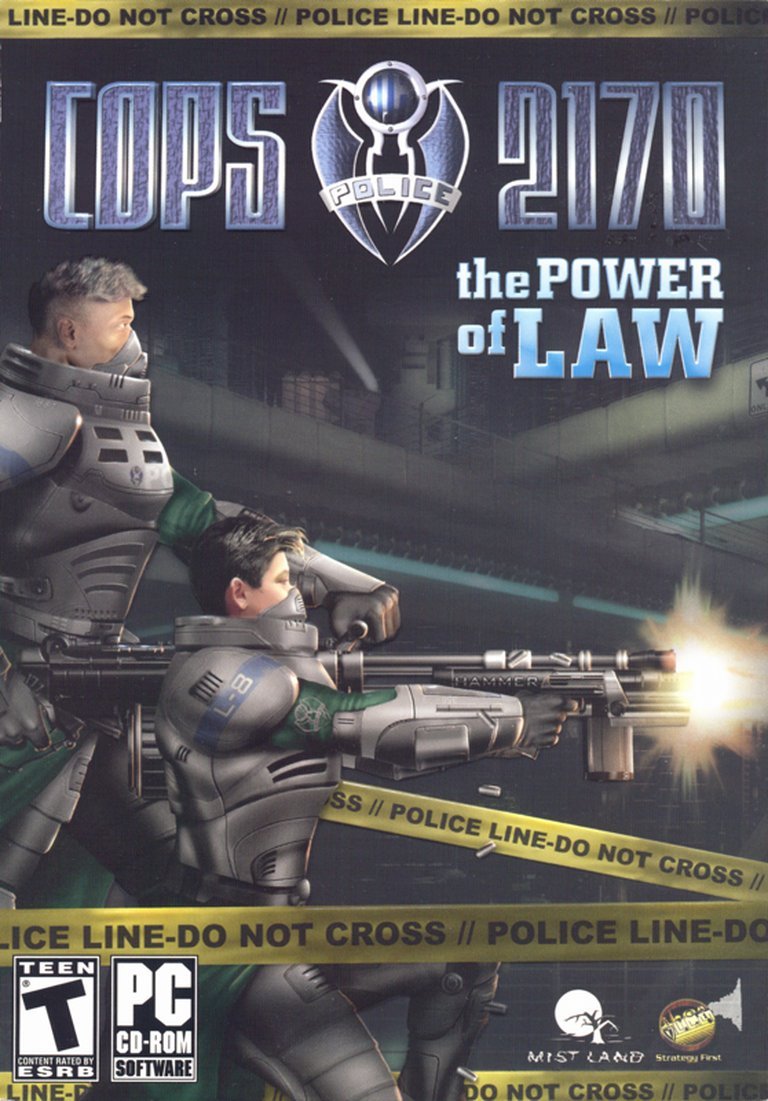
COPS 2170: The Power of Law is a tactical strategy game with RPG elements set in a futuristic cyberpunk world, serving as a prequel to Paradise Cracked. Players control Katy, a rookie police officer aiming to climb the ranks while leading a squad of up to six characters in turn-based combat against criminal factions. Missions unfold across dystopian urban environments, with branching objectives and outcomes influenced by player choices. The game emphasizes strategic squad management, equipment upgrades tied to rank, and a gripping narrative involving a dangerous criminal conspiracy threatening the city.
Gameplay Videos
Where to Buy Cops 2170: The Power of Law
PC
Cops 2170: The Power of Law Free Download
Cops 2170: The Power of Law Cracks & Fixes
Cops 2170: The Power of Law Patches & Updates
Cops 2170: The Power of Law Guides & Walkthroughs
Cops 2170: The Power of Law Reviews & Reception
metacritic.com (44/100): A triumphant return to form for the series.
gamepressure.com (52/100): A mix of real-time strategy and tactical gameplay, enriched with cRPG elements and embedded in a futuristic, cyberpunk world.
en.wikipedia.org (42/100): Cops 2170: The Power of Law received mostly negative reviews.
ign.com (40/100): If only they’d waited until 2170 to release it.
mobygames.com (48/100): Average score: 48% (based on 32 ratings)
Cops 2170: The Power of Law: Review
Introduction
In the annals of turn-based tactical RPGs, Cops 2170: The Power of Law (2004) stands as a fascinating artifact—a cyberpunk relic that dared to blend squad combat, moral ambiguity, and systemic ambition, yet stumbled under the weight of its own aspirations. Developed by Russian studio ZAO MiST Land South, this prequel to Paradise Cracked (2002) promised a gritty dystopian odyssey but arrived burdened by clunky mechanics, uneven storytelling, and a divisive critical reception. While its vision of a cybernetically enhanced police force navigating a fractured future captivated niche audiences, the game’s legacy remains overshadowed by contemporaries like Silent Storm and Jagged Alliance 2. This review argues that Cops 2170 is a flawed yet ambitious time capsule—a testament to the challenges of marrying narrative depth with tactical rigor in an era of rising player expectations.
Development History & Context
Cops 2170 emerged during a transformative period for tactical RPGs. By 2004, genre titans like X-COM and Fallout had raised the bar for depth and polish, while studios like Nival Entertainment (Silent Storm) refined 3D engine capabilities. MiST Land South, a small Russian developer, aimed to capitalize on this momentum with a spiritual successor to Paradise Cracked, set in their shared “Reality 4.13” universe. However, the studio faced significant hurdles:
– Technical Constraints: Built on a rudimentary polygonal engine, Cops 2170 struggled to match the visual fidelity or destructibility of Silent Storm. Budget limitations forced compromises, such as recycled animations and static environments.
– Publisher Turbulence: Originally intended as a direct sequel, rights disputes forced a rebrand to Cops 2170 after publisher Russobit-M retained the Paradise Cracked title. This fractured continuity confused fans.
– Cultural Localization: Designed for a CIS audience, the game’s English localization—handled by DreamCatcher Interactive—was lambasted for stilted dialogue and mistranslations (e.g., “Power of Law” misinterpreting the Russian Власть закона, or “Rule of Law”).
Released in Russia in February 2004 and later globally, Cops 2170 arrived at a crowded market moment, competing against sleeker AAA titles. Its rigid turn-based structure felt dated next to emergent real-time hybrids like Full Spectrum Warrior.
Narrative & Thematic Deep Dive
Set in 22nd-century North America, Cops 2170 casts players as Katy (or Katrin), a police academy graduate navigating a neon-drenched hellscape ruled by corporate syndicates, mutants, and underground factions. The plot orbits Katy’s moral reckoning as she uncovers a conspiracy orchestrated by the enigmatic Dr. Lasker—a trope-laden “evil genius”—while balancing alliances with rival groups like the Syndicate and mutant gangs.
Strengths and Shortcomings:
- Branching Morality: Player choices subtly shift faction reputations. Aiding mutants in the slums might unlock guerrilla allies but alienate corporate benefactors.
- Characterization Void: Despite a 60+ NPC roster, most characters lack depth. Katy’s arc feels undercooked, and allies like the gruff Sergeant Kovacs adhere to cyberpunk clichés.
- Thematic Ambition: The game interrogates authoritarianism and bioethics—e.g., mandatory cybernetic implants (“Cyber Links”) for societal control—but undermines itself with juvenile dialogue (“This city needs a cleansing!”).
Crucially, the narrative’s “Blind Idiot Translation” (TV Tropes) neutered its gravity. Mission briefings oscillate between incoherent jargon and unintentional comedy, a flaw critics universally panned.
Gameplay Mechanics & Systems
Cops 2170 combines X-COM-inspired tactics with light RPG progression, though its execution proved divisive:
Core Loop:
- Squad Management: Recruit up to six officers, each with customizable stats (Accuracy, Strength, Cyber-Affinity). Equipment unlocks tied to rank incentivize flawless mission performance.
- Turn-Based Combat: Hex-grid movement, action points, and cover mechanics define engagements. However, fog-of-war limits visibility absurdly—characters with 50% Accuracy routinely miss point-blank shots.
- Mission Structure: 14 maps vary from slum raids to cyberspace incursions. Optional objectives (e.g., rescuing hostages) add replayability but suffer from unclear triggers.
Innovations vs. Flaws:
- Rank-Based Equipment: Unlike X-COM’s resource economy, gear is gated by performance. Achieving “A” ranks unlocks flamethrowers or combat drones, rewarding mastery.
- AI Catastrophes: Allies pathfind into walls, while enemies like “RoboRats” (rodents with miniguns) obliterate squads in one turn. The result is a save-scumming nightmare.
- Verticality and Vehicles: Maps feature multi-level structures and drivable tanks, yet camera controls—lacking rotation—obscure critical angles.
Reviewers lambasted the UI’s “needlessly microscopic icons” (PC Games) and inventory management plagued by Critical Existence Failure—characters function identically at 1% or 100% health.
World-Building, Art & Sound
Cops 2170’s cyberpunk aesthetic channels Blade Runner via a low-budget lens:
- Visual Design: Dystopian sprawls drip with rain-slicked neon, but low-res textures and rudimentary animations (e.g., stiff “gangsta-style” pistol grips) shatter immersion. Character models lack expressiveness, reducing emotional stakes.
- Atmosphere: Where the game shines. Shadow-drenched alleys and humming data hubs evoke existential dread, amplified by a synth-heavy OST that IGN praised as “deserving of a better game.”
- Audio Miscues: Voice acting ranges from wooden (Katy) to hysterically overwrought (villains). Gunfire lacks punch, and ambient tracks loop jarringly.
Despite limitations, art director Igor Mikhalchishin’s vision coalesces in moments—e.g., cyberspace segments where players battle “logic demons” amidst Tron-esque grids.
Reception & Legacy
Upon release, Cops 2170 faced a critical mauling:
– Aggregate Scores: MobyGames’ 48% critic average (32 reviews) and Metacritic’s 44/100 reflect consensus on its squandered potential. Praise centered on its “pure playability” (Sector.sk) for hardcore tacticians; derision targeted its “prehistoric engine” (GamesFirst!).
– Commercial Fate: A modest CIS release saw lukewarm sales, while Western publishers DreamCatcher and Strategy First buried it in bargain bins. A 2005 “Gold Collection” reissue failed to revive interest.
– Cult Following: Retrospectively, niche communities celebrate its ambition—e.g., branching quests predating Mass Effect’s morality systems. The planned sequel, 4th Battalion, remains vaporware.
Though devoid of mainstream influence, Cops 2170 presaged indie experiments like Invisible, Inc. in marrying cyberpunk lore with systemic depth.
Conclusion
Cops 2170: The Power of Law is a contradictory relic—a game teeming with ideas (moral choice, rank-driven progression) yet shackled by technical ineptitude and localization failures. Its vision of a cyberpunk police state resonates thematically, but clunky mechanics and AI incompetence mar the experience. For genre historians, it offers a compelling case study in ambition vs. execution; for modern players, its Steam re-release (2022) serves as a curiosity, not a revelation. In the pantheon of tactical RPGs, it remains a footnote—a stuttering oracle that glimpsed the future but couldn’t escape the past.
Final Verdict: A 5/10—flawed yet fascinating, best appreciated as a museum piece for cyberpunk completists.