
- Release Year: 2020
- Platforms: Windows
- Publisher: SoulShared Games LLC
- Developer: SoulShared Games LLC
- Genre: Action, Puzzle
- Perspective: 1st-person
- Game Mode: Single-player
- Gameplay: Shooter, Tile matching puzzle
- Setting: COVID-19
- Average Score: 100/100
- VR Support: Yes
Description
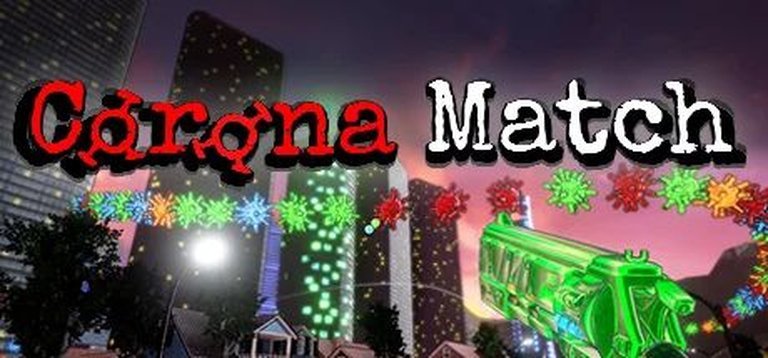
Corona Match is a first-person tile-matching puzzle game where players battle the spread of COVID-19 by using a Pill Pistol to shoot colored pills at viral strains, creating matches of three to eliminate them. Set in a world overrun by the Corona virus, the game offers three difficulty levels, VR support for an immersive experience, and Twitch integration that allows viewers to assist in gameplay. With unlockable weapons and a unique twist on the match-three genre, players must strategically clear levels before the virus spreads uncontrollably.
Corona Match Reviews & Reception
soulsharedgames.itch.io (100/100): Fun game!
Corona Match: A First-Person Puzzle Shooter Born from Pandemic Panic
Introduction
In the annals of video game history, few titles are as bizarrely timely—or as hastily conceived—as Corona Match. Released on March 28, 2020, by the obscure indie studio SoulShared Games LLC, this first-person puzzle shooter arrived at the height of the COVID-19 pandemic, a time when fear, uncertainty, and dark humor collided in unprecedented ways. Corona Match is a game that could only have been made in 2020: a frantic, colorful, and oddly cheerful attempt to gamify the global crisis. It’s a relic of its era, a digital artifact that captures the collective anxiety of the moment while wrapping it in the familiar mechanics of a match-three puzzle game.
At its core, Corona Match is a first-person shooter (FPS) with a twist: instead of bullets, players fire colored pills from a “Pill Pistol” to eliminate waves of virus-like enemies by matching three of the same color. The game’s premise is absurdly simple—”Corona’s greatest weakness is matches of THREE!”—yet its execution is a fascinating blend of urgency, experimentation, and sheer opportunism. With support for VR, Twitch integration, and a tongue-in-cheek narrative about “ridding the world of Corona,” the game is equal parts satire, stress relief, and shameless cash-in.
But what makes Corona Match worthy of analysis isn’t just its audacious premise or its impeccable timing. It’s the way the game reflects the gaming industry’s rapid response to global events, the rise of pandemic-themed games as a bizarre subgenre, and the creative (if sometimes questionable) ways indie developers capitalize on cultural moments. Corona Match is a game that could have been forgotten as quickly as it was released, yet it lingers as a curious footnote in gaming history—a reminder of how art, commerce, and crisis intersect in the digital age.
Development History & Context
The Studio Behind the Game: SoulShared Games LLC
SoulShared Games LLC is a small, relatively unknown indie studio with a portfolio that, prior to Corona Match, consisted of niche titles like Gun Chain (a game that Corona Match players could unlock a special weapon for upon completion). The studio’s output suggests a focus on experimental, often humorous, and mechanically simple games designed for quick consumption. Corona Match fits squarely within this mold: a game built fast, marketed faster, and designed to ride the wave of a cultural phenomenon.
The studio’s decision to develop Corona Match was almost certainly driven by the explosion of pandemic-themed games in early 2020. As COVID-19 spread globally, so too did a strange cottage industry of games attempting to process, parody, or profit from the crisis. Titles like Corona Simulator, COVID-19 Snake: Cure Corona, and Call of Corona: Micro Warfare flooded digital storefronts, each offering their own take on the pandemic. SoulShared Games saw an opportunity and seized it, crafting a game that was equal parts puzzle shooter and pandemic commentary.
Technological Constraints and Design Philosophy
Corona Match was developed under tight constraints, both in terms of time and resources. The game’s simple mechanics—shooting colored pills to create matches of three—suggest a development cycle measured in weeks, not months. The first-person perspective, while unusual for a match-three game, was likely chosen to differentiate Corona Match from the countless other puzzle games on the market. The addition of VR support, though optional, hints at the studio’s desire to leverage emerging technologies to stand out.
The game’s art style is bright, cartoonish, and deliberately non-threatening, a stark contrast to the grim reality of the pandemic. This aesthetic choice reflects a broader trend in pandemic-themed games: using humor and vibrant visuals to soften the blow of a serious subject. The “Pill Pistol” and the idea of “matching three” to defeat the virus are playful abstractions of real-world concepts like vaccines and herd immunity, albeit simplified to the point of absurdity.
The Gaming Landscape in Early 2020
By March 2020, the gaming industry was already in the midst of a pandemic-driven boom. With lockdowns in effect worldwide, players turned to games for escapism, social connection, and distraction. Platforms like Twitch saw record viewership, and indie games—particularly those with short development cycles—thrived in an environment where players craved novelty and quick bursts of entertainment.
Corona Match arrived at the perfect moment. Its Twitch integration feature, which allowed streamers to involve their chat in the game, was a savvy move that tapped into the platform’s explosive growth. The game’s freeware/free-to-play model (with an optional “name your own price” option on itch.io) ensured maximum accessibility, while its VR support catered to the niche but enthusiastic VR gaming community.
Yet, Corona Match was also part of a larger, more questionable trend: the commodification of tragedy. While some pandemic-themed games approached the subject with sincerity or educational intent, others—like Corona Match—leaned into satire or outright exploitation. The game’s existence raises ethical questions about the line between commentary and opportunism, a debate that continues to this day.
Narrative & Thematic Deep Dive
The Story: A Satirical Take on the Pandemic
Corona Match’s narrative is minimal but deliberately on-the-nose. The game opens with a dire warning: “Corona is invading and it’s up to you to stop it. It started at 15 cases, and it’s not stopping!” This blunt framing mirrors the early days of the pandemic, when case counts were still small but rising exponentially. The player’s mission is clear: use the Pill Pistol to shoot colored pills at the virus strains, creating matches of three to make them “disappear like a miracle.”
The game’s story is less a coherent narrative and more a series of tongue-in-cheek references to pandemic terminology. The “Pill Pistol” evokes images of vaccines, while the act of matching three pills to eliminate the virus is a gamified metaphor for herd immunity or antiviral treatments. The game’s three difficulty settings—”Easy,” “Medium,” and “Hard”—could even be read as a dark joke about the varying severity of COVID-19 cases.
Themes: Fear, Humor, and Catharsis
Corona Match’s themes are rooted in the collective psyche of early 2020. The game is, at its core, about taking control of an uncontrollable situation. In a world where people felt powerless against an invisible enemy, Corona Match offered a fantasy of agency: here, the virus could be defeated with a few well-placed shots. The game’s bright colors and upbeat tone contrast sharply with the grim reality of the pandemic, creating a form of catharsis through absurdity.
Humor is the game’s primary coping mechanism. The idea of “shooting pills” to defeat a virus is ridiculous, and the game leans into that ridiculousness. The Twitch integration feature, which allows chatters to “aid you in the war on Corona,” turns the pandemic into a communal, almost festive experience. This reflects a broader cultural trend of using humor to process trauma, from memes about toilet paper shortages to jokes about Zoom fatigue.
Yet, beneath the humor lies a darker undercurrent. Corona Match is, in many ways, a game about futility. No matter how many viruses the player eliminates, more keep coming—a metaphor for the endless cycle of pandemic waves. The game’s three difficulty settings could also be interpreted as a commentary on the uneven impact of COVID-19, with some players facing an “Easy” challenge while others struggle on “Hard.”
Dialogue and Tone: Lighthearted but Loaded
The game’s dialogue, such as it is, consists of short, punchy lines like “Rid the world of Corona before it’s too late!” and “like a miracle it will disappear.” These phrases echo the rhetoric of politicians and public health officials, albeit stripped of their gravity. The tone is unmistakably satirical, poking fun at the way the pandemic was framed in media and politics.
The game’s marketing materials double down on this tone. The official description on Indiegala and itch.io is peppered with exclamation points and hyperbolic language, mimicking the sensationalist headlines of the time. The game doesn’t take itself seriously, and that’s the point: in a world where everything felt serious, Corona Match offered a moment of levity.
Gameplay Mechanics & Systems
Core Gameplay Loop: Match-Three Meets FPS
Corona Match’s gameplay is a hybrid of two well-established genres: the first-person shooter and the match-three puzzle game. The player controls a character armed with a Pill Pistol, which fires colored pills at incoming virus strains. The goal is to create matches of three or more pills of the same color, causing the virus strains to disappear. This core loop is simple but addictive, combining the satisfaction of a well-placed shot with the strategic thinking of a puzzle game.
The first-person perspective is the game’s most unusual mechanic. Most match-three games are played from a top-down or isometric view, but Corona Match places the player directly in the action. This choice adds a sense of urgency and immersion, making the player feel like they’re on the front lines of the “war on Corona.” The perspective also allows for more dynamic gameplay, as players must aim and shoot quickly to keep up with the onslaught of viruses.
Combat and Progression: Unlocking Weapons and Difficulties
As players progress through Corona Match, they can unlock “powerful weapons” to aid in their fight against the virus. These weapons likely offer different firing patterns or special abilities, adding variety to the gameplay. The game also features three difficulty settings—Easy, Medium, and Hard—which adjust the speed and frequency of virus spawns. Completing the game on Hard mode is positioned as the ultimate challenge, a nod to the “git gud” culture of gaming.
The game’s progression system is straightforward but effective. Players are encouraged to replay levels to improve their scores and unlock new weapons, adding a layer of replayability. The Twitch integration feature further extends the game’s lifespan by turning it into a communal experience, with streamers and their audiences working together to defeat the virus.
UI and Controls: Simple but Effective
Corona Match’s user interface is minimalist, with a focus on clarity and functionality. The Pill Pistol is the only tool the player needs, and the game’s controls are designed to be intuitive. The first-person perspective requires precise aiming, but the match-three mechanics ensure that the game remains accessible even to casual players.
The game’s VR support is optional but adds a new dimension to the gameplay. Playing in VR likely enhances the immersion, making the player feel like they’re physically shooting pills at the virus. This feature is a smart inclusion, as it caters to the growing VR gaming market while remaining optional for players who don’t own a headset.
Innovative Systems: Twitch Integration
The most innovative aspect of Corona Match is its Twitch integration feature. When enabled, this mode allows Twitch chatters to join the game and aid the streamer in their fight against the virus. This feature turns the game into a collaborative experience, blurring the line between player and audience. It’s a clever way to leverage the social nature of Twitch, turning a single-player game into a communal event.
The Twitch integration also serves as a marketing tool. By involving the audience in the gameplay, streamers can create more engaging content, potentially attracting more viewers. This feature reflects the growing importance of streaming in the gaming industry, where games are increasingly designed with streamers and their audiences in mind.
Flawed Systems: Repetition and Lack of Depth
While Corona Match’s core mechanics are solid, the game suffers from a lack of depth. The match-three gameplay, while fun in short bursts, can become repetitive over time. The game’s progression system is limited, with only a handful of weapons to unlock and three difficulty settings to conquer. Without additional mechanics or modes, Corona Match risks feeling shallow after a few hours of play.
The game’s narrative is also underdeveloped. While the pandemic theme is timely, the game doesn’t do much with it beyond its initial premise. There’s no deeper exploration of the pandemic’s impact on society, no character development, and no real stakes beyond the immediate challenge of matching pills. This lack of narrative depth makes Corona Match feel more like a novelty than a fully realized experience.
World-Building, Art & Sound
Setting and Atmosphere: A Bright, Cartoonish Pandemic
Corona Match’s world is a surreal, cartoonish take on the pandemic. The game’s environments are abstract, with virus strains floating toward the player in waves. The art style is bright and colorful, with vibrant pills and cheerful sound effects that contrast sharply with the grim reality of COVID-19. This deliberate disconnect between the game’s tone and its subject matter is part of its appeal, offering players a lighthearted escape from the real-world crisis.
The game’s atmosphere is one of playful chaos. The first-person perspective and the constant onslaught of viruses create a sense of urgency, but the bright colors and upbeat sound design keep the mood light. The game doesn’t take itself too seriously, and that’s part of its charm.
Visual Direction: Simple but Effective
Corona Match’s visuals are simple but effective. The game’s art style is reminiscent of mobile puzzle games, with bold colors and clean lines. The virus strains are designed to be easily distinguishable, ensuring that players can quickly identify and target them. The Pill Pistol is the game’s most iconic visual element, a cartoonish weapon that fires equally cartoonish pills.
The game’s VR support is a notable visual feature. Playing in VR likely enhances the immersion, making the player feel like they’re physically standing in the game’s world. This feature is a smart inclusion, as it caters to the growing VR gaming market while remaining optional for players who don’t own a headset.
Sound Design: Upbeat and Engaging
Corona Match’s sound design is upbeat and engaging, with cheerful sound effects that reinforce the game’s lighthearted tone. The sound of pills firing from the Pill Pistol is satisfying, and the sound of viruses disappearing is equally rewarding. The game’s soundtrack, while minimal, likely consists of energetic tracks that keep the player motivated.
The game’s sound design is particularly important in VR, where audio cues can enhance immersion. The sound of pills firing and viruses disappearing likely feels more impactful in VR, making the gameplay more engaging.
Reception & Legacy
Critical and Commercial Reception: A Mixed Bag
Corona Match’s reception was likely mixed, reflecting the game’s status as a niche, pandemic-themed title. On itch.io, the game has a perfect 5.0 rating based on one review, suggesting that those who played it enjoyed it. However, the game’s lack of critical reviews on platforms like MobyGames indicates that it didn’t receive widespread attention from gaming journalists.
Commercially, Corona Match was likely a modest success. The game’s freeware/free-to-play model ensured that it was accessible to a wide audience, and its Twitch integration feature likely helped it gain traction among streamers. However, the game’s lack of depth and repetitive gameplay likely limited its long-term appeal.
Evolution of Reputation: A Curious Footnote
In the years since its release, Corona Match has faded into obscurity, remembered primarily as a curious footnote in gaming history. The game’s legacy is tied to its timing: it’s a relic of the early pandemic era, a moment when developers scrambled to capitalize on a global crisis. While Corona Match is far from the most egregious example of pandemic-themed games, it’s a reminder of how quickly and opportunistically the gaming industry can respond to cultural moments.
Influence on Subsequent Games: A Minor Blip
Corona Match’s influence on subsequent games is likely minimal. The game’s hybrid of FPS and match-three mechanics is unique, but it hasn’t spawned a wave of imitators. The game’s Twitch integration feature is more notable, reflecting a broader trend of games designed with streamers in mind. However, Corona Match itself is unlikely to be remembered as a pioneer in this regard.
Conclusion: A Game of Its Time
Corona Match is a game that could only have been made in 2020. It’s a product of its time, a digital artifact that captures the fear, humor, and opportunism of the early pandemic era. The game’s blend of FPS and match-three mechanics is unique, and its Twitch integration feature is a clever nod to the growing importance of streaming in gaming. Yet, Corona Match is ultimately a novelty, a game designed to be played in short bursts and quickly forgotten.
The game’s legacy is tied to its timing. It’s a reminder of how the gaming industry responded to the pandemic, for better or worse. While Corona Match is far from the most exploitative pandemic-themed game, it’s a symbol of the ways in which developers capitalized on a global crisis. The game’s lighthearted tone and playful mechanics offer a moment of catharsis, but they also raise questions about the ethics of turning tragedy into entertainment.
In the grand scheme of video game history, Corona Match is a minor blip. It’s not a groundbreaking title, nor is it likely to be remembered as a classic. But as a snapshot of a specific moment in time, it’s a fascinating case study in how games reflect and respond to the world around them. Corona Match is a game about shooting pills at a virus, but it’s also a game about fear, humor, and the human need to take control of the uncontrollable. And in that sense, it’s a game that tells us as much about ourselves as it does about the pandemic.