
- Release Year: 2016
- Platforms: Windows
- Publisher: Unknown
- Developer: Unknown
- Genre: Action
- Perspective: Side view
- Game Mode: Single-player
- Gameplay: Platform
- Setting: Futuristic, Sci-fi
- Average Score: 59/100
Description
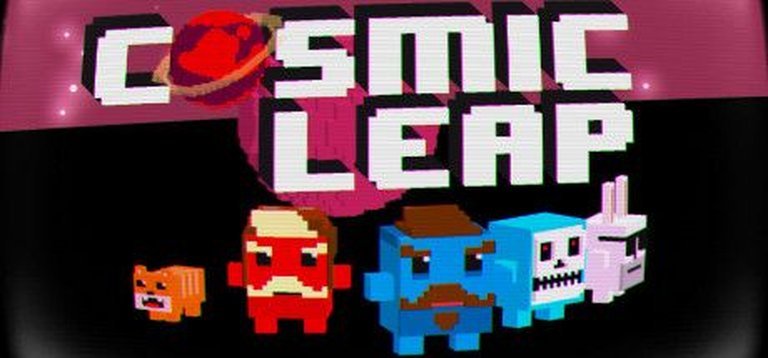
Cosmic Leap is a side-scrolling platformer set in a sci-fi universe where players navigate through 100 challenging levels. The game requires precise timing to jump between planets, avoid obstacles, and ultimately escape in a rocket ship. With colorful voxel graphics, retro arcade sounds, and a variety of unlockable characters and rocket ships, Cosmic Leap offers a nostalgic yet engaging gaming experience.
Where to Buy Cosmic Leap
PC
Cosmic Leap Reviews & Reception
opencritic.com (55/100): Cosmic Leap is a little game that tries to be more than what it truly is. The challenges are well designed, but the awful controls cause a lot of frustration.
metacritic.com (55/100): Cosmic Leap is a little game that tries to be more than what it truly is. The challenges are well-designed, but the awful controls cause a lot of frustration.
Cosmic Leap: Review
Introduction
In the vast cosmos of indie platformers, Cosmic Leap (2016) orbits as a curious experiment—a game that channels the charm of retro aesthetics and bite-sized challenges but struggles with the gravitational pull of its own design flaws. Developed by solo creator Michael Hall, this sci-fi platformer tasks players with leaping between planets, dodging obstacles, and racing against the clock in a dystopian game show. While its voxel art and catchy soundtrack earned niche praise, clunky controls and repetitive design left many players adrift. This review argues that Cosmic Leap is a fascinating, if uneven, artifact of indie ambition—a game that shines in moments but falters under the weight of its execution.
Development History & Context
Cosmic Leap emerged during a boom era for indie platformers, joining titles like Celeste and Geometry Dash in testing players’ reflexes. Built in Unity by Michael Hall, the game reflects the constraints of solo development: a tight budget, minimalist scope, and reliance on a singular creative vision. Released on Steam in March 2016, it entered a crowded market where pixel-art nostalgia and rhythm-based gameplay were already staples.
Hall’s vision was clear: create a “dangerous test of reflexes” with a retro-futuristic twist. The game’s 100 levels were designed to be completed in seconds, catering to speedrunners and casual players alike. However, technical limitations—such as the lack of a dedicated QA team—likely contributed to its infamous control scheme, which reviewers universally panned.
Narrative & Thematic Deep Dive
The game’s premise is its most underdeveloped element. Set in a tyrannical galaxy where contestants compete in the Cosmic Leap game show, players control a rebel forced to entertain a despotic regime. The narrative, delivered through sparse text interludes, hints at dystopian themes—forced labor, propaganda, and rebellion—but never explores them meaningfully. As Brandon Dayton of Indie Game Bundles noted, the “big-brother elements” clash oddly with the candy-colored visuals, creating a tonal dissonance that feels more accidental than intentional.
Characters, such as the unlockable “Hella Handsome Man” and voxel-themed astronauts, are cosmetic novelties rather than story drivers. The experience leans heavily on its arcade-inspired structure, treating narrative as a backdrop rather than a focus.
Gameplay Mechanics & Systems
At its core, Cosmic Leap is a momentum-based platformer. Players auto-run around tiny planets, timing jumps to avoid spikes, missiles, and lasers while collecting coins or racing to a rocket ship. The controls, however, are its Achilles’ heel:
- Directional Inversion: Movement reverses depending on planetary positioning, creating confusion.
- Jump Mechanics: Single jumps preserve momentum, while double jumps allow planetary transfers—a system critics called “arbitrary” (ChristCenteredGamer).
- Unlockables: 40 characters and nine ships offer cosmetic variety but no gameplay benefits.
The “Cosmic” difficulty levels ramp up challenges, but as BagoGames noted, these often feel “frustrating rather than rewarding” due to inconsistent physics. While the 100-level structure provides quantity, repetition sets in quickly, with obstacles recycling ideas rather than innovating.
World-Building, Art & Sound
Cosmic Leap’s strongest suit is its presentation. The voxel art style—a blocky homage to retro gaming—pops with neon planets and chunky explosions. An optional CRT filter adds scanlines and color warping, enhancing the “game show” aesthetic. However, the visuals suffer in motion: small sprites and cluttered environments make hazards hard to discern.
The soundtrack, a blend of “down-tempo electro” (Indie Game Bundles) and chiptune beats, is catchy but overly repetitive. Sound effects, though serviceable, lack punch—a missed opportunity to elevate the kinetic gameplay.
Reception & Legacy
At launch, Cosmic Leap garnered mixed reviews (66% positive on Steam). Critics praised its “addictive gameplay” and “colorful aesthetic” (Gamers-Haven) but lambasted its controls as “abysmal” (Indie Game Bundles) and “unresponsive” (ChristCenteredGamer). The game found a niche among speedrunners and achievement hunters, but its commercial impact was limited—a $0.99 price tag couldn’t mask its flaws.
While Cosmic Leap didn’t revolutionize the genre, it influenced later indie titles like Astro Bot Rescue Mission in its planetary platforming ideas. Its legacy lies in its cautionary tale: even charming aesthetics can’t salvage foundational gameplay issues.
Conclusion
Cosmic Leap is a paradoxical game—a title bursting with creative spark yet hobbled by mechanical missteps. Its voxel visuals and dystopian premise hint at greater ambitions, but clunky controls and repetitive design keep it from reaching orbit. For $0.49 on sale, it’s a harmless curiosity for platformer enthusiasts, but most players will find its charm eclipsed by frustration. In the pantheon of indie gems, Cosmic Leap remains a footnote—a reminder that even small games must nail the basics to truly shine.
Final Verdict: A flawed but earnest experiment, best suited for patient players craving retro vibes over polished gameplay.