
- Release Year: 2018
- Platforms: PlayStation 4, Windows
- Publisher: Tricol Co., Ltd.
- Developer: Tricol Co., Ltd.
- Genre: Action, Simulation
- Perspective: 1st-person
- Game Mode: Single-player
- Gameplay: Cooking
- Setting: Fantasy
- Average Score: 51/100
- VR Support: Yes
Description
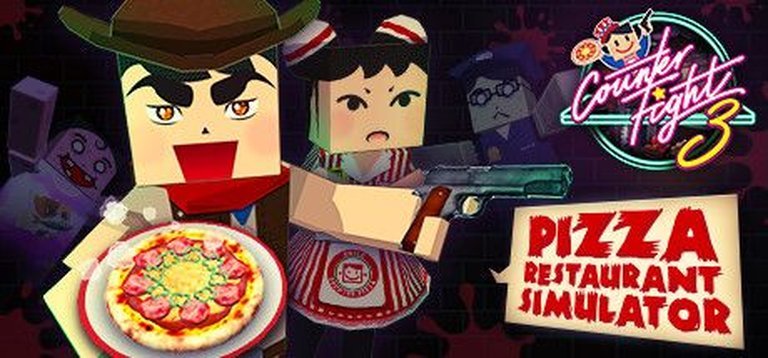
Counter Fight 3 is a fast-paced work simulation game set in a fantastical pizzeria overrun by unique customers, including robbers and zombies, where players assume the role of a chef crafting pizzas and pasta in real-time first-person action. Featuring improved graphics, optimized controls, and new chaotic elements like throwable items and UFOs, the goal is to serve orders accurately, defeat threats with guns, and rack up high scores for global rankings.
Counter Fight 3 Reviews & Reception
steambase.io (42/100): Mixed
metacritic.com (60/100): Sometimes, silly games are worth purchasing for a laugh and Counter Fight 3 is great for that but it does run out of steam quite fast.
Counter Fight 3: Review
Introduction
Imagine a bustling pizzeria where the dinner rush isn’t just hungry families but a horde of zombies shambling through the door, robbers waving pistols, and UFOs dispensing bizarre power-ups—all while you’re frantically kneading dough and slinging pizzas in virtual reality. Counter Fight 3, the third entry in Tricol Co., Ltd.’s delightfully unhinged VR cooking simulation series, embodies this chaotic fever dream. Building on the absurd foundations of its predecessors like the rice-bowl frenzy of Counter Fight: Samurai Edition, it transplants players into a pizza parlor apocalypse. As a game historian chronicling the wild west of early VR indies, my thesis is clear: Counter Fight 3 is a riotous, motion-controlled burst of silliness that captures the experimental spirit of 2018’s VR landscape, delivering short-term hilarity through its blend of culinary precision and zombie-slaying action—but its repetitive loops and lack of progression relegate it to a novelty rather than a staple.
Development History & Context
Tricol Co., Ltd., a small Japanese indie studio founded with a penchant for quirky VR simulations, unleashed Counter Fight 3 on December 20, 2018, for Windows via Steam, followed by a PlayStation 4 VR port in June 2019. Self-published and built on the Unity engine—a staple for VR indies due to its accessibility and cross-platform support—the game emerged during VR’s “novelty phase,” sandwiched between hits like Job Simulator (2016) and Half-Life: Alyx (2020). This era saw developers grappling with motion controls’ promise: translating real-world gestures into digital absurdity without inducing nausea or frustration.
Tricol’s vision, as gleaned from their IndieDB page and Steam announcements, was to evolve the “Counter Fight is never dead!” mantra. Previous titles like the original Counter Fight (2016, rice-focused) and Samurai Edition (2017, VR-enhanced with Japanese flair) established a formula of high-pressure food service amid escalating threats. For Counter Fight 3, creators optimized the in-store layout for “minimal movement,” addressing VR locomotion woes, while introducing zombies and UFOs to amp up the fantasy chaos. Technological constraints were VR-specific: requiring HTC Vive, Oculus Rift, or PSVR with dual Move controllers and cameras, it demanded precise tracking for dough-tossing and gunplay. The 2018 gaming landscape was VR-skeptical—Oculus Quest loomed, but headset adoption lagged—pushing indies like Tricol to lean into meme-worthy hooks. Priced as a budget title (around impulse-buy territory on Steam/PS Store), it targeted VR enthusiasts craving Overcooked-meets-House of the Dead vibes, amid a flood of cooking sims like Surgeon Simulator knockoffs.
Narrative & Thematic Deep Dive
Counter Fight 3 eschews traditional storytelling for emergent absurdity, a hallmark of VR sims where “plot” unfolds through player-customer interactions. There’s no overt campaign; instead, endless waves of “unique customers” flood your pizza counter, barking orders for custom pies and pastas amid escalating invasions. Dialogue is minimal—grunted demands like “Pepperoni pizza, now!” or zombie moans—but it paints a thematic tapestry of service-industry hell elevated to comic apocalypse.
At its core, themes revolve around capitalist absurdity under siege: you’re the entrepreneurial pizza chef chasing global leaderboards, turning profit (via scores) while defending your turf. Robbers from prior games return as greedy opportunists, but zombies introduce a “No more room in hell and pizzeria!” horror-comedy twist, nodding to Dawn of the Dead‘s mall siege. UFOs and “weakness robots” add sci-fi whimsy, with throwable items and special functions symbolizing chaotic improvisation. Characters are archetypal: impatient patrons, shambling undead, pistol-toting thugs—each a vessel for slapstick escalation. Subtle satire emerges in the power fantasy of arming up (guns galore) against consumer hordes, critiquing endless gig-economy grind. Yet, lacking voiced lines or branching paths, the “narrative” is player-driven vignettes: nailing a perfect Margherita amid gunfire feels triumphant, but botched orders lead to comedic failure states. In VR’s intimate scale, this fosters themes of bodily comedy—your hands flailing dough while blasting zombies—echoing vaudeville more than epic sagas. Ultimately, it’s thematic cotton candy: sweet, fleeting commentary on work-life Armageddon.
Gameplay Mechanics & Systems
The core loop is a masterful mashup of precision cooking and on-rails action, deconstructed as follows:
Core Gameplay Loops
Players inhabit a 1st-person pizza counter, using motion controls to grab ingredients (dough, sauce, toppings), assemble pizzas/pastas via stretching, spreading, and baking, then serve via precise handoffs. Orders appear as holographic tickets; accuracy and speed yield score multipliers for global rankings. Endless mode ramps waves, blending sim with survival.
Combat & Defense
Innovation shines in hybrid defense: robbers demand cash (or meals?), zombies devour patrons—counter with pistols, throwable “toys” (UFO power-ups, robot grenades), or melee hits. Gunplay feels tactile—aim with one hand, reload with the other—turning the kitchen into a warzone. New “fun throwing, fun hitting” mechanics add physics-based chaos, like hurling weakness-exploiting items at foes.
Progression & UI
Minimal progression: no unlocks or meta-progression (Steam forums lament this, comparing unfavorably to Order Up!‘s restaurant upgrades). Challenges (e.g., 5-minute rushes) and leaderboards provide replay hooks. UI is sparse—score HUD, order pop-ups—optimized for VR immersion, with redesigned store layout minimizing reaches (a leap from series’ clunkier navigation).
Flaws abound: Repetition dulls waves (Video Chums: “runs out of steam fast”); no pause/exit in challenges frustrates (Steam gripes). Controls demand calibration—motion drift kills flow—but when clicking, it’s euphoric: tossing pizza like a pro mid-zombie headshot. Scoring rewards multitasking, but VR fatigue limits sessions to 20-30 minutes. Innovative yet flawed, it’s peak arcade VR.
World-Building, Art & Sound
The singular setting—a compact, neon-lit pizzeria—pulses with lived-in chaos, counters cluttered with ovens, fridges, and hidden arsenals. Fantasy intrudes organically: zombie guts splatter dough stations, UFOs hover overhead, blending realism with comic horror. Atmosphere thrives on escalation—from orderly service to bullet-riddled bedlam—fostering claustrophobic tension unique to VR’s scale.
Visuals mark a “graphical evolution” from series priors: Unity-powered models boast improved textures (shiny cheese pulls, realistic toppings), lighting casts dramatic shadows during invasions, and destruction adds dynamism (overturned tables, bloodied floors). Not photorealistic—blocky customers evoke cartoonish charm—but VR presence sells the immersion, with hand models syncing gestures flawlessly.
Sound design amplifies mayhem: sizzling pizzas, clanging utensils, customer chatter build kitchen bustle; zombie groans, gun cracks, and explosive “toys” deliver punchy feedback. No full soundtrack noted, but ambient VR hum (sauce drips, crowd murmurs) heightens urgency. Collectively, these craft a sensory overload: visuals pop in motion-tracked frenzy, sounds cue actions, forging an atmosphere of gleeful pandemonium that elevates mundane sim to visceral thrill.
Reception & Legacy
Launch reception was muted: Video Chums’ lone critic score of 60% praised “silly laughs” but slammed brevity; Steam’s 42/100 (19 reviews, “Mixed”) echoes community woes—endless waves bore, calls for progression unheeded. PSVR users noted Move control quirks; commercial footprint tiny (~9K owners, <1 peak concurrent per PlayTracker). No Metacritic aggregate, zero player reviews on MobyGames.
Yet, reputation endures as cult VR oddity. Tricol’s series (up to Counter Fight 4‘s cafes, Ramen Simulator) influenced niche “VR work sims” like Vacation Simulator, blending chores with combat. Forums hail gunfights as highlights; its Unity template likely inspired copycats. In industry terms, it exemplifies 2018 VR’s hit-or-miss indiedom—pioneering cooking-defense hybrids amid Beat Saber dominance—but low visibility curbs broad impact. Legacy: a footnote for historians, cherished by VR diehards for unpretentious chaos.
Conclusion
Counter Fight 3 distills VR’s madcap potential into a pizza-slinging zombie blender: taut mechanics, absurd themes, and immersive absurdity make it a 20-minute hoot, but repetition and absent depth cap its staying power. Tricol’s indie pluck shines, evolving a series amid VR’s growing pains, yet it remains a quirky artifact—not revolutionary like Job Simulator, but a testament to simulation’s wild frontiers. Verdict: Recommended for VR novelty seekers (7/10), a historical curio securing Counter Fight‘s place as Japan’s gift of greasy, gun-toting gaming weirdness. Fire up the oven—counter fighting never dies.