
- Release Year: 2014
- Platforms: Windows
- Publisher: Nexon Korea Corporation
- Developer: Valve Corporation
- Genre: Action
- Perspective: 1st-person
- Game Mode: LAN, Online Co-op, Online PVP
- Gameplay: Tactical shooter, Zombie survival
- Setting: Fantasy
- Average Score: 40/100
Description
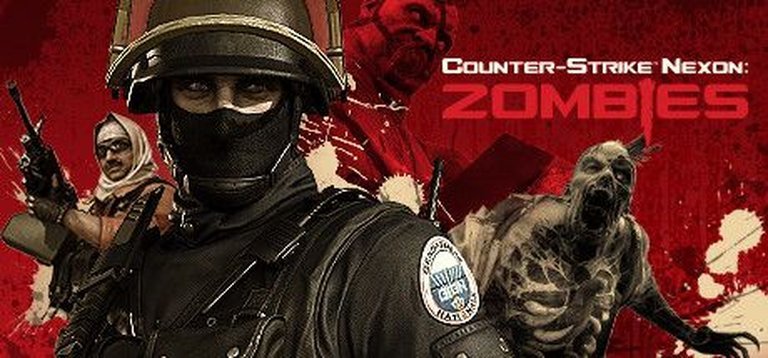
Counter-Strike Nexon: Zombies is a free-to-play first-person shooter set in a fantasy world, blending the tactical gameplay of the classic Counter-Strike series with a zombie apocalypse theme. Developed by Valve and published by Nexon Korea, it features wave-based zombie combat, diverse character classes, and weapon customization, all within a free-to-play model.
Gameplay Videos
Counter-Strike Nexon: Zombies Mods
Counter-Strike Nexon: Zombies Guides & Walkthroughs
Counter-Strike Nexon: Zombies Reviews & Reception
metacritic.com (50/100): Lousy use of a license but at least contains Counter Strike 1.6.
metacritic.com (40/100): A fifteen year old shooter packed with some new modes and, of course, a bunch of zombies.
metacritic.com : A disgrace to the CS games series with horrible visuals and gameplay.
metacritic.com (70/100): It’s basically a heavily modded CS 1.6 with awesome new gamemodes and weapons.
metacritic.com (0/100): A huge pay-to-win disaster with a dead community.
mmohuts.com : A hybrid of classic CS 1.6 and zombie modes with varied gameplay but aged presentation.
mobygames.com : Free-to-play CS with zombie modes and classic gameplay, though presentation is dated.
itsblogginevil.com : A unique and fun zombie mode experience despite minor performance issues and imbalanced PvP.
Counter-Strike Nexon: Zombies Cheats & Codes
PC
Enter codes at the console, which can be opened by assigning a button to it (usually the button above TAB and below ESC).
| Code | Effect |
|---|---|
| cl_showfps 1 | Shows FPS on screen |
| fps_max 101 | Sets maximum FPS to 101 |
| cl_crosshair_color “500 500 500” | Allows using custom colors for crosshair |
| cl_dynamiccrosshair 0 | Prevents crosshair from changing size while shooting |
| cl_crosshair_translucent 1 | Makes crosshair translucent |
| r_detailtextures 1 | Enables better quality textures |
| gl_vsync 0 | Disables vertical synchronization |
| violence_hblood 1 | Enables human blood (default) |
| violence_ablood 1 | Enables alien blood (default) |
| cl_minmodels 0 | Shows all non-classic costumes and classes (default) |
| net_graph 3 | Shows real-time data about FPS, MS and package loss |
| net_graphpos 2 | Centers the net_graph display |
Counter-Strike Nexon: Zombies: Review
Introduction
In the pantheon of tactical first-person shooters, few franchises command as much reverence as Counter-Strike. Born from a Half-Life mod in 1999 and refined into an esports phenomenon by Valve, its legacy is etched into the DNA of competitive gaming. Yet, amidst its storied lineage, one spin-off stands as a bewildering anomaly: Counter-Strike Nexon: Zombies. Released in 2014 as a free-to-play title, this South Korean-developed experiment thrusts the series’ tactical rigor into a chaotic blend of undead PvE and PvP gameplay. This review deconstructs Counter-Strike Nexon: Zombies not merely as a game, but as a cultural artifact—a product of its time, its engine, and its divergent design philosophy. While it captures the nostalgic essence of Counter-Strike 1.6, its execution is a study in ambition versus constraint, ultimately cementing its place as a footnote in the franchise’s history.
Development History & Context
Counter-Strike Nexon: Zombies emerged from a unique collaboration between Valve and Nexon Korea Corporation, with Valve credited for the underlying GoldSrc engine—the same aging technology powering the original 1999 mod. Announced in August 2014, the title was positioned as the Western counterpart to Counter-Strike Online, a 2008 Asian spin-off already popular in markets like South Korea and China. Its development was a pragmatic response to regional tastes: while Valve’s mainline titles (Global Offensive, launched in 2012) prioritized competitive realism, Nexon aimed to capitalize on the burgeoning zombie craze and free-to-play monetization models.
The game launched in open beta on Steam on September 23, 2014, plagued by server instability and a flawed anti-cheat system, as noted by early players (It’s Bloggin Evil). The full release on October 7, 2014, promised 50 maps, 20 modes, and a “zombie-centric” reinterpretation of the Counter-Strike formula. Technologically, it was a relic—running on a 16-year-old engine, it struggled to compete with contemporary shooters like Call of Duty: Advanced Warfare or even Valve’s Global Offensive. This constraint shaped its identity: a budget-friendly experiment leveraging proven mechanics to test new waters in the Western market.
Narrative & Thematic Deep Dive
Though Counter-Strike has never prioritized narrative, Nexon: Zombies attempts a loose zombie apocalypse framing. The Zombie Scenario mode hints at a backstory involving “conspiracies behind the undead,” but this is little more than window dressing for wave-based survival gameplay. Players navigate destructible maps like “Factory” or “Mall,” uncovering fragmented lore through environmental storytelling—abandoned labs, graffiti-laden walls, and scripted events. Yet the narrative remains shallow, serving purely as justification for zombie slaughters.
Thematic contrasts emerge: the game juxtaposes the franchise’s signature tactical realism (hostage rescues, bomb defusal) with fantastical absurdity. Zombie Hero mode pits players as monstrous abominations with supernatural abilities, while Zombie Escape frames terrorists as fleeing victims of a bioweapon. This tonal dissonance reflects its hybrid nature—classic Counter-Strike mechanics repurposed for a broader, less hardcore audience. Characters, too, blend realism and fantasy: classic CT/T models coexist with anime-inspired hero skins (e.g., “Oz’s Trio”), blurring the line between military and myth. Ultimately, the narrative is a vehicle for chaos, not depth—a thematic echo of its design.
Gameplay Mechanics & Systems
Counter-Strike Nexon: Zombies’ core gameplay is a dichotomy: it alternates between faithful Counter-Strike simulations and chaotic zombie extravaganzas.
Core Mechanics
- Classic Modes: Bomb defusal and hostage rescue retain the series’ signature tension, with round-based economy, one-life-per-round stakes, and tactical positioning.
- Zombie Modes:
- Zombie Scenario: PvE wave defense with boss fights (e.g., “Titan” zombies requiring coordinated fire).
- Zombie Hero: Asymmetric PvP where humans use guns while zombies deploy unique abilities (e.g., “Slapper” zombies stunlock players).
- Zombie Shelter: Base-defense against endless waves, featuring resource management.
- Fun Modes: Quirky alternatives like Bazooka Battle (explosive-only combat) and Football (melee-only soccer) break the monotony.
Progression & Monetization
- Crafting System: Players earn materials/blueprints to craft weapons, with randomized outcomes and time-limited rewards—a “pay-to-win” lite mechanic criticized by users (Metacritic).
- Family System: Guild-like clans offering item sharing and XP bonuses.
- Microtransactions: Weapon packs (e.g., $1.99 “Starter Pack”) and seasonal items dominate the store, though gameplay remains accessible without purchases.
Combat & Balance
Gunplay mirrors CS 1.6: recoil patterns, weapon spray, and movement physics are authentic. However, zombie modes introduce imbalance. In Zombie Hero, humans can “corner-camp” with machine guns, rendering zombies powerless (It’s Bloggin Evil). Boss fights often devolve into repetitive DPS checks, lacking the finesse of Valve’s design.
World-Building, Art & Sound
World-Building
The game spans 60+ maps, from classic de_dust reimagined with zombie barricades to original locales like “Lab” (a bioweapon facility). Settings are varied but thematically redundant: urban, industrial, and abandoned zones dominate, with no cohesive narrative geography.
Art Direction
The GoldSrc engine severely limits visual fidelity. Character models are blocky and inconsistent—realistic CTs clash with cartoonish zombies (e.g., “Teddy Nightmare” skins). Maps suffer from dated textures and repetitive assets, though some environments (e.g., “Haunted School”) leverage atmospheric lighting for fleeting scares.
Sound Design
Audio is functional but uninspired. Gunfire lacks punch, zombie sounds are recycled (generic growls), and environmental ambience is sparse. Voice lines are limited to basic radio commands, stripping the game of the tactical immersion the series is known for.
Reception & Legacy
Critical Reception
Reviewers were unimpressed. GameStar (Germany) scored it 50/100, calling it a “lousy use of a license” and dismissing it as a trial run for a sequel (Global Offensive’s spin-off). Multiplayer.it noted its “fifteen-year-old shooter” foundation but criticized the “bunch of zombies” as a gimmick. Metacritic users averaged 4.7/10, citing “pay-to-win” elements, broken achievements (e.g., 0% completion bug), and dated design as dealbreakers.
Player Feedback & Community
The community polarized. Nostalgic players enjoyed the free access to CS 1.6 mechanics, while newcomers found the learning curve steep. Positive reviews praised modes like Zombie Scenario for chaotic fun, but negativity dominated:
– “A disgrace to the CS series” (Metacritic user, 2023).
– “Heavily modded CS 1.6 with no extra depth” (Metacritic user, 2020).
Legacy
Despite criticism, the game retained a niche following. Nexon’s commitment to continuous updates (new weapons, events) kept it alive, and its Studio Mode (custom map creation) fostered grassroots creativity. Yet it never gained mainstream traction, overshadowed by Global Offensive and later Counter-Strike 2. Its greatest legacy is as a cautionary tale: a free-to-play experiment that prioritized quantity over quality, proving that even iconic licenses cannot salvage flawed execution.
Conclusion
Counter-Strike Nexon: Zombies is a time capsule of mid-2010s gaming—a product of engine limitations, regional market demands, and free-to-play trends. It succeeds as a nostalgic vessel for CS 1.6’s core mechanics, offering a chaotic twist with its zombie modes and surprising variety. Yet it fails to transcend its constraints: dated visuals, an imbalanced crafting system, and a lack of cohesive vision leave it as a curiosity rather than a classic.
For history buffs and fans of Counter-Strike’s roots, it offers a glimpse into an alternate timeline where zombies invaded Dust II. For modern players, it serves as a reminder of the series’ evolution—from tactical purity to commercial experimentation. In the end, Counter-Strike Nexon: Zombies is neither a triumph nor a disaster; it is simply a footnote—a testament to how even the most revered franchises can stumble when they stray too far from their essence. Verdict: A niche relic for completists only.