
- Release Year: 2021
- Platforms: Windows
- Genre: Action
- Perspective: 1st-person
- Gameplay: Mini-games
- Average Score: 75/100
Description
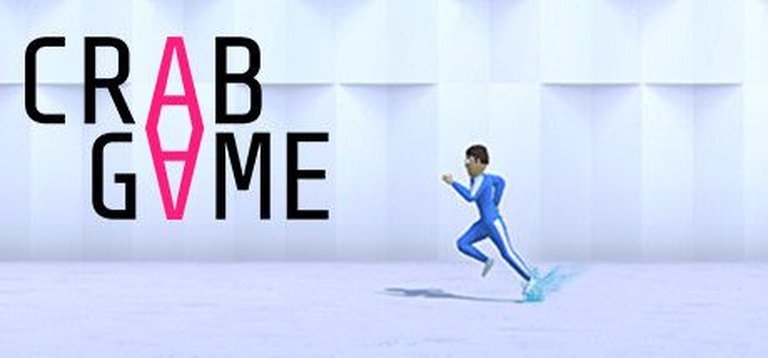
Crab Game is a free-to-play indie multiplayer party game developed by Dani, where players compete in fast-paced minigames inspired by the Netflix series Squid Game and childhood games. In servers supporting up to 40 participants, players must survive each round by avoiding death through various challenges, using items to attack, proximity chat to communicate, and navigating diverse maps and game modes in a battle royale-style format.
Gameplay Videos
Where to Buy Crab Game
Crab Game Mods
Crab Game Guides & Walkthroughs
Crab Game Reviews & Reception
imdb.com (70/100): A goofy party game to play with your friends.
metacritic.com (80/100): Fun but boring
Crab Game: Review
Introduction: The Crab That Roared
In the annals of viral gaming phenomena, few titles have captured the lightning-in-a-bottle essence of Crab Game with such chaotic, unrefined, and irresistibly charming force. Released into the cultural vacuum left by Netflix’s global megahit Squid Game in late 2021, this free-to-play indie title by Norwegian developer Dani (Daniel Sooman) did not merely ride the coattails of a trend—it temporarily became the trend for a generation of Twitch viewers and YouTube browsers. Its legacy is not one of technical polish or narrative depth, but of pure, unadulterated social chaos, a digital playground where the cartoonish veneer of childhood games collides with the brutal, elimination-based stakes of a battle royale. This review posits that Crab Game is a significant, if ephemeral, landmark in modern game history: a masterclass in rapid, trend-responsive development that exposed the profound power—and peril—of community-driven virality, proximity-based social interaction, and the relentless pursuit of fun over fidelity. It is a game that understood its core premise—the unpredictable joy and terror of a schoolyard game turned fatal—better than any big-budget adaptation could, precisely because it was not bound by the source material’s grim seriousness.
Development History & Context: A YouTuber’s Sprint to the Finish
The story of Crab Game is inseparable from the biography of its creator, Dani. Born Daniel William Sooman in 1997, Dani began his public career in 2018 by posting programming and indie game development logs on YouTube. His persona is defined by comedic, often exaggerated reactions and a development philosophy heavily influenced by viewer comments and online challenges. This approach produced a string of rapid-fire projects: a 3D recreation of Among Us (2020), the open-world survival game Muck (June 2021), and the long-anticipated KARLSON, a project that would later cause him significant burnout.
Crab Game was born from this environment of spontaneous, comment-driven creation. In October 2021, with Squid Game at the absolute zenith of global popularity, Dani challenged himself to create a game based on its core concept. The name itself is a direct product of legal pragmatism; “Squid Game” was a protected trademark, so “Crab Game” was chosen as a legally safe, alliterative, and vaguely crustacean-themed alternative. Developed in a blistering two-week sprint using the Unity engine, the game was a proof-of-concept built for speed, not scalability. Its initial release on October 29, 2021, for Windows on Steam (with macOS and Linux versions following on Itch.io and later Steam) was a bare-bones affair, a digital paper airplane thrown into the hurricane of Squid Game hype.
Technologically, the game was constrained by its own rapid development and the networking solutions available. The initial use of older Steam networking code would later prove catastrophically vulnerable, exposing players’ IP addresses and inviting DDoS attacks that temporarily crippled the game’s public servers. This technical debt was a direct consequence of a development cycle prioritizing launch velocity over infrastructural robustness. The gaming landscape of late 2021 was primed for such a title: the success of Fall Guys (2020) and Among Us (2018) had validated the “simple rules, social chaos” multiplayer model. Crab Game entered this ecosystem not as a polished competitor, but as the raw, unfiltered id of the genre—a game where the minigames were familiar, the presentation was deliberately low-rent, and the social dynamics were left almost entirely to the players.
Narrative & Thematic Deep Dive: The Story is the Server, The Theme is the Chaos
It is crucial to state upfront: Crab Game has no canonical narrative, story mode, or character arcs. There is no Seong Gi-hun, no Front Man, no horrific backstory for its participants. The game’s “plot” is generated entirely by the emergent interactions of its players within its elimination-based structure. However, to analyze its themes solely through this lens is to miss its profound, if accidental, thematic resonance.
The game’s entire premise is a direct, uncredited adaptation of Squid Game‘s central metaphor: economic desperation manifested as lethal childhood games for a cash prize. Players compete for a virtual “$456,000” (a direct nod to the show’s prize money), with elimination equating to a graphic, ragdoll-physics death. The thematic weight of Squid Game—capitalism, class exploitation, the commodification of human life—is entirely absent here, replaced by the pure, anarchic thrill of competition. The tension isn’t “will these impoverished souls survive to pay their debts?” but “can I out-jump this guy on the floating tiles?”. This deliberate flattening of the source material’s critique into pure game mechanics is Crab Game‘s most significant narrative choice. It treats the Squid Game format not as a story, but as a perfectly balanced set of game design constraints.
The true “narrative” of Crab Game is the story of player-driven social dynamics. The proximity voice chat—an unfiltered, raw audio channel where anyone nearby can be heard—becomes the game’s sole storytelling device. Here, alliances are forged and broken in seconds. Taunts, celebrations, coordinated screams in Tug of War, and the inevitable, horrifying silence after a Red Light Green Light misstep create a micro-drama more compelling than any written script. The game’s themes, therefore, are not about the value of life, but about the volatility of trust, the joy of schadenfreude, and the shocking speed with which a group of strangers can devolve into either cooperative teams or backstabbing maniacs.
The game’s own tongue-in-cheek denial of its origins—”Definitely not based on any online streaming pop culture korean tv shows, as that would get me in legal trouble”—cements its identity as a parody and a celebration of the Squid Game aesthetic, stripped of its horror. The terrifying giant doll is replaced by Dani’s own face (a Creator Cameo), the pastel green tracksuits by blue, and the somber score by a jaunty, repetitive tune. The theme is no longer societal decay, but internet culture itself: rapid, remixable, legally cautious, and obsessed with in-jokes and goofy aesthetics.
Gameplay Mechanics & Systems: Elegant Simplicity, Chaotic Execution
The core gameplay loop of Crab Game is deceptively simple: a lobby of up to 40 players enters a “Dorms” waiting area, ready up, and is sequentially thrown into a series of randomly selected minigames until only one player (or team) remains. Each minigame is a self-contained lethal challenge with a strict time limit. Failure means explosive elimination (complete with Ragdoll Physics and dismemberment), success means advancing to the next round. The final survivor is showered with in-game “money” (a purely cosmetic currency) in a Happy Dance cutscene.
Core Minigames & Mechanics:
The initial suite was clearly derived from Squid Game: Red Light Green Light (freeze at “Red Light”), Glass Bridge (memory/guess the safe panels), and Tug of War (team-based pulling). However, updates rapidly expanded the roster into a wildly eclectic mix that defined the game’s identity. These include:
* Stepping Stones / Lilypad Hop: Precision jumping on disappearing/fake platforms (Fake Platforms).
* Bomb Tag / Hot Potato: Pass a ticking bomb to avoid elimination.
* Floor is Lava: Navigate sinking rocks over a lethal pink goo.
* The Bridge: A free-for-all on a narrow bridge, using a Batter Up! bat or Pipe Pain to knock opponents into the goo.
* Crab Fight: A Boss Battle against a “Giant Enemy Crab” named Tantan, who uses Shockwave Stomp attacks.
* Hide and Seek and Zombies modes were added, further diversifying the format.
The combat system is universally applicable: a push mechanic (left-click) that can be used to shove others, combined with various pick-up weapons (bats, pipes, rocket launchers in later modes) found in certain maps. This creates immense Video Game Cruelty Potential; skilled players can proactively push others to their deaths in seemingly safe minigames like Red Light Green Light or during the brief Kaizo Trap intermissions between rounds.
Progression & Customization: There is no statistical progression. The only “progression” is cosmetic. At the end of matches, players receive loot Crates (a Loot Box system), which contain randomized cosmetics like hats (Cat Ears, Bucket Helmet), hairstyles (including one named Levi), and outfits. These feature Color-Coded Item Tiers (white/common to green/legendary) and rare gold variants. This system provides a shallow but effective reward hook, focusing player motivation on style over substance.
UI and Systems: The UI is minimalist: a crosshair, a timer, and a player count. The Direct control interface is responsive, with a first-person perspective (though some third-person modes exist). The most innovative and infamous system is the unrestricted proximity chat. There is no push-to-talk, no moderation filter. This design choice is the game’s beating heart and its greatest flaw. It enables hilarious coordination and streamer gold, but also guarantees exposure to toxicity, racism, and disruptive noise—a fact repeatedly noted in user reviews.
Innovation vs. Flaws: The game’s primary innovation was its commitment to unfiltered social chaos and a rapidly expanding, community-responsive library of minigames. Its flaws are legion: persistent bugs (infinite falling, collision issues), severe vulnerability to cheaters (speed hacks, invincibility), and the aforementioned server/IP security flaw that led to DDoS attacks. These are not minor quibbles; they are fundamental infrastructure failures that at times made the game unplayable and drove away a significant portion of its player base.
World-Building, Art & Sound: Aesthetic of the Meme
Crab Game presents a world that is visually and sonically distinct from its inspirations, creating a unique, if low-budget, atmosphere.
Visual Direction & Art Style: The game employs a simple, cartoonish low-poly aesthetic with bright, sometimes garish colors. Textures are often basic or sourced, contributing to a Stylistic Suck that feels intentionally meme-like. This is a stark contrast to the chilling, meticulously designed sets of Squid Game. Maps like Macaroni Mountain and Sussy Sandcastle (noted for their Added Alliterative Appeal) are surreal, candy-colored obstacle courses. The player models are generic Captain Ersatz versions of the Squid Game guards/contestants, with blue tracksuits and blank faces. This aesthetic choice distances the game from the source’s horror, framing the violence as silly and consequence-free, despite the graphic explosions. The inclusion of Bland-Name Product logos like “YIKE” (for NIKE) adds a layer of satirical consumer culture commentary, however shallow.
Sound Design: The soundscape is a mix of functional effects and comedic incompetence. Minigame cues are clear robotic voices (“Green Light!”, “Bomb!”), and weapon sounds are basic. The most significant audio element is, again, the proximity chat. Its raw, often distorted quality becomes part of the game’s texture. The musical score is reportedly composed by “Context Sensitive” (likely Dani himself or a royalty-free source) and consists of a single, über-catchy, slightly discordant loop that plays during menus and sometimes in-game, becoming a maddening earworm that signifies the game’s chaotic energy.
Atmosphere Contribution: Together, these elements create an atmosphere of unhinged, improvisational comedy. The visual simplicity reduces each map to a clear, functional playground, while the sound design prioritizes communication and player-generated noise over immersion. This is not a world you are meant to believe in; it is a stage for social experimentation. The disconnect between the cartoony visuals and the violent elimination mechanics generates a unique cognitive dissonance: the game feels both utterly harmless and intensely personal, as your digital avatar explodes at the hands of a screaming stranger on a rainbow bridge.
Reception & Legacy: Viral Fireworks and the Lingering Smoke
Crab Game‘s reception trajectory is a textbook case of a viral indie hit. Upon release, it exploded. Within days, it reached an all-time peak of 283,315 concurrent players on Steam and over 211,000 viewers on Twitch, fueled by an army of content creators including giants like xQc, Sodapoppin, and MrBeast. Its free-to-play price point, simple premise, and perfect timing made it an instant sensation. It was nominated for the “Better With Friends” category in the 2021 Steam Awards, though it lost to It Takes Two—a testament to its identity as a pure social experience.
However, its peak was marred by immediate, severe technical crises. The DDoS attacks of early November 2021, exploiting the IP-leaking networking code, caused widespread outages and forced Dani to publicly warn players against public lobbies. This incident highlighted the vulnerabilities of an indie project catapulted into the mainstream. Combined with the rise of cheaters and persistent bugs, player frustration mounted. As noted in contemporary reports (e.g., TheGamer, November 2021), the game was already seen as “at the tail end of a dying trend” by the end of 2021.
Yet, it demonstrated remarkable resilience. A second massive player surge occurred in early 2023 when a group of popular VTubers collaborated on the game, proving its enduring utility as a content creation engine. According to long-term tracking data (Steambase, as of 2026), while it no longer commands hundreds of thousands of concurrents, Crab Game maintains a stable, dedicated base. It consistently averages between 2,000 and 10,000 daily concurrent players, with spikes on weekends or after patches. Its Metacritic user score oscillates in the “Mixed or Average” range (around 7.3), but its Steam review tally is overwhelmingly “Very Positive” (over 138,000 positive vs. 13,000 negative), indicating a core audience deeply appreciative of its chaotic heart.
Its legacy is multifaceted:
1. The Proximity Chat Blueprint: It validated unfiltered, spatial voice chat as a core, hilarious, and toxic gameplay mechanic, influencing subsequent party games.
2. The “Rapid Response” Indie Model: It demonstrated that a small developer could capitalize on a global media phenomenon with startling speed, a model both enviable and risky.
3. A Cautionary Tale on Scale: Its server and cheating woes became a case study in the infrastructural demands of sudden virality.
4. Community Over Fidelity: It proved that a game could shed its direct source material and evolve through community play and updates into something with its own identity (e.g., the Crab Fight boss, the Karlson map referencing Dani’s other project).
5. The “Free-to-Play, Cosmetics-Only” Success: It thrived on a ethical monetization model (purely cosmetic crates) in an era often criticized for pay-to-win mechanics.
Conclusion: The Imperfect, Unforgettable Shell
Crab Game is not a masterpiece. It is buggy, often technically compromised, and its social environment can be a cesspool. It lacks a story, deep progression, or artistic ambition. By traditional critical metrics, it is a flawed, even shoddily constructed, product.
And yet, to judge it by those metrics is to miss the point entirely. In the history of video games, few titles have so perfectly distilled a cultural moment into a playable, shareable, screamingly funny experience. It is the definitive digital representation of a meme—transient, chaotic, legally cautious, and built for sharing. Its genius lies in its understanding that the essence of Squid Game was not its grim social commentary, but its pure, high-stakes game show format. By stripping the commentary and injecting unfiltered player voice, Dani created a game where every match generates its own narrative, its own drama, its own moments of fleeting glory and hilarious failure.
Its legacy is that of a viral phenomenon that successfully transitioned from trend to niche staple. It proved that a game could be born in two weeks, barely hold itself together, and still provide thousands of hours of shared, chaotic joy. It is a monument to the power of player-driven content and a warning about the importance of server stability. For historians, Crab Game is an essential case study in 21st-century game distribution: a YouTube-born, Unity-made, Steam-released, Twitch-optimized cultural artifact that existed at the exact intersection of streaming culture, Squid Game mania, and the enduring human love of playground competition. It is, in the end, a brilliant piece of ephemeral design—a game that, for a glorious, bug-ridden moment, made the entire internet play by its rules. Whether that makes it a “10/10, game of the year” or a “4/10, paskudna grafika” depends entirely on whether you value a flawless simulation or the beautiful, explosive, unpredictable mess of human interaction. On the latter, it is unmatched.