
- Release Year: 2018
- Platforms: Windows
- Publisher: Quiet River
- Developer: Quiet River
- Genre: Driving, Racing
- Perspective: Behind view
- Game Mode: Single-player
- Gameplay: Arcade, Vehicular combat
- Average Score: 71/100
Description
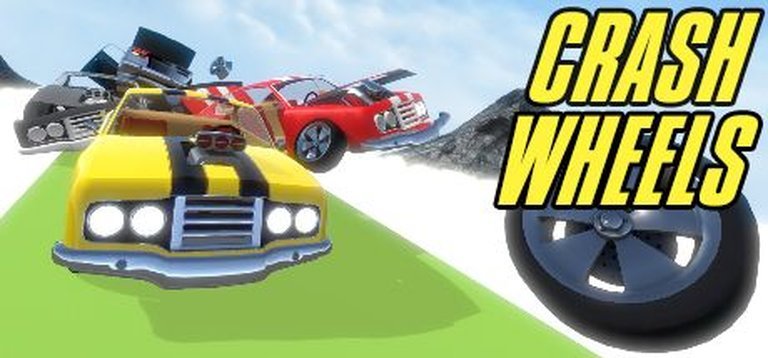
Crash Wheels is an arcade-style racing game that blends high-speed competition with demolition derby chaos. Set across 32 unique tracks, the game emphasizes realistic damage physics, where players must navigate treacherous courses while their vehicles sustain and accumulate damage. The goal isn’t just to finish first but to survive the race at all, with a simple, grey-toned aesthetic adding to its raw, mechanical feel. Featuring a crash test mode and a variety of controls for precise maneuvering, the game offers a solo experience focused on endurance and strategy rather than traditional racing dominance.
Gameplay Videos
Where to Buy Crash Wheels
PC
Crash Wheels Patches & Updates
Crash Wheels Guides & Walkthroughs
Crash Wheels Reviews & Reception
steambase.io (87/100): A triumphant return to form for the series.
store.steampowered.com (87/100): Very Positive (87% of 1,153 user reviews for this game are positive).
mobygames.com (40/100): Average score: 2.0 out of 5 (based on 1 ratings with 0 reviews).
Crash Wheels: A Demolition Derby Racer That Defies Expectations
Introduction: The Unlikely Appeal of a Grey, Grinding Gem
In the crowded landscape of indie racing games, Crash Wheels (2018) emerges as a curious anomaly—a title that embraces minimalism, brutality, and an almost masochistic design philosophy. Developed by the obscure studio Quiet River, this arcade racer eschews the glossy aesthetics and forgiving mechanics of mainstream competitors, instead offering a punishing, physics-driven demolition derby experience. With its stark grey visuals, relentless difficulty, and an astonishing 1,224 Steam Achievements, Crash Wheels is less a traditional racing game and more a test of endurance, patience, and sheer stubbornness.
At first glance, the game’s presentation is unassuming, even off-putting. The tracks are sparse, the cars are blocky, and the color palette is dominated by shades of industrial grey. Yet, beneath this austere exterior lies a surprisingly deep and addictive gameplay loop—one that rewards persistence over skill, and where the thrill of crossing the finish line (often in a barely functional wreck) outweighs the frustration of repeated failures.
This review will dissect Crash Wheels in exhaustive detail, exploring its development, mechanics, reception, and the cult following it has garnered despite—or perhaps because of—its uncompromising design.
Development History & Context: A Game Born from Obscurity
The Studio Behind the Wheels: Quiet River’s Mysterious Origins
Little is known about Quiet River, the one-person development team behind Crash Wheels. The studio has no notable prior releases, no public-facing presence beyond a defunct website (quietriver.info), and no post-launch updates since the game’s December 20, 2018 release. This anonymity adds to the game’s enigmatic charm—Crash Wheels feels like a passion project, unburdened by market trends or publisher demands.
The game was built using Unity, a choice that allowed for rapid prototyping but also contributed to its somewhat rudimentary visuals. Given the lack of updates or community engagement, it’s possible that Crash Wheels was a solo developer’s experiment—a labor of love that, against all odds, found an audience.
The Gaming Landscape in 2018: A Crowded Racing Genre
2018 was a banner year for racing games, with high-profile releases like Forza Horizon 4, Wreckfest, and Burnout Paradise Remastered dominating the market. In this environment, Crash Wheels was never going to compete on polish or presentation. Instead, it carved out a niche by embracing arcade brutality, a subgenre that prioritizes destruction over speed, chaos over precision.
Games like FlatOut (2004) and Wreckfest (2018) had already proven the appeal of vehicular combat, but Crash Wheels distinguished itself through:
– Extreme difficulty (even the earliest levels are punishing).
– A minimalist aesthetic (no flashy effects, just raw physics).
– An absurd achievement system (1,224 achievements, many of which are nearly impossible to unlock).
Technological Constraints & Design Philosophy
The game’s technical limitations are evident in its simple graphics, basic sound design, and lack of multiplayer. However, these constraints may have been intentional. The developer seemingly focused on core mechanics over superficial appeal, resulting in a game that feels raw—like a prototype that somehow made it to market.
The Unity engine allowed for robust physics simulation, which is the game’s strongest suit. Cars deform realistically, collisions carry weight, and the sense of momentum is surprisingly well-tuned. However, the lack of post-launch support means bugs (such as the game crashing after levels, as reported by players) remain unaddressed.
Narrative & Thematic Deep Dive: The Anti-Racing Game
Plot? What Plot?
Crash Wheels has no story. No characters. No dialogue. No cutscenes. The only “narrative” is the player’s struggle against the game itself.
This absence of traditional storytelling is a deliberate design choice. The game is not about winning—it’s about surviving. Each track is a gauntlet of obstacles, ramps, and rival cars hell-bent on turning your vehicle into scrap metal. The only “progression” is unlocking new levels, each more sadistic than the last.
Themes: Persistence, Punishment, and the Joy of Failure
If Crash Wheels has a theme, it’s perseverance in the face of futility. The game’s difficulty is not just high—it’s oppressive. Cars handle like bricks, collisions are devastating, and the AI is ruthless. Yet, the moment you finally limp across the finish line, the game rewards you with a sense of accomplishment that few modern titles can match.
This aligns with the “masocore” subgenre (games like Getting Over It with Bennett Foddy or I Wanna Be The Guy), where the challenge itself is the appeal. Crash Wheels doesn’t just test your racing skills—it tests your patience, adaptability, and willingness to endure failure.
The Absurdity of the Achievement System
With 1,224 Steam Achievements, Crash Wheels holds a dubious record. Most are tied to completing levels, surviving crashes, or performing specific stunts, but many are glitched or impossible to unlock, as noted by players in Steam discussions. This has led to speculation that the developer either:
1. Intended the achievements as a joke (a meta-commentary on Steam’s gamification culture).
2. Simply didn’t have time to properly implement them (given the lack of post-launch support).
Regardless, the achievement system has become a meme among players, with some treating it as a darkly humorous challenge rather than a legitimate progression system.
Gameplay Mechanics & Systems: A Masterclass in Controlled Chaos
Core Gameplay Loop: Crash, Restart, Repeat
Crash Wheels is, at its heart, a demolition derby racer. The goal is not to win—it’s to finish. Each of the 32 tracks is a minefield of hazards, including:
– Rival cars that aggressively ram you.
– Environmental obstacles (barrels, walls, pits).
– Physics-based traps (ramps that flip your car, tight turns that guarantee collisions).
The controls are simple:
– W/A/S/D for movement.
– Spacebar for handbrake.
– Mouse for camera control.
– V for cockpit view (a nice touch, though largely unnecessary).
Yet, the car handling is deliberately sluggish, making precision driving nearly impossible. This forces players to adapt to the chaos rather than mastering perfect laps.
Combat & Destruction: The Real Star of the Show
The game’s physics engine is its greatest strength. Cars crumple, bend, and break in satisfying ways. Wheels fly off, engines sputter, and entire vehicles can be reduced to scrap in seconds. The Crash Test Mode (a sandbox for smashing cars) is a fun diversion, though it lacks depth.
However, the lack of weaponry or special abilities means combat is purely physics-based. You can’t fire missiles or deploy oil slicks—you just ram, shove, and pray.
Progression & Unlocks: A Grind Without Reward
There is no traditional progression system. No upgrades, no new cars, no skill trees. The only “reward” for completing levels is access to the next one, which is invariably harder.
This design choice is polarizing:
– Fans appreciate the pure, unfiltered challenge.
– Critics argue it feels repetitive and unrewarding.
UI & Accessibility: Functional, But Barebones
The UI is minimalist to a fault. There’s no tutorial, no in-game hints, and no explanation of mechanics beyond the basic controls. The Steam guide by cgoldfinch2000 (since removed) was one of the few resources players had to understand the game’s quirks.
The lack of sound in early versions (a bug later fixed) further highlighted the game’s rough edges. Even now, the audio design is perfunctory—engine noises, crashes, and little else.
World-Building, Art & Sound: The Beauty of Ugliness
Visual Design: Grey, Gritty, and Gloriously Ugly
Crash Wheels embraces a stark, industrial aesthetic:
– Tracks are grey, blocky, and devoid of detail.
– Cars are simple 3D models with basic textures.
– Lighting is flat, with no dynamic effects.
This anti-aesthetic is part of the game’s charm. It feels like a lost PS1-era demo, a relic of a time when games were judged on gameplay alone.
Sound Design: The Silence of the Engine
The audio is equally sparse:
– Engine sounds are functional but unremarkable.
– Crashes have a satisfying crunch, but lack variety.
– No music—just the hum of your struggling vehicle.
The absence of a soundtrack enhances the isolation—you’re alone in this mechanical hellscape, with only the sound of your car’s protesting engine for company.
Atmosphere: A Test of Endurance
The game’s bleak, mechanical world reinforces its themes of struggle and persistence. There are no spectators, no cheering crowds—just you, your car, and the next obstacle.
Reception & Legacy: The Cult of Crash Wheels
Critical Reception: Ignored by Critics, Loved by Masochists
Crash Wheels received almost no professional coverage. MobyGames lists it with a 2.0/5 average score (from a single user rating), while Steam reviews tell a different story:
– 87% Positive (1,153 reviews).
– Players praise its challenge, physics, and addictive difficulty.
– Complaints focus on bugs, lack of updates, and the broken achievement system.
The game’s Steam Deck compatibility (rated “Playable”) has given it a second life, as players discover its pick-up-and-play appeal on handheld.
Legacy: A Niche Classic
Crash Wheels has influenced smaller indie developers who appreciate its no-frills, physics-first approach. Games like Rival Wheels (2018) and Wreckfest owe a debt to its destruction-focused gameplay, though they polish the formula with better presentation.
Its cult following persists due to:
1. The challenge—few games are this punishing.
2. The memes—the achievement system is a running joke.
3. The nostalgia—it feels like a lost relic of gaming’s past.
The Mystery of the Developer’s Disappearance
The lack of updates or communication from Quiet River has led to speculation:
– Was this a passion project abandoned after release?
– Did the developer move on to other ventures?
– Or is Crash Wheels simply complete as-is, a statement on the purity of gameplay over polish?
Whatever the case, the game stands as a testament to indie creativity—flawed, brutal, and unforgettable.
Conclusion: A Flawed Masterpiece of Punishing Design
Crash Wheels is not a game for everyone. It is:
✅ A love letter to arcade racing purists who crave challenge over spectacle.
✅ A physics playground where destruction is the only rule.
✅ A meme in game form, with its absurd achievement count and unapologetic difficulty.
But it is also:
❌ Repetitive, with little variety in tracks or mechanics.
❌ Buggy, with crashes and unfixable issues.
❌ Unforgiving, to the point of frustration.
Final Verdict: 7.5/10 – A Cult Classic Worth Crashing Into
Crash Wheels is not a great game by conventional standards, but it is a fascinating one. It defies trends, ignores player expectations, and delivers an experience that is as rewarding as it is infuriating.
For those who enjoy masocore challenges, physics-based destruction, or games that feel like lost artifacts, Crash Wheels is a hidden gem. For everyone else? It’s a curiosity—a relic of what indie gaming can be when unshackled from commercial expectations.
Should you play it?
– Yes, if you love hardcore racing games and don’t mind jank.
– No, if you prefer polish, progression, or multiplayer.
Crash Wheels is not a masterpiece, but it is uniquely, gloriously itself—and in an era of homogenized gaming, that’s worth celebrating.
Final Score: 7.5/10 – “A Beautiful Train Wreck”
Now, if you’ll excuse me, I need to go try (and fail) to unlock achievement #595.