
- Release Year: 2016
- Platforms: Windows
- Publisher: Skypeak LLC
- Developer: Laborious Rex
- Genre: Action
- Perspective: Side view
- Game Mode: Co-op
- Gameplay: Platform
- Average Score: 83/100
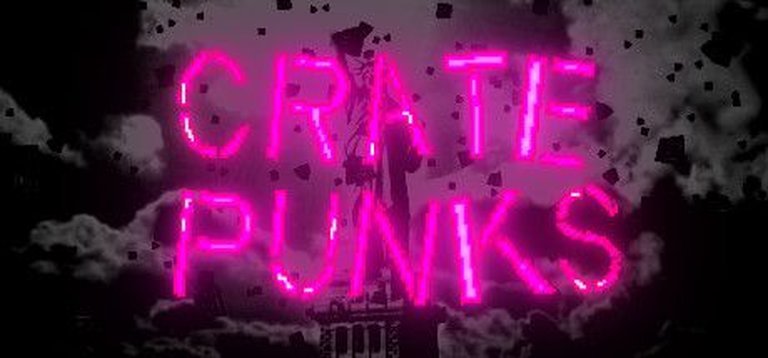
Description
In a post-apocalyptic world overrun by endless crates following the death of the C.E.Overlord, survivors forage amid towering piles of merchandise and clash in arenas constructed entirely from destructible crates, using the environment itself as weapons in a chaotic game of platforming action chess. Crate Punks emphasizes short, violent local multiplayer sessions for two players, supporting keyboard and USB controllers in handcrafted, customizable maps.
Where to Buy Crate Punks
PC
Crate Punks Reviews & Reception
steambase.io (83/100): Player Score of 83 / 100 from 6 reviews.
Crate Punks: Review
Introduction
In a gaming landscape dominated by sprawling open-world epics and live-service behemoths, Crate Punks emerges as a defiant punk rock anthem—a raw, unpolished tribute to chaotic local multiplayer mayhem. Released in 2016 by indie developer Laborious Rex (primarily the work of Christian Vandagrift) and published by Skypeak LLC, this $3 Steam gem hurls players into a crate-strewn post-apocalypse where every stack of cardboard is both playground and projectile. Drawing from the unbridled energy of couch co-op classics like Gang Beasts or TowerFall, it promises “short, violent bursts of crate-thrashing gameplay” in arenas built entirely from destructible crates. As a game historian, I see Crate Punks as a microcosm of indie resilience: a title that thrives on human interaction rather than algorithms, reminding us that sometimes the best games are the ones that demand you grab a friend (or ten) and smash controllers together. My thesis? Amidst 2016’s indie boom, Crate Punks carves a niche as an underappreciated masterpiece of emergent chaos, flawed yet brilliant in its simplicity, deserving rediscovery for anyone craving pure, friend-fueled anarchy.
Development History & Context
Crate Punks was born in the vibrant indie scene of the mid-2010s, a golden era when tools like the Godot engine democratized development, allowing solo creators like Christian Vandagrift to punch above their weight. Laborious Rex, Vandagrift’s one-person (or small-team) outfit, leveraged Godot’s open-source flexibility for 2D physics and multiplayer support, evident in the game’s smooth crate-stacking and destruction systems. Published by Skypeak LLC, it launched on December 2, 2016, exclusively as a digital download on Steam for Windows (with Mac and Linux compatibility noted in later listings), targeting the burgeoning couch-party market amid Steam’s indie explosion.
The era’s technological constraints shaped its vision: Godot’s lightweight nature enabled buttery-smooth local multiplayer for up to 10+ players—unrecommended but gleefully chaotic—without online infrastructure, a deliberate choice reflecting 2016’s nostalgia for split-screen brawlers. The gaming landscape was flooded with roguelikes (Enter the Gungeon), metroidvanias, and early battle royales, but local multiplayer was resurging via titles like Overcooked and Move or Die. Crate Punks positioned itself as “crate action chess,” a punk twist on platform fighters, amid a “punks” naming trend (Dungeon Punks, Bunker Punks). Vandagrift’s vision, per IndieDB and Steam blurbs, was pure couch co-op escapism—no single-player AI, no online modes—just humans hurling crates in handcrafted arenas. Community posts reveal post-launch tweaks for controller support (Xbox 360 issues fixed), underscoring indie realities: bootstrapped updates driven by player feedback. Priced at a humble $3, it embodied the era’s “pure indie” ethos, free from AAA bloat, yet hampered by zero marketing budget, explaining its obscurity.
Narrative & Thematic Deep Dive
Crate Punks wears its story like a tattered leather jacket: minimalist, irreverent, and dripping with post-apocalyptic punk satire. The plot unfolds via Steam and IndieDB blurbs: In a world ravaged by “The Cratening,” the tyrannical C.E.Overlord’s death unleashes unchecked crate production. Factories churn endlessly, drones deliver without cease, and merchandise eclipses humanity. Four years on, survivors scavenge “crate food” in crate-choked ruins—like a lightless Shibuya—where tribal punks feud over scraps. No cutscenes or dialogue trees here; the narrative is environmental, told through crate towers mimicking urban decay and punk graffiti vibes.
Characters are archetypal punks—faceless, customizable avatars in a Darwinian arena. You’re not heroes; you’re scavengers in a crate-fueled Mad Max melee, embodying themes of consumerist collapse. The supply chain’s “uncoiling” satirizes late-capitalism: crates as both sustenance and doom, outpopulating people in a absurd escalation. “Crate action chess” implies strategic positioning amid chaos, theming survival as punk rebellion—smash the system (literally) to be the last standing. Dialogue is absent, but controls (“Crate” to weaponize) and features scream ethos: violent bursts mocking endless consumption. Subtle depth lies in replayability; customizable maps let players remix the apocalypse, turning lore into user-generated punk manifestos. Flaws abound—no voiced lines or character arcs—but this sparsity amplifies themes: in a crate world, stories emerge from player carnage, not scripted beats.
Gameplay Mechanics & Systems
At its core, Crate Punks is a 2D side-scrolling platform brawler distilled to lethal elegance: move (A/D or arrows), jump (J/Num 2), and “Crate” (K/Num 3) to grab/throw destructible boxes in last-punk-standing deathmatches. Arenas—handcrafted from 100% crates—offer verticality and physics wizardry; stack for height, shatter for traps, hurl for kills. Matches are blisteringly short (under 5 minutes), fueling addictive loops of positioning, prediction, and betrayal.
Core Loops & Combat: Direct control shines in couch chaos—up to 10+ players via split-screen (keyboard for two, USB controllers preferred). Combat is “chess-like”: bait jumps, crate-surf platforms, collapse structures under foes. Physics feel “juicy,” with crates wobbling realistically (Godot’s boon), enabling emergent plays like chain-reaction avalanches. No progression systems; pure skill-based PvP, with pause (ENTER) for mercy.
Character Progression & UI: Zero RPG elements—everyone starts equal, emphasizing punk anarchy. UI is spartan: join screen (“Press Jump to join”), minimal HUD (health implied via knockouts). Customizable maps (edit .tmx files, add to include.txt) extend longevity, per Steam forums.
Innovations & Flaws: Genius in destructible everything—elevates platforming to weaponized architecture. Supports gamepads/keyboard hybrids, Remote Play Together (post-launch). Drawbacks: No single-player/AI (explicitly requires “one human friend”), buggy early controllers (fixed via updates), no online. Balance tilts chaotic over fair—stack exploits rule—but that’s the punk charm. Verdict: Flawed brilliance for parties, punishing solos.
World-Building, Art & Sound
Crate Punks‘ world is a crate Armageddon masterpiece: post-“Cratening” cities like Shibuya buried under precarious towers, blending urban decay with absurd abundance. Arenas evoke vertical slums—handcrafted levels like “London” (moddable)—where every surface destructs, fostering paranoia (is that platform safe?). Atmosphere nails punk desperation: dim lighting