
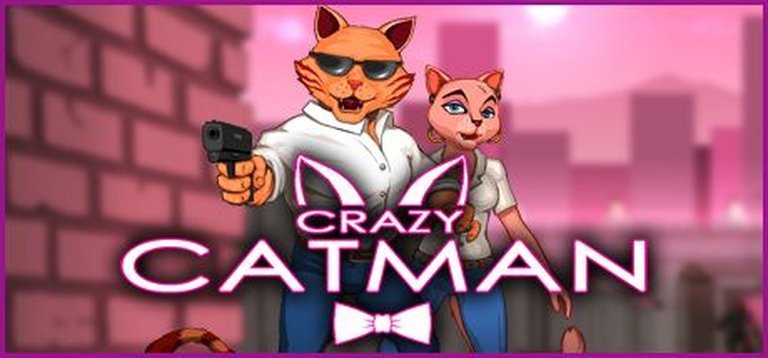
Description
Crazy Catman is a vibrant 2D side-scrolling platformer where players take on the role of Vasya, a brave cat on a mission to rescue his beloved Murka from the clutches of evil dogs. Set across numerous challenging levels filled with obstacles and enemy hordes, the game features colorful visuals, upbeat music, and intense boss battles. With a mix of platforming and shooter mechanics, players must navigate treacherous terrain and defeat gang leaders to save Murka in this action-packed adventure.
Gameplay Videos
Crazy Catman Guides & Walkthroughs
Crazy Catman Reviews & Reception
mobygames.com (36/100): A bright and colorful platformer, fun music. Many levels and evil gang leaders.
Crazy Catman: A Forgotten Feline Fiasco or Hidden Gem?
Introduction: The Curious Case of a Cat on a Mission
In the vast, often oversaturated landscape of indie platformers, Crazy Catman (2017) emerges as a peculiar artifact—a game so obscure that it barely registers in the annals of gaming history. Developed and published by the enigmatic Russian studio Oblomysh, this 2D side-scrolling action-platformer tasks players with guiding Vasya, a lovestruck tomcat, through a gauntlet of canine adversaries to rescue his kidnapped feline love, Murka. At first glance, the premise is absurdly charming, evoking the whimsy of classic arcade platformers like Felix the Cat or Taito’s Chack’n Pop. Yet, beneath its vibrant pixel art and simplistic premise lies a game that has been met with near-universal indifference, if not outright disdain.
With a MobyGames user score of 1.8/5 (based on a single rating) and no critic reviews on Metacritic, Crazy Catman exists in a liminal space—too obscure to be remembered, too bizarre to be forgotten. This review seeks to dissect the game’s development, mechanics, narrative, and legacy, asking: Is *Crazy Catman a misunderstood passion project, or is it a cautionary tale of indie game development gone awry?*
Development History & Context: The Birth of a Feline Fiasco
The Studio Behind the Game: Who Is Oblomysh?
Little is known about Oblomysh, the Russian developer behind Crazy Catman. The studio’s digital footprint is minimal, with no official website, sparse social media presence, and no other notable releases. Their only other credited work is Crazy Scientist (2017), another obscure title that shares Crazy Catman’s penchant for chaotic, low-budget design. This lack of visibility suggests that Oblomysh was either a small, amateur team or a solo developer operating under a pseudonym.
The game’s Steam Greenlight origins (a now-defunct crowdfunding platform for indie games) hint at its grassroots development. Greenlight was notorious for allowing unpolished, niche, or outright bizarre projects to secure publication, and Crazy Catman fits squarely into that category. Its June 1, 2017 release on Windows came at a time when the indie market was flooded with retro-inspired platformers, making it difficult for a game with minimal marketing to stand out.
Technological Constraints & Design Philosophy
Crazy Catman is a 2D side-scrolling platformer-shooter hybrid, blending run-and-gun mechanics with traditional platforming. The game’s visuals are bright, cartoonish, and deliberately simplistic, evoking early 2000s Flash games or mobile titles. The art style is reminiscent of Newgrounds-era animations—colorful, exaggerated, and unapologetically low-fi.
Given its 2017 release date, the game’s technical limitations are puzzling. By this point, indie developers had access to robust engines like Unity, GameMaker, and Unreal, yet Crazy Catman feels like a relic of an earlier era. The lack of fluid animations, repetitive level design, and clunky controls suggest either:
– A deliberate aesthetic choice (embracing retro minimalism).
– Development ineptitude (a lack of experience or resources).
– Rushed production (a quick cash-in on Steam’s indie gold rush).
The game’s Steam forum discussions reveal player frustrations with bugs, unclear mechanics, and even allegations of data mining (a 2018 thread accuses the game of “capturing personal data,” though no evidence supports this claim). These issues, combined with its $4.99 price point, positioned Crazy Catman as a low-effort, high-risk purchase—a gamble few players were willing to take.
The Gaming Landscape in 2017: A Crowded Market
2017 was a golden year for indie platformers, with critically acclaimed titles like:
– Cuphead (Studio MDHR) – A hand-drawn, brutally difficult run-and-gun.
– Hollow Knight (Team Cherry) – A Metroidvania masterpiece.
– A Hat in Time (Gears for Breakfast) – A 3D collectathon revival.
– Celeste (Maddy Makes Games) – A precision platformer with emotional depth.
In this context, Crazy Catman was doomed from the start. It lacked the polish, innovation, or narrative depth of its contemporaries, instead offering a shallow, repetitive experience that failed to justify its existence. Its Steam Greenlight roots and lack of pre-release hype ensured it would be buried under an avalanche of superior alternatives.
Narrative & Thematic Deep Dive: A Love Story Between Cats and Chaos
Plot Summary: A Tale as Old as Time (If Time Were a Russian Cartoon)
The story of Crazy Catman is deliberately simplistic, bordering on absurd:
“Evil and treacherous dogs have kidnapped Murka, Vasya’s beloved cat. Now, Vasya must battle through hordes of canine enemies, overcome obstacles, and defeat gang leaders to rescue his love.”
This premise is ridiculous in the best possible way, evoking the slapstick violence of Tom and Jerry or the anthropomorphic chaos of Sly Cooper. However, the game fails to capitalize on its potential, offering no meaningful character development, dialogue, or world-building.
Characters: One-Dimensional Felines and Canine Villains
- Vasya (The Protagonist) – A generic orange tabby cat with no personality beyond “determined.” His motivations are purely instinctual: save the girl, kill the dogs.
- Murka (The Damsel in Distress) – A passive MacGuffin with no agency, dialogue, or screen presence beyond being kidnapped.
- The Dog Gang Leaders – A series of cartoonish, unnamed bosses with no backstory or unique traits. They exist solely as obstacles to overcome.
The game’s lack of narrative depth is forgivable in a pure arcade experience, but Crazy Catman attempts to frame itself as a story-driven adventure, making its absence of substance all the more glaring.
Themes: Love, Violence, and the Absurdity of Anthropomorphism
At its core, Crazy Catman is a satirical take on action-platformer tropes, subverting the hero’s journey by replacing humans with warring cats and dogs. The themes, if they can be called that, include:
1. Love as Motivation – Vasya’s quest is driven by romantic devotion, a rare premise in platformers.
2. Species Warfare – The cats vs. dogs conflict is played for comedy and chaos, not unlike Looney Tunes.
3. Absurd Heroism – The game doesn’t take itself seriously, embracing its B-movie sensibilities.
However, these themes are never explored meaningfully. The game lacks cutscenes, dialogue, or environmental storytelling, reducing its narrative to a barebones excuse for gameplay.
Dialogue & Writing: The Sound of Silence
Crazy Catman features almost no text or voice acting. The Steam description and loading screens provide the only lore, leaving players to infer the story from context. This minimalist approach could be seen as boldly experimental, but in practice, it feels lazy and unfinished.
Gameplay Mechanics & Systems: A Clunky, Repetitive Slog
Core Gameplay Loop: Run, Jump, Shoot, Repeat
Crazy Catman is a hybrid platformer-shooter, blending:
– Precision platforming (jumping over gaps, avoiding traps).
– Run-and-gun combat (shooting enemies with a limited arsenal).
– Boss battles (fighting oversized canine antagonists).
The controls are stiff and unresponsive, with Vasya’s jumps feeling floaty and imprecise. The shooting mechanics are basic, with no weapon variety or upgrades—just a single projectile attack that feels weak and unsatisfying.
Level Design: Repetition Without Evolution
The game’s levels are linear, side-scrolling obstacle courses filled with:
– Generic enemies (dogs, robotic turrets, spikes).
– Basic platforming challenges (moving platforms, bottomless pits).
– Occasional power-ups (temporary speed boosts, invincibility).
Problems with Level Design:
✔ Lack of variety – Every stage feels visually and mechanically identical.
✔ Unfair difficulty spikes – Some sections require pixel-perfect jumps with no checkpoint system.
✔ No progression – No new abilities, weapons, or mechanics are introduced as the game progresses.
Combat & Enemy AI: Mindless and Uninspired
Enemies in Crazy Catman fall into three categories:
1. Basic Dogs – Walk back and forth, easy to dodge.
2. Turret Dogs – Shoot projectiles in predictable patterns.
3. Boss Dogs – Larger, health-barred enemies with telegraphed attacks.
The AI is braindead, with enemies walking into pits or failing to react to the player’s presence. Boss fights are pattern-based slogfests, requiring memorization rather than skill.
Progression & Upgrades: Nonexistent
Unlike contemporaries like Hollow Knight or Celeste, Crazy Catman offers:
❌ No skill trees.
❌ No weapon upgrades.
❌ No permanent power-ups.
❌ No unlockable abilities.
The only “progression” comes from reaching the next level, making the experience feel stagnant and unrewarding.
UI & HUD: Functional, But Ugly
The user interface is minimalist to a fault, with:
– A health bar (depletes quickly, refills via pickups).
– A score counter (serves no purpose).
– No map, no inventory, no objectives tracker.
The lack of feedback makes it difficult to gauge progress, reinforcing the game’s arcade-like, score-chasing mentality.
World-Building, Art & Sound: A Mixed Bag of Charms and Flaws
Visual Design: Bright, But Bland
Crazy Catman’s art style is its most redeeming quality—a colorful, cartoonish aesthetic that evokes Saturday morning cartoons. The character sprites are expressive and exaggerated, while the backgrounds are simple but vibrant.
However, the animation is stiff, with limited frames and awkward movement. The level design lacks detail, with repetitive tilesets that make each stage indistinguishable from the last.
Sound Design & Music: Forgettable at Best
The game’s soundtrack is upbeat and chiptune-inspired, but lacks memorability. The sound effects (jumps, gunshots, enemy deaths) are generic and uninspired, failing to enhance the gameplay experience.
Atmosphere: A Missed Opportunity for Whimsy
Given its absurd premise, Crazy Catman had the potential to be a surreal, comedic romp—something akin to Earthworm Jim or Conker’s Bad Fur Day. Instead, it plays it safe, delivering a generic, forgettable experience that fails to capitalize on its bizarre charm.
Reception & Legacy: The Game That Time Forgot
Critical Reception: Ignored by Critics, Despised by Players
Crazy Catman received no professional reviews on Metacritic, OpenCritic, or major gaming outlets. The only recorded user score is a 1.8/5 on MobyGames, with no written reviews.
Steam forum discussions reveal a small but vocal minority of frustrated players, with complaints focusing on:
– Buggy controls.
– Repetitive gameplay.
– Lack of content.
– Allegations of shady practices (data mining, false advertising).
Commercial Performance: A Financial Flop
With only 1 recorded player on MobyGames and no sales data available, it’s safe to assume Crazy Catman was a commercial failure. Its Steam page has mixed reviews, with many players requesting refunds due to misleading marketing.
Legacy: A Footnote in Indie History
Crazy Catman’s only lasting impact is as a cautionary tale for indie developers:
– A strong premise isn’t enough—execution matters.
– Steam Greenlight was a double-edged sword, allowing unpolished games to flood the market.
– Obscurity is the enemy of success—without marketing, even the weirdest games disappear.
It did not influence later titles, nor did it spawn a cult following. Instead, it faded into obscurity, remembered only by a handful of curious gamers and obscure database entries.
Conclusion: A Flawed, Forgotten Curiosity
Crazy Catman is not a good game—but it is a fascinating one. It represents the best and worst of indie development:
✅ A bold, absurd premise (cats vs. dogs is always fun).
✅ A distinct, if simplistic, art style.
❌ Clunky, unpolished gameplay.
❌ No meaningful progression or depth.
❌ Zero narrative or thematic ambition.
Final Verdict: 3/10 – A Missed Opportunity
Crazy Catman had the potential to be a cult classic, but lack of polish, innovation, and care doomed it to obscurity. It’s not worth playing unless you’re a completionist, a masochist, or a historian of bad games.
Where It Stands in Gaming History:
– Not a landmark title.
– Not a hidden gem.
– A relic of Steam’s indie gold rush—flawed, forgotten, and fascinating in its failure.
If you’re curious about bizarre indie games, Crazy Catman is a brief, strange diversion. But if you’re looking for a well-crafted platformer, you’d be better off playing literally any other game from 2017.
Final Thought:
“In a world where *Celeste and Hollow Knight exist, Crazy Catman is the equivalent of a dollar-store knockoff—cheap, flimsy, and ultimately disposable.”*
Would you like a follow-up analysis on similar obscure indie games? Let me know in the comments! 🐱🎮