
- Release Year: 2015
- Platforms: Android, iPad, iPhone, Nintendo Switch, Windows
- Publisher: Higgs Games GmbH, Protarius Vertriebsgesellschaft GmbH, Young Fun Studio
- Developer: Independent Arts Software GmbH, Young Fun Studio
- Genre: Strategy, Tactics
- Perspective: Side view
- Game Mode: Single-player
- Gameplay: Artillery
- Average Score: 48/100
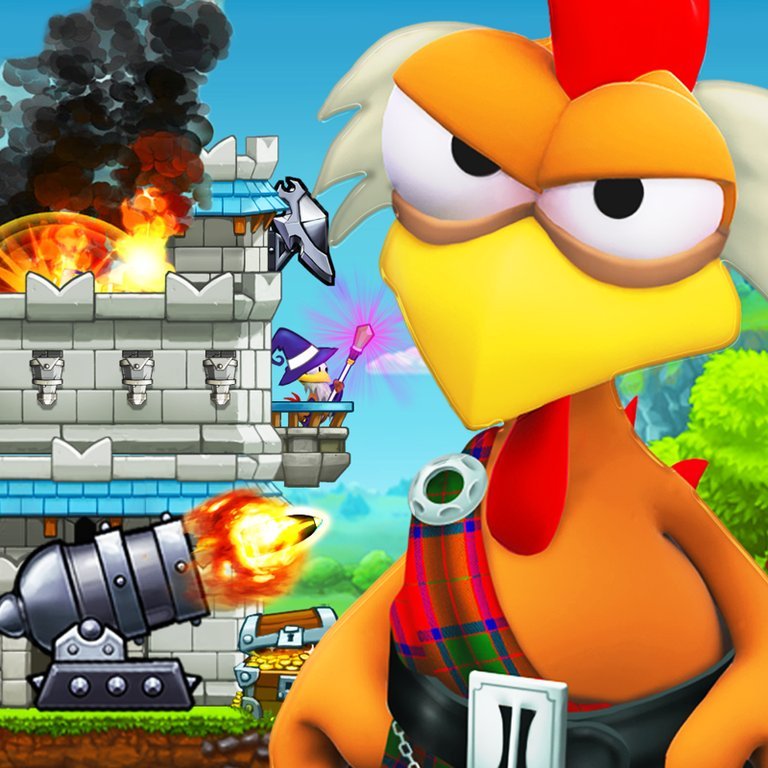
Description
Crazy Chicken Strikes Back is a strategy/tactics game where players engage in real-time, side-view artillery combat featuring the iconic Crazy Chicken character. Set in a medieval-themed world, the game challenges players to outmaneuver opponents using various weapons and tactics, blending casual gameplay with light strategic elements. Originally released on mobile platforms in 2015, it later expanded to Windows, Android, and Nintendo Switch, offering both single-player and online multiplayer modes.
Gameplay Videos
Crazy Chicken Strikes Back Guides & Walkthroughs
Crazy Chicken Strikes Back Reviews & Reception
mobygames.com (48/100): Action-packed artillery game featuring CRAZY CHICKEN at its best!
indiedb.com : Action-packed artillery game featuring Crazy Chicken at its best!
Crazy Chicken Strikes Back: A Comprehensive Retrospective
Introduction
In the annals of gaming history, few franchises have achieved the cultural ubiquity and viral success of Crazy Chicken (Moorhuhn in its native Germany). Born from an unlikely advertising campaign for Johnnie Walker whisky, the series exploded into a national phenomenon in the early 2000s, captivating millions with its simple yet addictive shooting gallery mechanics. Crazy Chicken Strikes Back (2015), developed by Independent Arts Software GmbH and published by Young Fun Studio, represents a modern reinterpretation of the franchise’s core gameplay, blending tower defense and artillery mechanics into a cross-platform experience. This review delves into the game’s development history, narrative and thematic elements, gameplay systems, artistic and auditory design, critical reception, and enduring legacy, offering a definitive analysis of its place in the Crazy Chicken saga and the broader gaming landscape.
Development History & Context
The Franchise’s Origins and Evolution
The Crazy Chicken franchise traces its roots to 1998, when Dutch studio Witan Entertainment developed KippenSchieten (Dutch for “Chicken Shooting”) as a promotional game for Johnnie Walker whisky. The prototype, showcased at the Bizarre ’98 demoparty, featured a 90-second shooting gallery where players targeted cartoonish chickens in a static 2D environment. Despite its humble beginnings, the game’s viral spread through informal sharing channels in Germany catapulted it to unprecedented popularity, disrupting workplaces and sparking a cultural craze.
By 2000, the franchise had transitioned from a free advergame to a commercial success, with The Original Crazy Chicken Hunt selling over 4 million copies. The series expanded rapidly, diversifying into spin-offs like kart racing (Crazy Chicken Kart), adventure games (Crazy Chicken Adventure), and even pinball (Crazy Chicken Pinball). However, the franchise’s journey was not without turbulence. Phenomedia AG, the original publisher, faced financial scandals and insolvency in the early 2000s, leading to the acquisition of the Crazy Chicken IP by ak tronic Software & Services GmbH in 2017.
Crazy Chicken Strikes Back: A Modern Revival
Crazy Chicken Strikes Back emerged in 2015 as a strategic pivot for the franchise, blending the series’ signature shooting mechanics with tower defense and artillery gameplay. Developed by Independent Arts Software GmbH—a studio with a history of creating casual and family-friendly titles—the game was designed to appeal to both longtime fans and new players. The use of the Unity engine allowed for cross-platform compatibility, enabling releases on iOS, Android, Windows, and later the Nintendo Switch.
The game’s development was overseen by executive producer Holger Kuchling, a veteran of the franchise, and game designer Hendrik Bartinger, who sought to modernize the Crazy Chicken experience while retaining its core appeal. The art direction, led by Thomas Nowicki and Michael Gravemann, embraced a vibrant, cartoonish aesthetic that paid homage to the series’ roots while incorporating contemporary visual flourishes.
Technological and Market Context
Crazy Chicken Strikes Back arrived at a time when mobile gaming was ascendant, and cross-platform play was becoming increasingly viable. The Unity engine’s flexibility allowed the developers to optimize the game for touchscreen controls on mobile devices while ensuring a seamless experience on PC and consoles. The game’s business model reflected this multi-platform approach, with a free-to-play structure on mobile and a premium model on Steam and Nintendo Switch.
The gaming landscape in 2015 was dominated by titles like Angry Birds and Clash of Clans, which had popularized casual, competitive, and social gaming experiences. Crazy Chicken Strikes Back sought to carve out its niche by combining the franchise’s nostalgic appeal with modern gameplay mechanics, offering both single-player campaigns and multiplayer duels.
Narrative & Thematic Deep Dive
Plot and Setting
Crazy Chicken Strikes Back unfolds in a whimsical, medieval-inspired Scotland, where the titular Crazy Chicken returns to its ancestral home only to find it overrun by a rival clan led by a nefarious Clan Chief. The narrative is straightforward but effective, framing the gameplay as a quest to reclaim territory, upgrade fortifications, and rescue a kidnapped maiden. The story’s lighthearted tone and cartoonish presentation align with the franchise’s tradition of accessible, family-friendly storytelling.
The game’s setting is divided into distinct environments, each with its own visual and thematic identity. Players begin with a humble shack, which they gradually expand into a formidable castle, complete with defensive structures and weaponry. The progression from a modest dwelling to a grand fortress mirrors the player’s journey from a novice to a seasoned warrior, reinforcing the game’s themes of perseverance and strategic growth.
Characters and Dialogue
The characters in Crazy Chicken Strikes Back are archetypal but charming, embodying the franchise’s penchant for humor and simplicity. The protagonist, Crazy Chicken, is a silent but determined hero, while the Clan Chief serves as a suitably villainous antagonist. Supporting characters, such as the kidnapped maiden and various clan members, are largely peripheral but contribute to the game’s lighthearted atmosphere.
Dialogue is minimal, with most interactions conveyed through text prompts and visual cues. This approach ensures that the game remains accessible to players of all ages and linguistic backgrounds, though it limits the depth of character development. The absence of voice acting is a notable omission, particularly in an era where even casual games often feature full voiceovers. However, the game’s reliance on visual storytelling and sound effects compensates for this, creating an immersive experience that doesn’t rely on verbal communication.
Themes and Symbolism
At its core, Crazy Chicken Strikes Back explores themes of resilience, strategy, and territorial conquest. The game’s narrative and gameplay mechanics emphasize the importance of planning and adaptation, as players must balance offensive and defensive strategies to succeed. The gradual expansion of the player’s fortress symbolizes growth and progress, while the battles against the rival clan underscore the challenges of reclaiming what has been lost.
The game also touches on themes of community and competition, particularly in its multiplayer modes. The ability to challenge friends or random opponents across different platforms fosters a sense of camaraderie and rivalry, reflecting the social dynamics that have long been a hallmark of the Crazy Chicken franchise.
Gameplay Mechanics & Systems
Core Gameplay Loop
Crazy Chicken Strikes Back blends elements of tower defense, artillery gameplay, and resource management into a cohesive and engaging experience. The core gameplay loop revolves around upgrading the player’s fortress, defending against enemy attacks, and launching counteroffensives to reclaim territory. Each battle is a test of strategy and precision, requiring players to position their weapons effectively and time their shots to maximize damage.
The game’s single-player campaign is structured as a series of increasingly challenging battles, with each victory unlocking new upgrades and abilities. Players begin with basic weaponry, such as catapults and ballistae, and gradually acquire more advanced tools, including cannons and magical projectiles. The progression system is designed to be accessible yet rewarding, ensuring that players feel a sense of accomplishment as they expand their arsenal.
Combat and Artillery Mechanics
Combat in Crazy Chicken Strikes Back is centered around artillery-style gameplay, where players aim and fire projectiles at enemy structures and units. The physics-based mechanics add a layer of depth, as players must account for factors like trajectory, wind resistance, and collision physics. The game’s touchscreen controls on mobile devices are intuitive, allowing for precise aiming and firing, while the PC and console versions offer more traditional control schemes.
The game’s AI opponents are competent but not overwhelming, providing a balanced challenge for players of all skill levels. Enemy attacks follow predictable patterns, allowing players to anticipate and counter them effectively. However, the game’s difficulty ramps up significantly in later stages, requiring players to refine their strategies and adapt to new threats.
Multiplayer and Social Features
One of the standout features of Crazy Chicken Strikes Back is its cross-platform multiplayer mode, which allows players to compete against friends or random opponents across different devices. The multiplayer battles are fast-paced and competitive, with players vying to outmaneuver and outgun their rivals. The game’s matchmaking system is efficient, ensuring that players are paired with opponents of similar skill levels.
The multiplayer mode also includes a looting mechanic, where players can steal resources from their opponents’ fortresses. This adds a layer of strategy to the gameplay, as players must balance offense and defense to protect their own resources while plundering those of their rivals. The social features, such as leaderboards and friend challenges, enhance the game’s replayability and foster a sense of community among players.
User Interface and Accessibility
The user interface in Crazy Chicken Strikes Back is clean and intuitive, with clear menus and icons that guide players through the game’s various systems. The upgrade and resource management screens are well-organized, allowing players to easily navigate their options and make informed decisions. The game’s tutorial system is comprehensive, providing step-by-step guidance for new players while offering advanced tips for veterans.
Accessibility is a key strength of the game, with controls that are easy to learn but difficult to master. The touchscreen controls on mobile devices are particularly well-implemented, offering a responsive and tactile experience. The game also supports multiple languages, making it accessible to a global audience.
World-Building, Art & Sound
Visual Design and Aesthetics
Crazy Chicken Strikes Back features a vibrant, cartoonish art style that is both charming and visually appealing. The game’s environments are richly detailed, with lush landscapes, medieval castles, and whimsical structures that evoke a sense of fantasy and adventure. The character designs are expressive and humorous, staying true to the franchise’s lighthearted tone.
The game’s visual effects are impressive, particularly in the combat sequences, where explosions, projectiles, and environmental interactions create a dynamic and immersive experience. The use of color is striking, with bright hues and bold contrasts that enhance the game’s playful aesthetic. The animations are smooth and fluid, adding to the overall polish of the presentation.
Sound Design and Music
The sound design in Crazy Chicken Strikes Back is a standout feature, with a mix of playful sound effects and atmospheric music that complements the game’s visual style. The sound effects are crisp and satisfying, from the thud of projectiles hitting their targets to the clatter of collapsing structures. The game’s music is upbeat and energetic, with a mix of orchestral and electronic elements that enhance the sense of action and adventure.
The game’s soundtrack, composed by Helge Borgarts and Andreas Kolinski, is a highlight, featuring memorable themes that evoke the franchise’s nostalgic appeal. The music adapts dynamically to the gameplay, shifting between calm and intense moments to match the on-screen action. The absence of voice acting is a minor drawback, but the game’s reliance on sound effects and music ensures that the auditory experience remains engaging.
Atmosphere and Immersion
The combination of visual and auditory elements in Crazy Chicken Strikes Back creates a cohesive and immersive atmosphere. The game’s medieval-inspired setting is brought to life through detailed environments, expressive characters, and dynamic sound design. The sense of progression, from a humble shack to a grand fortress, is reinforced by the evolving visuals and music, making the player’s journey feel tangible and rewarding.
The game’s lighthearted tone and humorous presentation ensure that the experience remains fun and engaging, even during challenging battles. The absence of a dark or serious narrative allows the game to focus on its core gameplay mechanics, creating a pure and unadulterated gaming experience.
Reception & Legacy
Critical Reception
Crazy Chicken Strikes Back received mixed reviews from critics, with praise for its accessible gameplay and cross-platform multiplayer but criticism for its repetitive mechanics and lack of innovation. The game’s MobyGames score of 48% reflects this divided reception, with reviewers highlighting its strengths as a casual, competitive experience while noting its limitations as a deep or complex strategy game.
Nindie Spotlight awarded the game a 55%, praising its unique blend of tower defense and artillery gameplay but criticizing its initial price point and lack of polish. NintendoWorldReport was more critical, giving the game a 40% and describing it as a “poor port of an also-ran mobile game” that failed to justify its $30 asking price on the Nintendo Switch.
Player reception was similarly mixed, with an average score of 2.0 out of 5 on MobyGames. While some players appreciated the game’s nostalgic appeal and competitive multiplayer, others found it repetitive and lacking in depth.
Commercial Performance
Despite its mixed critical reception, Crazy Chicken Strikes Back achieved modest commercial success, particularly on mobile platforms. The game’s free-to-play model on iOS and Android allowed it to reach a wide audience, while its premium releases on Steam and Nintendo Switch catered to more dedicated fans. The game’s cross-platform multiplayer features helped to sustain its player base, though it never reached the heights of the franchise’s early 2000s peak.
Influence and Legacy
Crazy Chicken Strikes Back represents a modern reinterpretation of the Crazy Chicken franchise, blending its classic shooting mechanics with contemporary gameplay elements. While it may not have achieved the cultural ubiquity of its predecessors, the game’s cross-platform approach and competitive multiplayer modes have helped to keep the franchise relevant in an evolving gaming landscape.
The game’s legacy is tied to its role in revitalizing the Crazy Chicken brand for a new generation of players. Its emphasis on accessibility, strategy, and social competition reflects the broader trends in casual and mobile gaming, ensuring that the franchise remains a recognizable and enduring presence in the industry.
Conclusion
Crazy Chicken Strikes Back is a flawed but ambitious attempt to modernize a beloved franchise, blending classic shooting mechanics with tower defense and artillery gameplay. While it may not have achieved the critical or commercial success of the series’ early entries, the game’s accessible design, cross-platform multiplayer, and charming presentation make it a worthy addition to the Crazy Chicken legacy.
The game’s strengths lie in its intuitive controls, strategic depth, and social features, which foster a sense of community and competition among players. However, its repetitive mechanics and lack of innovation prevent it from standing out in a crowded gaming landscape. Ultimately, Crazy Chicken Strikes Back is a nostalgic and enjoyable experience for fans of the franchise, but it may struggle to captivate newcomers or critics seeking a more polished or innovative title.
In the annals of gaming history, Crazy Chicken Strikes Back serves as a testament to the enduring appeal of simple, accessible gameplay and the power of nostalgia. While it may not be remembered as a groundbreaking or revolutionary title, it remains a charming and engaging entry in the Crazy Chicken saga, offering a glimpse into the franchise’s evolution and its place in the broader cultural zeitgeist.