
- Release Year: 2004
- Platforms: Nintendo Switch, PlayStation 5, Windows
- Publisher: ak tronic Software & Services GmbH, Blue Label Entertainment Srl, Higgs Games GmbH, Markt+Technik Verlag GmbH
- Developer: phenomedia publishing gmbh
- Genre: Action
- Perspective: 1st-person
- Game Mode: Single-player
- Gameplay: Shooter
- Setting: Old West, Western
- Average Score: 77/100
Description
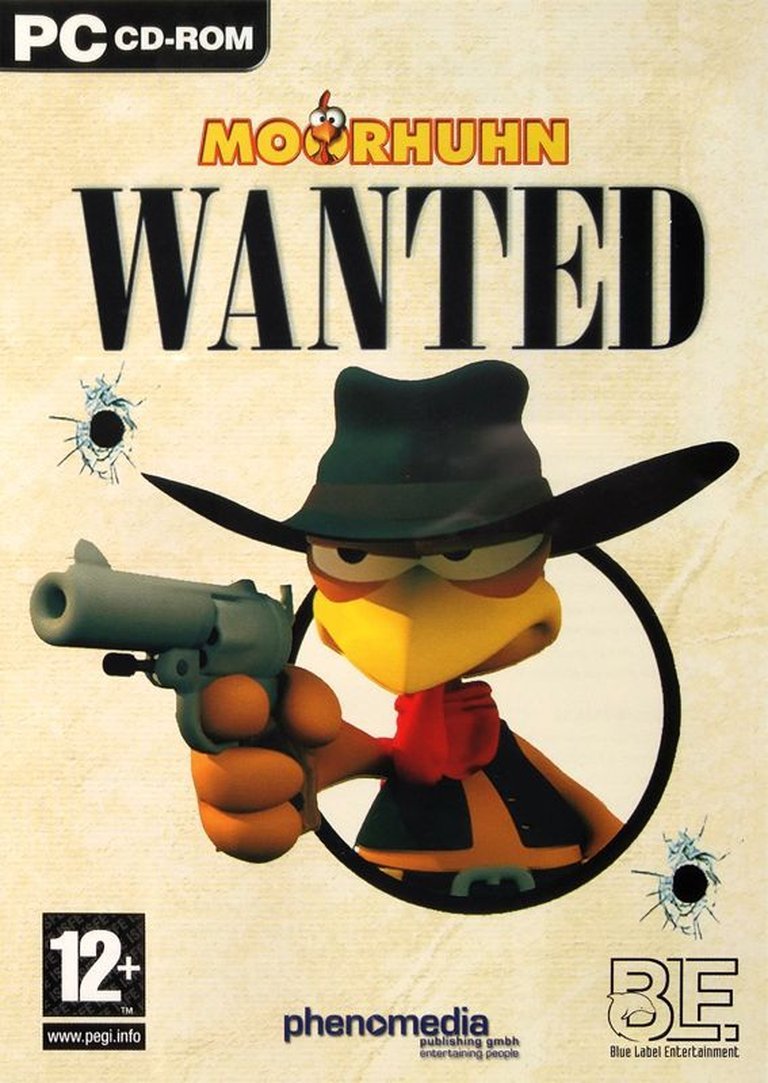
Crazy Chicken: Wanted is a Wild West-themed shooter game where players take on the role of a marshal tasked with restoring law and order to Gun City by shooting down armed cowboy chickens. As the successor to Moorhuhn X, this installment introduces a twist where the chickens fight back, adding a new layer of challenge. The gameplay follows the series’ traditional mechanics, with players using the mouse to aim and shoot, while the right mouse button reloads. Set in a vibrant Old West environment, the game blends humor, action, and fast-paced shooting in a first-person perspective.
Gameplay Videos
Crazy Chicken: Wanted Free Download
Crazy Chicken: Wanted Patches & Updates
Crazy Chicken: Wanted Guides & Walkthroughs
Crazy Chicken: Wanted Reviews & Reception
mobygames.com (55/100): The successor to Moorhuhn X in the Moorhuhn shooter series takes the player to a Wild West setting.
retro-replay.com : Crazy Chicken: Wanted perfects the series’ core gameplay loop while adding enough new wrinkles to feel like a legitimate evolution, rather than a mere reskin.
myabandonware.com (100/100): These Moorhuhn Crazy Chicken games are a ton of fun and challenging and addictive.
Crazy Chicken: Wanted – A Wild West Shooter That Never Quite Hit Its Mark
Introduction: The Chicken Strikes Back
In the annals of gaming history, few franchises have achieved the kind of viral, cultural ubiquity that Crazy Chicken (or Moorhuhn, as it’s known in its native Germany) did in the late 1990s and early 2000s. What began as a humble advergame for Johnnie Walker whisky—KippenSchieten, a Dutch demo shown at Bizarre ’98—evolved into a full-blown phenomenon, infecting offices, crashing servers, and even prompting workplace bans. By 2000, Moorhuhn was Germany’s most downloaded game, a symbol of the internet’s power to turn a simple shooting gallery into a national obsession.
Crazy Chicken: Wanted, released in 2004, arrived at a pivotal moment for the franchise. The initial “Moorhuhn-Boom” had begun to wane, and Phenomedia, the studio behind the series, was struggling to innovate beyond its core formula. Wanted attempted to reinvigorate the brand by transplanting its signature chicken-shooting mechanics into the Wild West, introducing armed “Desperado Chickens” that could shoot back—a first for the series. It also marked the franchise’s first foray into multi-level progression, requiring players to solve puzzles to unlock new stages.
Yet, despite these ambitions, Wanted was met with lukewarm reception. Critics praised its technical polish and humorous aesthetic but derided its repetitive gameplay and lack of meaningful evolution. It was, in many ways, a microcosm of the Crazy Chicken franchise itself: a game that rode the coattails of its own viral legacy while struggling to justify its existence beyond nostalgia.
This review will dissect Crazy Chicken: Wanted in exhaustive detail—its development, its mechanics, its cultural context, and its place in gaming history. Was it a bold reinvention, a desperate cash grab, or something in between? And what does its legacy tell us about the rise and fall of casual gaming’s first true phenomenon?
Development History & Context: The Rise and Fall of a Viral Sensation
From Advergame to Cultural Phenomenon
The story of Crazy Chicken: Wanted cannot be told without understanding the extraordinary origins of the Moorhuhn franchise. In 1998, Dutch studio Witan Entertainment, commissioned by German advertising agency Art Department, created KippenSchieten (“Chicken Shooting”) as a promotional tool for Johnnie Walker whisky. The game was simple: players had 90 seconds to shoot as many cartoonish chickens as possible in a static 2D environment. It was never meant for public release—just a quirky demo to be shown at bars and events.
But the internet had other plans.
By 1999, KippenSchieten had been leaked online, spreading like wildfire across German forums and email chains. Its tiny file size (just 2MB) made it easy to share, and its addictive, high-score-chasing gameplay made it impossible to put down. Offices ground to a halt as employees spent hours competing for bragging rights. The game’s unexpected virality forced Art Department to officially release it as Die Original Moorhuhn Jagd (The Original Moorhuhn Hunt), stripping out the Johnnie Walker branding and turning it into a standalone product.
The result? A cultural earthquake.
By 2000, Moorhuhn was everywhere. It was downloaded millions of times, sold in budget bins across Germany, and even inspired a wave of imitators. The game’s success was so overwhelming that it reportedly cost German businesses an estimated 135 million Deutsche Marks per year in lost productivity. The phrase “Moorhuhnjagd” (Moorhuhn hunt) entered the Duden, Germany’s authoritative dictionary, cementing the game’s place in the national lexicon.
Phenomedia’s Rise and the Franchise’s Expansion
The rights to Moorhuhn were acquired by Phenomedia AG, a German publisher that saw the potential in turning a viral hit into a full-fledged franchise. Under Phenomedia’s stewardship, the series expanded rapidly:
- 2000: Moorhuhn 2 introduced puzzles and interactive elements, deepening the gameplay.
- 2001: Moorhuhn Winter Edition and Moorhuhn 3 added seasonal themes and new enemies.
- 2003: Moorhuhn X overhauled the visuals and introduced bonus mini-games.
But Phenomedia’s ambitions extended beyond simple shooters. The studio experimented with spin-offs:
– Kart racing (Moorhuhn Kart, 2002)
– Adventure games (Moorhuhn Adventure: Der Schatz des Pharao, 2003)
– Pinball (Moorhuhn Pinball, 2004)
– Even a VR experiment (Moorhuhn VR, 2017)
Yet, for all its experimentation, the franchise struggled to escape its own shadow. The core Moorhuhn games remained largely unchanged: shoot chickens, chase high scores, repeat. Critics began to accuse the series of monotony, and by 2004, the “Moorhuhn-Boom” was fading.
The Birth of Crazy Chicken: Wanted
It was in this climate that Moorhuhn Wanted (rebranded as Crazy Chicken: Wanted for international markets) was conceived. Developed by Phenomedia publishing GmbH and released in August 2004, Wanted was an attempt to breathe new life into the franchise by:
1. Changing the setting – Swapping the series’ traditional rural landscapes for a Wild West town.
2. Introducing armed enemies – “Desperado Chickens” could now shoot back, adding a layer of challenge.
3. Adding progression – Players had to solve puzzles to unlock new levels, a first for the series.
4. Expanding the lore – The game cast the player as a marshal tasked with bringing law and order to “Gun City.”
The development team, led by Frank Ziemlinski and Michael Bohne (the original creators of Moorhuhn), aimed to make Wanted more than just another reskin. The game’s art direction, handled by Ernst Weber and Thomas Schüer, embraced a cartoonish Wild West aesthetic, complete with saloons, cacti, and tumbleweeds. The soundtrack, composed by Nils Fritze, blended spaghetti western twangs with the series’ signature upbeat electronic tones.
Technologically, Wanted was modest. Built for Windows PCs, it used a simple 2D engine with mouse-based controls—nothing groundbreaking, but perfectly suited for the casual audience Phenomedia targeted. The game was also released in a “XS” demo version, a common practice for the franchise, allowing players to try a limited version before purchasing the full “XXL” edition.
The Gaming Landscape in 2004
To understand Wanted’s reception, it’s crucial to contextualize the gaming industry in 2004. This was the era of:
– The rise of 3D shooters (Half-Life 2, Doom 3, Halo 2)
– The dominance of console gaming (PS2, Xbox, GameCube)
– The birth of modern indie games (World of Goo, Braid were on the horizon)
In this environment, Crazy Chicken: Wanted was an anachronism—a 2D, mouse-controlled shooting gallery in a world moving toward immersive 3D experiences. Yet, it wasn’t alone. Casual games like Bejeweled (2001) and Diner Dash (2003) were proving that simple, accessible gameplay still had a market. Wanted attempted to straddle both worlds: a casual game with just enough complexity to appeal to core gamers.
But did it succeed?
Narrative & Thematic Deep Dive: Law and Order in Gun City
Plot Overview: A Chicken Western
Crazy Chicken: Wanted’s premise is delightfully absurd. The game casts the player as the Marshal of Gun City, a lawless Wild West town overrun by armed chickens. Your mission? Shoot the outlaw chickens, solve puzzles, and restore order.
The narrative is delivered through minimal text and cartoonish cutscenes. There’s no voice acting, no deep characterization—just a simple setup that serves as an excuse for the gameplay. The story unfolds across three main levels and one bonus level, each with its own set of challenges:
- Gun City (Main Street) – The town’s central hub, where players first encounter the Desperado Chickens.
- The Saloon – A darker, more chaotic environment with faster-moving enemies.
- The Mine – A claustrophobic setting with hidden puzzles.
- High Noon (Bonus Level) – A showdown with the toughest outlaw chickens.
The game’s humor is its strongest narrative asset. The chickens are anthropomorphized bandits, complete with bandanas and six-shooters. The environments are filled with visual gags—wanted posters featuring chicken mugshots, dynamite barrels that explode when shot, and even a piano-playing chicken in the saloon.
Characters: The Outlaws of Gun City
While Wanted doesn’t have a deep roster of characters, it does introduce a few memorable foes:
- Desperado Chickens – The primary enemies. Unlike previous Moorhuhn games, these chickens shoot back, forcing players to dodge or take cover.
- Sheriff Chicken – A rare, high-value target that awards bonus points.
- Hank the Mole – A returning character from Moorhuhn Winter Edition, who must be lured out to retrieve keys.
- The Piano Chicken – A non-hostile chicken that plays ragtime music in the saloon.
The game’s antagonist is never explicitly named, but the implication is clear: the chickens have taken over, and it’s your job to stop them.
Themes: Chaos vs. Order
At its core, Crazy Chicken: Wanted is a power fantasy. The player is the lone lawman in a town overrun by chaos, and the only way to restore order is through violence. This theme is reinforced by the game’s mechanics:
– Shooting chickens = restoring order
– Missing shots = allowing chaos to persist
– Solving puzzles = outsmarting the outlaws
Yet, the game’s tone is self-aware and humorous. The chickens aren’t just mindless targets—they’re cartoonish bandits, complete with outlaw aesthetics. The game doesn’t take itself seriously, and neither should the player.
Dialogue and Localization
Wanted’s dialogue is minimal, consisting mostly of text prompts and sound effects. The German version (Moorhuhn Wanted) retains the series’ trademark humor, with chickens making silly noises when shot. The English localization (Crazy Chicken: Wanted) is serviceable but lacks the cultural nuance of the original.
One interesting note: the game’s Russian and Japanese localizations (Морхухн: Wanted and モーアフーン ウォンテッド, respectively) suggest an attempt to expand the franchise beyond Europe. However, these versions saw limited distribution and had little impact.
Underlying Themes: A Satire of the Western Genre
Crazy Chicken: Wanted can be read as a parody of classic Westerns. The game’s setting, characters, and even its title (Wanted) evoke the tropes of spaghetti westerns and cowboy films. But instead of grizzled outlaws, the enemies are cartoon chickens. Instead of a heroic sheriff, the player is a faceless marshal.
This satire extends to the gameplay:
– Dueling mechanics (shooting chickens before they shoot you)
– Wanted posters (high-value chicken targets)
– Saloon brawls (fast-paced shooting galleries)
In this way, Wanted isn’t just a reskin of the Moorhuhn formula—it’s a genre deconstruction, using absurdity to comment on the tropes of Western media.
Gameplay Mechanics & Systems: Shooting Chickens in the Wild West
Core Gameplay Loop: Shoot, Reload, Repeat
At its heart, Crazy Chicken: Wanted is a shooting gallery game with light puzzle elements. The core gameplay loop is simple:
1. Aim with the mouse.
2. Shoot by clicking the left mouse button.
3. Reload by clicking the right mouse button.
4. Avoid getting shot by Desperado Chickens.
The game is divided into three main levels and one bonus level, each with its own objectives:
– Gun City: Shoot a set number of chickens to unlock the saloon.
– The Saloon: Solve a puzzle (e.g., shoot a chandelier to reveal a key) to progress.
– The Mine: Navigate a maze-like environment while shooting chickens.
– High Noon: A timed showdown with the toughest outlaws.
Each level is timed, and players are graded based on their score. High scores unlock bonus content, including the “Los Dosos” mini-game (a standalone Flash game included in some versions).
Combat: The Chickens Shoot Back
The most significant innovation in Wanted is the introduction of Desperado Chickens—armed enemies that shoot back. This adds a layer of challenge absent from previous Moorhuhn games, where chickens were passive targets.
- Desperado Chickens fire bullets toward the player, which must be dodged.
- Sheriff Chickens are rare, high-value targets that award bonus points.
- Hank the Mole must be lured out of hiding to retrieve keys.
The combat is fast-paced but shallow. There’s no cover system, no health regeneration—just pure reflex-based shooting. The game’s difficulty ramps up as players progress, with later levels featuring faster, more aggressive chickens.
Puzzle Mechanics: More Than Just Shooting
Wanted introduces light puzzle elements, requiring players to interact with the environment to progress. Examples include:
– Shooting a chandelier to reveal a hidden key.
– Luring Hank the Mole out of his hole to retrieve an item.
– Shooting specific objects in a sequence to unlock doors.
These puzzles are simple but add variety to the gameplay. They’re not as complex as those in Moorhuhn 2 or Moorhuhn 3, but they prevent the game from feeling like a mindless shooting gallery.
Progression & Unlockables
Wanted features a linear progression system:
1. Complete Level 1 (Gun City) to unlock Level 2 (The Saloon).
2. Solve the saloon’s puzzle to unlock Level 3 (The Mine).
3. Navigate the mine to unlock the bonus level (High Noon).
High scores unlock bonus content, including:
– Los Dosos mini-game: A standalone Flash game featuring a chicken-themed card game.
– High Hun bonus level: A harder version of the main game with faster chickens.
The game also includes Easter eggs, such as hidden wanted posters and interactive objects that award bonus points.
UI & Controls: Simple but Effective
Wanted’s UI is minimalist:
– Score display (top-left corner)
– Ammo counter (bottom-right corner)
– Health bar (only in later levels)
The controls are mouse-based:
– Left-click: Shoot
– Right-click: Reload
– Mouse movement: Aim
There’s no controller support, no keyboard shortcuts—just pure, unadulterated mouse shooting. This simplicity makes the game accessible but also limiting for players who prefer more complex controls.
Innovations & Flaws
Innovations:
✅ Desperado Chickens add a new layer of challenge.
✅ Puzzle mechanics prevent the game from feeling repetitive.
✅ Wild West theme gives the franchise a fresh coat of paint.
Flaws:
❌ Shallow combat – No cover system, no health regeneration.
❌ Repetitive gameplay – The core loop doesn’t evolve much.
❌ Limited replayability – Once you’ve beaten the levels, there’s little reason to return.
World-Building, Art & Sound: A Cartoonish Wild West
Setting & Atmosphere
Crazy Chicken: Wanted takes place in Gun City, a fictional Wild West town overrun by outlaw chickens. The game’s environments are colorful and cartoonish, with exaggerated proportions and slapstick humor.
- Gun City (Main Street): A dusty town with saloons, general stores, and wanted posters.
- The Saloon: A dimly lit bar with a piano-playing chicken and swinging doors.
- The Mine: A dark, maze-like tunnel with hidden treasures.
- High Noon (Bonus Level): A desert showdown at sunset.
The game’s art style is consistent with the Moorhuhn franchise—bright, exaggerated, and full of visual gags. The Wild West theme is more of a cosmetic change than a true reinvention, but it gives the game a distinct identity.
Visual Direction: A Cartoon Western
The visuals in Wanted are 2D sprites with hand-drawn animations. The chickens are anthropomorphized, with bandanas, hats, and even guns. The environments are detailed but static, with little in the way of dynamic lighting or effects.
- Character designs: The chickens are expressive, with exaggerated reactions when shot.
- Environmental details: Wanted posters, dynamite barrels, and cacti add flavor.
- Animations: Smooth but limited—most interactions are simple sprite swaps.
The game’s art direction is charming but dated. By 2004 standards, Wanted was not a technical showcase, but it didn’t need to be. Its strength lay in its humor and accessibility, not its graphics.
Sound Design: Spaghetti Western Meets Electronic Beats
The soundtrack, composed by Nils Fritze, blends spaghetti western twangs with upbeat electronic beats. The result is a quirky, energetic score that fits the game’s tone.
- Main theme: A mix of guitar riffs and synth melodies.
- Saloon music: Ragtime piano tunes played by the in-game chicken.
- Combat music: Fast-paced electronic tracks that ramp up during shootouts.
The sound effects are simple but effective:
– Gunshots – A satisfying bang when you hit a chicken.
– Chicken noises – Silly squawks and clucks.
– Environmental sounds – Creaking saloon doors, exploding dynamite.
The voice acting is nonexistent—the game relies on text prompts and sound effects to convey its story.
How Art & Sound Contribute to the Experience
Wanted’s art and sound work together to create a lighthearted, humorous experience. The cartoonish visuals and quirky soundtrack reinforce the game’s satirical tone, making it clear that this is a parody, not a serious Western.
The sound design also plays a functional role:
– Gunshot sounds help players track their shots.
– Chicken noises indicate when an enemy is about to shoot.
– Music cues signal when a new wave of enemies is about to appear.
Overall, the art and sound elevate Wanted beyond a simple reskin, giving it a distinct identity within the Moorhuhn franchise.
Reception & Legacy: A Game That Couldn’t Escape Its Own Shadow
Critical Reception: Mixed Reviews and Nostalgia
Crazy Chicken: Wanted received mixed reviews upon release. Critics praised its humor, polish, and Wild West theme but criticized its repetitive gameplay and lack of innovation.
Positive Reviews:
– Freegame.cz (94%): “Excellent graphics and sound… a must-have for Moorhuhn fans.”
– PlnéHry.cz (80%): “Technically superb… the only downside is the XS version’s limitations.”
Negative Reviews:
– GameStar (Germany) (13%): “Nice, but it’s getting old.”
– PC Action (Germany) (41%): “The tenth thousandth variant of simple bird shooting.”
– Computer Bild Spiele (45%): “A successful mini-game, but not a full-fledged title.”
The player reception was similarly divided. On MobyGames, the game holds a 6.0/10 based on player ratings, with many citing its nostalgic value but acknowledging its lack of depth.
Commercial Performance: A Niche Hit
Wanted was not a blockbuster, but it sold well enough to justify its existence. The game was released in multiple versions:
– XS (Demo): Free, limited version.
– XL (Mid-tier): €5, with more content.
– XXL (Full): The complete experience.
The game was also bundled in several Moorhuhn compilations, including:
– Moorhuhn Complete (2016)
– Crazy Chicken: Shooter Edition (2021)
While exact sales figures are unclear, Wanted likely sold in the hundreds of thousands, consistent with other Moorhuhn titles of the era.
Legacy: The Franchise’s Struggle to Evolve
Crazy Chicken: Wanted is a microcosm of the Moorhuhn franchise’s strengths and weaknesses. It’s fun, accessible, and humorous, but it’s also repetitive, shallow, and overly reliant on nostalgia.
The game’s biggest innovation—armed chickens that shoot back—was a step in the right direction, but it wasn’t enough to reinvent the franchise. Later Moorhuhn games would continue to experiment (Moorhuhn Invasion, Moorhuhn Director’s Cut), but none would recapture the viral magic of the original.
Today, Wanted is remembered as:
✅ A fun, if forgettable, entry in the Moorhuhn series.
✅ A rare attempt to evolve the franchise’s formula.
❌ A game that ultimately couldn’t escape its own limitations.
Influence on Later Games
Wanted’s puzzle mechanics and progression system would influence later Moorhuhn games, such as:
– Moorhuhn Invasion (2005) – Introduced alien chickens and new puzzle elements.
– Moorhuhn Director’s Cut (2007) – Featured film-set-themed levels with progression.
However, the franchise would never fully escape its casual roots. Later attempts to branch out (Moorhuhn: Tiger & Chicken, Moorhuhn Kart 4) met with mixed success, proving that Moorhuhn’s appeal was tied to its simplicity.
Conclusion: A Wild West Shooter That Never Quite Drew Its Gun
Crazy Chicken: Wanted is a flawed but fascinating entry in the Moorhuhn franchise. It’s a game that tried to evolve—introducing armed enemies, puzzles, and a new setting—but ultimately couldn’t escape the limitations of its own formula.
What It Does Well:
✔ Humor & Charm – The Wild West theme is executed with wit and personality.
✔ Accessibility – Simple controls and straightforward gameplay make it easy to pick up.
✔ Innovation – The Desperado Chickens and puzzle mechanics add depth.
Where It Falls Short:
✖ Repetition – The core gameplay loop doesn’t evolve enough.
✖ Shallow Combat – No cover system or health mechanics limit strategic depth.
✖ Limited Replayability – Once beaten, there’s little reason to return.
Final Verdict: 6.5/10 – A Fun but Forgettable Shootout
Crazy Chicken: Wanted is not a bad game, but it’s not a great one either. It’s a competent, charming shooter that doesn’t overstay its welcome, but it also doesn’t leave a lasting impression.
For fans of the Moorhuhn series, it’s a worthwhile curiosity—a rare attempt to push the franchise forward. For everyone else, it’s a brief, amusing diversion that’s best enjoyed in short bursts.
In the grand tapestry of gaming history, Crazy Chicken: Wanted is a footnote—a reminder of a time when a simple shooting gallery could captivate a nation. But as the gaming landscape evolved, so too did the expectations of players. Wanted was a step in the right direction, but it wasn’t enough to save the franchise from fading into obscurity.
And yet, in its own small way, Crazy Chicken: Wanted matters. It’s a testament to the power of humor, accessibility, and sheer absurdity in gaming. In a world of hyper-realistic shooters and open-world epics, there’s still something to be said for a game where you shoot armed chickens in a cartoon saloon.
Sometimes, that’s exactly what gaming needs.
Final Score: 6.5/10 – “A Wild West Shootout That’s More Fun Than It Has Any Right to Be.”