
- Release Year: 2003
- Platforms: Nintendo Switch, PlayStation 2, PlayStation 4, PlayStation 5, PlayStation, Windows
- Publisher: ak tronic Software & Services GmbH, Higgs Games GmbH, Markt+Technik Verlag GmbH, Play It Ltd.
- Developer: phenomedia publishing gmbh, Sproing Interactive Media GmbH
- Genre: Action
- Perspective: First-person
- Game Mode: Single-player
- Gameplay: Shooter
- Average Score: 53/100
Description
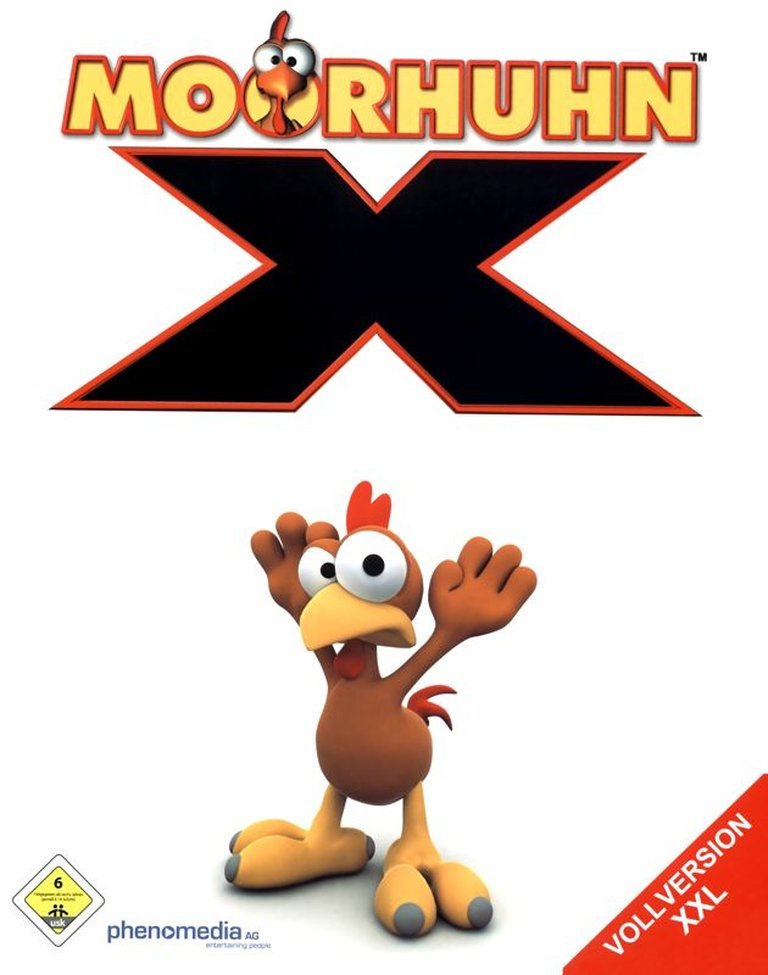
Crazy Chicken X is a 3D shooter game where players must hunt down animated chickens that hide in various creative and humorous locations. The game features a redesigned 3D environment filled with eccentric objects and scenes, making it challenging for players to spot and shoot the cleverly concealed chickens. The controls remain intuitive, with mouse aiming and clicking for shooting and reloading.
Gameplay Videos
Where to Buy Crazy Chicken X
PC
Crazy Chicken X Free Download
PlayStation 2
Crazy Chicken X Guides & Walkthroughs
Crazy Chicken X Reviews & Reception
mobygames.com (53/100): Average score: 53% (based on 6 ratings)
Crazy Chicken X: Review
A Whimsical Leap into 3D That Divided Critics but Charmed a Nation
Introduction
In the annals of European gaming history, few franchises evoke as much nostalgic reverence—or bewildered fascination—as Crazy Chicken. Known in its native Germany as Moorhuhn, the series began as a Johnnie Walker advergame before morphing into a viral phenomenon that dominated early 2000s PC culture. Crazy Chicken X (2003), the franchise’s first full 3D iteration, aimed to modernize the formula while preserving its absurdist soul. This review argues that while the game stumbled under the weight of its own simplicity and critical expectations, its irreverent charm and technical ambition solidified its cult status—even as it laid bare the limitations of genre reinvention in an era of rapid gaming evolution.
Development History & Context
Studio Vision & Turbulent Foundations
Developed by phenomedia publishing gmbh and Sproing Interactive Media, Crazy Chicken X emerged during a fraught period for its parent company. Phenomedia AG, the franchise’s original owner, had recently collapsed amid a stock-manipulation scandal that saw executives imprisoned. The rights were hastily acquired by ak tronic Software & Services GmbH, which greenlit X as a bold reinvention to reignite public interest. Led by concept designer Frank Ziemlinski and head artist Ralf Marczinczik, the team sought to translate the series’ 2D shooting-gallery gameplay into a three-dimensional diorama brimming with personality.
Technological Ambitions in 2003
Releasing for Windows in May 2003, X arrived at a transitional moment: Half-Life 2 and Doom 3 loomed on the horizon, yet many consumers still relied on rudimentary hardware. The developers prioritized accessibility, crafting low-poly 3D environments that could run on modest PCs. This strategic restraint allowed the game to flourish in internet cafés and home PCs across Germany, where the franchise’s popularity bordered on cultural obsession. The team’s use of animated sequences—chickens now ran, hid, and reacted—marked a significant leap from the static sprites of earlier entries, though engine limitations necessitated a locked single-screen perspective.
The Gaming Landscape
Crazy Chicken X entered a market saturated with casual shooters like Chicken Shoot, yet its timing was precarious. The PS2 and Xbox were redefining player expectations for depth, while browser-based freeware eroded the commercial viability of simplistic arcade titles. Against these headwinds, X’s $3.99 price point (for the Steam re-release) and CD-ROM distribution model felt simultaneously nostalgic and out-of-step, a tension that colored its reception.
Narrative & Thematic Deep Dive
Plot? What Plot?
To critique Crazy Chicken X for its narrative paucity is to miss the point. Like its predecessors, the game revels in joyful incoherence: players assume the role of an unseen hunter tasked with shooting manic poultry across a surreal farmstead. There are no cutscenes, no dialogue, and no stakes beyond achieving high scores. Yet within this vacuum, thematic threads emerge. The chickens—now endowed with exaggerated animations—become anarchic tricksters, dodging bullets while dressed as sunflowers, crammed into outhouses, or parodying pop culture (one duo of hedgehogs plays poker, shades of Alice in Wonderland).
Subtextual Satire
Beneath the chaos lies a gentle satire of hunting culture. The original Moorhuhn games drew ire from German animal rights groups for glorifying violence against birds; X responds by rendering its targets more comical than pitiable. A post-game screen shows wounded chickens comically bandaged, undermining any notions of brutality. This tonal tightrope—violent mechanics delivered with cartoon levity—reflects the franchise’s knack for disarming critics through absurdism.
Gameplay Mechanics & Systems
Core Loop: Simplicity as Virtue (and Vice)
The gameplay remains unchanged from 1999’s proto-release: players use a mouse to aim, left-click to shoot, and right-click to reload within a 90-second time limit. Chickens dart across the screen in predictable patterns, but X layers complexity through environmental interactivity. Shooting specific objects triggers chain reactions: detonating a barrel might flush out hidden birds, while firing at a scarecrow reveals a secret mini-game. These puzzles, though rarely more than two-step tasks, reward experimentation and elevate replayability.
Innovations and Missed Opportunities
The shift to 3D introduced physics-driven hijinks—chickens now tumble into haystacks or slide down roofs—but the camera remains static, evoking the feel of a living pop-up book. Critics praised the new “Boom Baby Boom” bonus round (accessed via high scores), a rhythm-based shooting gallery set to composer Nils Fritze’s jazz fusion track. Yet the lack of meaningful progression systems or difficulty scaling drew ire. PC Games Germany (3/100) lambasted its “outrageous lack of imagination,” while Hrej! (80/100) conceded it was “Moorhuhn 1 in a new coat.”
UI and Accessibility
The interface is Spartan: a score counter, timer, and ammo indicator frame the screen, ensuring minimal distraction. While functional, the absence of control customization options—even in modern re-releases—feels archaic.
World-Building, Art & Sound
A Farmstead Steeped in Whimsy
X’s rural setting bursts with idiosyncratic detail. The farm is littered with discarded tools, precarious stacks of pumpkins, and anthropomorphic critters (including card-playing hedgehogs wearing sunglasses). Unlike the flat backdrops of earlier games, this 3D space feels tactile, with wheat fields swaying in invisible breezes and chickens tumbling through barn doors. The autumnal palette—ochre leaves, burnt-orange sunsets—creates a cozy, almost folksy atmosphere, counterbalancing the frenetic action.
Sound Design: Jazz and Clucks
Nils Fritze’s soundtrack blends Dixieland jazz with slapstick synths, performed by the fictional “Frischluftfreunde” ensemble. The result is a manic, carnivalesque score that complements the on-screen chaos. Sound effects are equally exaggerated: gunshots pop like party favors, while chickens emit rubbery squawks reminiscent of Looney Tunes.
Reception & Legacy
Critical Divide
Upon release, Crazy Chicken X polarized reviewers. Czech outlet Freegame.cz (100/100) hailed it as “one of the best games in weeks,” praising its humor and polished presentation. Conversely, PC Action (33/100) decried its reliance on trial-and-error puzzles, lamenting: “Instead of skill, the developers doubled down on frustration.” The game holds a 53% critical average on MobyGames, with player scores marginally higher (2.7/5)—a testament to its niche appeal.
Commercial Resilience
Despite tepid reviews, X became a commercial linchpin for ak tronic. Bundled in compilations like Moorhuhn Complete, it sold over 300,000 physical copies by 2005, while free “XS Edition” downloads surpassed 800,000. Its 2022 Switch remaster introduced motion controls and new mini-games, proving the enduring demand for comfort-food gaming.
Influence and Cultural Footprint
Crazy Chicken X’s legacy is twofold: it demonstrated the viability of casual franchises transitioning to 3D, inspiring peers like Chicken Shoot, and reinforced Germany’s affection for irreverent, locally resonant IP. The phrase “Moorhuhnjagd” (Moorhen hunt) entered the Duden dictionary—a rare honor for a video game—while its addictive design became a case study in viral marketing.
Conclusion
Crazy Chicken X is a paradox: a game both derivative and innovative, critiqued for its simplicity yet beloved for its unpretentious fun. It neither revolutionized the shooter genre nor matched the artistry of contemporary titles, but as a time capsule of early 2000s Euro-casual gaming, it remains invaluable. Its chickens—absurd, indestructible, and endlessly entertaining—embody gaming’s capacity for joy divorced from narrative or complexity. For historians, X is a footnote; for fans, it’s a riotous heirloom. In the pantheon of avian shooters, it reigns as a plucky, unapologetic monarch—flaws, clucks, and all.
Final Verdict:
A flawed but culturally pivotal chapter in Germany’s gaming history, Crazy Chicken X earns its place not through polish, but through sheer, unbridled charm. Worth revisiting as a curiosity—or for anyone craving 90 seconds of cathartic cluck-busting.