
Description
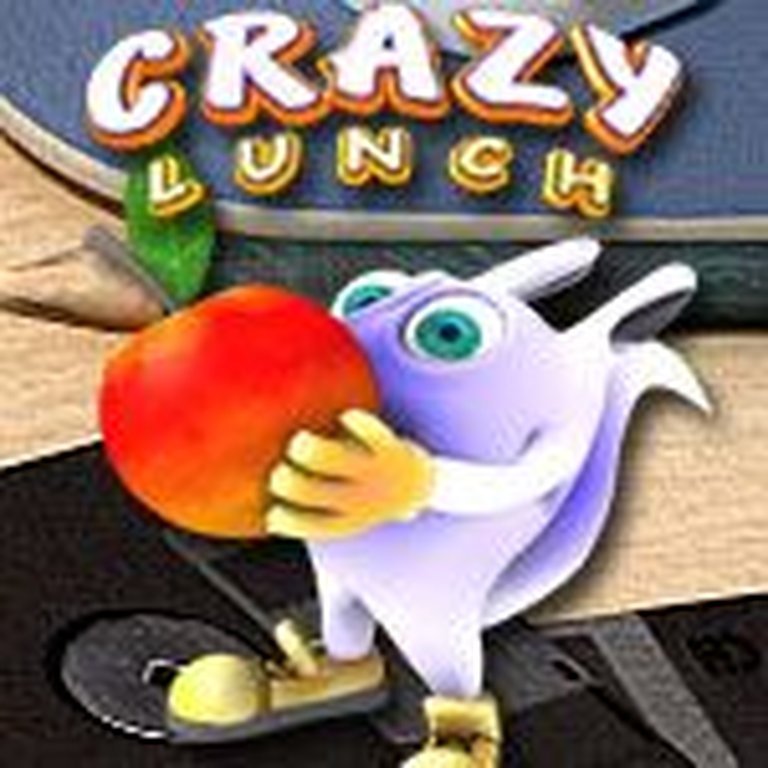
Crazy Lunch is a lighthearted arcade game set on your desktop in a fantasy world where mischievous little creatures steal your lunch, prompting players to fend them off through three engaging mini-games: stopping monster attacks to protect your meal, matching identical objects hidden behind their backs to chase them away, and typing specific words they’re thinking of to banish them, all accompanied by funny sounds, lively music, hand-drawn characters in bright jogging shoes and yellow gloves, and tasty bonuses that develop memory, typing, and reaction skills.
Crazy Lunch: Review
Introduction
Imagine your mundane office desk transforming into a chaotic battlefield, where pint-sized invaders in bright jogging shoes and yellow gloves pilfer your precious pizza slices amid silly sound effects and upbeat tunes—welcome to Crazy Lunch, a 2003 freeware gem that turns lunchtime larceny into pixelated pandemonium. Developed and published by the obscure Russian studio Sigma LLC (also known as Sigma Team), this arcade action title has languished in the shadows of gaming history, with scant documentation on MobyGames and zero Metacritic scores, yet its ports to iOS and Android years later hint at a quirky endurance. As a professional game journalist and historian, my thesis is clear: Crazy Lunch exemplifies the unpretentious charm of early 2000s freeware, delivering bite-sized, skill-sharpening mini-games that prioritize goofy accessibility over grandeur, carving a niche as a forgotten antidote to workweek drudgery.
Development History & Context
Sigma LLC, a small Russian developer with a footprint primarily in casual downloadable titles, unleashed Crazy Lunch in 2003 for Windows as freeware—public domain in spirit, downloadable at no cost, perfectly attuned to the era’s burgeoning internet distribution scene. This was the post-Y2K landscape, where broadband was spreading but high-end 3D blockbusters like Half-Life 2 (still a year away) dominated headlines; instead, freeware thrived on sites like AG.ru, filling the void for quick, lightweight distractions amid the rise of browser games and Flash experiments.
Technological constraints shaped its fixed/flip-screen visuals and point-and-click interface, leveraging simple 2D hand-drawn assets on pre-rendered 3D desk environments—no sprawling engines needed, just a nimble download for offline solo play. Sigma’s vision, gleaned from the official ad blurb, was pure whimsy: transform everyday office frustration (stolen lunches!) into a “fun kid party game” that hones memory, typing, and reaction skills. Russian roots shine through the alternate title Чудики (“Whimsies” or “Oddballs”), and its 2004 porting trajectory—iPhone/iPad in 2014, Android in 2016—reflects mobile casual gaming’s hunger for retro freebies. In a sea of Minesweeper clones and Solitaire staples, Crazy Lunch emerged as a fantastical desk defender, embodying the freeware ethos of joy without obligation.
Narrative & Thematic Deep Dive
Crazy Lunch eschews epic sagas for a delightfully trivial premise: your lunch has vanished, colleagues are suspects no more—the culprits are “little strange creatures” swarming your desktop, hiding pizza slices behind their backs in a frenzy of furry mischief. No branching plots or lore dumps; the narrative unfolds in real-time absurdity across three modes, with dialogue limited to thought bubbles demanding typed words or visual matches. Characters are the stars: purple, hairy, oddly endearing monsters decked in yellow gloves and jogging shoes, evoking a kid’s doodle come alive—lovely hand-drawn oddballs that scamper with personality, dropping “tasty bonuses” and “big surprises” upon defeat.
Thematically, it’s a lighthearted ode to petty chaos amid routine: the desk as a microcosmic fantasy realm where office woes manifest as adorable invasions, satirizing lunch theft while celebrating reaction over reflection. Modes reinforce this—defend against hordes (Don’t Let Monsters Steal Your Lunch), outwit hiders (Find Identical Objects), or silence thinkers (Too Many Words!)—weaving skill-building into surreal humor. No deep psychology, but the creatures’ lively antics critique sedentary work life, turning “hassle” into hilarity. In Russian context (Чудики), it taps folkloric whimsy, positioning play as escapist therapy: not serious literature, but a chuckle-filled vignette on vigilance and whimsy.
Gameplay Mechanics & Systems
At its core, Crazy Lunch is an arcade point-and-select extravaganza in 1st-person fixed/flip-screen view, looping through defense, matching, and typing mini-games with addictive escalation. The primary loop—”Don’t Let Monsters Steal Your Lunch!”—pits players against waves of desk-bound beasts eyeing pizza slices; click to splat them (per Reddit recollections of purple furries on a wooden desk), triggering potential pizza drops for points in a poorly lit, pre-rendered 3D room. Innovative power-ups shine: a cigarette lets you draw ash trails that auto-kill crossers, adding strategic line-laying to frantic clicking amid 150-160 BPM catchy music and silly effects.
Find Identical Objects shifts to memory-testing: monsters conceal lunch behind backs, demanding rapid pair-matching to shoo them—flawed if patterns repeat lazily, but innovative for freeware, blending spot-the-difference with chase mechanics. Too Many Words! demands typing monsters’ thought-bubble words verbatim, honing keyboard reflexes in a rhythm of escalating verbosity. Progression is score-based, with “a lot of tasty bonuses” fueling combos, though no deep RPG trees—pure arcade purity. UI is straightforward: intuitive pointing on the desktop arena, but flip-screen flips risk disorientation in hordes. Flaws include potential repetition and lack of depth (one-player only), yet innovations like ash-trail tactics and multi-mode variety elevate it beyond basic clickers, fostering reaction skills in 5-10 minute bursts.
| Mode | Core Loop | Skills Targeted | Unique Twist |
|---|---|---|---|
| Don’t Let Monsters Steal Your Lunch | Click invaders, collect drops | Reaction, clicking precision | Ash-trail cigarette power-up |
| Find Identical Objects | Match hidden pairs | Memory, observation | Chase-away on success |
| Too Many Words! | Type thought bubbles | Typing speed/accuracy | Escalating word length |
World-Building, Art & Sound
The “world” is ingeniously confined: a fantasy-infused office desk in a dimly lit room, pizza plate centerpiece amid wooden textures—pre-rendered 3D grounding the chaos in relatable realism, flipping to track furry fiends. Atmosphere crackles with liveliness: hand-drawn creatures burst with color and charm, their jogging-shoe sprints and glove-waving antics building a party-like vibe despite the theft theme.
Visual direction prioritizes cuteness over polish—purple hairy monsters as lovable pests, bonuses popping like candy—contributing immersive desk-scale whimsy. Sound design amplifies: “funny sounds” for squishes and steals, “lively music” pulsing at arcade tempo, syncing with reaction demands for euphoric flow. Together, they forge an experience of joyful frenzy: visuals invite empathy for foes, audio propels urgency, turning a static screen into a pulsating lunchline skirmish.
Reception & Legacy
Launch reception was whisper-quiet: Absolute Games (AG.ru) awarded 60% in 2004, praising its non-serious appeal as a Minesweeper/Solitaire rival for work breaks—”Одним словом, «Чудики» оставляют приятное впечатление” (In one word, Чудики leaves a pleasant impression)—but no Western fanfare, zero player reviews on MobyGames/Metacritic, unranked status. Commercially, freeware obscurity reigned; mobile ports (iOS 2014 at $0.00, Android 2016) extended reach modestly, collected by one MobyGames user.
Legacy endures in niches: Reddit quests resurrect it as a “silly” nostalgia hit, influencing no blockbusters but echoing in lunch-themed indies (Snowy: Lunch Rush, Lunch A Palooza). As freeware artifact, it prefigures casual mobile minis, preserving early Russian digital whimsy amid 309,678 MobyGames entries— a cult curio for historians, not revolutionaries.
Conclusion
Crazy Lunch distills 2003 freeware’s essence—goofy, skill-honing desk defense via clicking hordes, memory matches, and typing frenzies, wrapped in hand-drawn creature charm and bouncy audio—flawed by simplicity yet redeemed by infectious fun. In video game history, it claims a humble pedestal: not a masterpiece, but a pleasant relic outshining tedium, worthy of rediscovery for casual enthusiasts. Verdict: 7/10—a quirky time capsule deserving emulation and applause.