
- Release Year: 2005
- Platforms: Macintosh, Windows
- Publisher: Novitas GmbH, Viva Media, LLC
- Developer: FAKT Software GmbH
- Genre: Puzzle
- Perspective: Side view
- Game Mode: Single-player
- Gameplay: Custom contraption creation, Level editing, Puzzle-solving, Rube Goldberg machines
- Average Score: 76/100
Description
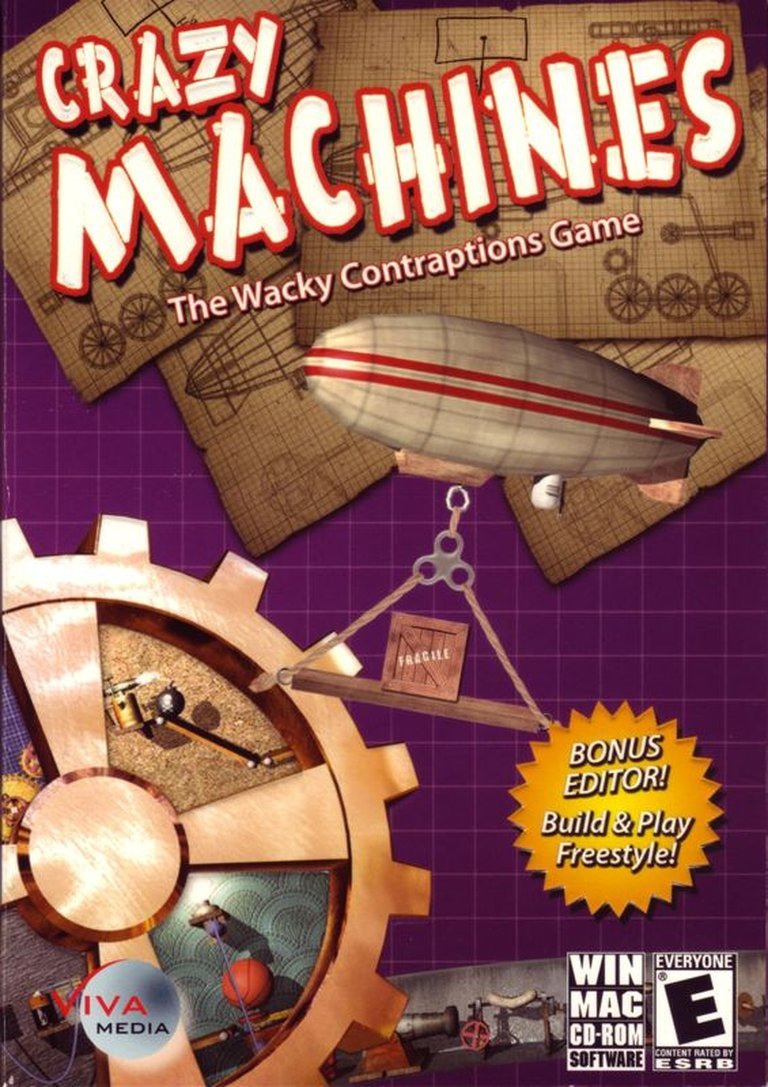
Crazy Machines: The Wacky Contraptions Game is a physics-based puzzle game where players construct elaborate Rube Goldberg machines to solve over 200 imaginative challenges. Drawing inspiration from The Incredible Machine series, the game offers a vast array of parts—from simple tools to explosive elements—allowing for creative problem-solving with multiple solutions per puzzle. Set in a zany laboratory environment, players can experiment with realistic physics, dynamic lighting, and interactive sound effects. The game also features a sandbox mode for designing custom contraptions, providing endless opportunities for inventive gameplay and experimentation.
Crazy Machines: The Wacky Contraptions Game Free Download
Crazy Machines: The Wacky Contraptions Game Guides & Walkthroughs
Crazy Machines: The Wacky Contraptions Game Reviews & Reception
metacritic.com (78/100): A fun little puzzle game with a few nice quirks.
mobygames.com (75/100): A very unique, if short, experience.
gamespot.com (77/100): Crazy Machines is pretty similar to many other puzzle games on the PC, but the amount and quality of its content makes it worthwhile anyway.
Crazy Machines: The Wacky Contraptions Game: Review
Introduction
In the storied lineage of physics-based puzzle games, few concepts capture the joy of chaotic engineering as vividly as the Rube Goldberg machine. Crazy Machines: The Wacky Contraptions Game (2005), developed by FAKT Software GmbH, emerged as a revivalist homage to Sierra’s The Incredible Machine series—reigniting fascination with intricate, chain-reaction problem-solving. This exceptionally detailed analysis argues that while Crazy Machines innovated little beyond its predecessors, its robust physics, creative flexibility, and sheer volume of content cemented it as a cult classic. Blending educational charm with absurdist experimentation, the game remains a testament to the enduring appeal of “what-if” engineering.
Development History & Context
Studio Vision & Technological Constraints
FAKT Software, a German developer, conceived Crazy Machines as a spiritual successor to the 90s’ Incredible Machine franchise, aiming to modernize the genre with contemporary physics engines and expanded creative tools. Released in 2005—a year dominated by blockbusters like World of Warcraft and Resident Evil 4—the game targeted a niche audience hungry for cerebral, family-friendly experiences. Technologically, FAKT leveraged real-time physics simulations (a novelty at the time) to model air pressure, electricity, and gravity, though hardware limitations of the era resulted in occasional stuttering and visual simplifications.
The game was a localized compilation of two earlier German titles—Crazy Machines: Die Erfinderwerkstatt (2004) and Crazy Machines: Neue Herausforderungen (2004)—unified for international audiences. Priced affordably (under $20), it positioned itself as an accessible alternative to AAA titles.
Narrative & Thematic Deep Dive
Minimalist Storytelling, Maximum Creativity
Crazy Machines forgoes traditional narrative in favor of a mad scientist framework. Players act as the apprentice to a caricatured professor whose grumbles and exclamations (“That d**n thing does not work!”) pepper the experience. While criticized for repetitive dialogue—especially in contexts targeting children—this lighthearted tone reinforces the game’s celebration of iterative experimentation.
Thematically, the game explores chaos versus order: each puzzle challenges players to harness entropy (exploding dynamite, rogue balloons) to achieve simple goals (popping a bubble, moving a ball). This duality mirrors scientific discovery itself—embracing failure as a path to innovation. Crucially, solutions aren’t prescriptive; players engineer serendipity, like a stray balloon toppling a block tower meant to be struck by a cannonball.
Gameplay Mechanics & Systems
Core Loop: Iterative Engineering
At its heart, Crazy Machines is a digital sandbox where players combine 70+ parts—wooden planks, lasers, robots, antigravity devices—to solve 200+ increasingly complex puzzles. Each level presents a fixed workspace with pre-placed objects and a goal (e.g., ignite a rocket). Players drag, rotate, and connect components, activating the machine via a switch to observe chain reactions.
Key Strengths:
– Multiple Solutions: Unlike rigid puzzle games, Crazy Machines rewards divergent thinking. Solving a level with unused parts grants bonus points, encouraging efficiency.
– Physics Accuracy: Electrical circuits behave realistically—a detail praised by players with technical backgrounds.
– Sandbox Mode: A post-campaign editor lets players design and share custom contraptions, extending longevity.
Flaws & Frustrations:
– UI Limitations: Parts lack tooltips, forcing trial-and-error to decipher functions (e.g., obscure mechanical triggers).
– Save System: Only one save slot, hindering multi-user households.
– Replayability: Completing all puzzles takes 7–15 hours, and without custom creations, incentives diminish.
World-Building, Art & Sound
Steampunk Whimsy on a Budget
Visually, Crazy Machines adopts a cartoony, steampunk aesthetic. Labs brim with brass gadgets, wooden ramps, and Tesla coils, though textures and animations are rudimentary by 2005 standards (likely due to budget constraints). The side-view perspective prioritizes clarity over artistic ambition, ensuring players parse complex interactions effortlessly.
Sound design complements the mayhem: slapstick effects (squelches, boings) accompany failures, while ambient hums and clanks deepen immersion. However, the professor’s voice lines—often grating—can be muted, a necessary concession for prolonged play.
Reception & Legacy
Critical & Commercial Impact
Crazy Machines earned a 75% critical average (MobyGames) and mixed player reviews (3.6/5). Praise centered on its creativity and physics depth:
“A very unique game that is a delight to play. Wonderful for children and adults alike.” — D Michael, MobyGames user review (2007)
Critics noted its lack of innovation but valued accessibility:
“Crazy Machines is pretty similar to many other puzzle games… but the amount and quality of its content makes it worthwhile.” — GameSpot (7.7/10)
Commercially, it found modest success, bolstered by budget pricing and sequels (Crazy Machines 2 in 2007). Its legacy lies in preserving the Rube Goldberg genre during an era dominated by action titles. Modern indie darlings like Contraptions (2019) and Incredibox owe debt to its frictionless experimentation ethos.
Conclusion
Crazy Machines: The Wacky Contraptions Game is a flawed gem that succeeds not through novelty, but through earnest homage to its genre roots. Its physics-driven puzzles, open-ended solutions, and creative tools offer timeless appeal, even as technical limitations and sparse documentation mar the experience. While later entries refined its formula, the 2005 original remains a vital artifact—a bridge between The Incredible Machine’s legacy and contemporary maker culture. For puzzle devotees and tinkerers alike, it’s a joyful tribute to the chaos of invention.
Final Verdict: A B-tier classic with A-tier heart—worth revisiting for its ingenious embrace of creative anarchy.
Sources: MobyGames, Wikipedia, Gamepressure, Squakenet, Google Arts & Culture, Internet Archive, Metacritic, GameSpot, IGN