
- Release Year: 2016
- Platforms: Linux, Macintosh, Windows
- Publisher: Anea_Duo_Dev
- Developer: Anea_Duo_Dev
- Genre: Driving, Racing, Simulation
- Perspective: Behind view
- Game Mode: Single-player
- Gameplay: stunts, Tricks
- Setting: Futuristic, Sci-fi, South America
- Average Score: 68/100
Description
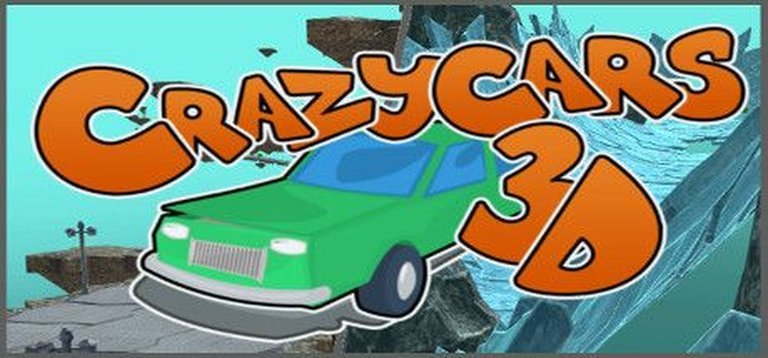
CrazyCars3D is a sci-fi racing game set in futuristic South America, where players choose and upgrade their vehicles to navigate challenging tracks. The game features unique mechanics like controlled jumps and mid-air tilting, along with levels filled with destructible obstacles, traps, and even alien ships that attempt to destroy the player. It offers both single-player and cooperative multiplayer modes for an immersive driving experience.
Gameplay Videos
Where to Buy CrazyCars3D
PC
Crack, Patches & Mods
Guides & Walkthroughs
Reviews & Reception
steambase.io (68/100): CrazyCars3D has earned a Player Score of 68 / 100.
stmstat.com : This game is quite difficult at first, but is a blast to play in Co-op with friends.
CrazyCars3D: A Forgotten Relic of Early Access Ambition
In the vast and ever-expanding library of Steam, countless titles vie for attention, but only a few carve out a lasting legacy. Some become celebrated classics, others become infamous failures, and a great many simply vanish into the digital ether, remembered only by a dedicated few and the cold, hard data of aggregation sites. CrazyCars3D, a 2016 release from the enigmatic developer AneaDuoDev, sits firmly in this final category. It is a game of stark contradictions: a project bursting with ideas yet starved of execution, a product of its time that feels instantly dated, and a title that, against all odds, still managed to cultivate a small, perplexed community. This is the story of an arcade racer that aimed for the stars but barely made it off the launchpad.
Development History & Context
The Studio and The Vision
CrazyCars3D was the product of AneaDuoDev (also listed as AneaGames across various storefronts), a developer so obscure that it exists more as a namesake than a known entity. In the mid-2010s, the digital distribution landscape, particularly Steam, was undergoing a seismic shift. The platform’s Greenlight program, a community-powered curation system, and the burgeoning Early Access model had opened the floodgates for small indie teams and solo developers. This was the golden age of the “jank” game—titles developed with ambition that often far outstripped budget, experience, or technical capability.
AneaDuoDev emerged from this ecosystem. Their vision, as pieced together from official descriptions and developer posts on ModDB and IndieDB, was to create an “arcade platformer” set in a “fantasy world.” This was not to be a straightforward racing sim; it was a hybrid beast. The developer posts from February 2016 speak of a game in active development, with plans for “a number of different modes.” The initial launch was framed as merely “the first level,” a taste of a larger, more ambitious world to come.
Technological Constraints and The Gaming Landscape
Built on the Unity engine with Photon middleware for its multiplayer features, CrazyCars3D was a product of accessible, off-the-shelf technology. This allowed for rapid development and cross-platform release on Windows, Mac, and Linux in March 2016. However, this accessibility came with a catch. The market was becoming saturated with Unity-based indie games, many exhibiting similar visual quirks and performance issues. To stand out, a game needed either impeccable style, groundbreaking mechanics, or overwhelming content. CrazyCars3D, with its modest $2.99 price point, attempted to compete on the latter two fronts but was immediately hamstrung by the former.
Its system requirements were incredibly low—a 2.1 GHz processor, 512 MB RAM, and a Geforce GT 320m were sufficient. This was not a game pushing technical boundaries; it was a game surviving on the barest minimum, a decision that would heavily influence its aesthetic and feel.
Narrative & Thematic Deep Dive
Plot, Characters, and Dialogue
To call the narrative of CrazyCars3D “thin” would be a profound understatement. The game operates on a premise so minimal it borders on the abstract. The official description from its Steam page and MobyGames provides the only real clues: “You will need to stop the aliens to save the remnants of their world.” Another line mentions “the ship of aliens which wants to destroy you.”
This is the entirety of the narrative scaffolding. There are no named characters, no dialogue, no cutscenes, and no lore to discover. The player is an anonymous driver piloting a vehicle across surreal, hazardous tracks while being intermittently harassed by an off-screen alien threat. The “story” is a functional excuse for the gameplay, a vestigial tail of a concept that justifies the existence of jumps, traps, and a co-op mode. Any deeper thematic exploration—of a post-apocalyptic world, of resistance against an alien invader—is purely projected by the player onto the barren landscape. The game is a thematic void, asking the player to project their own meaning onto its empty canvas.
Gameplay Mechanics & Systems
The Core Loop: Arcadian Platforming
The game bills itself as an “arcadian platformer in which you will operate the machine.” This is a fitting, if awkward, description. The core gameplay loop involves selecting one of a handful of machines, navigating a sprawling, obstacle-course-like track, collecting fuel canisters (which act as currency), and avoiding destruction long enough to reach the end.
The mechanics are where CrazyCars3D‘s ambitions and failures are most apparent. The developer touted four key “peculiarities”:
1. Vehicle Choice and Upgrade: Players could choose and upgrade their cars, a simple RPG-lite progression system intended to provide a sense of growth.
2. Operated Jump and Inclination in Flight: This was the game’s most innovative feature. Vehicles had a dedicated jump button and, crucially, mid-air control to tilt and adjust trajectory. This introduced a platforming element, demanding precision landings to avoid crashing.
3. Varied Levels with Traps and Impediments: The tracks were designed to be “fascinating” with different visual styles, destructible obstacles, and traps.
4. Co-op: The game featured online cooperative multiplayer, facilitated by Photon, allowing players to tackle the chaotic courses together.
Execution and Flaws
In practice, these systems were deeply flawed. Contemporary player reviews from Steam and STMSTAT.com consistently highlight two critical failings: physics and control. The vehicle handling was described as “sluggish,” “awful,” and “unresponsive.” Cars would spin out with little provocation, and the promised “operated inclination” in mid-air was often more of a suggestion than a precise tool, leading to frustrating, unpredictable landings.
The level design, while ambitious in its verticality and multiple paths, was let down by the inconsistent physics. What was meant to be a challenging platformer often felt like a frustrating fight against the game’s own systems. The “ship of aliens” that was promised to attack the player appears to have been a simplistic environmental hazard rather than a dynamic combat system.
The UI was barebones, and the upgrade system, while present, was reportedly a grind, requiring the collection of thousands of fuel canisters to make meaningful improvements—a tedious process in a game where simply staying on the track was a challenge.
World-Building, Art & Sound
A Sterile Sci-Fi South America
The game’s setting is listed on MobyGames as “Sci-fi / futuristic” and “South America.” This intriguing combination is barely evident in the final product. The visual direction is a generic, low-poly Unity asset store aesthetic. The textures are simple, the geometry is blocky, and the lighting is flat. While one level had an ice theme and another a more arid look, they lacked any cohesive artistic identity or the rich detail suggested by a “South American” futuristic setting.
The atmosphere is one of sterile emptiness. The tracks feel like deserted prototype maps rather than lived-in worlds. The alien presence is not felt through environmental storytelling but only as an occasional gameplay obstacle. There is no sense of place, history, or narrative in the world design.
Sound Design: A Functional Beep
The sound design is as minimal as the visuals. There are engine noises, collision sounds, and a soundtrack that some players tagged on Steam as a “Great Soundtrack,” though the specifics are lost to time. It served its functional purpose but did nothing to elevate the experience or immerse the player in its world.
Reception & Legacy
Critical and Commercial Reception
CrazyCars3D was met with a resounding silence from the professional critic community. As evidenced by its MobyGames and Metacritic pages, it received zero professional reviews. Its story is told entirely through player metrics and Steam reviews.
At launch, it held a “Mixed” rating on Steam, which has remained consistent over the years. As of 2025, it holds a 69% positive rating based on 147 reviews—a score that speaks to a divided, albeit tiny, player base. The positive reviews often came with caveats: “good for $3,” “cheap fun,” and praise specifically for its co-op potential. The negative reviews were more scathing, attacking its “awful” controls, lack of content, and feeling of being an unfinished tech demo.
The game was collected by only 14 players on MobyGames, a metric that underscores its obscurity. Its commercial performance was undoubtedly minor, a footnote in Steam’s vast sales data.
Evolution of Reputation and Influence
CrazyCars3D has no discernible legacy or influence on the industry. It did not pioneer new mechanics, inspire a genre, or become a cult classic. Its legacy is that of a cautionary tale, a perfect artifact of its time. It represents the end of an era on Steam—the kind of small, quirky, and deeply flawed project that was once more common before the platform’s curation became stricter.
Its reputation has not evolved; it has simply fossilized. It is remembered not for what it achieved, but as a curiosity—a game that prompts questions like “Why is this game so thought-provoking?” as one 2024 Steam forum post asked. It exists now as a piece of digital archaeology, a case study in the chasm between ambition and execution in the indie development scene of the mid-2010s.
Conclusion
CrazyCars3D is not a good game by any conventional critical measure. Its mechanics are unpolished, its content is sparse, its narrative is nonexistent, and its presentation is lackluster. Yet, it is an incredibly important game to document. It is a pristine snapshot of a specific moment in video game history—a time of unbridled indie experimentation on digital storefronts.
Its final verdict is not one of quality, but of historical significance. As a playable experience, it is a frustrating and shallow relic. As a historical document, it is a fascinating example of the dreams and limitations of a small developer navigating the nascent Early Access landscape. It is a game that aimed for the quirky charm of a TrackMania or the chaotic fun of Rocky Road Rush but stumbled over the fundamental hurdles of physics and control. CrazyCars3D is a forgotten footnote, a curious blip on the radar of gaming history that serves as a humble reminder that not every shot fired hits its target, but every shot tells a story.