
- Release Year: 2017
- Platforms: Windows
- Publisher: Phat Phrog Studios
- Developer: ColloseusX
- Genre: Idle, Role-playing (RPG)
- Game Mode: Single-player
- Gameplay: Monster capture, Open World, Sandbox, Training
- Setting: Fantasy
Description
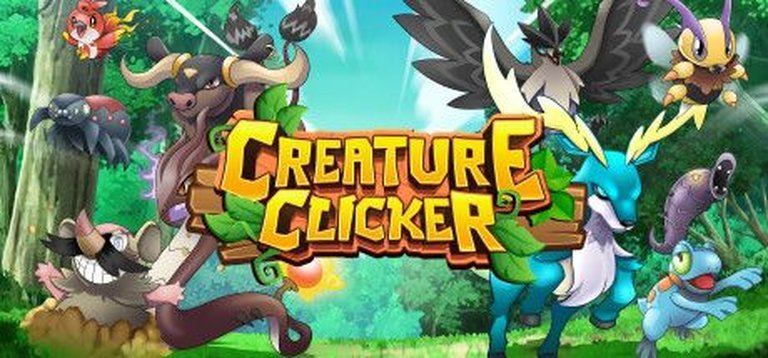
Creature Clicker is an idle role-playing game set in a fantasy world where players capture, train, and ascend various creatures. With a sandbox open-world gameplay and anime-inspired visuals, it combines point-and-select interface with incremental progression mechanics.
Gameplay Videos
Where to Buy Creature Clicker
PC
Creature Clicker Cracks & Fixes
Creature Clicker Guides & Walkthroughs
Creature Clicker Reviews & Reception
steamcommunity.com : This game is not game of the year material but it also doesn’t deserve a mostly negative rating. It’s a very simply yet working idle/clicker game.
Creature Clicker: A Definitive Historical Analysis of an Ambitious Clicker’s Uneven Ascent
Introduction: Capturing Lightning in a Bottle (or a Steam Inventory)
In the sprawling ecosystem of the idle/clicker genre, a subcategory dedicated to creature collection and training emerged as a potent fusion of two gaming passions: the satisfying, incremental progression of clickers and the deep, emotional investment of monster-taming RPGs like Pokémon. Creature Clicker: Capture, Train, Ascend! (2017) stands as a notable, if deeply flawed, attempt to synthesize these pillars. Developed by the pseudonymous ColloseusX and published by Phat Phrog Studios, the game launched into Early Access with a promise of a vast, evolving sandbox where players could incubate an egg, capture dozens of creatures, level them for DPS, and ascend them through tiers into legendary variants. Over eight years later, it remains in Early Access, a persistent artifact of a specific indie development ethos—one of solo passion, community collaboration, and protracted struggle against scope and technical debt. This review argues that Creature Clicker is not merely a game but a case study: a fascinating, often frustrating, chronicle of ambition tethered to the clicker genre’s core loop, whose legacy is defined as much by its unmet potential and controversial community management as by its innovative mechanics.
Development History & Context: The Solo Dev’s Marathon
The studio behind Creature Clicker is effectively a one-person operation. The credits, as listed on MobyGames, name Lee Davies as the creator and developer under the alias ColloseusX, with Jordan Klikucs credited for creature names. Publisher Phat Phrog Studios appears to be Davies’ own label. This situates the project firmly within the realm of the passionate indie developer, a common figure in the mid-2010s Early Access boom enabled by Steam’s accessibility.
The technological constraints were primarily those of a solo developer using GameMaker Studio (as inferred from the “Game Engine by: YoYo Games Ltd” credit in release data). This engine is powerful for 2D projects but presents scaling challenges for a game aspiring to deep systems. The development context is dominated by ajar timeline: launched in April 2017 as an “Early Alpha” with content “till level 50,” the developer’s own Early Access FAQ projected a 6-12 month journey to full release. By 2026, the game is still in Early Access, with the last significant update noted as over 18 months prior as of early 2025, though community posts through late 2025 indicate ongoing, sporadic development and discussion about a hypothetical “1.0” launch.
The gaming landscape of 2017 was ripe for this hybrid. Clicker Heroes (2014) had popularized the RPG-clicker hybrid. Pokémon GO had exploding the creature-collection genre into the mainstream. Creature Clicker explicitly aimed to bridge these, adding a persistent sandbox element with farm-building and Steam integration—a novel idea that leveraged Valve’s platform in a way few clickers attempted.
Narrative & Thematic Deep Dive: The Story in the Stats
Creature Clicker possesses no traditional narrative with characters, dialogue, or plot. Its “story” is entirely emergent, procedural, and player-generated, built upon the foundational mythos of the creature collector. The thematic core rests on several pillars:
- The Cycle of Capture and Ascension: The core loop—select an egg, kill to incubate, capture (1/10 chance), level for DPS, ascend using boss soul stones—creates a personal narrative of growth. Each creature progresses through life stages (egg, baby, juvenile, adolescent, adult, with a specific dragon example detailed), mirroring a lifecycle of nurture and power acquisition. Ascension serves as a “rebirth,” a permanent power-up that resets the creature but forges a stronger bond and greater potential, echoing roguelike permadeath mechanics where loss enables future strength.
- The Scholar-Collector Fantasy: The goal of “capturing all 50+ creatures” and unlocking “legendary variants” frames the player as a chronicler and master of a bestiary. The Steam Inventory integration—earning a random tradable creature hourly—extends this fantasy into a real-world marketplace, blurring the line between in-game collection and economic simulation.
- The Imperfect Sanctuary (The Farm): The ability to build a farm with Stables, Townhouses, and Vineyards that boost DPS introduces a base-building narrative. It’s not just a combat resource; it’s a statement of permanence and civilization amidst the endless monster-grinding, a player-created haven that grows alongside their legion of creatures.
- The Tyranny of the Boss: The raid bosses appearing every 12 levels, with a 60-second kill timer blocking progression, inject a narrative of recurring, formidable adversaries. They are not just difficulty spikes but narrative gates—the “dragon” that must be slain to reach the next kingdom. Their soul stones are MacGuffins essential for ascension, driving the core progression narrative.
The lack of explicit story allows these systemic narratives to dominate, creating a “sandbox mythology” where the player’s 500-hour save file is the story.
Gameplay Mechanics & Systems: A Patchwork of Promising Systems
The gameplay is a complex, often contradictory, tapestry of mechanics.
Core Loop & Combat: It is a point-and-click idle RPG. The player clicks to damage enemies, supported by automated DPS from captured creatures. The 1/10 capture chance on enemy kill is a central,Гаمبر-driven mechanic. Creatures can be leveled with cash, equipped with armor/weapons, and ascended via soul stones from timed bosses. This loop is satisfying in its early stages, offering clear feedback (numbers go up, new creature forms unlocked).
Innovative Systems:
* Steam Inventory Integration: The hourly Steam creature is the game’s most unique feature. It creates a second game loop centered on the Steam Community Market, encouraging trading, selling, and collecting as a meta-game. This was visionary for 2017, creating a persistent, tradeable asset system tied to playtime.
* Ascension as Progression: Ascension works as a soft “prestige” system. Keeping a creature’s DPS on reset provides a permanent bonus, encouraging long-term planning. The “APEX” system mentioned in later community posts (for final-tier creatures) extends this, offering double DPS on level-up post-ascension.
* Biome & Vehicle Expansion: 2024-2025 developer posts outline an ambitious revamp: constructing vehicles (submarine for “The Deepest Depths”) to access new biomes with unique resources, creatures, and bosses. A day/night/weather/season system affecting spawns and difficulty adds dynamic texture to the world.
* Farm Building: The town-builder element adds a strategic layer; structures like Vineyards and Stables provide DPS boosts, integrating resource management (implied crops) with combat preparation.
Flawed & Frustrating Systems:
* Permanent Progress Loss Risk: As noted by players, the ascension system’s design—where you keep DPS but reset levels—creates a severe FOMO (Fear Of Missing Out). Ascending too early, before maximizing level gains, can permanently cripple a creature’s potential due to what players perceive as a hard cap on ascensions, leading to paralysis.
* Progression Wall & Grind: Bosses every 12 levels with a 60-second timer create brutal walls. The common solution, as described in the store page, is to “go back a few levels to further level and ascend,” which devolves into infinite, mind-numbing grinds. This is the dark heart of the clicker genre made explicit.
* Save File Corruption & Ignored Issues: A major point of negative criticism in community discussions is the persistent, unreliably fixed issue of save file corruption/wipes, particularly after updates or reboots. The developer’s admission of being “an adult…looking after a 2 year old” explains delays but does little to soothe players who lost 200+ hour saves, a cardinal sin in an idle game.
* Achievement Bloat & Grind: With 733 achievements, the game is infamous for requiring astronomically repetitive tasks (e.g., “6500 ascended kills”). This “shit achievement” design, coupled with the save issues, turned achievement hunters into vocal critics, as noted in the discussion threads complaining about constantly dropping new achievements.
* Early Access Permanence: The original promise of “6-12 months” starkly contrasts with the 8+ year Early Access tenure. The shift from a paid ($1.99) to Free-to-Play model—while defended by the dev as necessary for sustainability and community growth—rightfully angered early adopters who felt no retrospective benefit, a common pain point in Early Access economics.
World-Building, Art & Sound: Aesthetic Consistency Amidst dE developmental Flux
The game’s setting is a fantasy sandbox with distinct biomes (The Frostlands, The Savannah, The Deepest Depths, The Skylands). The world is not pre-authored but is functionally a series of combat zones and resource hubs, with the farm serving as the player’s personalized home base. The atmosphere is one of quiet, relentless progression. The addition of dynamic day/night cycles and seasons (from dev posts) aimed to make the world feel alive but remains underdeveloped in the current build.
Visual Direction: The art style is consistently described and tagged as Anime/Manga. Creature designs, as seen in community artwork (e.g., “Spindle Ascension Line,” “Nocturnal Cave Dragon”), follow this aesthetic—stylized, often draconic or beastly, with clear evolutionary stages. The UI is a standard fixed/flip-screen point-and-click interface, functional but rarely elegant. The shift to a more polished art style over time is noted by returning players (“the developer redid a lot of the game including the art”).
Sound Design: This is the most scant area in the source material. There is no mention of a soundtrack or significant sound design in the provided data. This implies a minimalist or generic audio experience, likely consisting of click sounds, basic combat effects, and perhaps a looping track—common in the clicker genre where audio is often secondary to the core feedback loop of visual numbers and progression bars.
Reception & Legacy: The Mixed Tapestry of a Cult Artifact
Critical Reception: There are no traditional critic reviews aggregatable on Metacritic. MobyGames itself lacks an approved description or critic scores. The game exists almost entirely in the realm of user reviews and community discourse.
Commercial & User Reception: On Steam, the game holds a “Mixed” rating (49% positive from 591 reviews) as of early 2026. This score is a perfect encapsulation of its divisive nature. Analysis of the review graph shows a persistently split sentiment over years, with slight dips often correlating with controversial updates (like the F2P switch) or save file issues.
Positive Reviews praise it as:
* A “very simply yet working idle/clicker game” that delivers on its core loop.
* A fair value, especially post-F2P, with 24+ hours for a few dollars.
* More polished and communicative than many “broken” AAA titles.
* A game that has visibly improved since its “messy” 2017 launch.
Negative Reviews cite:
* “Zero depth” after initial systems are engaged, leading to “thousands of hours” of idle grinding.
* Save file corruption/wipes and perceived developer indifference to this critical bug.
* Achievement bloat and “nonsense achievements” added over time,forcing completionists to return to a frustrating grind.
* The permanent F2P switch, making early purchasers feel like “scammed” beta-testers with no exclusive rewards.
* The betrayal of the Early Access promise—still in EA after 8+ years with no clear 1.0 horizon.
* The ascension system’s design being inherently punitive due to perceived hard caps.
Legacy & Influence: Creature Clicker is unlikely to be cited in academic papers on game design. Its legacy is more granular:
1. The Steam Inventory Clicker: It was an early, notable experiment in tying idle game progression to the Steam Community Market. While not widely copied, it demonstrated the potential (and complexity) of asset integration.
2. The Long Tail of Early Access: It serves as a cautionary tale about the open-endedness of the model. A solo dev with a clear 1-year plan can become a decade-long project with shifting scope, community management challenges, and pricing ethical dilemmas.
3. Genre Hybridization: It firmly sits in the “creature collector clicker” subgenre, alongside titles like Sven’s Amazing Adventure Clicker or Monster’s Den: Book of Dread. It validated that the dopamine hit of Pokémon‘s collection could work in a passive, incremental format.
4. Community Fracture: Its history is a textbook example of how developer communication (or lack thereof) on critical bugs, monetization changes, and roadmap transparency can irrevocably sour a community, leading to a permanently “Mixed” rating regardless of gameplay quality.
Conclusion: A Fascinating Failure, A Monument to Passion
Creature Clicker: Capture, Train, Ascend! is not a good game by conventional critical standards. It is plagued by grindy design, persistent technical issues, and a development journey that has stretched its welcome past the breaking point for many. Yet, to dismiss it entirely is to ignore its significance as an artifact.
It is the digital equivalent of a裤裆里的宝藏—a hidden, messy, deeply personal project that somehow persists. Its innovative Steam integration was ahead of its time. Its core loop, when shorn of the ascension anxiety and boss walls, taps into a primal enjoyment of collection and incremental growth. Its existence proves that a solo developer with a clear, hybrid vision can build something that resonates—and infuriates—a dedicated niche audience for nearly a decade.
Its place in video game history is not in the hall of classics, but in the wings of the Early Access theatre, as a persistent example of what happens when passion outpaces production, when community trust is eroded by technical negligence, and when a simple, compelling loop is buried under the weight of its own ambitious systems and the slow march of real life. It is a monument to what could have been—a fully realized creature-collecting sandbox clicker with a vibrant, tradeable ecosystem—and a stark lesson in the perils of promising a world and delivering, year after year, just another increment.
Final Verdict: Creature Clicker is a historically significant curio of the Early Access era: a fundamentally flawed but intermittently brilliant hybrid that captures the promises and perils of indie development better than any polished AAA title ever could. It is a game best experienced as a case study, not as a finished product.