
- Release Year: 2005
- Platforms: PlayStation 2, Windows, Xbox
- Publisher: Konami Corporation, Noviy Disk
- Developer: Hothouse Creations Ltd.
- Genre: Action
- Perspective: Diagonal-down
- Game Mode: Single-player
- Gameplay: Beat-em-up, Fighting, Missions
- Setting: Crime, Urban
- Average Score: 33/100
Description
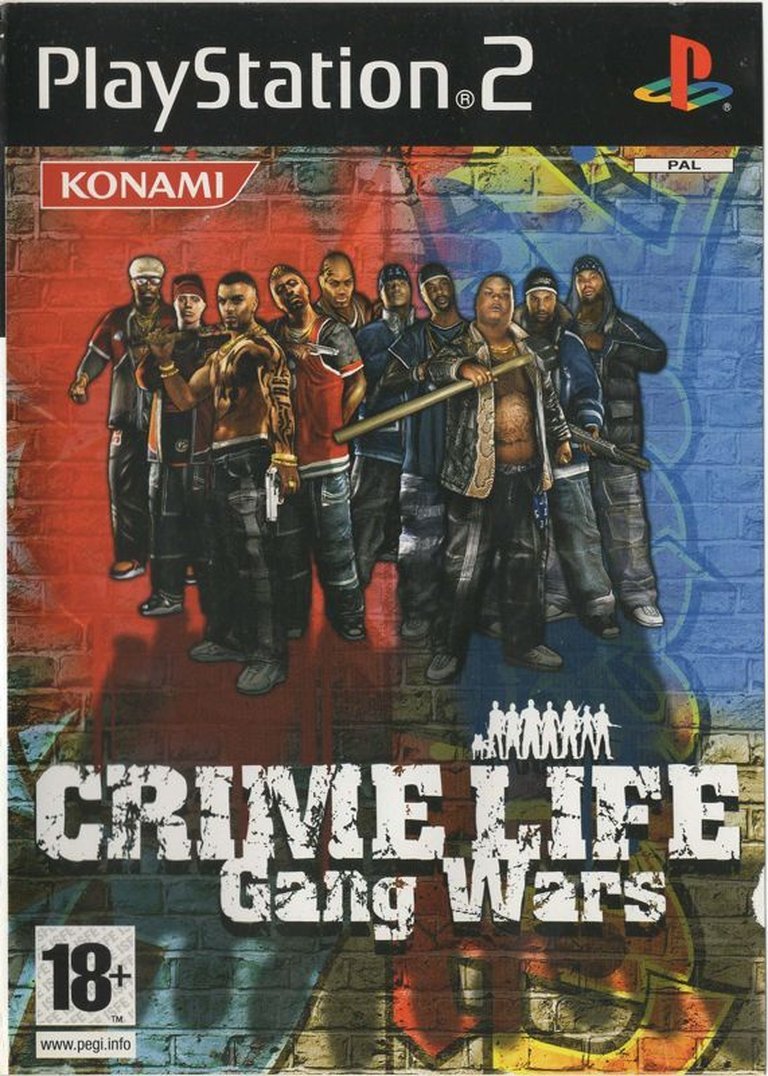
Crime Life: Gang Wars is a mission-based street combat game set in the gritty fictional city of Grand Central, where players control Tre, a new member of the Outlawz gang navigating rival gangs, corrupt cops, and internal betrayal. The gameplay, inspired by old-school beat-em-ups, emphasizes hand-to-hand combat across 25 story missions, free exploration, and mini-missions like fighting while drunk or seizing rival turf, as the Outlawz face a united front from the Headhunterz and KYC gangs.
Gameplay Videos
Crime Life: Gang Wars Free Download
PlayStation 2
Crime Life: Gang Wars Patches & Updates
Crime Life: Gang Wars Guides & Walkthroughs
Crime Life: Gang Wars Reviews & Reception
metacritic.com (30/100): Don’t be fooled with this brawler’s budget pricetag, as its attrocious camera angle, repetitive gameplay and dated visuals makes it a complete waste of your money.
imdb.com (30/100): So terrible that you want to pass completely
Crime Life: Gang Wars Cheats & Codes
PlayStation 2
Type these codes in at the cheat menu
| Code | Effect |
|---|---|
| friendsofbob | All Skaters |
| extremepassport | All Levels |
| supercharger | Max Special Meter |
| sweetthreads | Create-A-Skater Items |
| nugget | Tarzan (Music Video) |
| marin | Toy Story (Music Video) |
| savannah | Lion King (Music Video) |
Crime Life: Gang Wars: Review
Introduction: A Gangster’s Lament in the Shadow of Giants
In the mid-2000s, a peculiar wave of urban action games washed ashore, riding the coattails of Grand Theft Auto’s unparalleled success. While titles like The Warriors offered compelling takes on gang culture, most were forgettable also-rans. Among these, Crime Life: Gang Wars stands as a uniquely spectacular failure. Released in 2005 by Konami and developed by Hothouse Creations, it promised a gritty, hip-hop-infused tale of gang warfare, blending open-world exploration with brutal street combat. Yet, what emerged instead was a game universally condemned by critics as technically broken, narratively bankrupt, and profoundly unenjoyable. Its Metacritic scores hover at rock-bottom (30-35 across platforms), and its reviews read like a litany of despair. This review will delve into the depths of Crime Life‘s creation, its disastrous execution, its surprisingly complex narrative ambitions, and its enduring status as a cautionary tale in gaming history. Despite its overwhelming flaws, Crime Life: Gang Wars remains a fascinating artifact, offering a stark lesson in ambition versus execution and holding a mirror to the trends that defined its era.
Development History & Context: The Making of a Disaster
Crime Life: Gang Wars was the brainchild of UK-based developer Hothouse Creations Ltd., a studio with a history spanning back to 1994, known for titles like Urban Chaos and the ill-fated Casino Inc.. The project helmed by Project Manager and Lead Designer Paul Jeal, boasted a surprisingly large team of 232 credited individuals across development and thanks. This scale, while indicative of Konami’s involvement, often hints towards a rushed and ambitious project stretched thin. Jeal’s vision, as stated in early press materials, aimed for a game where the player would “protect his people from exploitation and abuse and defend his crew from the violence and treachery that permeates the society he lives in.” This noble goal, however, collided head-on with harsh technological realities and a crowded marketplace.
Released in September 2005 (PS2) and November 2005 (Xbox, PC), Crime Life arrived at the peak of the “gangsta” game subgenre. Grand Theft Auto: San Andreas (2004) was still a towering cultural force, The Warriors (2005) had just proven a successful licensed adaptation could work, and lesser entries like Beat Down: Fists of Vengeance and 187 Ride or Die were already being judged. Hothouse Creations explicitly aimed to bridge the gap between the free-roaming ambition of GTA and the focused, visceral combat of classic beat ’em ups like Final Fight. The inclusion of the rap group D12 – providing likenesses and voices for the rival Headhunterz gang – was a clear attempt to capitalize on the authentic hip-hop aesthetic and perceived street credibility of the era. Yet, the development process seems to have been fraught with compromise. The game utilizes the Bink Video middleware for cutscenes, common for the time, but the overall polish is lacking. The PlayStation 2, Xbox, and PC versions were released simultaneously across different regions, suggesting a development cycle focused on meeting a deadline rather than achieving a cohesive, quality product. The result was a game that felt fundamentally incomplete and poorly realized in almost every aspect, its core ideas smothered by inadequate execution.
Narrative & Thematic Deep Dive: Betrayal, Blood, and Banality
Set in the fictional, perpetually rain-slicked urban sprawl of Grand Central City, Crime Life follows the path of Tre, a young, ambitious recruit joining the once-dominant Outlawz gang. The Outlawz are now shadows of their former glory, having been supplanted in a past “Gang Wars” and now face annihilation from a coalition of rivals: the Headhunterz (led by Justiss, voiced/likenessed by D12’s Proof), the KYC, and the Pogue Mahones. The narrative unfolds over 25 story missions, structured around Tre’s rise from grunt to undisputed kingpin.
The plot, on paper, contains seeds of classic gangster tropes: loyalty, betrayal, power struggles, and the corrupting nature of ambition. Tre’s journey begins with protecting his turf and crew, but quickly escalates into a full-blown war. The central twist, arriving midway through, is the revelation that the Outlawz’ leader, Big Dog, is planning to abandon his crew and join the Headhunterz. In a brutal act of usurpation, Tre kills Big Dog, seizing control of the Outlawz and steering them towards a campaign of vengeance and conquest. The narrative culminates in Tre executing Justiss and the police chief, leaving the city under his iron fist. The ending is deliberately ambiguous: after being shot multiple times by Justiss, Tre kills him and collapses. When police arrive, only Justiss’s body is found, Tre’s fate unknown, implying potential survival and setting up a sequel that never materialized.
Themes & Execution:
* Betrayal as Motivation: The core driver is betrayal – Big Dog’s treachery, the alliances of rival gangs. This theme is presented starkly but lacks nuance. Big Dog’s shift feels abrupt, motivated purely by narrative convenience rather than believable character development.
* Rise and Damnation: Tre’s arc mirrors classic gangster narratives (e.g., Scarface). He starts with ambition and a desire for respect but becomes increasingly ruthless and paranoid. However, the game fails to explore the psychological toll of this transformation. Tre remains a cipher – “hässlich-maulfaul” (ugly-mouthed/unsympathetic) as GameStar put it – lacking charisma or relatable motivation beyond simplistic power lust. He’s never developed beyond a generic avatar for violence.
* Gang Culture & Morality: The game explicitly references films like New Jack City, Boyz n the Hood, and Menace II Society. However, it fails to engage with the complexities of these narratives. The “protection” of Tre’s people feels hollow, a veneer over the pervasive, glorified violence. The “strong sense of morality” claimed by developers is nowhere to be found; the game revels in brutality without offering meaningful commentary or consequence. The narrative feels like a checklist of gangster clichés, executed with adolescent seriousness and undermined by laughably amateurish dialogue (“gangland cliché[s] that day time television could think of” – GameWatcher / Strategy Informer).
* Ambiguous Ending: The cliffhanger is perhaps the narrative’s most interesting element, hinting at survival and the cyclical nature of violence. However, it feels less like a deliberate thematic statement and more like a rushed setup for a sequel that the game’s failure made impossible.
The dialogue is universally panned as stilted, poorly written, and reliant on cringeworthy hip-hop vernacular that falls flat. Cutscenes are often cited as “among the worst acted” (Cheat Code Central), with performances that range from wooden to unintentionally hilarious. The narrative, despite its thematic ambitions, collapses under the weight of its own simplistic execution and lack of character depth.
Gameplay Mechanics & Systems: A Symphony of Stumbles
Crime Life’s core gameplay loop is a disastrous fusion of open-world exploration and repetitive, flawed combat.
- Combat: The Heart of the Failure: The game explicitly positions itself as a “street combat” title influenced by “old school beat-em-ups.” The reality is a clunky, deeply unsatisfying brawler. Combat relies almost exclusively on mashing basic attack buttons (punch, kick, grab) against waves of indistinguishable enemies. The system attempts complexity with kill moves and combos, signaled by intrusive, oversized yellow ‘Y’ icons that flash over vulnerable enemies (Computer and Video Games). This “training wheels” approach removes any sense of timing, strategy, or skill, reducing fights to a repetitive “wild clicking” (GameStar) or “hammering… like an Idiot” (PC Action). Weapon variety (baseball bats, lead pipes, hammers, guns) exists but doesn’t alleviate the tedium; guns feel especially underdeveloped. Fighting multiple opponents is chaotic and frustrating, with the camera failing to keep up, leading to disorientation and cheap hits. Frame rate plummets during large brawls (“clogging the frame rate” – GamePro), exacerbating the chaos. The combat system is, in the words of many critics, “boring and repetitive” (IGN), “stupidly easy and as badly designed” (CVG), and rendered “fun-free” (CVG).
- Character Progression & Repetition: Tre gains new moves and combos as he progresses, but the core combat loop remains unchanged. Missions are overwhelmingly variations on “go here, beat up these guys,” “take over this turf,” or “protect this person.” Mini-missions like “fighting whilst drunk” or “smashing everything” are touted as variety but are shallow and poorly implemented. The “Courier” mission, where you lose money every time you’re hit, is singled out as particularly nonsensical (Official UK PlayStation 2 Magazine). There’s no meaningful character growth beyond unlocking slightly different animations for beating people up.
- Open World & Exploration: Grand Central City is presented as a “sprawling metropolis,” but it feels disappointingly small, empty, and lifeless (IGN). Free-roaming is a pale imitation of GTA. Exploration offers little reward beyond finding a few mini-missions or shops to buy health/weapons. Driving, while present, is rudimentary and often unnecessary. The world lacks detail, interaction, and believable population density. As TeamXbox noted, it’s “far too empty to work as a free-roaming GTA-a-like.”
- UI & Presentation: The user interface is basic and uninformative. Health and ammo meters are functional but uninspired. The camera is perhaps the single most criticized technical element, described as “missratene Kameraführung” (botched camera control – PC Action), suffering from “nervigen Umsprüngen” (annoying jumps – GameStar), and failing to track action effectively during combat or exploration. The camera’s diagonal-down perspective, intended for cinematic flair, often becomes a liability, obscuring action and making navigation clumsy. Mission objectives are often vague (“protect this area,” “eliminate these targets”) without clear guidance, leading to frustrating wandering.
In essence, Crime Life‘s gameplay systems are a cascade of failure: combat is mind-numbingly simplistic yet frustratingly chaotic, the world is a sterile backdrop, progression is shallow, and the core missions are repetitive and poorly designed. It fails as both a beat ’em up and an open-world game.
World-Building, Art & Sound: A Ghetto of Missed Opportunities
Crime Life aims for a gritty, authentic urban atmosphere, but its execution falls far short, leaving behind a world that feels both generic and unnervingly empty.
- Setting & Atmosphere: Grand Central City is the quintessential fictional urban dystopia – rain-slicked streets, decaying tenements, abandoned lots, and rival gang territories marked by graffiti. The attempt at a “ghetto-Atmosphäre” (ghetto atmosphere – GameStar) is the game’s most consistent, though flawed, element. The concept of “reputation is everything” and the struggle for street supremacy provides a thematic backbone. However, the world fails to breathe. Pedestrians are sparse and non-interactive beyond being potential victims. Gang members look and act alike. The city lacks the density, detail, and emergent storytelling that made GTA’s worlds feel alive. The atmosphere feels less like a lived-in environment and more like a series of interconnected arenas for fights. The sense of danger and community the narrative hints at never materializes.
- Visual Direction & Graphics: The visual presentation is universally condemned as dated, ugly, and technically inept, even for 2005. Character models are blocky, with stiff animations and facial expressions that range from vacant to unintentionally comical. Environments are repetitive, with low-poly textures, clipping issues, and a drab color palette that does little to evoke the vibrancy of hip-hop culture. Cutscenes suffer from low resolution, stiff character models, and poor lip-syncing. As GameSpot bluntly stated, “it looks like a slightly filtered PlayStation game.” The visual design fails to sell either the gritty realism or the stylized violence the game attempts. It’s simply poor.
- Sound Design & Music: The soundtrack is perhaps the game’s single most discussed and debated element. It features a heavy emphasis on hip-hop, including an exclusive track by D12 and contributions from various UK and international artists. GameStar praised the “fantastischer Soundtrack” (fantastic soundtrack) as a key element of the “believable ghetto atmosphere.” GameSpy also noted the soundtrack gets “props for its variety.” This music provides a consistent, if occasionally generic, pulse to the urban setting. However, the sound design surrounding it is dire. Sound effects are often weak, poorly mixed, and repetitive – punches sound like wet slaps, gunshots lack impact. Voice acting is uniformly awful, ranging from wooden to laughably over-the top, exacerbating the terrible script. The disconnect between the (relatively) decent music and the abysmal sound design and dialogue is jarring. While the music provides some fleeting moments of atmosphere, it’s insufficient to salvage the overall auditory presentation.
The world-building ambition is clear – create a visceral, hip-hop-infused urban jungle. But the execution results in a visually sterile, technically broken, and sonically inconsistent environment that fails to immerse the player or justify its own existence.
Reception & Legacy: A Universal Panning and a Cult Infamy
The critical reception to Crime Life: Gang Wars was, without exception, brutal and unanimous. It stands as one of the most critically reviled games of its generation. Aggregated scores tell the story: Metacritic scores a devastating 30/100 (Xbox), 35/100 (PS2), and 30/100 (PC). MobyGames Critics average a paltry 36% based on 29 reviews. Individual reviews read like a chorus of condemnation:
- GameSpot (21/10): “From top to bottom, there’s absolutely nothing to like about Crime Life: Gang Wars. It isn’t even bad in an interesting or funny way. It’s just garbage.”
- IGN (39/10): “Even Capcom’s dismal ‘Beat Down: Fists of Vengeance’ is preferable to this. The missions are vague, the fighting system is boring and repetitive, and there’s little to motivate you…”
- GamePro (30/10, Xbox): “The mind numbs along with your thumbs… only a dull realization that you can’t tell which thug is yours, and that you don’t much care.”
- Official UK PlayStation 2 Magazine (40/10): “Compared to the similarly combat-focused The Warriors, it’s laughable… when fighting is the core of the entire game, it’s absolutely ridiculous.”
- GameSpy (20/10, Xbox): “There’s no reason to rent or purchase this title… the combat leaves far too much to be desired, the visuals are perhaps the worst on the Xbox, and the overall production value is nil.”
Common criticisms centered on the abysmal combat (“wholly deficient,” “boring,” “repetitive”), the broken camera, the ugly and dated graphics, the terrible voice acting and script, the shallow open world, and the overall lack of fun or purpose. The inclusion of D12 was seen by many as a cynical marketing ploy rather than a genuine artistic enhancement, failing to save the core experience.
Commercial Performance & Legacy: While precise sales figures are elusive, the game’s critical drubbing and budget price point suggest it performed poorly commercially. It became a textbook example of a rushed, low-effort GTA clone, failing to capture the essence of the genre it aped. Its legacy is primarily one of infamy – a cautionary tale in game design and a frequent entry in “Worst Games Ever Made” lists. It represents the nadir of the mid-2000s gangsta game trend, a game so comprehensively flawed that it achieved a strange kind of notoriety. Paradoxically, it has gained a small, dedicated following among some players who appreciate its earnest, if terrible, ambition or find its sheer ineptitude amusing. User reviews on platforms like Metacritic are mixed, with a few outliers praising the combat or soundtrack (“Crime life la storia piu andavi avanti e piu era intrigante, combattimento divertente…” – Den800), but these are vastly outnumbered by negative player feedback as well. It remains a footnote in Konami’s history, overshadowed entirely by their concurrent successes like Metal Gear Solid. Its influence on subsequent games is negligible; it serves only as a warning of what happens when ambition outstrips execution.
Conclusion: The Ghost of Gang Wars Past
Crime Life: Gang Wars stands as a monument to missed potential and catastrophic failure. It arrived at a time ripe for compelling urban gang narratives, yet offered a product that was technically broken, narratively bankrupt, and profoundly unenjoyable. Its development by Hothouse Creations under Konami’s banner promised a fusion of GTA’s open world and beat ’em up intensity, but delivered instead a game defined by clunky combat, a broken camera, a sterile world, and laughably bad presentation. The narrative, while attempting themes of betrayal and rise to power, collapsed under the weight of clichéd writing, unsympathetic characters, and amateurish execution.
The critical reception was an unmitigated disaster, with scores hovering in the 20s and 30s across all platforms. Critics uniformly condemned its every system, from the mindless combat to the ugly visuals and terrible voice acting. Its legacy is one of infamy, a cautionary tale about the dangers of chasing trends without the execution to back them up. It represents the absolute nadir of the mid-2000s “gangsta game” subgenre.
Yet, for all its failures, Crime Life: Gang Wars is not entirely without fascination. It is a stark, unfiltered look at the gulf between ambition and reality in game development. Its earnest attempt to capture a specific cultural moment – the hip-hop-inflected urban crime narrative – through a lens of brutalist combat, however flawed, makes it a unique historical artifact. The surprisingly strong soundtrack, juxtaposed against the abysmal sound design and visuals, creates a dissonance that is almost compelling in its own right. And its ending, a bleak cliffhanger hinting at survival and cyclical violence, remains one of its most potent, if unintentionally poignant, moments.
In the end, Crime Life: Gang Wars is not a good game. It is, by almost every objective measure, a terrible one. But within its deeply flawed shell lies a story of a studio and publisher reaching for something they couldn’t grasp. It serves as a permanent reminder that even a license from a major publisher like Konami and the involvement of recognizable talent like D12 cannot save a core built on sand. It is a ghost in the machine of gaming history, a failure so complete it achieves a strange, haunting immortality. For historians and analysts, it’s a fascinating case study; for players, it’s best left undisturbed. Its place in video game history is secured, not as a classic, but as a definitive, unforgettable cautionary tale.