
- Release Year: 2004
- Platforms: Windows
- Publisher: 1C Company, DreamCatcher Interactive Inc., GMX Media, Leader S.p.a., Nordic Games GmbH
- Developer: Artematica Entertainment
- Genre: Adventure
- Perspective: Third-person
- Game Mode: Single-player
- Gameplay: Graphic adventure, Puzzle elements
- Setting: Aztec, City – New York
- Average Score: 49/100
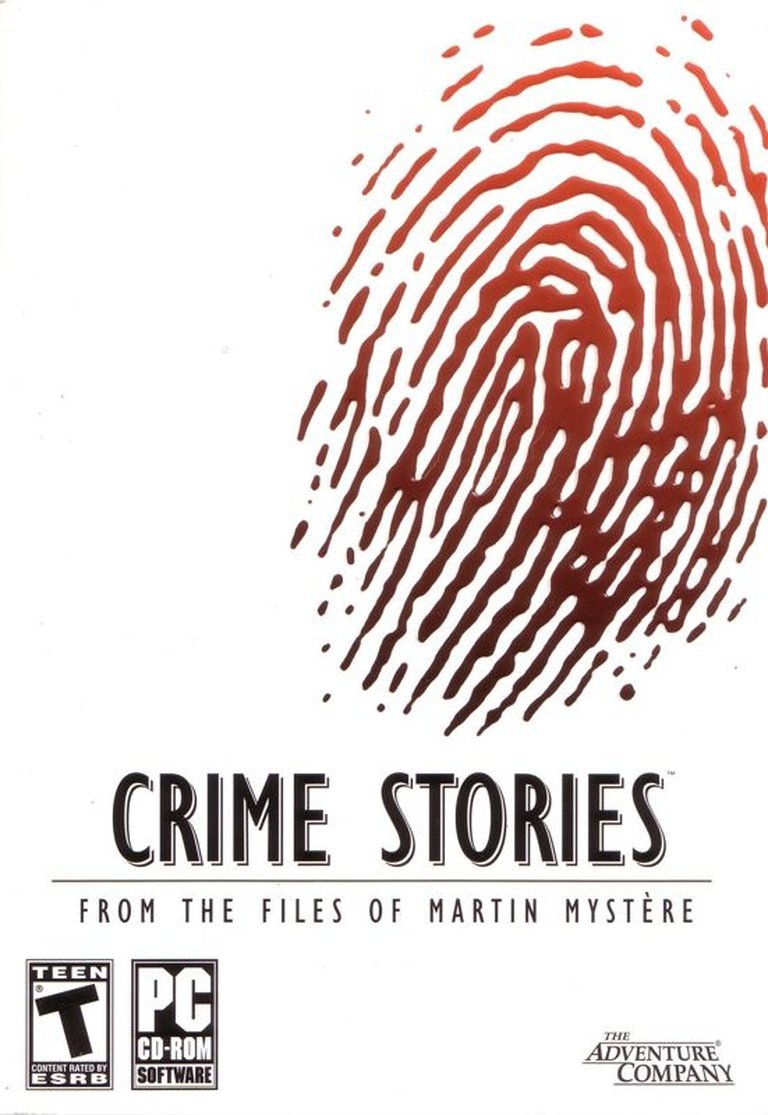
Description
An Italian point-and-click adventure game based on the Martin Mystère comic by Alfredo Castelli. Investigate the murder of MIT professor Eulemberg as ace detective Martin Mystère, alongside his team. Follow the trail from New York to a Mexican Aztec site where Eulemberg’s assistant was researching. Discover a conspiracy for eternal youth as you evade the villainous Mister Jinx. Explore detailed 3D environments with a 3rd-person view and solve puzzles in this classic adventure.
Gameplay Videos
Crime Stories: From the Files of Martin Mystère Cracks & Fixes
Crime Stories: From the Files of Martin Mystère Guides & Walkthroughs
Crime Stories: From the Files of Martin Mystère Reviews & Reception
metacritic.com (45/100): A mediocre point and click adventure game that doesn’t advance the genre.
en.wikipedia.org (45/100): The game received generally unfavorable reviews according to the review aggregation website Metacritic.
mobygames.com (58/100): The graphic is amazing, but everything is pretty much static backdrop hence the quality.
gameboomers.com : The game’s attention to detailed graphics and the level of interactivity between the character sprites and their environments is relatively immersive.
Crime Stories: From the Files of Martin Mystère: Review
Introduction
In the shadowed corners of adventure gaming history, Crime Stories: From the Files of Martin Mystère (known internationally as Martin Mystère: Operation Dorian Gray) stands as a curious relic—a bold, if flawed, adaptation of Italy’s celebrated sci-fi detective comic by Alfredo Castelli. Released in 2004–2006 by Artematica Entertainment, this third-person point-and-click adventure promises a globe-trotting mystery blending forensic investigation, Aztec lore, and the pursuit of eternal youth. Yet beneath its vibrant visuals and ambitious narrative lies a game trapped in the awkward limbo of mid-2000s adventure design—a title cherished by comic fans yet marred by technical hiccups and design inconsistencies. This review dissects Crime Stories not merely as a game, but as a cultural artifact: a product of its time, a testament to licensed adaptations, and a cautionary tale of ambition versus execution.
Development History & Context
The Studio and Vision
Developed by Italy’s Artematica Entertainment, Crime Stories emerged from a studio deeply invested in narrative-driven experiences. Led by producer Riccardo Cangini and art director Daniele Montella, the team sought to bring Alfredo Castelli’s charismatic detective Martin Mystère—already a European comics icon since 1982—to interactive life. Their vision was explicitly faithful: the game’s storyboard was “heavily based on the original comic strips,” with character designs and settings lifting directly from Castelli’s world of paranormal investigations and historical enigmas. This reverence for the source material is evident in the inclusion of a comic prequel in physical editions, a rarity for mid-2000s games.
Technological Constraints and Design Choices
Artematica faced significant technical hurdles. Built on the Virtools engine with pre-rendered backgrounds à la Syberia, the game employed 3D character models animated in 3DS Max. Yet its development was hampered by the era’s limitations. Originally slated for Mac, PlayStation 2, and Xbox, these versions were canceled due to “financial constraints,” leaving a Windows-only release. The result was a hybrid approach: static backdrops with dynamic character sprites, creating a “cinematographic” feel but sacrificing fluidity. As Artematica’s CEO admitted in a 2003 interview, the team prioritized “storyboard over technology,” resulting in a game that looked polished but moved like a clockwork toy—precise yet stiff.
The Gaming Landscape of 2004–2006
Crime Stories arrived during a transitional period for adventure games. While titles like Still Life and The Black Mirror were reviving the genre, point-and-click adventures were increasingly marginalized. The industry favored open-world RPGs and shooters, leaving niche genres like this to rely on cult followings. Artematica’s gamble—to market a licensed adventure to both comic fans and traditional adventurers—was audacious but ill-timed. As one critic noted, the game felt like “a single episode stretched into a full adventure,” a symptom of a developer striving to punch above its weight in a genre on life support.
Narrative & Thematic Deep Dive
Plot Structure and Character Dynamics
The narrative opens with a brutal murder: Professor Eulemberg, an MIT researcher obsessed with eternal youth, is found dead in his New York apartment. Player-investigator Martin Mystère—aided by his Diana, his wife, and Java, his Neanderthalic assistant—uncovers a conspiracy linking the crime to Aztec artifacts and a shadowy figure named “Mister Jinx.” The plot oscillates between detective procedural and supernatural thriller, drawing heavily from Oscar Wilde’s The Picture of Dorian Gray. Professor Eulemberg’s research into life-extension technology becomes a metaphor for moral corruption: the game suggests that obsession with immortality corrupts the soul, a theme underscored by Aztec rituals blending science and sacrifice.
Character interactions drive the narrative, but often stumble. Martin is a likable if bland hero—less charismatic than Broken Sword’s George Stobbart and more bookish than Indiana Jones. His wife Diana, introduced as a nagging spouse, later emerges as a spunky co-protagonist, while Java, the caveman sidekick, provides comic relief. Yet dialogue is plagued by translation quirks. Voice lines are “chopped into mp3 files” of seconds-long clips, creating jarring pauses:
“I wanted to tell you that… I don’t think it is a good idea to… come looking for me because… it may get very dangerous.”
This technical flaw flattens performances, making even seasoned actors like German dubber Wolfgang Pampel (Harrison Ford’s voice) sound “müde und unmotiviert” (tired and unmotivated), as one German publication put it.
Thematic Ambitions and Narrative Flaws
Thematic depth is Crime Stories’s greatest strength. The Aztec setting explores colonial guilt, with Martin uncovering how European greed plundered indigenous knowledge for “scientific” exploitation. Eternal youth critiques modern vanity, while the mystery’s solution—revealing Martin’s doppelgänger—questions identity and self-deception. Yet these themes are buried under a convoluted plot. Acts 6 and 7 introduce a “drunken tramp” named Alfie, who claims to be Martin, derailing momentum with tangential puzzles. As GameBoomers’ review lamented, the story “developed at a reasonable pace until 80% through, then artificially lengthened with unrelated activities.” The ending, too, leaves threads untied, frustrating players unfamiliar with Castelli’s comics.
Gameplay Mechanics & Systems
Core Loop and Interface
Crime Stories adheres to classic point-and-click traditions: explore, collect items, solve inventory puzzles, and converse with NPCs. The interface is minimalist, cycling three actions—Look, Use, and Talk—with a right-click. Inventory management is streamlined: items can only be used when contextually relevant, eliminating “adventure clutter.” This design choice, praised by some critics, forces players to think strategically, though it also limits experimentation.
Puzzles and Progression
Puzzles skew heavily toward inventory-based logic: forging a club ticket, painting flowers purple, or swapping Aztec medallions. They’re generally straightforward but occasionally illogical. A notorious “box riddle” requires players to physically inspect the game’s packaging—a meta-puzzle referencing Monkey Island’s “three men in a boat” challenge. While clever, it breaks immersion. Later sections introduce environmental puzzles, like using a donkey to kick open a crate, but these feel tacked on.
Character movement is a sore point. Martin’s “slow walking speed” and inability to run exacerbate already large, static environments. Double-clicking exits sometimes fast-travels, but inconsistently. The game splits into eight acts, each lasting 3–5 hours, yet the brevity is misleading. As one player noted, “the game doesn’t feel short—it is short,” with 30 “locations” actually being 5–6 locales revisited under day/night cycles.
Innovation and Flaws
Switching control to Diana and Alfie in later acts adds variety. Diana’s “spunky” demeanor contrasts Martin’s stoicism, while Alfie’s drunken perspective injects dark humor. Yet these shifts feel underdeveloped, and the game’s lack of an “I can’t do that” response frustrates—clicking invalid actions yields silence, breaking immersion.
World-Building, Art & Sound
Visual Direction and Atmosphere
Crime Stories’s art is its undeniable triumph. Pre-rendered backgrounds burst with color—New York’s neon-lit streets, Veracruz’s sun-drenched plazas, and Aztec ruins choked with vines—evoking Castelli’s graphic novels. Character models, though “blocky,” are expressive, with Martin’s fedora and Java’s club becoming iconic. Day/night cycles and cinematic camera pans enhance immersion, though static scenes sometimes feel like “digital dioramas.”
Sound Design and Music
The soundtrack, composed by Lucio Fabbri and Carlo Forester, is “superb,” blending orchestral swells with Latin rhythms. The Veracruz theme, in particular, “captured the soul of Mexico,” per a player review. Voice acting, however, is divisive. English performances are competent but hampered by technical glitches, while German dubs were praised as “gut” (good) by PC Games but slammed as “uninspired” by GameStar. Sound effects—from creaking doors to Aztec drums—add texture, yet music occasionally overpowers scenes, “swelling toward unknown crescendos” that “did not support the action,” as GameBoomers observed.
Reception & Legacy
Launch and Critical Response
Upon release, Crime Stories polarized critics. Metacritic scored it a dismal 45/100, with outlets like GameSpot calling it “archaic” and GameSpy branding it a “travesty.” Yet others saw merit: Game Freaks 365 lauded its “amazing graphics,” while Adventurearchiv praised its “humor and suspense.” Reception varied wildly by region—German magazines scored it 46–66%, prompting publisher Most Wanted Games to pen an open-letter accusing critics of “frustration” and “sleepy unmotivated” reviews. Players were kinder, rating it 3.0/5 on MobyGames, with one noting, “For its simplicity, it’s a fine adventure that reminds me of LucasArts classics.”
Long-Term Legacy
Crime Stories never spawned a sequel, despite Artematica’s “hints” at future titles. Its legacy is that of a cult curiosity: preserved on abandonware sites like MyAbandonware and patched by communities for modern systems. The game’s technical flaws—voice glitches, slow loading times—became cautionary tales for licensed adaptations. Yet its artistic ambition endures: the Aztec setting and Dorian Gray themes influenced later titles like Gray Matter (2010). For comic fans, it remains a “worthwhile adventure,” but for genre purists, it’s a footnote—a reminder that even the best intentions can’t overcome executional missteps.
Conclusion
Crime Stories: From the Files of Martin Mystère is a game of duality: visually stunning yet technically flawed, narratively rich yet structurally uneven. It captures the spirit of Alfredo Castelli’s comics with reverence, delivering a mystery that’s as much about moral decay as it is about solving a crime. Yet its legacy is defined by compromise—the tension between artistic vision and technological limits, between catering to fans and appeasing adventurers. For players willing to overlook its quirks—pixel hunts, voice stutters, and pacing issues—it offers a charming, if fleeting, glimpse into a world where science and myth collide. For the industry, it stands as a testament to the risks of licensed adaptations: a game that could have been a classic, but instead became a fascinating artifact of a bygone era. In the end, Crime Stories is less a masterpiece than a might-have-been—a relic that, for all its flaws, remains worth investigating.