
- Release Year: 2018
- Platforms: Windows
- Publisher: Rhino Games
- Developer: Yah_Shi
- Genre: Action
- Perspective: Diagonal-down
- Game Mode: Single-player
- Gameplay: Arcade, Shooter
- Setting: Futuristic, Mars, Sci-fi
- Average Score: 54/100
Description
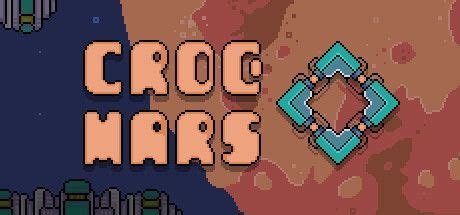
Croco Mars is a 2D arcade-style shooter set in a futuristic sci-fi environment on Mars. Players take on the role of a crocodile navigating through scrolling levels, battling enemies and overcoming obstacles in a diagonal-down perspective. The game blends fast-paced action with retro-inspired visuals, offering a unique twist on the classic shooter genre.
Where to Buy Croco Mars
PC
Croco Mars Reviews & Reception
metacritic.com (69/100): A nostalgic blast of absolutely epic proportions.
gamepressure.com (72/100): A remaster of the popular 3D platforming game from 1997.
retrododo.com (6/100): A Faithful Remaster With All The Good and Bad of a 90’s 3D Platformer
gamecritics.com : An excellent upgrade of a beloved PS1 classic!
games.mxdwn.com (70/100): A delightful return of a oft forgotten character from the early days of the 3D platformer genre.
Croco Mars: A Pixelated Oddity in the Shadow of a Legend
Introduction: A Crocodile Out of Water
In the vast, often bewildering landscape of indie games, Croco Mars (2018) emerges as a curious footnote—a title that, at first glance, seems to trade on the nostalgia of its namesake, Croc: Legend of the Gobbos, but ultimately carves its own bizarre niche. Developed by Yah_Shi and published by Rhino Games, Croco Mars is a top-down shooter framed as a surreal, pixel-art fable about reptilian colonization, betrayal, and, inexplicably, mushrooms. While it lacks the polish, charm, or cultural impact of its spiritual predecessor, it stands as a fascinating artifact of indie experimentation—a game that embraces its own weirdness with unapologetic abandon.
This review will dissect Croco Mars in its entirety, exploring its development context, narrative eccentricities, gameplay mechanics, and artistic choices. We’ll also examine its reception (or lack thereof) and its place in the broader tapestry of games that dare to defy convention. By the end, we’ll determine whether Croco Mars is a hidden gem, a forgettable oddity, or something far more intriguing: a game that exists purely for the sake of its own existence.
Development History & Context: The Shadow of a Legend
To understand Croco Mars, one must first acknowledge the elephant—or rather, the crocodile—in the room: Croc: Legend of the Gobbos (1997). Developed by Argonaut Software and published by Fox Interactive, Croc was a pioneering 3D platformer that emerged in the wake of Super Mario 64. It was a game of firsts: one of the earliest 3D platformers on the PlayStation and Sega Saturn, a technical marvel for its time, and a commercial success that sold over 3 million copies. Its legacy is one of innovation, charm, and a touch of controversy—born from a rejected pitch to Nintendo for a 3D Yoshi game, Croc became a mascot in its own right, albeit one overshadowed by the likes of Crash Bandicoot and Spyro the Dragon.
Croco Mars, by contrast, arrives in a vastly different gaming landscape. Released in 2018, it is a product of the indie renaissance, where small teams and solo developers could craft experimental titles with minimal budget but maximal creativity. Yah_Shi, the developer behind Croco Mars, appears to be a lone creator (or a very small team), and the game’s Steam description reads like a stream-of-consciousness manifesto:
“Arthouse look at the colonization of Mars … Reptiloid, Captain Deer, Flying Octopus, Mushrooms and Pain … I could not film, so I made a game.”
This is not the language of a triple-A studio or even a polished indie darling. It’s the voice of an artist who saw game development as a medium for expression, unburdened by market expectations or commercial viability. Croco Mars was not made to compete with Croc: Legend of the Gobbos or any other game. It was made because Yah_Shi had a vision—however obscure—and the tools to realize it.
Technologically, Croco Mars is a throwback to the era of 2D pixel-art shooters, evoking classics like Metal Slug or Ikari Warriors, but with a distinctly modern indie sensibility. The game’s diagonal-down perspective and arcade shooter mechanics are reminiscent of titles like Zelda II: The Adventure of Link or Contra, but its narrative and aesthetic choices set it apart. The constraints of its development—limited resources, a small team, and a reliance on pixel art—are not hidden but embraced, resulting in a game that feels intentionally rough around the edges.
The gaming landscape of 2018 was dominated by battle royales (Fortnite, PUBG), open-world epics (Red Dead Redemption 2), and narrative-driven indie darlings (Celeste, Hollow Knight). Croco Mars arrived without fanfare, without marketing, and without the backing of a major publisher. It was, and remains, a game that exists on the fringes—a title that defies easy categorization and resists the trappings of mainstream appeal.
Narrative & Thematic Deep Dive: A Surrealist Fable
Croco Mars is not a game that concerns itself with traditional storytelling. Its narrative, such as it is, unfolds through cryptic Steam store descriptions, in-game text snippets, and environmental storytelling. The premise is as follows:
“Mars is a wonderful planet. I was not on Mars, but I’m sure that the Mushrooms grow there and the Flying Octopuses live. And beneath the surface are the Talking Stones. If you want to be the first to colonize Mars, then you must be a Reptiloid. But most likely, you are not a Reptiloid… If you were a Reptiloid, then you would have a friend Captain Deer who betrayed you…”
This is not the setup for a conventional sci-fi shooter. It’s a surrealist poem disguised as a game synopsis. The protagonist is a “Reptiloid” (a reptilian humanoid, presumably the “Croco” of the title), tasked with colonizing Mars. Along the way, they encounter:
- Captain Deer: A traitorous ally whose betrayal drives the narrative.
- Flying Octopuses: Presumably hostile fauna of Mars.
- Mushrooms: Three species that “do not affect anything,” according to the game’s description—a bizarre inclusion that feels like a meta-commentary on meaningless collectibles.
- Talking Stones: Mysterious entities beneath the Martian surface.
- Pain: Both a thematic element and, apparently, a gameplay mechanic.
The game’s narrative is deliberately obtuse, rejecting the player’s expectation of coherence. There is no clear beginning, middle, or end—only a series of vignettes that unfold as the player progresses. The “pain” mentioned in the description is not just a thematic motif but a literal gameplay element: the game features no saving, and death sends the player back to the start. This is framed not as a punitive measure but as an existential statement: colonization is painful, progress is fleeting, and betrayal is inevitable.
Thematically, Croco Mars grapples with ideas of alienation, futility, and absurdism. The Reptiloid’s quest to colonize Mars is doomed from the start, not because of external obstacles but because of the inherent meaninglessness of the endeavor. The mushrooms that “do not affect anything” are a perfect metaphor for the game’s approach to traditional mechanics—collectibles that serve no purpose, achievements that go unrewarded, and progress that is ultimately erased.
The game’s tone is one of dark humor and existential dread, wrapped in a veneer of pixel-art whimsy. It’s as if Croco Mars is winking at the player, acknowledging the absurdity of its own existence. Why make a game about colonizing Mars with a reptilian protagonist, flying octopuses, and meaningless mushrooms? Because why not? In a medium often obsessed with grandeur, Croco Mars is a reminder that games can also be small, weird, and deeply personal.
Gameplay Mechanics & Systems: A Study in Minimalism and Frustration
Croco Mars is, at its core, a top-down shooter with light arcade and roguelike elements. The gameplay loop is simple:
- Shoot: The player controls the Reptiloid, who can fire in eight directions. The shooting mechanics are deliberately imprecise, with bullets feeling slightly delayed and enemies moving in unpredictable patterns.
- Survive: Enemies include Flying Octopuses, Talking Stones (which, true to their name, occasionally speak), and other surreal hazards. The game’s difficulty is brutal, with no checkpoints and no saves.
- Collect: The three species of mushrooms are scattered throughout the levels. As the game’s description notes, they “do not affect anything,” making them purely aesthetic or meta-commentary.
- Die: Death is frequent and punishing. The game’s tagline—”full hardcore, no saving, only your skill will help you survive!”—is both a warning and a challenge.
Core Mechanics:
- Movement and Combat: The Reptiloid moves in a diagonal-down perspective, with movement and shooting tied to the same input scheme. This can feel clunky, especially in tight spaces, but it’s intentional—the game is not designed for precision but for chaos.
- Enemies and Hazards: Enemies are varied but often behave erratically. Flying Octopuses dart across the screen, Talking Stones spew cryptic messages before attacking, and environmental hazards (like sudden drops or traps) add to the unpredictability.
- Progression: There is none. Croco Mars is a game about the journey, not the destination. Levels are procedurally generated to some extent, but the lack of saving means each playthrough is a fresh (and likely short) experience.
- Mushrooms: The three species of mushrooms serve no mechanical purpose. They are purely atmospheric, reinforcing the game’s themes of futility and absurdity.
Innovative (or Flawed?) Systems:
- No Saving: This is the game’s most defining—and divisive—feature. In an era where games are increasingly player-friendly, Croco Mars demands commitment. Each death is a reset, and the game’s brevity (it can be “completed” in under an hour, though “completion” is a loose term) means that the lack of saving is less about punishment and more about reinforcing the game’s themes.
- Meaningless Collectibles: The mushrooms are a stroke of genius in their pointlessness. They exist to be collected, but they do nothing. This is a direct subversion of the collectathon genre popularized by games like Croc: Legend of the Gobbos, where every crystal and Gobbo served a purpose. Here, they are a commentary on the emptiness of such mechanics.
- Surreal Enemy Design: The Flying Octopuses and Talking Stones are not just enemies—they are symbols. The octopuses represent the unknown, the stones the inanimate made animate. Their behavior is deliberately unpredictable, mirroring the chaos of the Reptiloid’s quest.
UI and Feedback:
The game’s UI is minimalist to the point of austerity. Health, ammunition, and other traditional HUD elements are either absent or obscured. The player is given little feedback, reinforcing the sense of disorientation. When the Reptiloid takes damage, the screen flashes, but there is no health bar—only the knowledge that death is imminent.
This lack of feedback is both a strength and a weakness. On one hand, it immerses the player in the Reptiloid’s plight, making every encounter feel desperate and unpredictable. On the other, it can feel unfair, especially in a game that already punishes the player harshly for failure.
World-Building, Art & Sound: A Pixelated Nightmare
Croco Mars’s setting is Mars, but not the Mars of science fiction. This is a Mars of the subconscious—a dreamlike landscape where logic is optional and surrealism reigns. The game’s pixel art is crude but effective, evoking the aesthetic of early 90s arcade games while infusing it with a modern indie sensibility.
Visual Direction:
- Pixel Art: The game’s graphics are deliberately low-resolution, with a limited color palette dominated by reds, blues, and greens. The Reptiloid is a simple sprite, the Flying Octopuses are blocky and abstract, and the Talking Stones are little more than animated rocks with eyes. The art style is not polished, but it is cohesive, reinforcing the game’s themes of alienation and absurdity.
- Level Design: Levels are a mix of open areas and claustrophobic corridors, with little in the way of environmental storytelling. The surrealism is in the details—a mushroom that does nothing, a stone that speaks, an octopus that flies. The game’s Mars is not a place to be understood but experienced.
- Atmosphere: The game’s atmosphere is one of dread and whimsy, a combination that feels uniquely indie. The pixel art, while simple, conveys a sense of isolation—the Reptiloid is alone on Mars, betrayed by Captain Deer, surrounded by enemies that make no sense.
Sound Design:
The game’s sound design is as minimalist as its visuals. There is no voice acting, no orchestral score—only a handful of chiptune tracks and ambient noises. The soundtrack is sparse, with simple melodies that loop endlessly, reinforcing the game’s repetitive and futile nature.
- Music: The few tracks that exist are reminiscent of early 8-bit games, with a focus on atmosphere over melody. They are not memorable, but they are effective in creating a sense of unease.
- Sound Effects: Gunshots, enemy screeches, and the occasional “pain” grunt from the Reptiloid are the extent of the sound design. The lack of audio feedback mirrors the game’s visual minimalism—everything is stripped down to its essence.
Contribution to the Experience:
The art and sound of Croco Mars are not designed to impress. They are designed to unsettle, to confuse, and to immerse the player in a world that makes no sense. The pixel art’s crudeness is a feature, not a bug—it reinforces the game’s themes of futility and absurdity. The sound design’s sparseness mirrors the Reptiloid’s isolation. Together, they create an experience that is less about mastery and more about endurance.
Reception & Legacy: The Sound of Silence
Croco Mars was released on March 5, 2018, on Steam for the price of $0.00—yes, it was free. Despite this, it has remained largely unknown, even within indie gaming circles. As of this writing, it has been “collected” by only 16 players on MobyGames, and there are no critic reviews, no player reviews, and no significant coverage in gaming media.
This is not entirely surprising. Croco Mars is not a game designed for mass appeal. It is not a Croc: Legend of the Gobbos for the modern era. It is a niche experiment, a surrealist statement, and a game that defies easy categorization. Its lack of reception is, in some ways, a testament to its success—it exists outside the traditional metrics of success or failure.
Critical Reception:
There is none. Croco Mars has no Metacritic score, no OpenCritic rating, and no significant presence on gaming forums or social media. It is a game that was released and then forgotten, save for the few who stumbled upon it and were curious enough to try it.
Commercial Reception:
As a free game, Croco Mars has no commercial metrics to speak of. It was not designed to sell, and it did not. Its legacy, such as it is, lies in its existence as a curiosity—a game that dares to be weird in a medium that often rewards conformity.
Influence:
Croco Mars has had no discernible influence on subsequent games. It is not a trendsetter, nor is it likely to inspire imitators. Its greatest legacy may be as a footnote in the history of indie games—a reminder that not every game needs to be a masterpiece or a commercial success. Some games exist simply because their creators had a vision, however obscure.
Conclusion: A Game That Shouldn’t Exist (But Does)
Croco Mars is not a good game by traditional metrics. It is clunky, punishing, and deliberately obtuse. Its narrative is nonsensical, its mechanics are barebones, and its reception is nonexistent. And yet, it is fascinating.
In an era where games are increasingly polished, accessible, and designed for mass appeal, Croco Mars is a defiant outlier. It is a game that embraces its own weirdness, that rejects the player’s expectation of coherence, and that exists purely for the sake of its own existence. It is not Croc: Legend of the Gobbos, nor does it aspire to be. It is something far stranger—a surrealist fable about colonization, betrayal, and the futility of progress.
Final Verdict: 6/10 – A Flawed but Fascinating Oddity
Croco Mars is not a game for everyone. It is not a game for most people. It is a game for those who seek out the weird, the experimental, and the unapologetically obscure. It is a game that should not exist, and yet it does—and for that alone, it is worth acknowledging.
For players who value narrative coherence, polished gameplay, or traditional progression, Croco Mars will be a frustrating experience. For those who appreciate surrealism, existential themes, and games as art, it may be a revelation. It is not a masterpiece, but it is a statement—and in a medium often dominated by sequels, remakes, and safe bets, that is no small feat.
Croco Mars is the antithesis of Croc: Legend of the Gobbos. Where the latter was a pioneering 3D platformer with charm, polish, and mass appeal, the former is a 2D shooter that embraces chaos, futility, and obscurity. And yet, in its own way, it is just as bold. Croc dared to be one of the first; Croco Mars dares to be one of the weirdest.
In the grand tapestry of video game history, Croco Mars will likely remain a footnote—a curious blip on the radar of indie gaming. But for those who seek out the strange and the surreal, it is a game that lingers, like a dream half-remembered or a mushroom that does nothing at all.