
- Release Year: 2020
- Platforms: Windows
- Publisher: Digital Technologist, The
- Developer: Digital Technologist, The
- Genre: Educational, Simulation, Visual novel
- Perspective: Fixed / flip-screen
- Game Mode: Single-player
- Gameplay: Cards, Point and select, Tiles
- Setting: Europe, Historical events
- Average Score: 76/100
Description
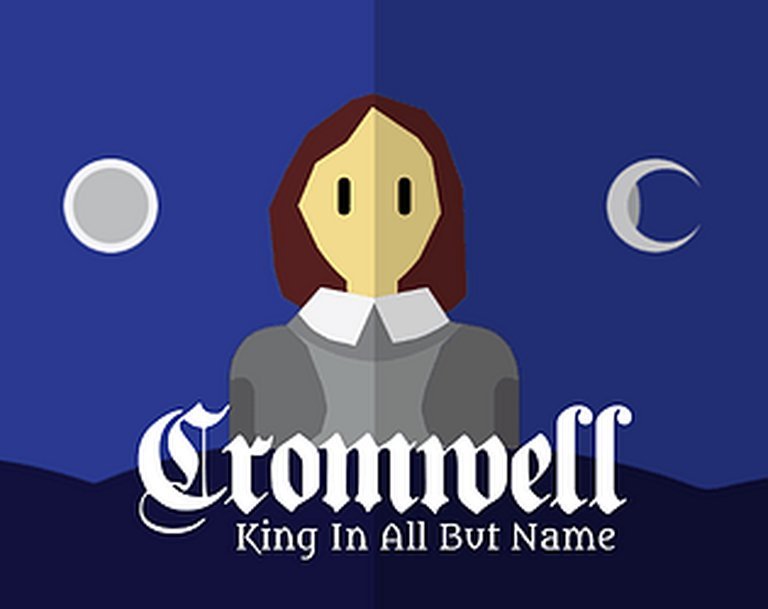
Cromwell is a historical visual novel that puts players in the role of Oliver Cromwell during his time as Lord Protector of the Commonwealth. Gameplay is inspired by the Reigns series, where you make binary choices from character-driven cards to manage the delicate balance of power between the church, the people, the treasury, and parliament. Each decision impacts these crucial meters, and if any are driven to their extreme, it results in a game over. With 11 possible endings and an indicator to track historical accuracy, players can either follow the historical path or create their own divergent legacy in this simulation of 17th-century England, Scotland, and Ireland.
Cromwell: King in All But Name: Review
Introduction
Cromwell: King in All But Name is a historical visual novel that places players in the tumultuous era of Oliver Cromwell’s rule as Lord Protector of England, Scotland, and Ireland. Released in 2020, this game is a unique blend of education and interactive storytelling, drawing heavily from the Reigns series’ card-based decision-making mechanics. At its core, the game challenges players to navigate the political, religious, and social turmoil of the mid-17th century while balancing the delicate factions that held power during Cromwell’s reign. This review will dissect the game’s development, narrative depth, gameplay mechanics, and its place in both historical education and gaming history.
Development History & Context
Developed by The Digital Technologist, Cromwell was created by a small team led by Milan Kurovsky, who handled both gameplay and visuals. The game was inspired by the Reigns series, adopting its card-based, binary-choice structure but applying it to a lesser-explored historical period. Released on May 11, 2020, the game arrived during a time when historical and educational games were gaining traction, particularly those that blended narrative with interactive decision-making.
The game’s development was constrained by its small team and indie budget, but it leveraged Unity as its engine, allowing for a polished, albeit simple, presentation. The art style is minimalist, focusing on text and character portraits rather than intricate environments. The soundtrack, composed of public domain and Creative Commons-licensed music, enhances the period-appropriate atmosphere without overwhelming the player.
Narrative & Thematic Deep Dive
The game’s narrative centers on Oliver Cromwell’s rule as Lord Protector following the execution of King Charles I. Players must make decisions that affect the stability of the Commonwealth, balancing the interests of the Church, the People, the Treasury, and Parliament. Each choice shifts these meters, and if any meter is depleted or overflows, the game ends in failure.
Plot & Characters
The story begins with Cromwell’s rise to power and continues through his reign, presenting key historical figures such as Charles II, George Monck, and various parliamentary leaders. The game does not shy away from the brutality of the era, including the Irish Rebellion of 1649 and the Putney Debates, which explored the role of democracy in the new republic.
Themes
- Power & Authority: The game explores the tension between democracy and authoritarianism, as Cromwell must decide whether to rule with an iron fist or seek consensus.
- Religious Conflict: The struggle between Puritans, Anglicans, and other factions is a recurring theme, reflecting the real historical divisions.
- Legacy & Leadership: Cromwell’s decisions shape his legacy, with the game offering multiple endings based on historical accuracy or divergence.
Gameplay Mechanics & Systems
Cromwell uses a card-based decision-making system, where each card presents a dilemma with two choices. The consequences of these choices are reflected in the four meters (Church, People, Treasury, Parliament), which must be kept in balance to avoid game over.
Core Mechanics
- Binary Choices: Players must choose between two options, each with immediate and long-term consequences.
- Divergence Indicator: A small icon shows whether a choice aligns with historical events, encouraging players to explore alternate outcomes.
- Modding Support: The game includes an editor, allowing players to create or modify characters and events, adding replayability.
Strengths & Weaknesses
- Strengths: The game’s simplicity makes it accessible, while the historical depth rewards players who engage with the lore.
- Weaknesses: The binary nature of choices can feel limiting, and the lack of complex strategic depth may frustrate players seeking more nuanced gameplay.
World-Building, Art & Sound
The game’s art style is minimalist, focusing on character portraits and text, which keeps the focus on the narrative. The soundtrack consists of period-appropriate instrumental music, enhancing immersion without distraction.
- Setting: The game captures the political and social upheaval of 17th-century England, from the streets of London to the battlefields of Ireland.
- Atmosphere: The use of historical text and dialogue immerses players in the era, making them feel like active participants in history.
Reception & Legacy
At launch, Cromwell received limited critical attention, likely due to its niche subject matter and indie development. However, it has since gained a cult following among history enthusiasts and fans of narrative-driven games.
- Critical Reception: The game’s educational value and unique approach to historical storytelling have been praised, though some critics noted its simplicity.
- Influence: The game’s success has encouraged other developers to explore historical visual novels, particularly those focusing on lesser-known figures and events.
Conclusion
Cromwell: King in All But Name is a bold and educational experiment in historical gaming. While its mechanics are simple, its narrative depth and thematic richness make it a standout title for those interested in 17th-century British history. The game’s modding support ensures its longevity, allowing players to shape their own historical narratives. Ultimately, Cromwell earns its place as a unique and thought-provoking entry in the realm of historical visual novels.