
- Release Year: 2023
- Platforms: Windows
- Publisher: DotEmu SAS, Gamera Games
- Developer: Tako Boy Studios LLC
- Genre: Adventure, Strategy, Tactics
- Perspective: 3rd-person
- Game Mode: Single-player
- Gameplay: Collectible card, Roguelike, RPG elements, Trading
- Average Score: 90/100
Description
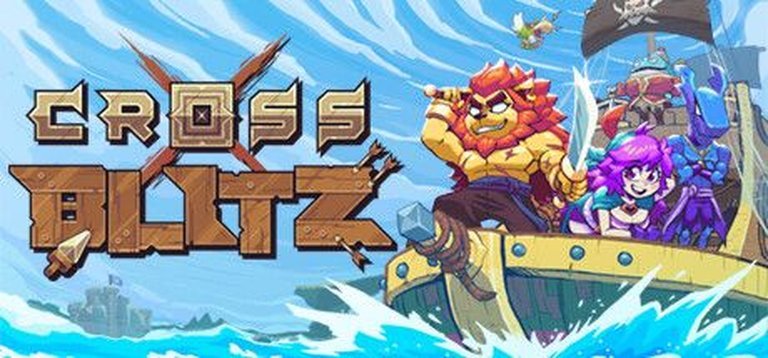
Cross Blitz is a hybrid digital collectible card game and role-playing video game set in the fantasy world of Crossdawn Isle. The game features multiple interconnected single-player campaigns, each following a different protagonist, as well as a roguelite mode called Tusk Tales where players choose a mercenary and attempt to defeat bosses while building their deck. The game combines strategic card gameplay with a rich fantasy setting, offering a mix of turn-based combat, deck-building, and narrative-driven adventures.
Gameplay Videos
Where to Buy Cross Blitz
PC
Cross Blitz Mods
Cross Blitz Guides & Walkthroughs
Cross Blitz Reviews & Reception
metacritic.com (87/100): Cross Blitz is a beautifully made deck builder that feels not only incredibly inventive, but also mechanically dense, and just very satisfying to sink into.
web.phenixxgaming.com (100/100): With Cross Blitz in its full release, every Deck-building fan in your life should have this on their radar.
gamerjournalist.com (85/100): Cross Blitz is a breath of fresh air in the realm of RPG deckbuilders.
thesixthaxis.com (90/100): Cross Blitz is a beautifully made deck builder that feels not only incredibly inventive, but also mechanically dense, and just very satisfying to sink into.
Cross Blitz: A Masterful Fusion of Deckbuilding and RPG Storytelling
Introduction
In the crowded landscape of digital card games, Cross Blitz emerges as a rare gem—a title that seamlessly blends the strategic depth of deckbuilding with the immersive storytelling of a role-playing game. Developed by Tako Boy Studios and published by The Arcade Crew and Gamera Games, Cross Blitz is a love letter to fans of both genres, offering a rich, interconnected narrative experience alongside a challenging roguelite mode. With its charming pixel-art aesthetic, diverse cast of characters, and innovative gameplay mechanics, Cross Blitz carves out a distinct identity in a genre often dominated by multiplayer-focused titans like Hearthstone and Magic: The Gathering. This review will delve into every facet of the game, from its development history to its narrative depth, gameplay systems, and lasting legacy.
Development History & Context
The Studio and Vision
Tako Boy Studios, a San Diego-based indie developer co-founded in 2018 by Tom Ferrer (Lead Programmer) and Phil Giarrusso (Lead Artist), set out to create a game that would capture the charm of classic card games while infusing it with modern RPG elements. The studio’s vision was clear: to craft a deckbuilder that prioritized single-player storytelling and strategic depth over the competitive multiplayer focus that dominates the genre. This philosophy is evident in Cross Blitz, which eschews the traditional PvP model in favor of a narrative-driven campaign and a roguelite mode designed for solo play.
The game’s development began in 2019, with the team drawing inspiration from a mix of classic and contemporary titles. Hearthstone’s accessibility, Slay the Spire’s roguelite structure, and Inscryption’s atmospheric storytelling all left their mark on Cross Blitz. However, rather than simply emulating these games, Tako Boy Studios sought to innovate by integrating a hex-grid overworld, a unique cross-lane combat system, and a cast of characters with distinct personalities and arcs.
Technological Constraints and Design Choices
Developed using the Unity engine and FMOD for sound, Cross Blitz leverages modern tools to create a retro-inspired experience. The pixel-art aesthetic, reminiscent of 16-bit era RPGs, was a deliberate choice to evoke nostalgia while maintaining a fresh, vibrant visual identity. The game’s fixed/flip-screen perspective and turn-based pacing further reinforce its classic feel, making it accessible to both veteran card game players and newcomers alike.
One of the most notable design choices was the decision to focus exclusively on single-player content. While a multiplayer mode was initially planned, the scope of the campaign and roguelite modes expanded to the point where the team opted to prioritize depth over breadth. This decision, though controversial among some fans, allowed Tako Boy Studios to refine the game’s core mechanics and narrative without spreading their resources too thin.
The Gaming Landscape at Launch
Cross Blitz entered Early Access on November 29, 2023, at a time when the deckbuilding genre was experiencing a renaissance. Games like Inscryption, Monster Train, and Slay the Spire had already proven that there was a hungry audience for innovative card games, particularly those with strong single-player components. However, the market was also becoming increasingly saturated, with new titles vying for attention in an already competitive space.
Despite this, Cross Blitz managed to stand out thanks to its unique blend of storytelling and strategy. The game’s Early Access launch was met with enthusiasm, with players praising its charming visuals, engaging characters, and deep gameplay systems. The full release on November 24, 2025, further solidified its reputation as a must-play for fans of the genre.
Narrative & Thematic Deep Dive
The World of Crossdawn Isle
Cross Blitz is set in the fantastical world of Crossdawn Isle, a continent divided into diverse biomes ranging from lush forests and sprawling plains to a Caribbean-inspired ocean known as the Southron Sea. The world is populated by a wide array of humanoid races, including anthropomorphic mammals, birds, lizards, fish, and even sentient fungi and robots. This eclectic mix of species creates a rich, vibrant setting that feels both familiar and fresh.
The game’s narrative is structured around five interconnected episodes, each following a different protagonist on a unique adventure. These episodes, known as “Fables,” are self-contained but share a broader overarching plot that gradually unfolds as players progress through each story.
The Five Fables: A Tapestry of Characters and Themes
-
Redcroft’s Pirate Odyssey
- Protagonist: Redcroft, an anthropomorphic lion and a pirate with a strong sense of honor.
- Plot: Captured by the lizard-like Princess Eingana, Redcroft is forced into a dangerous quest to recover his stolen ship and reclaim his freedom. Alongside his first mate and a dark mage sent to ensure his compliance, Redcroft embarks on a journey filled with treachery, adventure, and self-discovery.
- Themes: Freedom, redemption, and the consequences of rash decisions. Redcroft’s story explores the tension between his impulsive nature and his desire to do what’s right, culminating in a journey that forces him to confront his past mistakes.
-
Violet’s Pop Star Predicament
- Protagonist: Violet, a human pop star and dark sorceress with a flamboyant personality.
- Plot: After an impostor begins tarnishing her reputation, Violet sets out to uncover the truth behind the doppelgänger’s schemes. Accompanied by her manager, she navigates a world of glamour, intrigue, and magic, ultimately learning the value of humility and friendship.
- Themes: Identity, fame, and the duality of public persona versus private self. Violet’s arc is a commentary on the pressures of celebrity and the importance of staying true to oneself.
-
Quill’s Heist of a Lifetime
- Protagonist: Quill, a small, rat-like thief with a heart of gold.
- Plot: Quill undertakes a high-stakes heist to steal from a wealthy noble’s mansion, inadvertently drawing an elf ambassador into his scheme. As the heist unfolds, Quill grapples with questions of trust, morality, and the true meaning of family.
- Themes: Trust, loyalty, and the struggle between self-interest and altruism. Quill’s story is a classic underdog tale, highlighting the power of unlikely friendships and the potential for redemption.
-
Seto’s Martial Arts Journey
- Protagonist: Seto, a young monk from a race of anthropomorphic fish.
- Plot: Seto embarks on a pilgrimage to find his master and compete in a martial arts tournament held in a mountain temple. Along the way, he confronts his emotional turmoil and learns to cook, symbolizing his growth from a reckless youth to a disciplined warrior.
- Themes: Discipline, self-discovery, and the balance between physical and emotional strength. Seto’s journey is a coming-of-age story that emphasizes the importance of perseverance and inner peace.
-
Mereena’s Political Gambit
- Protagonist: Mereena, an elf ambassador and noblewoman.
- Plot: Mereena seeks to unite the warring tribes of her kingdom to prevent a catastrophic war. Her quest involves political maneuvering, diplomacy, and combat, as she works to expose a warmonger threatening to destabilize the region.
- Themes: Leadership, unity, and the cost of power. Mereena’s story is a political drama that explores the complexities of governance and the sacrifices required to maintain peace.
Thematic Cohesion and Overarching Plot
While each Fable stands on its own, the stories are interconnected through subtle narrative threads and shared characters. The overarching plot revolves around the mysterious Zan, a villain who opens a hole in the sky during the game’s climax, escaping to set up future conflicts. This cliffhanger, along with unresolved subplots involving characters like Brazi (the lizard from Redcroft’s Fable) and Quill’s unresolved quest to aid Mereena, hints at potential DLC or a sequel.
The game’s themes of unity, redemption, and self-discovery are woven throughout each Fable, creating a cohesive narrative tapestry. The characters’ personal growth is mirrored in the gameplay, as players must adapt their strategies and decks to overcome increasingly difficult challenges.
Dialogue and Character Development
The writing in Cross Blitz is sharp, witty, and full of personality. Each character is given distinct voice and depth, with dialogue that ranges from humorous banter to poignant introspection. The visual novel-style interactions between characters during the overworld segments add layers of emotional weight to the story, making the world of Crossdawn Isle feel alive and dynamic.
One of the game’s strengths is its ability to balance lighthearted humor with darker, more serious themes. For example, Redcroft’s pirate adventures are filled with swashbuckling charm, while Seto’s journey delves into themes of loss and emotional healing. This tonal variety ensures that the narrative remains engaging and unpredictable.
Gameplay Mechanics & Systems
Core Gameplay Loop
At its heart, Cross Blitz is a turn-based deckbuilding RPG where players construct decks of cards to engage in strategic battles. The game’s core loop revolves around exploring the overworld, engaging in battles, acquiring new cards, and upgrading abilities to progress through the story.
The gameplay is divided into two primary modes:
1. Fables Mode: A story-driven campaign where players follow the adventures of the five protagonists across a hex-grid overworld.
2. Tusk Tales Mode: A roguelite mode where players embark on randomized runs, battling through procedurally generated maps to defeat bosses and unlock new content.
Combat System: The Cross-Lane Mechanic
The combat in Cross Blitz is where the game truly shines. Battles take place on a grid divided into two rows of four spaces on each side. Players can place cards (minions, spells, or traps) in any unoccupied space, with each card requiring a mana cost to play. Mana regenerates each turn, increasing by one up to a maximum of ten.
The cross-lane system is one of the game’s most innovative features. Minions attack in a left-to-right, front-to-back pattern within their column, meaning that positioning is crucial for both offense and defense. This adds a layer of tactical depth rarely seen in digital card games, as players must carefully consider where to place their units to maximize damage and minimize losses.
- Minions: Units that attack automatically each turn. They can be placed in either the front or back row, with front-row minions absorbing damage for those behind them.
- Spells: One-time-use cards that can deal damage, heal, or apply status effects.
- Traps: Cards that trigger under specific conditions, such as when an opponent plays a minion or attacks.
- Blitz Bursts: Powerful, game-changing abilities that can turn the tide of battle.
Deckbuilding and Progression
Players start with a basic deck of 30 cards, which can be customized as they acquire new cards through battles, shops, or crafting. The game features over 500 cards, each with unique abilities and synergies, allowing for a staggering variety of deck archetypes.
- Card Acquisition: New cards can be purchased from shops using in-game currency earned from battles, or crafted using materials obtained from defeating enemies.
- Relics: Equippable items that provide passive bonuses, such as increased health, reduced mana costs, or special abilities. Players can equip up to four relics, with one slot reserved for an “Elder Relic” that offers a powerful unique effect.
- Skill Tree: Each character has a skill tree that unlocks new cards, abilities, and stat boosts as they level up. Players can reset their skill tree at any time, allowing for experimentation with different builds.
Overworld Exploration
In Fables mode, players navigate a hex-grid overworld filled with events, battles, and NPC interactions. The overworld is divided into regions, each with its own unique enemies, challenges, and story beats. While the paths are not entirely open-ended, players are given choices that affect their progression, such as which battles to fight or which NPCs to assist.
- Events: Random encounters that can reward players with cards, relics, or currency, or present them with challenging obstacles.
- Shops: Locations where players can purchase new cards, relics, or crafting materials.
- Boss Battles: Major encounters that require strategic deckbuilding and careful planning to overcome.
Tusk Tales: The Roguelite Mode
Tusk Tales offers a more unpredictable and replayable experience. Players select a mercenary, each with their own starting deck and abilities, and embark on a randomized run through Crossdawn Isle. The mode features:
– Procedurally Generated Maps: Each run presents a unique path with branching choices, ensuring no two playthroughs are the same.
– Mercenaries: Unlockable characters with distinct playstyles, such as bomb-focused decks or discard synergies.
– Trinkets and Upgrades: Temporary buffs and permanent unlocks that enhance the mercenary’s abilities between runs.
– Bosses and Modifiers: Increasingly difficult enemies and optional challenges that test the player’s strategic prowess.
UI and Accessibility
The game’s UI is clean and intuitive, with clear visual indicators for mana costs, card effects, and enemy intentions. However, some critics have noted that the animations can feel slow, particularly during longer battles. The lack of a way to skip animations in the Early Access version was a point of contention, though this was addressed in later updates.
One area where Cross Blitz could improve is in its legibility. Some card effects are not immediately clear, and the game’s history log does not always provide enough context for what happened during an opponent’s turn. This can lead to confusion, especially for newer players.
World-Building, Art & Sound
The Aesthetic: A Love Letter to Retro Gaming
Cross Blitz’s visual style is a standout feature, drawing heavy inspiration from 16-bit era RPGs while infusing it with a modern sensibility. The pixel-art characters are expressive and charming, with exaggerated proportions that give them a chibi-like appeal. The environments are richly detailed, from the lush forests of Crossdawn Isle to the bustling streets of its cities.
The game’s art direction is a deliberate throwback to classic titles like Final Fantasy VI and Chrono Trigger, but with a unique twist that makes it feel fresh. The vibrant color palette and meticulous attention to detail create a world that is both nostalgic and inviting.
Sound Design and Music
The soundtrack, composed by Cactus Bear and Fat Bard, is a highlight of the game. The music blends orchestral and synth elements to create a sound that is both epic and whimsical. Each region of Crossdawn Isle has its own distinct musical theme, enhancing the game’s immersive atmosphere.
The sound effects are equally well-crafted, with satisfying card-playing sounds, impactful battle cues, and ambient noises that bring the world to life. The voice acting, while minimal, is well-executed, with each character’s personality shining through in their delivery.
Atmosphere and Immersion
The combination of art, sound, and storytelling creates a world that feels alive and dynamic. The overworld segments, with their visual novel-style interactions, add depth to the characters and make the player feel invested in their journeys. The combat, while strategic, is also visually engaging, with card animations and effects that make each battle feel cinematic.
Reception & Legacy
Critical Reception
Cross Blitz was met with widespread acclaim upon its full release, earning a Metacritic score of 87 based on seven critic reviews. Critics praised the game’s deep gameplay mechanics, charming visuals, and engaging narrative.
- PC Gamer’s Dominic Tarason described it as “charming Hearthstone-lite for the single-player crowd,” highlighting its accessibility and strategic depth.
- Rock Paper Shotgun’s Katharine Castle called it “good fun,” recommending it to fans of Inscryption and Slay the Spire.
- TheSixthAxis awarded it a 9/10, calling it “a triumph of deckbuilding and RPG design.”
However, some critics noted that the game’s pacing could feel slow due to unskippable animations, and the lack of multiplayer was a missed opportunity for some players.
Commercial Performance and Community Response
While exact sales figures are not publicly available, Cross Blitz has cultivated a dedicated fanbase since its Early Access launch. The game’s Steam page boasts a “Very Positive” rating, with players praising its depth, charm, and replayability.
The community has been particularly vocal about the game’s narrative, with many players expressing a desire for additional content to resolve the cliffhanger ending. The developers have hinted at potential DLC or a sequel, though nothing has been officially confirmed as of this writing.
Influence on the Genre
Cross Blitz stands as a testament to the potential of single-player deckbuilding games. By focusing on narrative depth and strategic complexity, it has carved out a niche in a genre often dominated by competitive multiplayer titles. Its success has demonstrated that there is a hungry audience for story-driven card games, paving the way for future titles to explore similar hybrid designs.
The game’s innovative cross-lane combat system and hex-grid overworld have also influenced other indie developers, who have taken note of its ability to blend accessibility with depth. In this way, Cross Blitz has contributed to the evolution of the deckbuilding genre, proving that there is still room for innovation and creativity.
Conclusion: A Definitive Verdict
Cross Blitz is a masterful fusion of deckbuilding and RPG storytelling, offering a rich, engaging experience that appeals to both casual players and hardcore strategists. Its charming visuals, deep gameplay mechanics, and interconnected narratives create a world that is as immersive as it is strategic.
While the game is not without its flaws—such as the occasional pacing issues and the lack of multiplayer—its strengths far outweigh its weaknesses. The Fables mode provides a compelling, story-driven campaign, while Tusk Tales offers near-endless replayability for those seeking a challenge.
Final Verdict: Cross Blitz is a must-play for fans of deckbuilding games and RPGs alike. With its innovative mechanics, memorable characters, and vibrant world, it stands as one of the best titles in the genre and a shining example of what indie developers can achieve. 9/10
For those who have yet to experience it, Cross Blitz is a journey worth taking—a testament to the power of storytelling in strategy games and a reminder that sometimes, the best battles are fought not against other players, but against the deck itself.