
- Release Year: 2015
- Platforms: Linux, Macintosh, Windows
- Publisher: Cuveet Story
- Developer: Cuveet Story
- Genre: Puzzle
- Perspective: Fixed / flip-screen
- Game Mode: Single-player
- Gameplay: Point and select, Puzzle
- Average Score: 81/100
Description
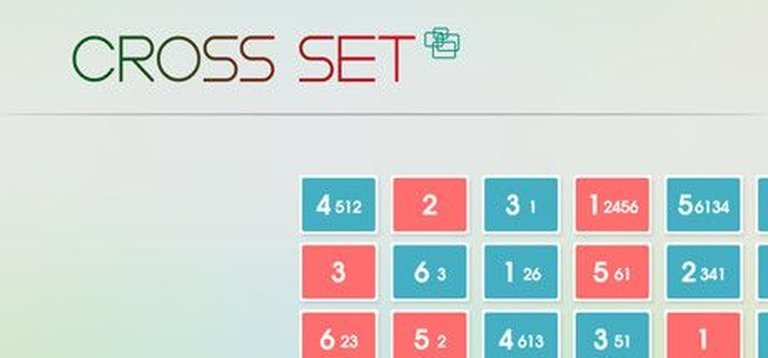
Cross Set is a puzzle game developed and published by Cuveet Story, released in November 2015 for Windows, Linux, and Macintosh. Featuring a fixed, flip-screen visual style and a point-and-select interface, the game challenges players to solve a variety of puzzles set in a minimalist environment. Built with the Unity engine, Cross Set offers a straightforward yet engaging experience for puzzle enthusiasts.
Where to Buy Cross Set
PC
Cross Set: A Minimalist Masterpiece of Digital Zen
Introduction
In the vast, often overcrowded landscape of indie puzzle games, Cross Set (2015) emerges as a quiet, unassuming titan of pure logic. Developed by Cuveet Story and released across Windows, macOS, and Linux platforms, this deceptively simple number puzzle game eschews grand narratives and complex mechanics, instead presenting a crystalline challenge that resonates with the core satisfaction of problem-solving. While its name might be confused with the more elaborate CrossCode RPG, Cross Set carves its own distinct legacy as a meditation on rule-based deduction and elegant spatial reasoning. This review delves into the genesis, mechanics, artistry, and enduring appeal of this minimalist gem, arguing that its power lies not in complexity, but in the profound clarity of its fundamental puzzle structure and its ability to induce a state of focused calm.
Development History & Context
Cross Set was a product of Cuveet Story, a developer focused on accessible, brain-teasing experiences. Released on November 17, 2015, it arrived during a period where puzzle games on digital storefronts like Steam were thriving, particularly those offering quick yet challenging mental workouts. Built on the versatile Unity engine, the game leveraged this platform for cross-platform compatibility (Windows, Mac, Linux) and relative ease of distribution, costing just $0.99 – a price point emphasizing its value proposition as a pure puzzle experience rather than a sprawling adventure.
The development context is defined by its simplicity. There’s no indication of a protracted development cycle or ambitious scope. Instead, the focus was on perfecting the core mechanic: the NxN grid puzzle. The constraints of the era – Unity’s accessibility, the demand for low-cost indie titles, and the market for accessible puzzles – all aligned to create the conditions for Cross Set. It wasn’t competing with narrative-driven epics like CrossCode (which began its own long development around the same time) but rather with other logic puzzle classics like Sudoku, aiming to offer a distinct, perhaps more streamlined, variant of the number-placement challenge. Its release was quiet, without major fanfare, relying on word-of-mouth and the inherent appeal of its core concept to find its audience.
Narrative & Thematic Deep Dive
Cross Set operates within a narrative vacuum. There is no overarching plot, characters, dialogue, or explicit themes. The game’s entire narrative is the puzzle itself, the internal story of the player’s logical journey from chaos (an empty grid) to order (a completed grid). This absence is not a flaw but a deliberate and powerful design choice. It eliminates distractions, forcing the player’s complete engagement with the spatial and numerical logic unfolding before them.
The implicit themes, however, are rich and universal:
1. Order from Chaos: The fundamental premise – imposing structure (numbers 1-N in each row/column) onto a seemingly random grid – is a microcosm of humanity’s drive to impose order and find patterns within complexity.
2. Deductive Reasoning: The game is a pure celebration of logic. Every number placed is the result of eliminating candidates, applying constraints, and making sound deductions. It champions rational thought over guesswork.
3. Minimalism as Power: By stripping away all non-essential elements – story, complex controls, flashy visuals – Cross Set highlights how much can be communicated and experienced through pure, unadorned rules. Its power lies in its austerity.
4. The Zen of Focus: The lack of narrative friction or time pressure fosters a state of deep concentration. Solving a particularly tough grid becomes a meditative act, where the external world fades, and only the grid and the player’s logic remain. The “calm and ambient BGM” explicitly supports this thematic journey towards mental tranquility through focused effort.
Gameplay Mechanics & Systems
The core gameplay of Cross Set is a refined take on the Latin Square concept, the foundation of Sudoku, but with subtle distinctions that give it its own flavor.
- The Grid Constraint: The player is presented with an NxN square grid (ranging up to 9×9). The objective is straightforward: fill each cell with a number from 1 to N, ensuring that every row and every column contains each number exactly once. This is the bedrock, shared with Sudoku.
- The Candidate Set: Where Cross Set diverges significantly from traditional Sudoku is in its presentation. Instead of pre-filled givens, the grid is populated with “sets of candidates.” Each empty cell starts with multiple possible numbers displayed (e.g., showing “1,3,7”). The player’s task is to deduce which single number belongs in each cell by logically eliminating the incorrect candidates based on the row/column constraints. This initial state creates a different starting point – a field of possibilities rather than a field of certainties.
- The Interface & Controls: The interface is intentionally minimalist and utilitarian, fitting the game’s aesthetic. Using a “Point and Select” system, the player clicks on a cell to highlight it and then clicks on the desired number from the candidates (or perhaps a keyboard shortcut for speed). The “Fixed / flip-screen” visual style suggests a clean, grid-based presentation without scrolling, focusing attention on the puzzle at hand. There are no complex menus, just the grid, the candidates, and the satisfaction of a correctly placed number.
- Progression & Challenge: The game offers “50+ Unique Levels.” While the core rules remain constant, the challenge evolves through the interplay of grid size (N=3,4,5… up to 9) and the initial distribution of candidates. Larger grids naturally offer more complexity and longer solving times. The uniqueness of each puzzle set ensures players aren’t just replaying variations of the same layout. The difficulty curve is implicit – larger grids and denser initial candidate sets present steeper logical hurdles.
- Systems: There are no traditional RPG systems like combat, leveling, or gear. Progress is purely measured by puzzle completion. The primary “system” is the player’s own logical deduction engine. The inclusion of “17 Steam Achievements” provides extrinsic motivation to tackle all levels and potentially solve puzzles with certain criteria (e.g., speed, minimal errors, completing specific grid sizes).
World-Building, Art & Sound
Cross Set eschews traditional world-building entirely. There is no environment, lore, or setting beyond the grid itself. The “world” is the abstract space of the puzzle. This radical minimalism serves the gameplay perfectly; any extraneous visual detail would be a distraction from the critical information – the numbers and their relationships.
The Art Direction is defined by clarity and function. The Fixed/flip-screen presentation likely employs clean, high-contrast graphics. Numbers are likely rendered in a clear, readable font. Grid lines are precise. The “sets of candidates” are probably displayed unobtrusively within the cells (e.g., smaller, lighter-colored numbers or a list). Visuals are purely functional, designed for maximum legibility and to support logical focus, not to evoke any particular atmosphere beyond the one the puzzle itself creates. It’s the visual equivalent of a perfectly organized workspace.
Sound Design plays a crucial, though subtle, role. The Calm and Ambient BGM is explicitly mentioned and is a key part of the experience. It’s likely gentle, perhaps featuring soft synths, piano, or nature sounds, designed to soothe the mind and support concentration without drawing attention away from the logical task. Sound effects, if present, would be minimal and functional – perhaps a soft chime for a correct placement, a subtle click for cell selection, and maybe a gentle tone for mistakes, avoiding jarring interruptions. The soundscape reinforces the game’s core theme: mental clarity achieved through serene focus.
Reception & Legacy
Cross Set achieved a modest but positive reception upon release and in the years since.
- Launch Reception: While lacking major critical reviews in the provided sources, its performance on Steam tells a story of steady appreciation. It holds a “Mostly Positive” rating based on 133 user reviews (77% positive). This indicates a core audience found value in its offering. The low price point ($0.99) was likely a significant factor in encouraging purchases and experimentation. Players appreciated the accessibility, the challenge of the puzzles, and the relaxing atmosphere.
- Player Feedback (Synthesized): Positive reviews consistently highlight the satisfying nature of the puzzles, the “brain-teasing” quality, the relaxing soundtrack, and the excellent value for money. Players who enjoy logic games like Sudoku found a welcome, perhaps slightly different, variant. The minimalist design was often praised for its clarity. Criticisms noted in similar puzzle games (and likely applicable here) include potential repetition for some players and the lack of significant difficulty progression beyond increasing grid size. Some might have desired more complex rulesets or narrative elements, but these are outside the game’s intended scope.
- Legacy: Cross Set didn’t spawn a major franchise or revolutionize the puzzle genre, but it carved out a niche. Its primary legacy is as a well-executed, accessible, and calming example of pure logic puzzle gaming. The release of Cross Set Infinity in 2017 (on Windows, Mac, Linux) demonstrates a sustained, if niche, interest in the core concept. It stands as a testament to the enduring appeal of simple, well-designed rule-based systems. It remains a go-to recommendation for players seeking a pure, unadulterated mental workout without the trappings of complex narratives or action. Its legacy lies in its quiet competence and its ability to provide a reliable, portable source of logical satisfaction and zen-like focus.
Conclusion
Cross Set is a masterclass in minimalist design and focused gameplay. It strips away everything non-essential to deliver a pure, distilled experience of logical deduction and spatial reasoning. Its development was efficient, its scope deliberate, and its execution polished. While lacking the narrative depth or mechanical complexity of games like CrossCode, its power lies precisely in its simplicity and purity. The core NxN grid puzzle, solved by eliminating candidates based on row and column constraints, provides an endlessly replayable challenge that is both deeply satisfying and mentally clarifying.
Supported by its clean, functional art direction and a carefully crafted calming soundscape, Cross Set creates a space for focused thought and serene problem-solving. Its “Mostly Positive” reception and enduring presence on platforms like Steam, evidenced by the sequel Cross Set Infinity, confirm its place as a valued entry in the puzzle game canon. It is not a game for those seeking epic adventures or visceral action, but for players who find profound satisfaction in the elegant application of logic and the achievement of perfect order within a grid, Cross Set is an exceptional, timeless offering that truly delivers on its promise of a brain-teasing digital zen experience. It stands as a quiet monument to the enduring power of simple, well-conceived rules.