
- Release Year: 2020
- Platforms: Nintendo Switch, PlayStation 4, PlayStation 5, Windows Apps, Windows, Xbox One, Xbox Series
- Publisher: Hyperstrange Sp. z.o.o
- Developer: Hyperstrange Sp. z.o.o
- Genre: Action
- Perspective: 1st-person
- Game Mode: Single-player
- Gameplay: Arcade, Shooter
- Setting: Fantasy
- Average Score: 69/100
Description
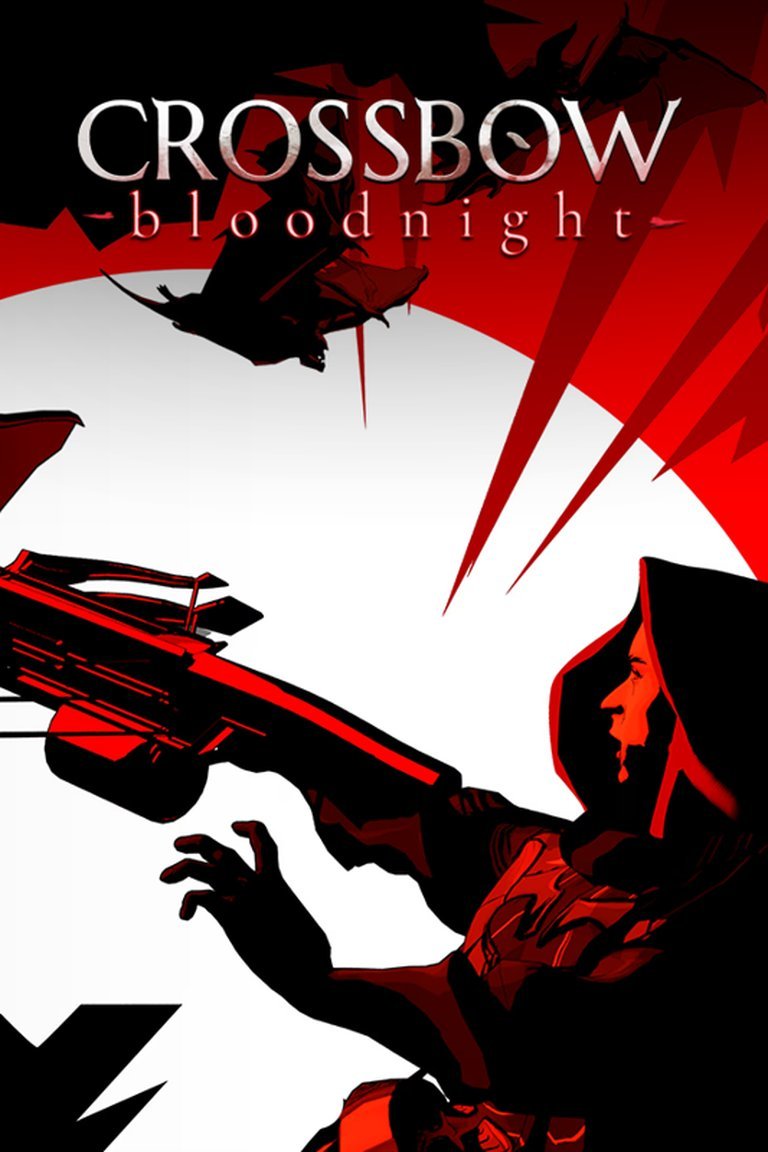
Crossbow: Bloodnight is a first-person arcade shooter set in a fantasy horror world with historical period visuals, where players wield a crossbow to fend off endless hordes of monstrous enemies in confined arenas like eerie courtyards, aiming to survive as long as possible while collecting spirits to trigger bullet-time sequences for massive clears.
Gameplay Videos
Where to Buy Crossbow: Bloodnight
PC
Crossbow: Bloodnight Cracks & Fixes
Crossbow: Bloodnight Guides & Walkthroughs
Crossbow: Bloodnight Reviews & Reception
metacritic.com : For $5, Crossbow: Bloodnight provides a nice, quick arcade experience for those who want something simple and don’t have lots of time to spare.
monstercritic.com (69/100): It’s a fun battle arena that’s all about honing your skills against a horde of horror-styled enemies in a fun and fast-paced gameplay loop. Being sold for just a few bucks, it’s actually well worth your cash.
lifeisxbox.eu : It’s quite an addictive arena shooter where you’ll spend hours trying to beat your top score without realizing how much time has passed… well-executed and just really fun to play.
geekyhobbies.com : The game can be kind of addicting at times… There is something surprisingly satisfying about the gameplay.
Crossbow: Bloodnight: Review
Introduction
In the shadowed courtyards of a desecrated abbey, where the air reeks of plague-ridden London in 1666 and demonic hordes spill forth like vomit from the abyss, Crossbow: Bloodnight thrusts you into a frenzy of bolts and blood. This unassuming indie gem from Polish studio Hyperstrange isn’t just another retro-inspired shooter—it’s a brutal love letter to arcade survival, evoking the relentless pulse of Devil Daggers and the aerial ballets of Quake III Arena. Released amid the 2020 indie renaissance, it has quietly carved a niche as a score-attack purist’s dream, ported across platforms up to 2024. My thesis: Crossbow: Bloodnight masterfully distills the essence of old-school arena shooters into a hyper-focused, budget-priced adrenaline hit, proving that simplicity, when executed with Polish precision, can outshine bloated blockbusters in pure, addictive joy.
Development History & Context
Hyperstrange Sp. z o.o., a nimble Warsaw-based outfit, birthed Crossbow: Bloodnight as a passion project from a tight-knit team of 15 credits, led by project head and programmer Łukasz Jarząb. Fresh off Elderborn (a melee-focused boomer shooter) and Postal: Brain Damaged (a chaotic twin-stick frenzy), the studio channeled their expertise in fast-paced violence into this Unity-powered FPS. Art direction by Łukasz Szybałdin and Piotr Kosmala emphasized “historical period visuals,” blending 17th-century grit with campy horror, while FMOD handled the throbbing soundscape courtesy of Kacper Kajzderski and Piotr Stachera.
Launched on September 24, 2020, for PC via Steam at a steal of $2.99, it arrived during a perfect storm: the “boomer shooter” revival fueled by Dusk, Amid Evil, and Doom Eternal‘s arena slaughterfests. The COVID era amplified demand for quick, solo dopamine hits—no MMOs, no live services, just pure skill expression. Technological constraints? Minimal—Unity’s accessibility let a small team craft fluid 60FPS movement without AAA budgets. Console ports followed: Nintendo Switch in 2021 (ideal for bite-sized sessions), and a 2024 wave for PS4/PS5, Xbox One/Series, and Windows Apps, capitalizing on cross-platform leaderboards. In Poland’s burgeoning indie scene (think The Thaumaturge or Cyberpunk‘s roots), Hyperstrange embodied scrappy ingenuity, turning historical trivia—the 1139 Lateran Council’s crossbow ban—into demonic fodder amid a gaming landscape craving unpretentious arcades.
Narrative & Thematic Deep Dive
Crossbow: Bloodnight wears its lore lightly, a vignette etched in blood rather than scripted cutscenes. You embody an anonymous hunter from the Coven of Crossbow, a secret order defying the Catholic Church’s 1139 anathema on the “ungodly” weapon. Fast-forward to 1666: London’s Great Fire and Plague unleash the “Ancient Horror from Beyond,” ripping veils between heaven, hell, and reality. Legions of nightmare spawn in the “Bloodnight,” and your abbey courtyard becomes ground zero for cosmic equilibrium.
No named characters or branching dialogue—just Wojtek Mroczek’s terse writing framing the hunt as eternal duty. Themes pulse occult: the crossbow as forbidden phallus of power, siphoning enemy spirits like vampiric Eucharist, inverting medieval piety into gore-soaked heresy. Camp horror reigns—zombies, werewolves, bat-vomiting blobs evoke B-movie schlock (Evil Dead meets Hammer Horror), subverting historical gravity with gleeful excess. It’s no Bloodborne tapestry, but thematically taut: survival as sacrament, death as sacrament’s reset (“Hunt. Die. Hunt again.”). In an era of narrative bloat, this minimalist mythos amplifies mechanical purity, letting themes emerge from slaughter’s rhythm—hubris of meddling with the divine, endless cycles of purge and resurgence.
Gameplay Mechanics & Systems
At its molten core, Crossbow: Bloodnight is a score-attack loop distilled to savagery: survive endless waves in one fog-shrouded courtyard, racking seconds toward leaderboard glory. The arcane crossbow is genius—hold-fire for machine-gun bolt sprays (infinite ammo, satisfying brrrt), precision-aim for explosive clusters shredding packs. Siphon spirits from kills to empower: hoard for “bullet time” slow-mo, unleashing field-clearing barrages before frenzy resumes. A rechargeable special attack (nuke-like AOE) demands timing, punishing spam.
Movement is skill-rewarding poetry: WASD strafe, jumps, dashes, bunny hops for Quake-esque air control, dodging six enemy types (x2 variants: shambling zombies, agile flyers, hulking brutes, werewolf lungers, blob spewers, bosses). Early waves are scripted for muscle memory; post-2-minutes, randomization spikes chaos. Health is fragile—one-hit kills force perpetual motion, but instant respawn (button or auto) erases frustration, fueling “one more go” addiction.
Progression? Score multipliers via time/kills/spirits, global leaderboards fostering rivalry. UI is spartan brilliance: central timer, spirit meter, kill counter—no menus mid-run, full controller/keyboard-mouse support. Flaws: repetition in early-game patterns, occasional “unfair” spawns (per reviews), scant variety beyond enemy intro. Yet innovations shine—spirit bullet-time as risk-reward pivot, respawn immersion—making it a mechanical scalpel, not a Swiss Army knife.
| Core Loop Breakdown | Description | Strengths | Weaknesses |
|---|---|---|---|
| Shooting | Autofire/Explosive crossbow + spirit buffs | Infinite ammo, empowering progression | Predictable patterns post-unlock |
| Movement | Dashes, jumps, bunny hops | Fluid, skill-ceiling high | Controller precision varies (Switch Joy-Cons iffy) |
| Survival | Endless waves, timer score | Addictive short bursts (1-2 min runs) | Repetitive arena, luck in late spawns |
| Specials | Bullet-time, recharging nuke | Strategic depth in frenzy | Recharge gating feels arbitrary early |
World-Building, Art & Sound
Confined to one “night-clad courtyard of the old, desecrated abbey,” world-building thrives on implication: crumbling gothic arches, plague fog, hellish portals birthing foes amid 1666 London echoes (fire glows distant). No expansive levels—just verticality (rooftops, ledges) amplifying arena depth. Art direction excels in “beautiful historical period visuals”: low-poly gore with painterly flair—gushing wounds, spectral spirits, B-horror mutants (flying skulls, vomit-bats). 2D overlays (Robert Rejmak, Piotr Bystry) and animations (Przemysław Miliński) pop with juicy feedback, Unity’s sheen masking indie roots.
Sound design, via FMOD, is visceral symphony: crossbow thunks escalate to ratchets, enemy gurgles/swipes build dread, dynamic OST throbs with industrial dread (Kajzderski/Stachera). No voice lines, but impacts/splatters sell carnage. Atmosphere? Oppressive intimacy—the courtyard claustrophobically evolves from skirmish pit to charnel house, fog/sound/motion blurring survival haze. It contributes immersion: not exploration fodder, but perfect crucible for mechanical transcendence.
Reception & Legacy
Launch reception was niche acclaim: MobyGames 82% critics (E1M1’s 100%: “quintessential score-attack”; eShopper 75%, WayTooManyGames 70%: “limited but fun for bucks”). Steam “Mostly Positive” (500+ reviews), Metacritic TBD but Switch scores 60-70 (precision quibbles). Players averaged 3/5, praising addiction/price, dinging depth. Commercially modest—collected by 29 MobyGames users, $2-5 tags ensure impulse buys—yet 2024 console surge (Sep 27) broadened reach.
Legacy? No seismic ripples, but emblematic of post-Doom Eternal arena microgenre (Viscerafest, BPM). Influences Hyperstrange’s oeuvre, echoes in Crossbow Crusade. Historically, it nods 80s/90s arcades (Robotron) via modern revival, proving indies sustain Quake DNA cheaply. Evolving rep: from “Devil Daggers clone” to “palate cleanser essential,” its ports cement endurance-testing purity amid 2020s sprawl.
Conclusion
Crossbow: Bloodnight is no opus—its single arena, light lore, and replay grind demand masochistic love for high scores. Yet Hyperstrange alchemizes constraints into elixir: ferocious mechanics, campy horror sheen, and sub-$5 value yield endless “one more hunt” highs. In video game history, it claims a pedestal among unsung arcade revivalists—a testament that in 1666 or 2025, one bolt at a time can hold back the night. Verdict: 8.5/10. Essential for boomer shooter faithful; casual thrill for all. Hunt. Die. Legendize.