
- Release Year: 2005
- Platforms: Windows
- Publisher: Lago S.r.l., Matrix Games, Ltd.
- Developer: Western Civilization Software
- Genre: Strategy, Tactics
- Perspective: Top-down
- Game Mode: Single-player
- Gameplay: Turn-based, Wargame
- Setting: Historical events, War
- Average Score: 68/100
Description
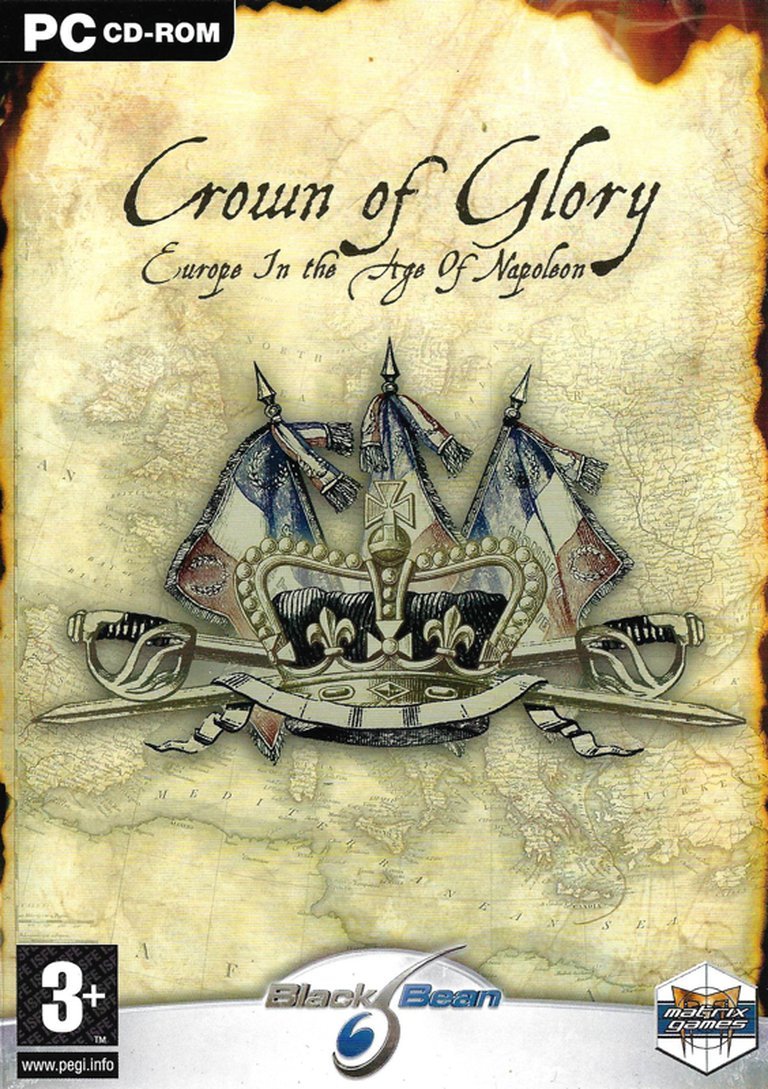
Crown of Glory: Europe in the Age of Napoleon is a historical war game set during the Napoleonic Wars, where players control one of six main nations, including France, England, and Russia. The game combines grand strategy gameplay with tactical battles, offering a thorough simulation of the entire Napoleonic Era.
Crown of Glory: Europe in the Age of Napoleon Cracks & Fixes
Crown of Glory: Europe in the Age of Napoleon Patches & Updates
Crown of Glory: Europe in the Age of Napoleon Mods
Crown of Glory: Europe in the Age of Napoleon Guides & Walkthroughs
Crown of Glory: Europe in the Age of Napoleon Reviews & Reception
metacritic.com (68/100): The different playable nations and the vagaries of diplomacy ensure that there’s plenty enough reason for fans to come back again and again.
gamewatcher.com : Crown of Glory: Europe in The Age of Napoleon is deep enough for both the empire builders and budding generals.
Crown of Glory: Europe in the Age of Napoleon: Review
In the pantheon of Napoleonic-era strategy games, few titles have dared to capture the full breadth of Europe’s most tumultuous decade with the same ambition and meticulous detail as Crown of Glory: Europe in the Age of Napoleon. Released in 2005 by Matrix Games in collaboration with Western Civilization Software, this turn-based grand strategy wargame sought to be more than just a battlefield simulator—it aimed to be a comprehensive simulation of the entire Napoleonic Era, from the dockyards of Lisbon to the frozen wastes of Holy Mother Russia. Two centuries after the start of the Napoleonic Wars, Crown of Glory stands as a monument to the era of legendary diplomats and brilliant tacticians, offering players the chance to rewrite history as one of Europe’s crowned potentates.
Development History & Context
The year 2005 marked the 200th anniversary of the start of the Napoleonic Wars, and Western Civilization Software seized this historical milestone to craft what they envisioned as the definitive Napoleonic strategy experience. Based in an era when the gaming landscape was dominated by first-person shooters and 3D graphics showcases, Crown of Glory represented a deliberate throwback to the golden age of deep, cerebral strategy gaming. The developers recognized a gap in the market for a game that could seamlessly blend grand strategy empire management with detailed tactical combat, all while maintaining historical authenticity.
The technological constraints of 2005 meant that the game had to rely on 2D graphics and menu-driven interfaces rather than the flashy 3D engines that were becoming standard. However, this limitation proved to be a blessing in disguise, as it allowed the development team to focus their resources on creating sophisticated AI, complex economic and diplomatic systems, and a deeply nuanced combat model. The game was built using Microsoft’s Direct Play technology, supporting multiplayer options ranging from hotseat to play-by-email, ensuring that the community aspect of Napoleonic wargaming would thrive.
Matrix Games, known for publishing hardcore strategy titles that appealed to dedicated wargamers, saw in Crown of Glory the potential to capture both the empire-building enthusiasts and the tactical combat purists. The publisher’s commitment to supporting niche strategy games provided the perfect platform for Western Civilization Software’s ambitious vision.
Narrative & Thematic Deep Dive
While Crown of Glory lacks a traditional narrative in the sense of characters and plot, its thematic depth is unparalleled. The game’s narrative emerges organically from the player’s decisions as they navigate the complex web of Napoleonic politics, warfare, and diplomacy. Each scenario—whether starting in 1792 during the French Revolutionary Wars or in 1820 for a more balanced experience—presents a unique historical context that shapes the player’s strategic options.
The game’s themes revolve around the transformation of Europe during this pivotal decade. Players witness firsthand how cobblers became princes and emperors became exiles, experiencing the volatile nature of power during this era. The inclusion of historical figures like Talleyrand, Metternich, and Napoleon himself as special diplomatic units adds a layer of authenticity and historical texture to the experience.
Thematically, Crown of Glory explores the tension between military might and diplomatic finesse, between the glory of conquest and the stability of peaceful development. Players must balance their nation’s military readiness with economic prosperity, manage the delicate relationships between major powers while courting the favor of minor nations, and decide whether to pursue total war or seek diplomatic solutions to conflicts.
The game’s title itself—”Crown of Glory”—speaks to the central theme of national prestige and the pursuit of historical significance. Nations play to accumulate “glory points” through various means: winning battles, conquering territory, maintaining high levels of culture, and achieving political objectives. This system creates a meta-narrative where the player’s ultimate goal is not just survival but the creation of a lasting legacy in the annals of European history.
Gameplay Mechanics & Systems
Crown of Glory is a masterclass in layered game design, offering players unprecedented control over every aspect of their nation’s development while maintaining accessibility through a robust advisor system.
Strategic Layer
The strategic map divides Europe and North Africa into over 200 provinces, each with its own population, resources, and development level. Players control one of eight major powers—France, Britain, Austria, Prussia, Russia, Turkey, Spain, or Sweden—or manage one of more than 90 minor powers controlled by the computer. Strategic turns represent one month of game time, allowing for a detailed simulation of long-term planning and development.
The economic system is particularly sophisticated, featuring a dozen commodities including money, labor, horses, food, iron, timber, wool, wine, and luxuries. Players must manage resource production, trade routes, and colonial income while maintaining their nation’s infrastructure through ten areas of development: defensive guns, walls, roads, barracks, banks, culture, farms, factories, courts, and shipyards. Each improvement area has ten possible levels of development, creating a complex optimization puzzle.
The diplomatic system is equally deep, featuring customizable treaties with over twenty-five possible clauses, secret treaties, and the ability to declare total war on enemy governments. The presence of historical great diplomats—each with unique abilities and statistics in espionage, influence, and law—adds another strategic dimension to international relations.
Military Systems
Military units are controlled at the division level and can be arranged into corps and armies. The game features more than thirty types of units, from light and Jäger infantry to Cossacks, Janissaries, and various types of artillery. Units have individual strength and quality (morale) ratings determined by the level of barracks improvements in their province of origin.
The combat system offers two resolution methods: quick combat and detailed combat. Quick combat provides a faster resolution while still allowing players to influence the outcome through initial unit placement. Detailed combat, however, is where the game truly shines—a comprehensive battle simulation featuring a 50×50 hex map with full terrain modeling, weather effects, smoke accumulation, and over 13,400 frames of animated 3D unit graphics.
The detailed combat system includes numerous innovative features: night turns lasting 90 minutes of game time, weather effects that can vary from turn to turn, special unit abilities (guerrillas can bypass zones of control, howitzers can fire over friendly units), and the ability for units to “lose their eagles,” making them much harder to rally. The morale system is particularly well-designed, allowing smaller forces to win battles through localized victories that cause cascading morale losses in larger forces.
Command and Control
The game’s movement system uses a unique initiative-based approach where each movement has a percent chance of success determined by factors such as weather, unit types, terrain, and whether the unit is force-marching. This creates a realistic fog of war where even well-planned operations can go awry due to the chaos of warfare.
Siege warfare is another highlight, with players able to choose between starving cities, attacking walls, or charging walls—each with distinct advantages and disadvantages. Naval combat features weather gage determination, prize money for captured ships, and the ability to blockade enemy ports, creating significant economic penalties for blockaded nations.
Economic and Social Management
The economic model extends beyond simple resource management to include population growth, food requirements, and the national morale system. Players must provide food to maintain and increase population, feed armies in the field, and keep their people happy through access to luxuries. A nation whose national morale dips too low experiences production loss, insurrection, rebellion, and eventually forced peace.
The reinforcement system allows players to manage their nation’s manpower pool by setting draft levels, age ranges, and training times. Population factors are removed from provinces to make men available for the reinforcement pool, creating a realistic connection between economic development and military strength.
Diplomacy and International Relations
The diplomatic system is perhaps the most innovative aspect of Crown of Glory. Players can propose treaties using a comprehensive editor, engage in secret diplomacy, and use historical great diplomats for special tasks like spying, propaganda, and fomenting coups. The game features more than ninety computer-controlled neutral countries, each with its own attitudes and relationships with the major powers.
The ability to break treaties (except terms of surrender) with steep penalties adds a layer of strategic depth to diplomatic decisions. The total war option—declaring another nation’s government null and void—represents a bold diplomatic move with far-reaching consequences, as the targeted nation receives additional support from its populace and gains sympathy from other European nations.
World-Building, Art & Sound
Crown of Glory creates its immersive Napoleonic world through detailed historical accuracy rather than graphical flash. The strategic map, while functional rather than beautiful, effectively conveys the geographical and political complexity of early 19th-century Europe. The use of fog of war on the main map adds to the tension and uncertainty of international relations.
The detailed combat maps are generated dynamically based on the terrain features and population levels of the province where the battle occurs. Using over 800 tiles arranged in four layers, the game creates unique battlefields that reflect the historical reality of each region. From the mountains of Switzerland to the plains of Poland, each battlefield feels authentic and strategically distinct.
The unit graphics, while not cutting-edge by 2005 standards, are well-detailed and animated. The 13,400 frames of unit graphics ensure that battles have a dynamic, living quality. The sound design complements the visual experience with over 100 digitized sound effects that put players into the thick of battle—horses braying, men cheering, cannons roaring.
The game’s interface, while initially intimidating, becomes intuitive with use. The menu structures and point-and-select interface allow players to access the game’s numerous systems without becoming overwhelmed. The advisor system provides a helpful crutch for new players while allowing veterans to dive deep into micromanagement.
The historical authenticity extends to the game’s music, which features classical compositions appropriate to the period, including licensed tracks from Beethoven and performances by the Royal Philharmonic Orchestra. This attention to historical detail helps create an atmosphere that transports players to the Napoleonic era.
Reception & Legacy
Upon release, Crown of Glory received generally positive reviews from the strategy gaming community, though its reception was somewhat mixed compared to more mainstream titles. Critics praised its depth and historical authenticity while noting its steep learning curve and dated presentation.
IGN awarded the game 80/100, praising its wide range of experiences from economic management to tactical combat. The reviewer noted that while the battlefield sequences had obvious appeal, the game’s steep learning curve—particularly regarding empire management—might deter some players. Computer Games Magazine gave it 60/100, suggesting that players excited by abstract quick combat resolution could overlook other problems.
The game found its true audience among hardcore strategy enthusiasts and Napoleonic history buffs. Its influence can be seen in later grand strategy titles that attempted to combine detailed tactical combat with empire management, though few have matched Crown of Glory‘s level of integration between these systems.
Crown of Glory won the Charles S. Roberts Award for Best Pre-20th Century Era Computer Wargame in 2006, cementing its reputation among strategy gaming’s most prestigious awards. The game also received the Wargamer.com Readers’ Choice Bronze Award for 2005 and was named Wargame of the Year by the newsgroup War-Historical.
The game’s legacy extends beyond its immediate reception through its influence on subsequent titles. The Crown of Glory engine was later used for Forge of Freedom: The American Civil War 1861-1865, demonstrating the versatility and robustness of the game’s core systems. The game’s approach to combining grand strategy with detailed tactical combat influenced later titles in the Total War series and other historical strategy games.
Conclusion
Crown of Glory: Europe in the Age of Napoleon stands as a testament to the golden age of hardcore strategy gaming—a time when depth, complexity, and historical authenticity were valued over graphical flash and accessibility. While its presentation may appear dated by modern standards, the game’s sophisticated systems, historical accuracy, and innovative integration of grand strategy with tactical combat ensure its place in video game history.
For players willing to invest the time to master its complex systems, Crown of Glory offers an unparalleled Napoleonic strategy experience. The game successfully captures the essence of the era—the transformation of Europe, the tension between military and diplomatic power, and the pursuit of national glory. Its influence can be seen in subsequent grand strategy titles, though few have matched its level of detail and historical authenticity.
In an era when strategy games increasingly focus on accessibility and streamlined mechanics, Crown of Glory remains a monument to a different philosophy of game design—one that trusts players to engage with complex systems and rewards deep strategic thinking. For dedicated strategy enthusiasts and Napoleonic history buffs, it remains an essential experience that continues to offer fresh challenges and insights more than a decade after its release.
The game’s ultimate legacy may be its demonstration that historical strategy games can be both deeply educational and thoroughly entertaining, providing players with not just a game but a window into one of history’s most fascinating periods. In this sense, Crown of Glory achieves something rare in video games: it makes history come alive through gameplay, allowing players to experience the triumphs and tragedies of the Napoleonic era firsthand.