
- Release Year: 2022
- Platforms: Linux, Macintosh, Windows
- Publisher: Coldwild Games
- Developer: Coldwild Games, Jagit Games
- Genre: Puzzle
- Perspective: Fixed
- Gameplay: RPG elements, Tile matching puzzle
- Setting: Fantasy
- Average Score: 70/100
Description
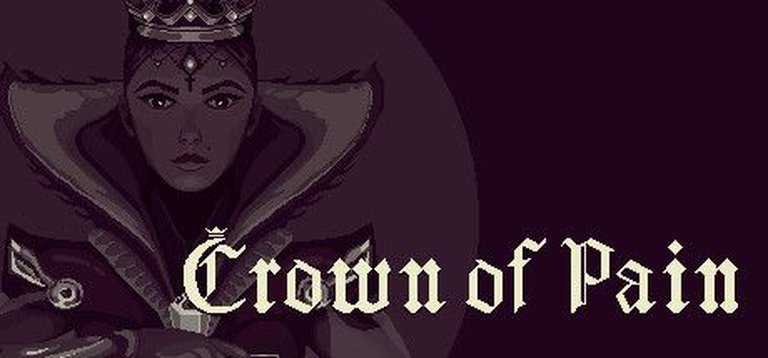
Crown of Pain is a fantasy-themed tile-matching puzzle game with RPG elements, developed by Coldwild Games and Jagit Games. Players engage in strategic battles by matching tiles to unleash powerful attacks, while managing a team of characters with unique abilities. The game features a rich lore, vibrant art, and dynamic music, offering a blend of puzzle-solving and tactical gameplay in a visually appealing setting.
Where to Buy Crown of Pain
Crown of Pain Guides & Walkthroughs
Crown of Pain: Review
Introduction
In the ever-evolving landscape of indie game development, few hybrids are as intriguing as the union of match-3 puzzles with tactical RPG mechanics. Crown of Pain, the brainchild of Latvian studio Jagit Games and publisher Coldwild Games, emerges as a bold experiment in this niche genre. Released in Early Access in February 2022 before reaching full version in April 2024, the game thrusts players into a grim medieval world where desperate heroes seek the mythical “Crown of Pain”—an artifact promising to erase all suffering. This review posits that Crown of Pain is a compelling, if imperfect, achievement that reimagines puzzle-RPGs through a lens of unrelenting darkness and strategic depth. Its legacy lies not in perfection, but in its audacious fusion of mechanics and its unwavering commitment to a visceral, oppressive atmosphere.
Development History & Context
Jagit Games, a small studio based in Riga, Latvia, embarked on Crown of Pain in late 2020, leveraging Unity for cross-platform compatibility (Windows, macOS, Linux) and Steam Deck support. Published by Coldwild Games—a collective known for titles like Lazy Galaxy: Rebel Story—the project emerged from a clear mandate: avoid derivative “game X, but better” design and instead innovate through genre blending. The developers described their vision as a “roguelike tactical combat match-3,” prioritizing player freedom in team composition and emergent strategy.
Technologically, Unity offered flexibility but constrained scope; the Early Access phase (intended to last 3–12 months) allowed community-driven iteration. This was crucial, as players immediately flagged issues like repetitive encounters and opaque progression. Coldwild’s philosophy—to treat games as “art aesthetically, but put good gameplay first”—shaped development, emphasizing atmosphere over spectacle. The gaming landscape in 2022 favored such experiments, with indie titles like Ring of Pain demonstrating appetite for dark, puzzle-driven RPGs. Jagit’s responsiveness to feedback (e.g., adjusting character unlocking) reflects a studio attuned to modern agile development practices.
Narrative & Thematic Deep Dive
- Crown of Pain*’s narrative is a masterclass in minimalism and thematic weight. Heroes—each burdened by personal struggles (though their individual backstories remain tantalizingly vague in the source material)—storm a cursed castle to claim the titular artifact. The Crown’s promise of painless existence becomes a cruel irony, as the journey itself amplifies suffering. This setup mirrors classic existentialist tropes: characters chase transcendence only to confront their own fragility in a world “without remorse or compassion.”
The dialogue, scarce yet potent, drips with fatalism. Enemy lore snippets (e.g., gravestones, demonic entities) suggest a history of cyclical despair, reinforcing the game’s central question: Is relief worth the cost? Thematic richness lies in its ambiguity. The Crown could symbolize salvation or annihilation, leaving players to ponder whether alleviating pain erodes humanity. Despite narrative brevity, the game’s world-building excels through environmental storytelling—crumbling architecture, oppressive shadows, and the omnipresent threat of violence—that makes the castle a character in its own right.
Gameplay Mechanics & Systems
At its core, Crown of Pain revolves around a deceptively simple loop: traverse a map, engage in turn-based battles via match-3 puzzles, and upgrade heroes. Yet, this simplicity masks intricate systems.
Combat Mechanics
– Match-3 triggers color-specific hero abilities (e.g., blue for ice attacks, red for fire). Strategic depth emerges from aligning matches with enemy weaknesses—like matching four frost runes to stun a demon boss.
– Positioning, however, is a point of contention. Early player feedback criticized its randomness: damage isn’t tied to row placement, wasting opportunities for tactical tanking. A proposed solution—leveling “position/elements” (e.g., a blood rune slot granting bonuses to any hero)—would have enhanced flexibility but was never implemented.
– RNG dependence dominates late-game play. Success hinges on board state cascades; a single “mega-turn” can clear screens, but failure feels punitive. As one player noted, it becomes a “coin flip” between victory and swift death.
Progression & Customization
– Heroes are unlocked via in-game currency, a grind criticized as tedious. Unlocking after specific milestones or battles would have been more organic.
– Team building shines: combining abilities (e.g., a healer’s AoE with a warrior’s cleave) creates synergies. Yet, the game encourages one dominant strategy, stifling experimentation. Late-game “endless skeletons” exacerbate this, diluting unique encounters.
– Upgrades (using “faith”) and permadeath-lite elements (roguelike enhancements) add replay value, but insufficient enemy variety limits strategic diversity.
UI & Innovation
The Unity-based UI is functional but cluttered. Character screens and ability trees could be more intuitive. Yet, the core innovation—linking puzzle matches to tactical actions—remains fresh. Enemies with special match-based mechanics (e.g., gravestones requiring four matches to destroy) reward attentive play, making rare moments of triumph deeply satisfying.
World-Building, Art & Sound
The castle’s oppressive atmosphere is Crown of Pain’s greatest triumph. Environments—from blood-soaked halls to decaying courtyards—are rendered in stylized pixel art, with muted palettes (browns, grays, deep crimsons) evoking medieval decay. Textural details like cracked masonry and flickering torches amplify the sense of abandonment.
Sound design complements the visuals effectively. Battle tracks, while limited, pulse with urgency, blending ambient dread with percussive intensity. Music underscores the thematic weight, swelling during pivotal matches. Sound effects—shattering runes, enemy roars—are crisp, though variety wanes in repetitive encounters. The world’s “no compassion” ethos permeates every element; even victory feels hollow, echoing the game’s central tragedy.
Reception & Legacy
Launch & Community Response
Early Access garnered cautious optimism. Phenixx Gaming praised the “dark middle-ages aesthetic” and strategic depth, while Linux Game Consortium lauded its “rich, strategic experience.” Steam players offered granular feedback: one praised the “feeling of arranging abilities” but criticized “endless skeletons,” while another lauded the art but lamented “coin flip” RNG. By full release (April 2024), Steam reviews were “Mixed” (69% positive), with Steambase calculating a 71/100 score. Critics highlighted atmosphere and innovation but cited repetition as a flaw.
Legacy & Influence
Crown of Pain occupies a unique niche in puzzle-RPG history. It echoes Puzzle Quest’s blend of genres but infuses it with bleakness, influencing titles embracing “dark fantasy” twists (e.g., Theatre of Pain). Its greatest legacy is its iterative design: Jagit’s responsiveness to community feedback—especially regarding progression and combat—demonstrates how Early Access can refine ambitious concepts. While not a commercial blockbuster, its cult following attests to a niche appeal: players seeking cerebral, punishing, and thematically resonant experiences.
Conclusion
Crown of Pain is a flawed yet fascinating artifact of indie game development. Its marriage of match-3 puzzles and tactical RPG mechanics is audacious, while its dark medieval setting creates an atmosphere unmatched in the genre. The game excels in moments of strategic clarity—when a perfectly cascading match chain vaporizes enemies—but falters under the weight of repetition and RNG dominance. Jagit Games’ commitment to iterating based on player feedback is commendable, transforming a promising Early Access title into a more polished, if imperfect, final product.
Verdict: Crown of Pain is not for the faint of heart, but for those who embrace challenge and thematic depth, it offers a uniquely punishing journey. Its place in video game history is secure as a bold experiment that reimagines familiar mechanics through a lens of unrelenting despair. It may not dethrone giants of the puzzle-RPG genre, but it carves out a memorable niche as a testament to the power of ambition and atmospheric design.