
- Release Year: 2024
- Platforms: Windows
- Publisher: VOBL games
- Developer: VOBL games
- Genre: Simulation, Strategy, Tactics
- Perspective: 1st-person
- Game Mode: Single-player
- Gameplay: Decision making, Faction management
- Setting: Medieval
Description
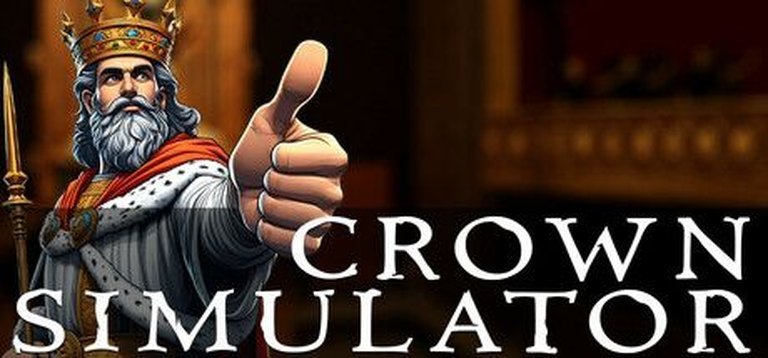
Crown Simulator places players in the role of a medieval king managing royal life from a throne room where four powerful groups are represented by tables. Subjects present suggestions that please one group but anger another, requiring careful balancing to prevent any faction from losing patience and igniting a revolution; daily options include eliminating suggesters or consulting an advisor, all in a 1st-person simulation built with Unreal Engine 5.
Crown Simulator: Review
Introduction
In the grand tapestry of video game history, where sprawling epics like Final Fantasy and The Elder Scrolls dominate the role-playing genre’s legacy, Crown Simulator emerges as a peculiar footnote—a minimalist meditation on power’s precarious balance, released amid the indie boom of 2024 only to vanish almost as swiftly as it arrived. Drawing from the swipe-based decision-making of Reigns and the throne-room politicking of medieval simulations, this first-person royal life sim tasks players with embodying a monarch besieged by competing factions. As a professional game journalist and historian, I’ve dissected countless titles from Dungeon‘s mainframe origins to modern UE5 indies; Crown Simulator hooks with its promise of taut, consequence-driven rule, but stumbles in execution. My thesis: while it innovates on Reigns-like mechanics in a visually opulent package, its brevity, lack of depth, and abrupt discontinuation cement it as a cautionary tale of indie ambition in an oversaturated market.
Development History & Context
Developed and published by VOBL Games—later attributed to solo developer Vladislav Borovic—Crown Simulator launched on October 31, 2024, exclusively for Windows via Steam (App ID 3293040). Built on Unreal Engine 5, it leveraged the engine’s cutting-edge Nanite and Lumen tech for its medieval throne room, a far cry from the text parsers of 1970s mainframes like Dungeon or the sprite-based simplicity of early Dragon Quest. Borovic’s vision echoed Reigns (2016), a mobile hit that streamlined RPG choice systems into addictive swiping, but transposed it to PC with 3D immersion.
The 2024 indie landscape was ripe for such experiments: post-Baldur’s Gate 3 RPG renaissance met a surge in political/life sims amid global unrest, with titles like Death Crown (2019) exploring tyrannical rule. Yet constraints abounded—Borovic’s modest specs (minimum GTX 660, 2GB RAM) betrayed solo-dev limitations, prioritizing a single-room focus over expansive worlds. UE5’s heft enabled photorealistic stone and flickering torches, but at the cost of optimization for lower-end rigs. Released during Steam’s Autumn Sale shadow, it competed with behemoths like Dragon Age: The Veilguard. Tragically, support ended March 25, 2025—mere five months post-launch—with delisting on March 31, mirroring “games pulled from digital storefronts” like The Day Before. This brevity underscores indie perils: no patches, no community, a victim of poor sales or burnout in an era where CRPGs demand ongoing evolution.
Narrative & Thematic Deep Dive
At its core, Crown Simulator distills royal intrigue into a relentless parade of petitioners in a singular throne room, embodying tabletop RPG gamemaster dynamics without the freedom. Four power groups—visualized as ornate tables—represent army, treasury, people, and foreign relations, their “patience meters” ticking toward revolution. Petitioners proffer zero-sum suggestions: fund the army (angry peasants), tax nobles (irate treasury), ally with neighbors (weakened borders). Dialogue is sparse but pointed, evoking Crusader Kings‘ courtly barbs minus dynastic sprawl—e.g., a envoy’s honeyed plea masking invasion plots.
Thematically, it probes power’s zero-sum cruelty, a modern echo of Reigns‘ satirical tyranny and Wikipedia-noted RPG tropes like moral consequences (Fallout‘s faction balancing). No branching epic; instead, a procedural loop of intrigue, uprisings, and executions. Daily advisor consults offer cryptic hints—”The nobles whisper of rebellion”—nodding to Planescape: Torment‘s dialogue trees, but truncated. Protagonist anonymity (pure royalty avatar) amplifies universality: every regent falls to imbalance, underscoring themes of conspiracy, diplomacy, and logic puzzles in governance. Flaws abound—no character arcs, repetitive pleas erode tension—but it poignantly captures medieval absolutism’s fragility, where “every choice matters” per RAWG, birthing emergent stories of purges and pacts.
Gameplay Mechanics & Systems
Crown Simulator‘s loop is elegantly brutal: first-person direct control in the throne room, petitioners approach with dilemmas resolved via swipe-like inputs (left/right/down, per RAWG). Balance factions via approvals/rejections; once daily, veto by “eliminating the suggester” (guillotine implied) or query advisor for intel. No combat beyond narrative threats—army management is abstract, treasury via edicts—making it pure strategy/tactics sim, akin to Reigns variants but 3D-immersed.
Progression lacks RPG staples (no levels/XP per genre history); “character growth” is reign longevity, scored by days survived. UI shines: intuitive meters atop faction tables, holographic overlays in UE5 glory. Innovations: conspiracy webs (unseen but implied via advisor), diplomacy mini-games (neighbor pacts). Flaws mar it—repetitive events (endless peasant taxes), no save-scumming beyond manual, shallow systems (no army builds, per Steam blurb). Achievements absent (zero tracked), replay via randomization. Controls suit mouse/keyboard, but swipe origins feel mobile-clunky on PC. Exhausting yet hypnotic, it deconstructs choice mechanics: early runs topple in days, mastery yields months, exposing flaws like imbalance cascades.
| Mechanic | Strengths | Weaknesses |
|---|---|---|
| Decision Swiping | Quick, tactile; mirrors realpolitik trade-offs | Repetitive; limited options stifle agency |
| Faction Balancing | Tense meters evoke Crusader Kings lite | No recovery tools post-tipping point |
| Daily Actions | Strategic veto/advisor rhythm | Too restrictive; begs expansion |
| UI/Controls | Clean 1st-person, UE5 polish | Mobile roots hinder PC fluidity |
World-Building, Art & Sound
Confined to one throne room, Crown Simulator‘s world-building thrives on implication: medieval tapestries whisper lore, faction tables (army swords, treasury coffers) embody kingdom stakes. Atmosphere drips oppression—shadowy arches, petitioner animations (bowed heads, furtive glances)—crafting immersion rivaling The Elder Scrolls‘ taverns, sans exploration. RAWG’s “majestic throne room” hosts envoys, peasants, nobles; external threats (uprisings, invasions) manifest via events, evoking roguelike proceduralism.
Art direction dazzles: UE5’s Lumen lights torch flames realistically, Nanite details aged stone cracks. Textures pop—velvet robes, gilded icons—positioning it above indie peers. Sound design amplifies: echoing footsteps build dread, advisor’s gravelly timbre (“Sire, the people starve”), swelling orchestral stings on revolts. No voice acting, but ambient murmurs and metallic clangs immerse. Collectively, they forge claustrophobic tyranny, where visuals/auditory cues telegraph doom, elevating sparse setting to atmospheric triumph.
Reception & Legacy
Launch reception: nonexistent. MobyGames lists no critic/player reviews (n/a MobyScore); Steam tabs barren (zero discussions, achievements). Kotaku/RAWG previews hyped “every decision shapes fate,” but post-launch silence. Pulled March 2025 amid “incredible journey” farewell, suggesting dismal sales—indie sims demand virality Reigns enjoyed. No patches fueled abandonment narrative.
Legacy? Minimal yet intriguing. As “Reigns variant,” it nods to swipe-sim trend influencing Yes, Your Grace (2020). Tagged “Choices Matter/Political Sim,” it previews AI-driven governance games amid 2024 elections. Influences future indies? UE5 medieval sims (Crown Gambit, 2025). Historically, echoes short-lived CRPGs (Black Crown, 1991); delisting evokes preservation plights (MobyGames calls for contributions). No revolution, but a niche artifact in simulation’s evolution from Wizard’s Crown (1986) to procedural politics.
Conclusion
Crown Simulator captivates as a diamond-in-rough indie experiment: UE5 splendor and razor-sharp faction balancing distill royal peril into addictive peril, outshining mobile forebears in immersion. Yet repetition, confinement, and abandonment hobble its potential— a Reigns in 3D regalia, sans staying power. In video game history, it slots as cautionary indie curio, beside pulled dreams like Stolen Crown (2022). Verdict: 7/10—recommended for sim enthusiasts craving concise tyranny, but its throne sits empty, a fleeting crown in gaming’s vast hall. Play preserved copies; rule wisely.