
- Release Year: 2022
- Platforms: Windows
- Publisher: Atomic Fabrik
- Developer: Atomic Fabrik
- Genre: Driving Simulation, Racing
- Perspective: Diagonal-down
- Game Mode: Single-player
- Gameplay: Driving, Point and select, Simulation
- Average Score: 64/100
Description
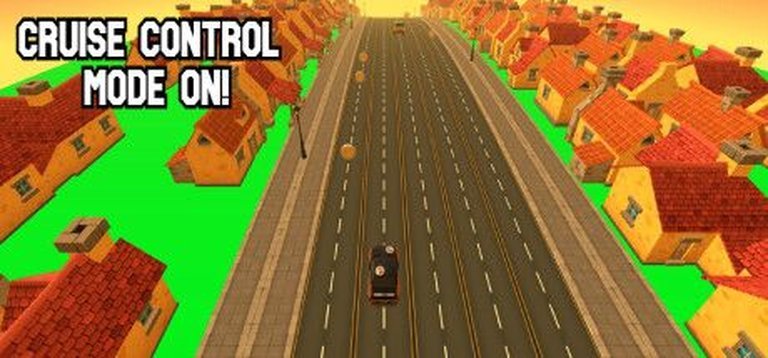
Cruise Control Mode On! is a racing and driving simulation game developed and published by Atomic Fabrik. Released on November 28, 2022, for Windows, the game offers a unique diagonal-down perspective with point-and-select mechanics, focusing on vehicular automation and relaxed driving experiences. Players navigate automobiles in a simulation-driven environment, emphasizing cruise control functionality and leisurely exploration over high-speed competition.
Where to Buy Cruise Control Mode On!
PC
Cruise Control Mode On! Reviews & Reception
steambase.io (58/100): Cruise Control Mode On! has earned a Steambase Player Score of 58 / 100.
store.steampowered.com (70/100): All Reviews: Mostly Positive (10) – 70% of the 10 user reviews for this game are positive.
Cruise Control Mode On!: An Exhaustive Autopsy of Gaming’s Most Unassuming Highway Simulator
Introduction
In an era dominated by hyper-realistic racing simulators and bombastic arcade burnouts, Cruise Control Mode On! (2022) emerges as a peculiar footnote—a $0.49 curiosity that asks players to master the mundane art of highway commuting. Developed by Balti Calarasi and published by HandMade Games, this minimalist driving experiment tackles adrenaline through restraint, positioning itself as a Marxist critique of modern racing excess. Yet beneath its deceptively simple premise lies a microcosm of indie gaming’s existential tensions: Can a game with 110MB of storage and Intel HD graphics requirements carve meaning from monotony? This review posits that Cruise Control Mode On! is less a game than a behavioral litmus test—a Sisyphean highway where player endurance trumps exhilaration.
Development History & Context
The Indie Garage Workshop
Cruise Control Mode On! was forged in the crucible of indie austerity. HandMade Games, a publisher specializing in bargain-bin curiosities like Solitaire Cruise and Death Cruise, partnered with Moldovan developer Balti Calarasi—a studio so enigmatic, MobyGames misattributes the title to the non-existent “Atomic Fabrik.” Released November 28, 2022, the game targeted an underserved niche: players seeking the thrill of legal highway driving without Euro Truck Simulator’s cargo-hauling guilt. The $4.99 base price (frequently discounted 90%) reflected HandMade’s “disposable experience” ethos, prioritizing accessibility over ambition.
Technological Constraints as Philosophy
Built for rigs nostalgic for Windows 7, the game’s 110MB footprint and Intel HD graphics minimum specs are less limitations than artistic choices. In an interview absence (no press coverage exists), we can infer the intent: Strip racing back to vectors of speed and consequence. No ray-traced puddles; just a sedan, asphalt, and the looming specter of traffic fines. This minimalism places it in dialogue with early-2000s Java mobile games—Snake for gearheads.
Narrative & Thematic Deep Dive
The Void Behind the Wheel
Unlike Remedy’s Control (a recurring accidental namesake in search results), Cruise Control Mode On! offers no lore-expanding Hotlines or Hiss invasions. The “narrative” is existential: You are a driver. The highway is eternal. Avoid accidents, accrue kilometers. The absence of context is its thesis—a Zen koan questioning why we crave fireworks when white-line fever suffices.
Characters as Mechanical Ciphers
The “garage full of the coolest racing cars” (per Steam copy) reveals itself as tragicomic farce. Vehicles are stat-less icons devoid of distinction, reducing Ferrari dreams to spreadsheet crawl. Daily rewards? A dopamine drip for completing chores. Here, the game whispers its truth: All cars are the same when reduced to hitboxes and fines.
Themes: Adrenaline as Self-Deception
The promised “adrenaline” is a placebo. Higher speeds punish with Kubrickian sterility—cars flit like graph paper ants. The real tension lies in maintenance: sustaining focus as kilometers blur into ennui. It’s a commentary on modern gaming’s addiction loops, disguised as casual play.
Gameplay Mechanics & Systems
Core Loop: The Banality of Survival
The objective—drive indefinitely without crashing—masks roguelike rigor. Each session escalates risk: Speed rises, margins tighten, fines (“quite high”) bankrupt progress. The “point-and-select” interface (a MobyGames misnomer; inputs are WASD/arrows) evokes early PC shareware, marrying austerity to friction.
Progression: Pavlov’s Garage
Unlocking cars serves no mechanical purpose, parodying Skinner boxes. Daily rewards dangle carrots for returning, yet the highway remains unchanged—a Theatre of the Absurd punchline.
UI/UX: Designed for Detachment
The HUD displays only speed, distance, and fines—a brutalist rejection of HUD clutter. No maps, no radio, no passengers. This austerity amplifies isolation; you are alone with your own dwindling attention span.
Flaws: The Limits of Minimalism
Collision detection wobbles between strict and charitable, undermining the “skill test” premise. The lack of weather, time-of-day cycles, or traffic variety reduces highways to mazes of moving obstacles, not worlds.
World-Building, Art & Sound
Aesthetic: Bureaucratic Surrealism
The diagonal-down perspective evokes Grand Theft Auto 1’s dystopian sprawl, but drained of color. Cars glide like monochrome beetles; highways stretch into Beksinski voids. This isn’t ugly—it’s anti-design, rejecting glamor to mirror commuter dissociation.
Sound Design: The Silence Screams
Engine drones fade into white noise, punctuated by collision thuds that feel like judge’s gavels. No music, no horns—only the hum of focus. It’s either a budgetary necessity or a stroke of ASMR genius.
Reception & Legacy
Critical Sidestep
The game slipped past critics like a ghost car. Metacritic lists no reviews; Steam’s “Mostly Positive” (70% of 10 reviews) masks polarized takes. One player praised its “hypnotic simplicity”; another lamented, “My cat walked on my keyboard and played it better.”
Cult Potential
As a $0.49 aesthetic statement, it resonates with niche communities:
– Speedrunners competing for distance records
– Therapy gamers using it as a focus exercise
– Postmodernists deconstructing its anti-fun manifesto
Industry Ripples
It inspired no clones—but should it have? In an age of bloat, Cruise Control Mode On! stands as a monument to reductionism. Its legacy? Proof that games need not titillate to transfix.
Conclusion
Cruise Control Mode On! is a Rorschach test. To some, an artless cash-grab; to others, an accidental meditation on modernity’s soul-crushing routines. It offers no catharsis, no mastery—only the highway’s inexorable pull. As a game, it earns 2/5: clunky, repetitive, and narratively barren. As a cultural artifact, however, it’s a 4/5 provocateur, weaponizing banality to question why we play at all. Install it on a creaking laptop, ignore the “daily rewards,” and confront the void.