
- Release Year: 2003
- Platforms: Windows
- Publisher: Activision Publishing, Inc., Activision Value Publishing, Inc.
- Developer: Cat Daddy Games, LLC
- Genre: Strategy, Tactics
- Perspective: Isometric
- Game Mode: Single-player
- Gameplay: Business simulation, Managerial
- Average Score: 68/100
Description
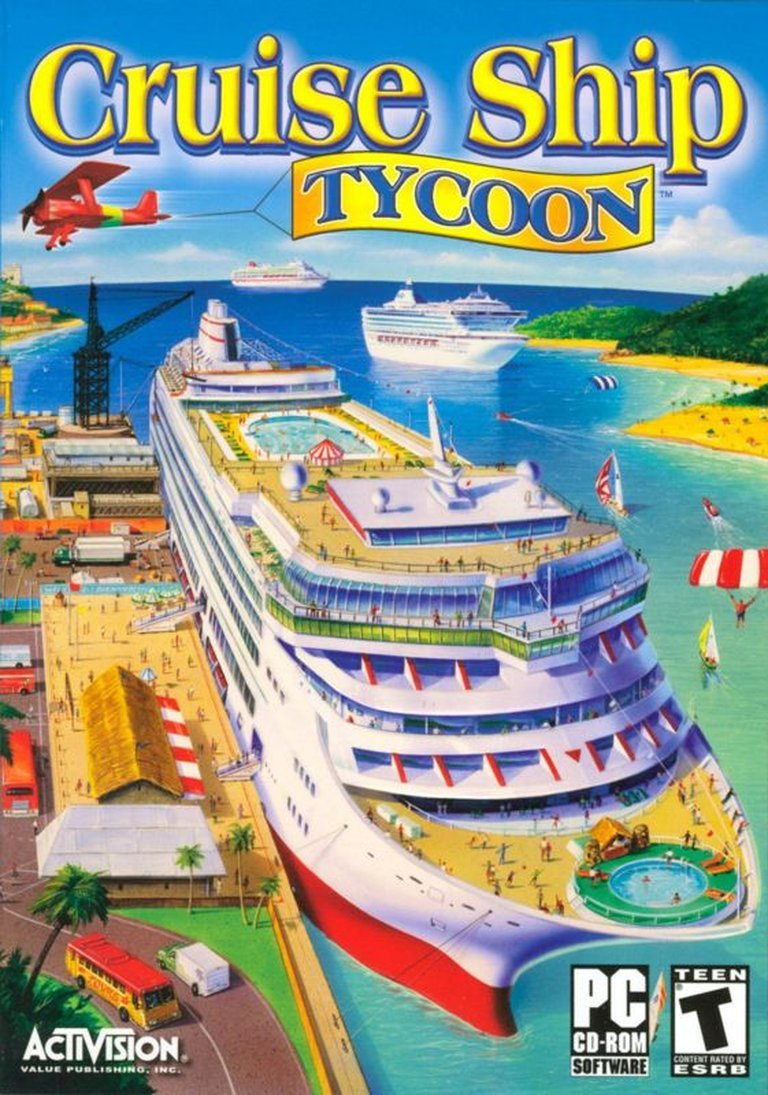
Cruise Ship Tycoon is a managerial business simulation game where players design and manage their own cruise ship, customizing it with rooms, restaurants, bars, and other attractions. The goal is to attract passengers at various ports, keep them satisfied to prevent early disembarkation, and grow a successful cruise line through strategic planning and staff management. The game offers both free play and mission-based modes, with unlockable content as players progress.
Gameplay Videos
Cruise Ship Tycoon Free Download
Cruise Ship Tycoon Cracks & Fixes
Cruise Ship Tycoon Patches & Updates
Cruise Ship Tycoon Mods
Cruise Ship Tycoon Guides & Walkthroughs
Cruise Ship Tycoon Reviews & Reception
mobygames.com (60/100): A fun and exciting game that lets you take control of a fleet of cruise ships.
metacritic.com (60/100): The game didn’t capture my imagination or my attention, I didn’t play it for more than a few hours, and I wouldn’t recommend purchasing it.
myabandonware.com (87/100): The Best aquatic simulator game on low end pc.
gamepressure.com (66/100): Here’s your chance to build, staff, promote and command your own luxury cruise ship.
Cruise Ship Tycoon Cheats & Codes
PC
Enter codes during gameplay.
| Code | Effect |
|---|---|
| IAmACheater | Enable cheat mode |
| GameDebug | Enable game debug mode |
| EngineDebug | Enable engine debug mode |
| CatDebug | Enable all debug modes and cheat mode |
| MovieCapture | Toggle movie capture |
| Ctrl + Shift + * | Add money |
| Ctrl + Shift + F11 | Toggle wireframe view and get more money |
| Ctrl + Shift + K | Temporarily change weather |
| Ctrl + Shift + F8 | Toggle cull cam |
| Ctrl + Shift + F9 | Show wire objects |
| Ctrl + Shift + F10 | Show wire objects |
| Ctrl + 5 | Run out of fuel |
| Ctrl + 6 | Collide with iceberg |
| Ctrl + 7 | Collide with rocks |
| Ctrl + 8 | Get lost at sea |
| Ctrl + 9 | Get eaten by sea monster |
| Ctrl + 0 | Ground your ship |
| TAB | Change view to MMSUX mode |
Cruise Ship Tycoon: A Nostalgic Voyage Through the Highs and Lows of a Forgotten Tycoon Classic
Introduction: Setting Sail on a Forgotten Tycoon Adventure
In the early 2000s, the tycoon genre was a bustling harbor of creativity, with games like RollerCoaster Tycoon, Zoo Tycoon, and The Movies dominating the landscape. Amidst this golden age, Cruise Ship Tycoon (2003) emerged as a quirky, ambitious, yet ultimately flawed entry—a game that dared to let players captain their own floating empire. Developed by Cat Daddy Games and published by Activision Value, this title promised a unique blend of business simulation and nautical adventure, where players could design their dream cruise ship, manage unruly passengers, and navigate treacherous waters.
Yet, despite its charming premise, Cruise Ship Tycoon struggled to make waves. Critics and players alike found it shallow, buggy, and lacking the depth of its contemporaries. Today, it lingers in the annals of gaming history as a cult curiosity—a game that, for all its faults, still holds a special place in the hearts of those who sailed its digital seas. This review will dive deep into the game’s development, mechanics, reception, and legacy, exploring why it failed to reach the heights of tycoon greats while still managing to carve out its own niche.
Development History & Context: A Budget Title in a Crowded Sea
The Studio Behind the Helm: Cat Daddy Games
Cruise Ship Tycoon was developed by Cat Daddy Games, a studio that, at the time, was relatively unknown. Founded in 2000, Cat Daddy had a portfolio of budget titles, including Extreme Paintbrawl and Championship Snowboarding. Their work was often published under Activision’s “Value” label, a brand known for affordable, mid-tier games that rarely pushed technological boundaries.
The studio’s lack of experience with deep simulation games is evident in Cruise Ship Tycoon. While the team had ambition, they lacked the polish and refinement of studios like Bullfrog or Maxis, who had perfected the tycoon formula. The game’s development was likely constrained by tight budgets and deadlines, resulting in a product that felt rushed and unoptimized.
The Tycoon Genre in 2003: A Golden Age
By 2003, the tycoon genre was at its peak. RollerCoaster Tycoon 2 (2002) had set the gold standard for management simulations, while Zoo Tycoon (2001) and The Sims (2000) had proven that niche simulations could achieve mainstream success. Players expected depth, complexity, and emergent gameplay—qualities that Cruise Ship Tycoon struggled to deliver.
The game’s release in June 2003 placed it in direct competition with heavier hitters like SimCity 4 and Tropico 2: Pirate Cove. Unlike those titles, Cruise Ship Tycoon was a budget release, priced lower but also offering less. This positioning may have doomed it from the start, as players comparing it to more polished simulations found it lacking.
Technological Constraints: The Limits of Early 2000s Gaming
Running on the proprietary CatCore engine, Cruise Ship Tycoon was built for the hardware of its time—Pentium III processors, 64MB of RAM, and 16MB graphics cards. While these specs were standard in 2003, the game’s isometric 3D engine struggled under the weight of its own ambitions.
One of the most glaring issues was performance degradation when ships became crowded. As more passengers boarded, the game’s frame rate would plummet, making management a chore rather than a joy. This technical limitation was a critical flaw, as tycoon games thrive on scalability—the ability to grow and manage increasingly complex systems.
Narrative & Thematic Deep Dive: A Lighthearted but Shallow Voyage
Plot and Structure: More Sandbox Than Story
Cruise Ship Tycoon is not a narrative-driven game. Instead, it offers three primary modes:
1. Career Mode – A mission-based progression system where players complete objectives to unlock new ships, rooms, and locations.
2. Challenge Mode – Pre-set scenarios with specific goals (e.g., “Survive a storm with 500 passengers”).
3. Free Play – A sandbox mode where players can design and manage their ship without restrictions.
The game’s “story” is minimal, revolving around the player’s rise from a small-time cruise operator to a mogul dominating the high seas. There are no cutscenes, no character arcs, and no overarching plot—just the illusion of progression through unlocks and upgrades.
Characters and Dialogue: Cartoonish but Forgettable
The game’s cast consists of:
– Passengers – Stereotypical vacationers with simple needs (food, entertainment, rest).
– Crew Members – Hirable staff like chefs, janitors, and entertainers, each with basic stats (efficiency, happiness).
– Rival Cruise Lines – Nine competing companies that occasionally sabotage your operations.
Dialogue is lighthearted and humorous, with passengers making quippy remarks like:
– “I came here for a tan, not a tan-trum!”
– “This food tastes like it was cooked by a pirate!”
While amusing, the writing lacks depth. Passengers are one-dimensional, existing only to either praise or complain based on their immediate needs. There’s no personality, no backstory—just functional NPCs serving the simulation.
Underlying Themes: Capitalism on the High Seas
At its core, Cruise Ship Tycoon is a satire of consumerism and service industry management. The game exaggerates the absurdity of keeping customers happy at all costs, with passengers demanding constant entertainment, luxury, and perfection. Fail to meet their expectations, and they’ll abandon ship at the next port, leaving you with financial ruin.
The game also touches on environmental hazards, with random events like storms, icebergs, and even sea monsters (a nod to classic nautical myths). These elements add a layer of unpredictability but are ultimately superficial, serving more as obstacles than meaningful gameplay mechanics.
Gameplay Mechanics & Systems: A Mixed Bag of Innovation and Frustration
Core Gameplay Loop: Build, Manage, Repeat
The heart of Cruise Ship Tycoon lies in its three-phase loop:
1. Ship Design – Players select a base ship model and customize it by adding rooms (restaurants, bars, cabins, theaters).
2. Passenger Management – Attract guests at ports, keep them happy, and prevent them from disembarking prematurely.
3. Financial Balancing – Manage budgets, set ticket prices, and ensure profitability.
On paper, this loop is solid, but in execution, it falters due to shallow mechanics and repetitive tasks.
Ship Customization: A Double-Edged Sword
The game’s biggest selling point was its ship design system. Players could:
– Choose from four base ship models (small, medium, large, luxury).
– Add dozens of rooms and amenities (sushi bars, discos, casinos, spas).
– Decorate with themes (tropical, modern, classic).
However, the system had glaring limitations:
– No true freedom – Rooms could only be placed in pre-defined slots, limiting creativity.
– No physics or spatial logic – A ship could be packed with illogical layouts (e.g., a disco next to a nursery).
– Performance issues – Large ships with many rooms caused severe slowdowns.
Passenger AI: Dumb as a Bag of Hammers
The game’s biggest weakness was its braindead passenger AI. Guests would:
– Get stuck in corridors or fail to find their rooms.
– Complain incessantly about minor issues (e.g., “This drink is 0.1% too warm!”).
– Ignore logic – A passenger might demand a spa visit while standing right next to one.
This made management frustrating rather than engaging, as players spent more time babysitting NPCs than strategizing.
Staff Management: A Missed Opportunity
Hiring and managing crew should have been a deep, strategic layer, but instead, it was oversimplified:
– Staff had only two stats (efficiency, happiness).
– No training or progression – A janitor on day 1 was the same as on day 100.
– No morale system – Crew members never quit, even if overworked.
This lack of depth made staff feel like interchangeable cogs rather than a meaningful part of the simulation.
Random Events: More Annoying Than Exciting
The game included random events like:
– Storms (slow movement, passenger nausea).
– Icebergs (potential ship damage).
– Sea monsters (a Kraken that could “attack” your ship).
While these events added variety, they were poorly implemented:
– No real consequences – Ship damage was easily repairable with no long-term effects.
– No player agency – You couldn’t outmaneuver storms or fight the Kraken—just wait it out.
UI and Controls: Clunky and Outdated
The game’s isometric perspective and mouse-driven controls were standard for the era but felt clunky in execution:
– No zoom function – Managing large ships was a nightmare.
– Poor pathfinding visualization – Passengers’ movement was hard to track.
– No hotkeys – Everything required tedious menu navigation.
World-Building, Art & Sound: A Charming but Flawed Aesthetic
Visual Design: Colorful but Repetitive
The game’s isometric 3D graphics were bright and cartoonish, fitting its lighthearted tone. Ships had a playful, toy-like quality, and passenger animations were exaggerated and humorous.
However, the art style suffered from:
– Repetitive assets – Passengers and crew looked identical after a while.
– Low detail – Rooms lacked variety in decoration.
– Performance issues – As mentioned, crowded ships brought the game to a crawl.
Sound Design: A Missed Opportunity
The game’s audio was underwhelming:
– Limited soundtrack – A handful of elevator-music-style loops that grew tedious.
– Repetitive sound effects – The same “ding” for notifications, the same “uh-oh” for complaints.
– No voice acting – All dialogue was text-based, removing immersion.
Atmosphere: A Cruise That Never Feels Real
Despite its nautical theme, Cruise Ship Tycoon failed to capture the magic of a real cruise. The game lacked:
– A sense of scale – Ships felt small and cramped.
– Dynamic weather – Storms were just a visual filter.
– Day/night cycles – Time passed, but the ship’s atmosphere never changed.
Reception & Legacy: A Game That Sank Without a Trace
Critical Reception: “Mediocre at Best”
Cruise Ship Tycoon received lukewarm reviews, with critics highlighting its shallow gameplay and technical issues:
– Game Over Online (60/100): “Didn’t capture my imagination… wouldn’t recommend purchasing it.”
– GamersHell.com (6/10): “Way too easy… might get boring pretty fast… performance goes down so badly.”
Players were even harsher, giving it an average score of 1.8/5 on MobyGames. Common complaints included:
– Repetitive gameplay.
– Dumb AI.
– Lack of depth.
Commercial Performance: A Budget Flop
As a budget title, Cruise Ship Tycoon didn’t need blockbuster sales to be profitable, but it failed to find a lasting audience. Its lack of post-launch support (no major patches or expansions) meant it quickly faded into obscurity.
Legacy: A Cult Curiosity
Despite its flaws, Cruise Ship Tycoon has developed a small but dedicated fanbase over the years. Nostalgic players remember it fondly for:
– Its unique premise (few games let you manage a cruise ship).
– Its charming, if simplistic, humor.
– Its status as a “hidden gem” in the tycoon genre.
However, its lack of depth and polish ensures it will never be regarded as a classic. Instead, it remains a footnote—a game that could have been great with more time and resources.
Influence on Later Games
While Cruise Ship Tycoon didn’t spawn direct sequels, it paved the way for later nautical management games like:
– Ship Simulator Extremes: Ocean Cruise Ship (2012).
– Cruise Line Tycoon (2010, Nintendo DS).
– Luxury Liner Tycoon (a spiritual successor in concept).
Modern tycoon games like Two Point Hospital and Planet Coaster have refined the formula, offering deeper mechanics and better AI—something Cruise Ship Tycoon desperately lacked.
Conclusion: A Flawed but Fascinating Relic of the Tycoon Era
Cruise Ship Tycoon is a game of missed potential. It had a brilliant premise—who wouldn’t want to design and manage their own cruise ship?—but lackluster execution held it back. From dumb AI to performance issues, it struggled to deliver the depth and polish that defined the tycoon genre’s golden age.
Yet, for all its flaws, it remains a charming relic—a game that, despite its shortcomings, still manages to entertain in short bursts. It’s the kind of title that tycoon enthusiasts might enjoy for its novelty, but one that casual players will quickly abandon.
Final Verdict: 5.5/10 – “A Rough Voyage, but Not Without Its Charms”
- Pros:
- Unique premise in the tycoon genre.
- Charming, lighthearted tone.
- Some creative ship customization options.
- Cons:
- Shallow, repetitive gameplay.
- Terrible passenger AI.
- Performance issues on larger ships.
- Lack of post-launch support.
Cruise Ship Tycoon is not a lost masterpiece, but it’s not complete trash either. It’s a flawed experiment—one that tried something different but didn’t quite stick the landing. For tycoon fans willing to overlook its rough edges, it offers a brief, amusing diversion. For everyone else? It’s a game best left docked in the harbor of history.
Would I recommend it? Only to die-hard tycoon fans or nostalgic players looking for a curiosity from the early 2000s. For everyone else, modern alternatives like Two Point Hospital or Parkitect offer far deeper, more polished experiences.
But if you’re curious? Set sail at your own risk. The waters are choppy, the passengers are unruly, and the Kraken is always lurking. Bon voyage! 🚢