
- Release Year: 2015
- Platforms: Macintosh, Windows
- Publisher: Codename Entertainment Inc.
- Developer: Codename Entertainment Inc.
- Genre: Action, RPG
- Perspective: Side view
- Game Mode: Single-player
- Setting: Fantasy
- Average Score: 80/100
Description
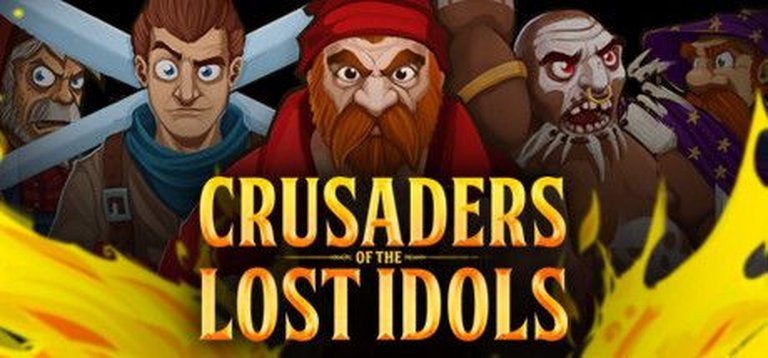
Crusaders of the Lost Idols is a free-to-play idle role-playing game set in a fantasy world, where players manage a party of crusaders on quests to recover lost idols. Featuring side-view action and strategic resource and party management, it blends idle mechanics with RPG elements for a unique adventure experience.
Gameplay Videos
Where to Buy Crusaders of the Lost Idols
PC
Crusaders of the Lost Idols Guides & Walkthroughs
Crusaders of the Lost Idols Reviews & Reception
metacritic.com (80/100): This isn’t a huge step forward for the genre, but what it manages to do is make something incredibly accessible more palatable to those who prefer a challenge.
Crusaders of the Lost Idols Cheats & Codes
Browser Version
| Code | Effect |
|---|---|
| NATE-932D-42BB-BOOM | Nate’s Epic |
| BB49-JHAE-3891-U546 | Werewolf’s Epic |
| B53S-432A-9LTT-003J | Jim’s Axe |
| SANT-AHAS-2GIF-TS4U | Jeweled Chest and Christmas Chest |
PC Version
First go to the backpack icon, click on shop at the right side of Red Rubies then you’ll see another window popup and on the bottom right, you’ll have a Redeem a code bar! paste it there and profit.
| Code | Effect |
|---|---|
| bb49-jhae-3891-u546 | Epic WereWolf Item Dripping Blood Crystal, DPS x200% |
| NATE-932D-42BB-BOOM | Epic Nate’s Unstable Dynamite DPS x200% |
| B53S-432A-9LTT-003J | Jim’s epic axe 200% |
Crusaders of the Lost Idols: The Formation-Focused Idle Game That Carved Its Own Niche
Introduction: An Idle Game With a战略 (and a Strategy)
In the crowded, click-happy landscape of the idle game genre, where titles often compete through sheer volume of upgrades and exponential number growth, Crusaders of the Lost Idols (2015) announced its presence with a deceptively simple yet profound proposition: what if your idle party’s formation mattered as much as their level? Developed and published by the small Canadian studio Codename Entertainment, this free-to-play title did not merely join the idle revolution; it sought to complicate it, injecting a layer of tactical spatial puzzle-solving into the monotonous grind. Its legacy is that of a clever hybrid, a game that respected the core dopamine loop of clicking and waiting while insisting the player engage with a tangible, chess-like layer of party management. This review will argue that Crusaders of the Lost Idols represents a pivotal, if under-sung, evolution in the idle genre—one that prioritized meaningful strategic choice over passive accumulation, all wrapped in a package dripping with referential humor and an astonishingly robust live-service model for a niche title.
Development History & Context: From Flash Roots to a Strategic Pivot
The Studio and the Vision: Codename Entertainment, led by figures like CEO Eric Jordan and Senior Designers Justin Stocks and David Whittaker, was not a new player in the casual browser game space. The studio’s prior work included Bush Whacker 2, a top-down action game. This history is critically important, as Crusaders would become a narrative and character “greatest hits” compilation, directly overlapping with Bush Whacker 2. This reuse of assets and characters (Jim the Lumberjack, The Princess, Nate and Natalie Dragon, Detective Kaine) was a pragmatic decision by a small team, allowing them to build a deep roster with established identities from day one. The vision, as articulated in their own description, was to create “the only clicker/idle game to feature a formation system,” a direct response to what they saw as a strategic vacancy in the genre.
Technological Constraints and Era: Released in October 2015 for Windows and Mac (with web/Flash roots evident in its simple, scalable 2D art), the game was built in Unity. This engine choice was standard for cross-platform indie titles of the period, allowing the team to deploy to web browsers, standalone clients, and eventually mobile (iOS/Android). The technological “constraint” was actually an advantage: the game’s modest system requirements (512MB RAM) and lightweight client made it perfectly suited for the idle genre’s “play in the background” ethos. Visually, it embraced a clean, cartoonish aesthetic that could render dozens of combatants without strain. The era was peak “clicker” mania, following the explosion of Cookie Clicker (2013) and preceding the widespread adoption of the “idle RPG” subgenre. Crusaders landed at a moment when players were growing weary of bare-bones incrementals and were hungry for more systemic depth.
The Gaming Landscape: 2015 saw the rise of “hybrid” casual games. The success of Into the Breach (2018) was still years away, but there was a growing appreciation for turn-based and tactical decisions in smaller packages. Crusaders entered a market saturated with purely incremental games and stood out by marketing itself as a “formation strategy” game first and an idle game second. Its free-to-play model, with cosmetic/gear packs and a premium currency (red rubies), was also becoming the standard for sustainable indie live-service games, moving away from the more aggressive “pay-to-win” models of some contemporaries.
Narrative & Thematic Deep Dive: A Patchwork of Puns and Parody
The narrative of Crusaders of the Lost Idols is not a linear, literary epic. It is, by design, a fractured, referential framework built to justify the endless slaughter of hordes. The core plots are delivered through campaign “objectives,” each with a short, often humorous description.
-
Plot Structure and Delivery: The game is structured around six primary campaigns (e.g., “World’s Wake,” “Descent into Darkness,” “Grimm’s Idle Tales”) and numerous limited-time events. Progress is measured by completing “objectives”—levels where you must kill a set number of enemies or a boss to advance. The story is paper-thin, presented in mission blurbs and character tooltips. For example, in the “Grimm’s Idle Tales” campaign, the entire premise is a Fractured Fairy Tale, where you interact with expies of classic characters, sometimes as a helper, often as the de facto villain completing grim tasks. This self-awareness is key.
-
Characterization Through Trope and Class: With a roster that eventually exceeded 120 “Crusaders,” characterization is achieved through:
- Archetypal Classes: Each Crusader belongs to a class (Warrior, Mage, Rogue, etc.) with specific formation slots (Front, Middle, Back) they can occupy.
- Unique Ability Flavors: Their abilities are named and described with heavy doses of humor and pop-culture parody. Nate Dragon is the archetypal Lethally Stupid hero—his abilities involve “dynamite for locked doors” and “looting the family crypt,” culminating in him accidentally triggering the New Game+ (called “Dragon’s Disc” in-game) by pressing a “Big Red Reset Button.” The Princess is a Pyromaniac, with all her fire-based abilities explicitly geared toward arson. Emo Werewolf is Our Werewolves Are Different simply by virtue of his name and gloomy affect.
- Direct Pop-Culture References: The roster is a who’s who of parody: RoboTurkey (Thanksgiving robot), The Bat Billionaire (a clear Batman analogue), Dr. Theo (a mad scientist), Molly the Mouser (a cat burglar). This “Reference Overdosed” approach means the game’s “lore” is less about a cohesive world and more about a shared cultural lexicon with its player base.
-
Thematic Underpinnings: Beneath the silliness, a few themes persist:
- The Absurdity of Heroic Quests: Many quest givers are Treacherous or Comically Missing the Point. You might be sent to “Make the Mountain Baron have an accident” or complete endless Fetch Quests for a never-satisfied Voodoo Lord Zollie. The game constantly winks at the meaningless grind of its own mechanics.
- Found Family and Teamwork: The core gameplay loop is literally about forming a dysfunctional but effective family of misfits. The Brother–Sister Team dynamic of Nate and Natalie Dragon, who gain a “Double Dragon” synergy when adjacent, is a rare moment of genuine (if parodic) emotional connection in the description text.
- Commercialization as Meta-Commentary: The sheer volume of paid DLC packs (over 30 listed on MobyGames/Steam, from “Epic Starter Packs” to “Taskmaster Packs”) mirrors the game’s own in-game monetization. You are constantly “collecting” Crusaders, reflecting the consumerist parody woven into its design.
Gameplay Mechanics & Systems: Where the Idle Genre Got Smart
This is the core of Crusaders‘s innovation and enduring appeal.
1. The Core Loop & The Formation Revolution:
The fundamental loop is classic idle: click to damage, earn gold, use gold to level Crusaders (increasing their DPS) and unlock ability upgrades, progress through levels to earn more gold. The revolutionary twist is the Formation Grid. Your party occupies a 2×4 or 3×3 grid (depending on campaign). Each Crusader has specific slots they can be placed in (e.g., a “Back Only” mage, a “Front & Middle” warrior). Their abilities trigger based on their position relative to others and the number of enemies.
- Abilities as Formation Triggers: A Crusader’s ability might say, “Deals 300% damage to enemies in the same column” or “Buffs all Crusaders in adjacent slots by 20% DPS.” This transforms formation building from a aesthetic choice into a spatial optimization puzzle. Do you cluster your buffers? Spread out your area-of-effect (AoE) damage dealers? Protect your squishy DPS in the back?
- Gear as Formation Modifiers: Equipment (common, uncommon, epic, legendary) doesn’t just increase stats; it often changes which slots a Crusader can occupy or grants new formation-based abilities. A “Helm of the Frontliner” might allow a mage to move to the front row, drastically altering your party’s composition.
2. Progression and Meta-Systems:
* Campaigns & Objectives: The 10,000+ levels are grouped into campaigns with thematic enemies and gimmicks. Progress is gated by completing a set of objectives per tier (usually 10, later expanded to 11). This provides long-term structure.
* Missions (The “Idle” in Idle): The “A Quest Giver Is You” trope is literal. You can dispatch benched Crusaders on timed missions (1-24 hours) for rewards like past event characters, gear, or currency. This is a secondary progression layer that requires roster depth—you need many Crusaders to run missions effectively.
* Events & FOMO: Monthly Events are the game’s lifeblood. They introduce new, time-limited Crusaders obtainable only during the event (or later via expensive “Taskmaster” DLC packs). Events have their own campaigns, objectives, and often unique mechanics (e.g., “Hard Levels, Easy Bosses” where special enemy debuffs are disabled on boss stages). This drives regular player return.
* Crafting & Economy: The Item Crafting system is simple: disenchant duplicate gear for materials to craft specific pieces for a Crusader. The currency pyramid (Gold -> Gems -> Red Rubies) creates multiple resource sinks. Red Rubies, earned primarily through Daily Quests and event milestones, are the premium currency for buying key items, skipping timers, or purchasing special packs, tying daily logins to long-term power.
3. UI and Accessibility: The UI is clean, if dense. The formation screen is the heart of the game, with clear slot indicators. The information density is high—managing 30+ Crusaders’ gear, levels, and ability upgrades across multiple campaigns is a spreadsheet-like task, appealing to a specific strategic mindset. The mouse-only control scheme is perfectly suited to its casual, background-play roots.
Flaws and Friction Points:
* The “Gold Wall”: As with all idle games, progress exponentially slows. The formation optimization can only delay the inevitable point where you must wait for gold to level your Crusaders further. New campaigns and events reset this curve but don’t eliminate it.
* Event Exclusivity: The reliance on limited-time events for new Crusaders creates a significant Fear Of Missing Out (FOMO). Players who miss an event must often wait a year for a re-run or pay a premium for the “Taskmaster” DLC pack, which can feel punitive.
* Grind for Gear: Equipping a full, optimal set for a top-tier Crusader can require hundreds of hours of play or significant real-money investment in jeweled chests, creating a potential pay-to-progress wall.
World-Building, Art & Sound: A Collage of Chaos
- Setting & Atmosphere: The world is an absurdist fantasy pastiche. You fight “Terrible T-Rex,” “Irritable Escargot” (snails), and “Panda Claw” (a panda with lobster claws). The “Grimm’s Idle Tales” campaign is the most cohesive, evoking a dark fairy-tale forest. Otherwise, the setting is a nonsensical “anything goes” amalgam that matches the referential humor.
- Visual Direction: The 2D side-view art is simple, colorful, and functional. Crusader sprites are distinct and effectively communicate their archetype (the hulking warrior, the glowing mage). Enemy variety is good, with creative designs that fit their punny names (e.g., a snail with a grumpy expression). The UI is informative but can become cluttered with dozens of ability icons during combat.
- Sound Design: The soundtrack, credited to Adrian Chalifour (“Towers & Trees”) and Francis Hooper/Justin Banmann (“Goodwood Atoms”), is serviceable fantasy fare—upbeat, inoffensive, and loopable for hours. The sound effects for clicks, attacks, and level-ups are crisp and satisfying, providing crucial audio feedback for the core loop. Voice lines are sparse but present for key characters, usually a short quip on ability use, reinforcing their personalities.
Reception & Legacy: A Cult Success That Defined a Sub-Genre
Critical Reception: Critical coverage was light but positive. Gamezebo’s 80/100 review for the iOS port called it “highly recommended,” noting it made the idle genre “more palatable to those who prefer a challenge.” This encapsulates the critical take: it was seen as a smart, accessible twist on a simple formula, not a genre-redefining masterpiece. Metacritic lists only that one critic score.
Commercial & Player Reception: This is where the game truly shines. On Steam, it boasts a “Very Positive” rating (82% of 1,790 reviews at time of writing) with over 3,000 total reviews across languages. Its Player Score of 83/100 on Steambase indicates a deeply satisfied player base. Key praise in user reviews consistently highlights:
* The strategic depth of the formation system.
* The sheer amount of content (campaigns, events, Crusaders).
* The “free-to-play” fairness—many reviewers state it’s enjoyable without spending a dime, with purchases being for convenience or collection.
* The humorous character writing.
The low MobyGames user score (2.8/5 from 1 rating) is an anomaly, likely reflecting that platform’s different user demographic.
Influence and Legacy:
* The Spiritual Sequel: The most direct legacy is Idle Champions of the Forgotten Realms (2018), also by Codename Entertainment. This game applies the exact same formation-centric idle mechanics to the official Dungeons & Dragons setting, featuring iconic characters like Bruenor, Celeste, and Jim Darkmagic. It’s a larger-scale, more polished, and officially licensed evolution of the Crusaders formula, with a significantly larger active player base today. The overlap in development team (14 people credited on both) is direct confirmation of the lineage.
* Genre Influence: While not the first to use formations, Crusaders popularized the concept within the idle/clicker space. Titles like “Idle Heroes” and others have incorporated similar grid-based party placement, acknowledging the strategic layer Codename Entertainment proved players wanted.
* The Live-Service Model: Its success demonstrated that a small indie studio could sustain a free-to-play idle game with regular, substantial content updates (monthly events, new campaigns, new Crusaders) for years without resorting to aggressive monetization. The DLC packs, while numerous, are primarily cosmetic/collection-focused rather than power-gating essential gameplay.
Conclusion: A Strategic Pillar of the Idle Pantheon
Crusaders of the Lost Idols is not a game that will dazzle with narrative brilliance or graphical fidelity. Its genius lies in a single, elegant question: “What if placement was power?” By making the formation grid the central puzzle, it transformed the idle genre from a Skinner box into a tactical management sim. Wrapped in a package of self-aware parody, absurd enemies, and an almost unbelievably generous (for F2P) content pipeline, it carved out a dedicated niche.
Its place in video game history is as a crucial bridge and innovator. It bridged the gap between simplistic clickers and complex RPGs, proving that “idle” and “strategy” are not oxymorons. It innovated by taking a core combat mechanic—positioning—and making it the primary lever for player agency in a genre that typically offers none. While its spiritual successor Idle Champions of the Forgotten Realms now overshadows it in scale and popularity, Crusaders of the Lost Idols remains the foundational text. It is the game that asked idle players to think, and in doing so, made the genre smarter, deeper, and ultimately more rewarding for the hundreds of thousands who have logged thousands of hours arranging their motley crew of parodic heroes against endless hordes. For that, it deserves recognition as one of the most important and clever idle games ever made.