
- Release Year: 2017
- Platforms: Macintosh, PlayStation 4, Windows, Xbox One
- Publisher: DCF Studios Ltda – ME
- Developer: DCF Studios Ltda – ME
- Genre: Action
- Perspective: Side view
- Gameplay: Fighting
- Average Score: 30/100
Description
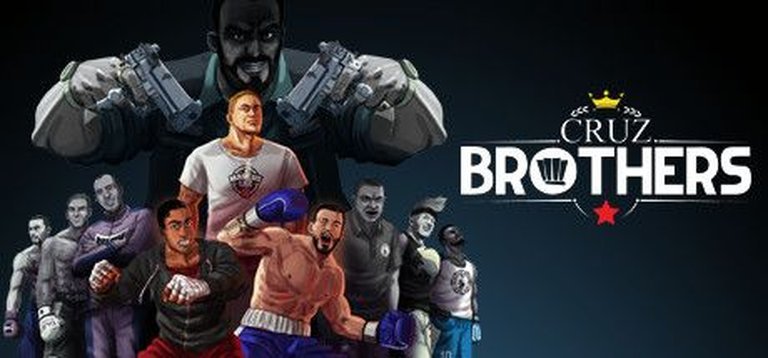
Cruz Brothers is an indie fighting game developed by DCF Studios, set in a contemporary world with Brazilian influences. It centers on brothers Igor and Felipe Cruz, who work as bartenders and participate in underground fight clubs while aspiring to become professional boxers. With former champion Marcus Luz as their coach, they must overcome challenges from exploitative boxing club leaders and the violent Sons of Subversions biker gang, which tries to coerce them into throwing fights.
Gameplay Videos
Where to Buy Cruz Brothers
PC
Cruz Brothers Guides & Walkthroughs
Cruz Brothers Reviews & Reception
metacritic.com (20/100): The sad truth about Cruz Brothers is that we’ve played far superior games in this genre that were made over thirty years ago.
thexboxhub.com : the realisation sets in that this game is going to be a struggle to get through.
opencritic.com (40/100): Overall, it’s hard to recommend Cruz Brothers.
Cruz Brothers: A Study in Ambitious Catastrophe
Introduction: The Alluring Mirage of a Fighting Game
In the vast and often contradictory ecosystem of video games, few titles arrive with such a profound dissonance between evident ambition and catastrophic execution as Cruz Brothers. Released in 2017 by the Brazilian indie studio DCF Studios, this 2D fighter presents itself as a gritty, story-driven experience that melds the realism of boxing with the fantastical excess of arcade fighters. Its premise—rooted in the real-life Brazilian martial arts scene and promising a narrative of redemption, revenge, and underground brawling—suggests a title with something meaningful to say. Yet, a collective critical and player consensus, synthesized from reviews across PlayStation 4, Xbox One, and PC, paints a portrait of a game that collapses under the weight of its own design decisions. This review will argue that Cruz Brothers stands as a fascinating, albeit deeply flawed, artifact of indie development: a game where noble intentions, a passion for its source material, and a desire for genre-blending are utterly undermined by fundamental misunderstandings of fighting game mechanics, technical execution, and player experience. It is less a failed game and more a comprehensive catalog of how not to build a competitive fighter, offering a case study in prioritizing aesthetic and narrative ambition over the “meat and potatoes” of gameplay.
Development History & Context: Passion Project in a Studio’s Infancy
DCF Studios Ltda – ME, a small Brazilian team, developed Cruz Brothers almost entirely under the creative direction of André Amorim, who wore every key hat: Game Designer, Producer, Team Manager, Creation Director, and Story Writer. The team credits list 42 developers, with key roles filled by Taynan Quintino (Lead 3D Artist, Level Designer), Mauricio Paiva (Art Director), and a collective of concept and illustrators. Crucially, the game’s characters are not mere fiction; Felipe and Igor Cruz, Marcus Luz, Gabriel Ribeiro, and Cláudio Coelho are real Brazilian Jiu-Jitsu fighters, and the boxing academies Academia Nobre Arte and Academia Delfim are real institutions founded by Cláudio and Gabriel. This grounding in reality is the project’s most significant and unique selling point, reflecting a deep cultural connection and a desire to celebrate Brazilian martial arts on a global stage.
The game was built in Unity, a common engine for indies but one that requires significant optimization expertise for a fast-paced, precise genre like fighting games. Released first on Windows/Mac in September 2017, then ported to PlayStation 4 in 2018 and Xbox One in 2020, the ports did little to address core issues. The contemporary gaming landscape in 2017 was dominated by polished, deep fighters like Street Fighter V (despite its own launch issues), Tekken 7, and the accessible Injustice 2. For a tiny studio to enter this space with a narrative-heavy, hand-drawn aesthetic was a daring, arguably quixotic, move. The ambition was clear: create a “connected game universe” with regular updates, blend fantasy moves with reality, and tell a story rooted in authentic Brazilian culture. However, the technological constraints of a small indie team and the immense complexity of crafting balanced, responsive fighting game mechanics proved insurmountable. The result is a game that feels like a prototype that mistakenly reached full commercial release, with all the rough edges, unpolished systems, and fundamental flaws intact.
Narrative & Thematic Deep Dive: A Story Drowning in Its Own Delivery
The narrative of Cruz Brothers is its most concurrently praised and criticized element. The ad blurb and multiple sources establish the plot: disgraced coach Marcus Luz seeks redemption by training the titular Cruz brothers, Felipe and Igor, while contending with the villainous biker gang Sons of Subversion, led by Tray Sorrow, who murdered Luz’s former pupil. The structure is that of a classic sports film trilogy—underdogs rise, face corruption, and vie for a championship—wrapped in a violent, revenge-driven thriller.
Thematic Aspirations: The story attempts to tackle themes of redemption (Luz), legacy (the Cruz brothers), systemic corruption (the Boxing Club and the Sons of Subversion), and the social reintegration of marginalized individuals (“Reformed Criminal” trope, as noted by TV Tropes, referencing Academia Nobre Arte’s mission). It makes direct, shout-out references to Fight Club (through characters Riley Durden and Dying Joe, with split personalities) and Sons of Anarchy (the gang’s aesthetic and structure), positioning itself within a lineage of gritty, masculine, counter-culture stories. The use of real-life Brazilian fighters adds a layer of authentic aspiration, celebrating a specific national martial arts scene.
Execution: Where the narrative completely unravels is in its delivery. The story mode is presented as a graphic novel-style comic with full voice acting. Reviews consistently describe the comic art as “basic and cartoony but also oddly realistic in places” and note the backdrops can be “quite well-drawn.” This creates a visual schism: the cutscenes have a passable, if unspectacular, comic-book aesthetic, but the in-game character sprites are a separate, disastrous entity (more on this in Art & Sound). The promise of a “2-hour campaign” with “unique encounter designs” is undercut by a profoundly abrupt and unsatisfying ending. Multiple reviews hammer this point: the story “just ends” with no resolution, promising DLC that never materialized, making the entire narrative feel like a incomplete, frustrating tease.
The voice acting is universally decried as some of the worst in gaming. As PlayStation Country states, “all of the dialogue seems to have been recorded with the mic actual in the actors’ mouths. The distortion and high volume levels seeming to be the work of someone who has no idea how to mic up a voice acting booth.” The sound mixing is so poor that “music often drowning out key moments of dialogue” (TheXboxHub). The arena announcer is singled out as grating and repetitive. This technical failure in audio production actively sabotages the story, turning potentially dramatic or engaging moments into auditory annoyance. Thematic weight is lost; character motivations are mumbled; the gritty tone is diluted into farce. The narrative’s grounding in real Brazilian culture and its cinematic aspirations are obliterated by a presentation so technically inept it becomes the primary focus, eclipsing the plot itself.
Gameplay Mechanics & Systems: The Cardinal Sin of Input Lag and DesignBankruptcy
In a fighting game, gameplay is the thesis. Cruz Brothers fails this fundamental test with a consistency that approaches artistry in its failure. The issues are not minor bugs but deep, systemic design flaws.
Core Combat Loop & Control Scheme: The control scheme is bizarre and counter-intuitive. Instead of the industry-standard light/medium/heavy or low/mid/high, it offers: Light Attacks, Strong Attacks, and ‘Walking’ Attacks. Reviews could not decipher a meaningful difference beyond basic damage values for the ‘Walking’ attacks. This lack of clear, distinct move types removes character diversity from the outset. Furthermore, special moves are mapped to a single button (L2) and, while visually varied (fireballs, electricity, pink energy clouds), they all use the same quarter-circle d-pad input. Their damage is astronomically high (60-75% health), making them “win buttons” that reduce matches to a desperate race to land one first. This promotes button-mashing over tactical play, as noted by TheXboxHub: “Success usually comes down to trapping a fighter in a combo (by mashing a button) and then firing off your special.”
The Unforgivable Input Lag: This is the game’s defining, catastrophic flaw. Input lag—the delay between a player’s button press and the on-screen action—is described as “severe” and inconsistent. TheXboxHub reports a 2-second delay in some instances, a number so high it would render any competitive game unplayable. This causes players to be “stuck in a combo I could not exit, and being beat down senselessly.” The lag is not a sporadic bug; it’s a pervasive, infrastructural problem that makes the game feel disconnected and unfair. It transforms the “ridiculous speed” of animations into a chaotic, impossible-to-read blur. As PlayStation Country succinctly diagnoses: “the problems here are all with the design choices… the general lack of sharpness in the controls.”
Hitboxes, Animation, and Camera: The animation is derided as “laughable,” with characters feeling like “pieced together from cut outs of a torso and limbs, almost like Ragdoll Kung Fu.” They “occasionally seem to fold in half” and have a “basic bouncing animation,” making them feel like puppets. This directly feeds into bizarre and inconsistent hitboxes. Fighters can be face-to-face and fail to connect, or be struck by punches from what appears to be a mile away. The camera exacerbate these issues, “lik[ing] to zoom in and out like a NEO GEO game” and obsessively cutting to slow-motion during combos. Higher Plain Games notes this “slow-motion camera zoom in disorientates and confuses the player,” especially in the 2v2 mode where multiple slo-mo triggers cause the view to whip around nonsensically. The game also features a significant absence of shadows and texture reversal on character clothing when they turn, adding to a general sense of sketchiness and lack of polish.
Character Balance & Depth: With nearly identical move sets across the entire roster (all characters can perform the same combos and specials), “character nuance is nearly non-existent” (Higher Plain Games). Balance rests solely on HP, damage, and special point (SP) values, leading to clear, exploitable tier lists. Some special moves are simply faster and more damaging. The game offers no tutorial beyond a splash screen, leaving players to blindly mashed buttons, which often works due to the simplicity and inconsistency of the systems. The “Spetsnaz Party” 4-player mode is an interesting idea but is ruined by the same camera and input issues.
In summary, the gameplay is a button-mashing mess where success feels random, failure feels inevitable due to lag, and there is no meaningful skill expression or character mastery. It violates the core covenant of the fighting game genre: providing a reliable, responsive system for players to test their skill against one another.
World-Building, Art & Sound: A Clashing Aesthetic Identity
Cruz Brothers presents a deeply conflicted visual and auditory identity, torn between a semi-realistic boxing narrative and an over-the-top anime-inspired fighter.
Visual Presentation: The game employs a stark dichotomy. The environmental stages are pre-rendered CGI, with TheXboxHub noting they are “clean” and “reactive” (e.g., roofs collapsing, floors catching fire), though they are not interactable. Some backdrops are “quite well-drawn.” However, the character sprites are the game’s visual anchor and its greatest failure. They are hand-drawn, a noble goal for an indie, but the execution is poor. The proportions are “off,” animations are stiff and puppet-like, and the lack of shadows or consistent perspective makes them appear flat and disconnected from the backgrounds. This disconnect is jarring: you have a relatively detailed, realistic boxing ring and club, populated by cartoonish, weightless figures who move with all the grace of a marionette. The “Rule of Cool” from TV Tropes is invoked—boxers firing beams, fireballs, and electricity—but the aesthetic clash is so severe it feels tonally deaf, not cool. Why is this serious story about murder and redemption punctuated by a character bending backwards to release a “cloud of pink energy”?
Sound Design & Music: The soundscape is equally troubled. The music is described as “hit or miss,” with some fitting the tone and others “overstaying their welcome.” The voice acting, as previously established, is technically atrocious due to poor recording and mixing. The sound effects for punches and specials are serviceable but lost in the chaos of on-screen activity and audio clipping. The announcer’s repetitive, grating lines (“Better stay down boy”) become a symbol of the game’s lack of audio polish and self-awareness. The overall effect is one of an unprofessional, poorly mixed soundtrack that fails to build atmosphere, heighten tension, or complement the story’s attempted gravitas.
The world of Cruz Brothers is thus a schizophrenic one: a story rooted in the realistic underworld of Brazilian boxing and biker gangs, visualized through a mix of competent background art and abysmal character animation, and narrated through a cacophony of distorted, poorly mixed audio. The elements do not coalesce; they actively fight against each other, leaving the player unsure whether to take the narrative seriously or laugh at the absurd spectacle on screen.
Reception & Legacy: A Cautionary Tale Written in One-Star Reviews
Cruz Brothers suffered an immediate and devastating critical and commercial reception that has persisted, with no meaningful rehabilitation of its reputation.
Critical Reception: The game is virtually unanimous in its condemnation. On MobyGames, the sole critic review (from Garage Band Gamers) gave it 10%, calling it “a failure on every level” and placing it below notorious bad games like Shaq-Fu. Metacritic lists a critic score based on one review (no aggregate metascore formed). OpenCritic places it in the -1st percentile. Reviews from PlayStation Country (2/5), TheXboxHub (outright warning against purchase due to a £24.99/$30USD price tag for such a flawed product), and Higher Plain Games (1.5/5, “Horrific”) all converge on the same verdict: the game is fundamentally broken at a design level. The most common refrain is that it is worse than much older fighters: “The sad truth about Cruz Brothers is that we’ve played far superior games in this genre that were made over thirty years ago” (PlayStation Country).
Player Reception: Player sentiment, as captured on Steam, is mixed but leaning negative. Steambase calculates a Player Score of 50/100 from 18 reviews (9 positive, 9 negative). This suggests a small group of players may find charm in its “so-bad-it’s-good” story or chaotic 2v2 mode, but the majority find it frustating and unplayable. The high price point for such a broken product is a recurring point of player anger, especially given the existence of far superior, deeper, and cheaper fighting games on all platforms.
Legacy and Influence: Cruz Brothers has no meaningful positive legacy. It has not influenced subsequent game design. Instead, it serves as a stark cautionary tale for indie developers, particularly those tackling complex, precision-based genres like fighting games. Its legacy is one of:
1. The Primacy of Gameplay: No amount of narrative ambition, authentic character inspiration, or aesthetic vision can compensate for unresponsive controls, high input lag, and broken fundamentals. These are not “quirks” but fatal flaws.
2. The Perils of Scope: DCF Studios’ ambition—story mode, multiple modes (2v2, championships), character customization, a planned “connected universe”—spread their limited resources too thin, resulting in a shallow core experience. As TheXboxHub states, it is “a classic case of adding too much garnish without nailing the meat and potatoes of the core gameplay.”
3. Technical Debt is Fatal: The input lag and hitbox issues suggest a game running on an engine (Unity) that was not properly optimized for the task, or code that was not robust enough. This is a non-starter for a competitive genre.
4. Failure of Polish: The terrible voice acting, audio mixing, and inconsistent animation quality point to a lack of quality control and directorial oversight. Passion does not excuse unprofessional execution.
It exists now as a curious footnote, mentioned in forums and “worst of” lists, and analyzed on sites like TV Tropes for its bizarre adherence to and subversion of genre tropes. It is a game more interesting to read about and dissect than to actually play.
Conclusion: A Passion Project Grounded by Its Own Foundations
Cruz Brothers is a tragedy of unrealized potential. At its core lies a genuinely compelling seed: a story inspired by real Brazilian martial artists, a critique of corruption in combat sports, and a desire to blend boxing realism with fantastical super moves. The team at DCF Studios clearly possessed passion and a unique cultural perspective. However, this vision was catastrophically betrayed by every layer of its implementation.
The game is not merely “bad” or “flawed”; it is fundamentally broken as a fighting game. The severe, inconsistent input lag alone invalidates any claim to being a functional competitive or even casual fighter. This is compounded by a nonsensical control scheme, a complete lack of character move-set diversity, baffling hitboxes, and a disorienting camera that actively works against the player. These are not polish issues; they are core design and technical failures that render the gameplay an exercise in frustration and randomness. The narrative, while conceptually sound, is delivered via terrible voice acting and poor audio mixing, and is rendered moot by an abrupt, incomplete ending. The art is a jarring mix of okay backgrounds and disastrous character sprites, with a clashing aesthetic that undermines its own tone.
Ultimately, Cruz Brothers fails because it misunderstands the hierarchy of its genre. In a fighting game, gameplay is narrative. Every system, every input, every frame of animation serves the primary goal of creating a reliable, deep, and satisfying interactive contest. Cruz Brothers prioritizes a story it cannot tell well, and an aesthetic it cannot render consistently, over the absolute necessity of a solid, responsive combat engine. It is a game that asks the player to endure a broken experience for the sake of a plot that it itself sabotages.
Its place in video game history is not as a classic or a cult favorite, but as a modern monument to development misprioritization. It is a textbook example for game design courses on what not to do: do not ship with severe input lag; do not give your entire roster identical movesets; do not prioritize story mode in a genre where the story is the played experience; do not neglect tutorialization; and never, ever compromise on the core input-response loop. For every other indie studio dreaming of making their mark on the formidable fighting game genre, Cruz Brothers stands as a silent, pixelated warning: passion is not enough. You must first build a game that works.
Final Verdict: 1.5/5 – Horrific. A deeply fascinating failure that is more valuable as a case study than as an entertainment product. Avoid at all costs unless your goal is to witness a masterclass in how not to build a fighting game.