
- Release Year: 2021
- Platforms: Nintendo Switch, Windows
- Publisher: Midnight Games S.r.l.
- Developer: Midnight Games S.r.l.
- Genre: Simulation
- Perspective: 1st-person
- Game Mode: Single-player
- Gameplay: Business simulation, Managerial
- Setting: Contemporary
- Average Score: 65/100
Description
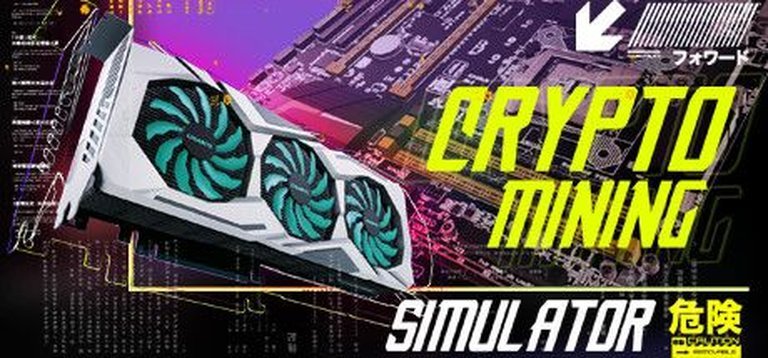
Crypto Mining Simulator is a first-person managerial business simulation set in the contemporary world of cryptocurrency mining, where players manage operations by purchasing and repairing GPU rigs, overclocking hardware, mining Bitcoin, and trading on the market to build a profitable empire, all using direct control and point-and-select interfaces.
Gameplay Videos
Where to Buy Crypto Mining Simulator
PC
Crypto Mining Simulator Guides & Walkthroughs
Crypto Mining Simulator Reviews & Reception
steambase.io (65/100): Player Score of 65 / 100 with Mixed rating from 1,507 reviews.
store.steampowered.com (65/100): Mixed (65% of the 1,395 user reviews are positive).
Crypto Mining Simulator: Review
Introduction
In the frothy peak of the 2021 cryptocurrency bull run, when Bitcoin soared past $60,000 and every garage seemed primed for a mining rig, Crypto Mining Simulator emerged as a peculiar digital artifact—a first-person tycoon game promising to democratize the arcane art of crypto mining. Developed and published by the enigmatic indie outfit Satosha Nakamoti (with attributions varying across databases to Midnight Games S.r.l. or even Stanislaw Dev), this Unity-powered simulation invites players to assemble bespoke PC rigs, monitor hash rates, and scale up to sprawling farms of over 1,000 GPUs churning at 50+ GH/s. But beneath its neon-lit promise of “realistic mining algorithms and money earning” lies a title that’s equal parts ambitious tinkering sandbox and frustratingly unfinished prototype. My thesis: Crypto Mining Simulator is a fascinating time capsule of crypto mania, excelling in tactile hardware assembly but undermined by technical woes, absent polish, and unfulfilled features, rendering it a cult curiosity rather than a genre-defining masterpiece.
Development History & Context
Crypto Mining Simulator arrived on Steam for Windows on April 24-25, 2021, amid a perfect storm of cultural and economic fervor. The crypto market was exploding—Ethereum’s DeFi summer was in full swing, NFTs were exploding onto the scene, and retail investors worldwide were snapping up GPUs amid shortages that crippled gamers. Satosha Nakamoti, a solo or micro-team developer (pseudonymously evoking Bitcoin’s Satoshi Nakamoto), leveraged Unity’s accessible engine to craft a niche sim targeting this zeitgeist. Ports followed to Nintendo Switch in 2022, broadening its reach to handheld audiences, though MobyGames lists Midnight Games S.r.l. as the core studio, hinting at possible rebranding or outsourcing.
The vision was audaciously hands-on: eschew abstract clickers for a first-person builder mimicking real PC assembly, complete with wire management and thermal monitoring. Technological constraints were minimal—minimum specs demand only an i3, 4GB RAM, and GTX 460—but the era’s GPU scarcity ironically mirrored the game’s theme, as real-world miners hoarded cards. The 2021 gaming landscape was dominated by blockbusters like Cyberpunk 2077 (fresh off its troubled launch) and cozy sims like Stardew Valley, but indie simulators thrived on Steam, from House Flipper to PowerWash Simulator. Crypto-themed games were nascent, with predecessors like 1980s puzzle Crypto or idle Crypto Clicker paling against this one’s depth. Yet, development appears rushed: Steam promises like VR, multiplayer, and multi-coin trading remain “coming features” years later, suggesting scope creep or abandonment. Community forums buzz with pleas for fixes, underscoring a small team’s overambition in a volatile niche.
Narrative & Thematic Deep Dive
Lacking a traditional plot, Crypto Mining Simulator forgoes characters, dialogue, or cinematic cutscenes in favor of emergent storytelling through progression. You embody an anonymous miner bootstrapping from a single rig in a bare room to a humming data-center empire, a rags-to-rig narrative echoing real 2021 tales of hobbyists turned millionaires (until the 2022 crash). No voiced protagonists or branching quests exist; instead, “dialogue” manifests via terse UI tooltips, shop banter, and a simulated Mining OS dashboard spouting stats like “Hashrate: 50 GH/s” or “Temp: 75°C – Overheat Risk!”
Thematically, it’s a microcosm of late-stage capitalism in the crypto era. Core motifs include exponential growth versus entropy: scaling your farm yields godlike hash power, but realism intrudes via skyrocketing electricity bills, GPU degradation, and thermal throttling—mirroring debates on mining’s unsustainability. Obsession and isolation permeate the first-person view, trapping you in a windowless room amid whirring fans, symbolizing the crypto bro’s hermetic grind. Subtle nods to market volatility appear in “realistic money earning,” though without implemented trading, it’s abstracted. Broader undertones critique hype: the game’s 2021 snapshot captures peak euphoria, but post-launch bear markets (halvings, Ethereum’s PoS shift) render its mechanics quaintly obsolete.
No deep lore or moral arcs, but player-driven narratives emerge—will you min-max for profit or aesthetically perfect your “beautiful gaming room”? It’s thematic minimalism at its purest: a meditation on labor, speculation, and silicon dreams, unadorned yet evocative for those who lived the era.
Gameplay Mechanics & Systems
At its heart, Crypto Mining Simulator is a managerial loop distilled into tactile assembly and optimization, blending PC Building Simulator with idle progression.
Core Loops: Building and Mining
Players shop for components (hundreds of GPUs, CPUs, mobos, RAM, SSDs, PSUs) via a “Parts PC Tech Shop,” then enter first-person mode to install them—snapping motherboards, slotting GPUs, routing cables, and affixing fans. Direct control and point-and-select interfaces make this satisfyingly fiddly, with physics-simulated wires and drag-and-drop precision. Once built, rigs mine via a “realistic algorithm,” accruing virtual crypto based on hash rates, wattage, and temps. Scale to 1,000+ GPUs for massive farms, monitoring via a bespoke OS interface with overclocking, stats, and alerts.
Progression and Economy
Earnings fund expansions: repair rigs, customize rooms (desks, lights, decor), or buy more hardware. UI is functional but clunky—dense menus, finicky mouse controls (per forums), and no robust financial dashboards. Innovation shines in realism: watt consumption scales accurately (e.g., high-end GPUs guzzle power), temps demand cooling upgrades, and overclocking boosts hash but risks failure. Flaws abound: bugs like vanishing GPUs, unsellable rigs, and broken overclocking plague loops, per 179+ Steam threads.
Combat? None—Pure Sim
No combat; “challenge” is systemic—balancing costs, repairs, and scaling. Lacks depth in automation or employees, feeling repetitive post-midgame. Controls support gamepad/keyboard/mouse, but first-person building frustrates on Switch.
Overall, mechanics innovate in hardware fidelity but falter on balance and reliability, turning potential depth into grindy frustration.
World-Building, Art & Sound
The “world” is intimate: a customizable room evolving from drab garage to cyberpunk lair, stuffed with rigs glowing under neon accents. First-person perspective immerses you amid cables and heatsinks, fostering claustrophobic realism—no vast open world, just iterative expansion. Atmosphere evokes 2021 miner dens: humming fans, RGB bling, flickering monitors. Visuals are “detailed” low-poly Unity fare—serviceable models of RTX 30-series GPUs, believable temps via particle effects (steam from overheating), but textures blur at scale, and 1,000-GPU farms chug on modest rigs.
Art direction prioritizes functionality: clean shop UI, holographic OS overlays. Room customization adds flair—wallpaper, shelves—but lacks variety. Sound design amplifies immersion: layered fan whirs escalate with farm size, punctuated by beeps, clicks, and crypto “cha-ching” rewards. No score or voice; ambient noise sells the grind, though repetition grates. Collectively, these craft a niche, authentic vibe—less Blade Runner, more AliExpress unboxing—but unpolished edges (pop-in, aliasing) dilute the spell.
Reception & Legacy
Launch reception was muted: no Metacritic score, zero MobyGames critic reviews, and Steam’s “Mixed” (65% positive from 1,508 reviews, 977 positive/531 negative). Players praise building depth and nostalgia (“good potential,” “satisfying rigs”), but decry bugs (“GPUs disappearing,” “can’t sell BTC,” “needs removal from Steam”), unfinished features, and grind. Sales lean budget ($0.99 sales spike volume), with 3 concurrent players recently.
Commercially modest, it inspired kin like Crypto Miner Tycoon Simulator (praised for strategy) or itch.io clickers, but lacks influence—overshadowed by polished sims. Reputation evolved from 2021 hype vehicle to meme-worthy relic; forums show dev engagement (pinned “We are back” post) but stalled updates. In history, it’s a footnote: capturing crypto’s absurd optimism amid real-world crashes, influencing no majors but embodying indie sim’s pitfalls.
Conclusion
Crypto Mining Simulator distills 2021’s crypto fever into a hands-on rig-building odyssey, triumphing in mechanical authenticity—cable-cluttered assembly, thermal juggling, farm-scaling euphoria—while stumbling over bugs, sparse progression, and vaporware features. As a historical curio, it earns props for zeitgeist capture, but as a game, it’s hampered by unrefined execution. Verdict: Recommended for sim enthusiasts and crypto nostalgics at deep discount (6/10). It carves a quirky niche in video game history—not revolutionary, but a tangible echo of silicon-fueled dreams, best played as interactive museum piece before the next bear market forgets it.